Why Are There So Many Orthodox Saints? Understanding the Orthodox Church’s Path to Holiness — An In-Depth Study
Introduction
The Orthodox Church has venerated thousands of saints throughout the centuries — men and women regarded as having attained holiness through divine grace and officially recognized as such by the Church. Some estimates cite more than a thousand names in ancient Greek menologia alone, a number that grows considerably when the saints of all local Orthodox churches are included. This naturally raises a question that puzzles many observers: why does the Orthodox Church have so many saints? Is it a form of religious excess, a product of historical accumulation, or does it reflect something theologically profound?
The answer lies at the very heart of Orthodox theology: salvation is not merely a juridical act but a process of deification (Greek: theosis), through which a human being genuinely participates in the life of God. Saints are not a pantheon of distant, unattainable heroes — they are people like us, transformed by the grace of the Holy Spirit. This article examines in depth why the Orthodox Church has so many saints, how the process of glorification works, what role saints play in the life of the faithful, and who some of the most significant saints are, along with prayers addressed to them.
1. The Theological Foundation: Theosis, or Deification
At the centre of Orthodox theology stands the concept of theosis, or deification — the genuine communication of God to the human person, not by nature but by grace. The Apostle Peter writes: “He has given us his very great and precious promises, so that through them you may participate in the divine nature” (2 Pet. 1:4). This does not mean that a human being becomes God in essence, but that he or she genuinely partakes of God’s life, grace, and energies.
“God became man so that man might become God.” — St Athanasius of Alexandria (c. 296–373)
This celebrated statement by the Bishop of Alexandria encapsulates the entire theology of the Incarnation. The Son of God assumed human nature not only to redeem us from sin but to open the way to divine life. Every saint has walked this path. Each one is a living proof that theosis is real and accessible.
It is important to note a key difference between the Orthodox understanding and that of Western Christianity, particularly post-Reformation Protestantism. In Western theology, salvation is often understood primarily as the forgiveness of guilt — a juridical act by which God declares the sinner righteous. In Orthodoxy, salvation is healing: the restoration of the whole person — soul and body — through divine grace, and a genuine participation in divine life. The abundance of saints is therefore a natural consequence: the more people who have truly experienced theosis, the greater the number of saints.
2. The Process of Glorification in the Orthodox Church
Unlike the Roman Catholic Church, where the canonization process is formally codified and falls exclusively under papal authority, in the Orthodox Church the glorification of a saint — as the process is more precisely called — is the witness of the whole Church, often arising from below, from the piety of the faithful.
The process typically unfolds as follows. First, signs of holiness become evident in the life of the deceased: miraculous healings, prophetic words, and mystical experiences. Second, the relics of the saint are often found to be incorrupt and to emit a fragrant aroma (Greek: euodia), regarded as a sign of the Holy Spirit. Third, a local investigation is conducted, involving the bishop, the clergy, and the people. Fourth, the bishop or the Ecumenical Patriarch proclaims the person a saint, an icon is written, and an Akathist hymn is composed in their honour. Finally, the saint’s name is inscribed in the church calendar.
It is essential to emphasize that the Church does not “create” saints — it recognizes them. Holiness is the work of God, not a human achievement. The Apostle Paul calls all baptized believers saints (Greek: hagioi): “To all in Rome who are loved by God and called to be his holy people” (Rom. 1:7). Proclamation as a saint, however, is the recognition of a particular and manifest holiness that may serve as an example to others.
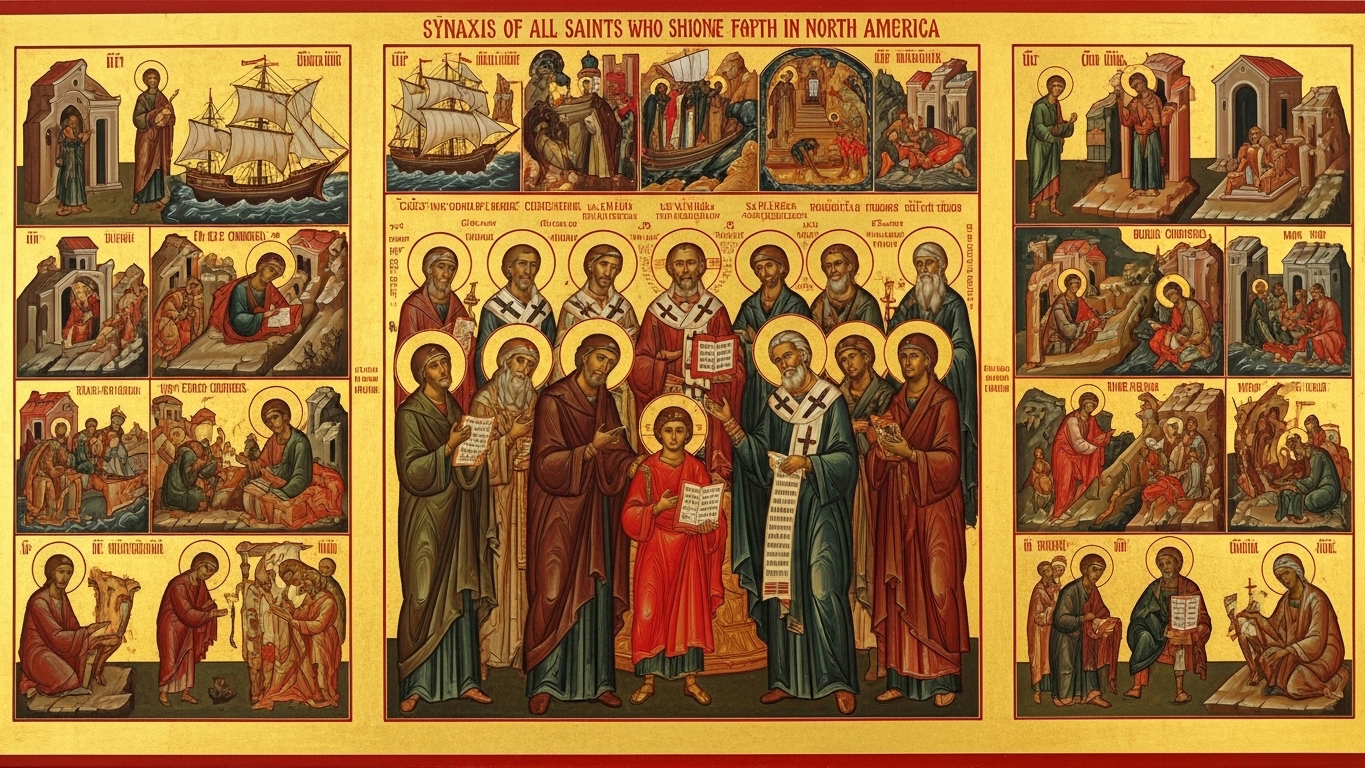
One of the reasons for the large number of saints in the Orthodox Church is that every local church — whether Russian, Greek, Romanian, Serbian, Georgian, or another — has historically glorified its own local saints. The Ecumenical Patriarch in Constantinople has proclaimed many of these saints universal, but local saints continue to be venerated within their own communities. This produces an enormous cumulative number of names.
3. Categories of Saints in the Orthodox Church
The Orthodox Church groups saints into distinct categories according to their lives and the nature of their service. This very diversity helps explain why there are so many saints: nearly every form of Christian life can lead to holiness.
Martyrs (Greek: martyres, meaning witnesses) are those who accepted death for the sake of their faith. The first martyr was Stephen (Acts 7:54–60). The history of the Church has produced an enormous number of martyrs — especially during the first centuries under the Roman Empire, but also in later periods of persecution. In the twentieth century alone, tens of thousands of clergy and faithful were executed during the Bolshevik terror, many of whom have since been glorified as saints.
The Venerable (Greek: Hosios) designates monks and hermits who dedicated their lives to prayer, fasting, and the practice of inner stillness (Greek: hesychia). The monks of Mount Athos, the Egyptian desert, and other places of solitary prayer have given the Church an inexhaustible number of saints.
Apostles and Evangelists are those who first carried the message of Christ into the world. In addition to the Twelve Apostles, the Church honours as Equal to the Apostles (Greek: isapostolos) figures such as St Helena, St Constantine the Great, and St Nina, the Enlightener of Georgia.
Bishops and Church Fathers who taught and guided the Church and defended Orthodoxy at the Ecumenical Councils also form a numerous category. St Basil the Great, St Gregory the Theologian, and St John Chrysostom are the Three Holy Hierarchs, honoured together on a shared feast day (30 January / 12 February in the new calendar).
God-bearing Mothers and Righteous Women include female saints — nuns, married women, and virgins alike. St Mary of Egypt, St Macrina, St Olga of Kiev, and St Matrona of Moscow are among the many women who hold a place of honour among the saints of the Church. The Psalmist declares: “Precious in the sight of the Lord is the death of his faithful servants” (Ps. 116:15).
Wonderworkers (Greek: thaumatourgoi) are saints through whom God has performed visible miracles — healings and solutions to seemingly hopeless situations. St Nicholas of Myra is the most widely venerated saint of this kind in the world. It is important to note that the working of miracles belongs not to the saint but to God — the saint is merely the instrument.
4. The Role of Saints in the Life of the Faithful
In Orthodoxy, the veneration of saints (Greek: timesis) is never the worship of saints (Greek: latreia), which belongs to God alone. This distinction is dogmatically fundamental. The Second Council of Nicaea (787) stated it clearly: icons and saints are accorded veneration, but worship is offered to God alone.
According to the Church’s understanding, saints are alive — not dead. Jesus said: “He is not the God of the dead but of the living” (Matt. 22:32). Saints, though departed from bodily life, live fully in Christ. They can intercede for us as no living person can — indeed, even more effectively, because they stand in the very presence of God.
“Invoke the saints who are exalted in the presence of the Majesty, that they may pray for us when we are bowed down under the weight of our transgressions.” — St John of Damascus (c. 675–749)
In practice, the veneration of saints is expressed in several ways. Icons are windows into heaven — in bowing before an icon, the faithful turn to the saint as to a living person. The Akathist is a liturgical hymn sung in honour of a saint. Pilgrimages to the relics of saints are also a widespread practice. Name days hold great importance — Orthodox Christians celebrate the feast of their patron saint rather than their birthday.
The abundance of saints is also pastorally valuable. Almost every sphere of the faithful person’s life, every vocation, every kind of suffering and illness, has its own saint with a particular closeness to that experience. This makes the faithful person’s relationship with the saints living and personal rather than abstractly religious.
5. Some of the Most Notable Saints and Prayers Addressed to Them
The following presents a selection of saints particularly venerated throughout the world and in Estonia, together with brief prayers addressed to each.
St Nicholas of Myra (c. 270–343) — The Wonderworker
Nicholas was the Bishop of Myra in the province of Lycia, renowned for his extraordinary generosity and his many miraculous deeds. His relics were later transferred to Bari in Italy, where they rest to this day in the Basilica of St Nicholas. He is venerated as the patron saint of sailors, children, prisoners, and the poor. His feast day is 6/19 December.
Prayer to St Nicholas: “O holy hierarch Nicholas, great Wonderworker! May your prayers before the Lord, whom you loved and served, bring consolation to our souls and blessing to our lives. Be our intercessor before the divine throne, O saint venerated throughout the whole world. Amen.”
St Matrona of Moscow (1881–1952) — The Blind Prophetess
Matrona Nikonova was born into a poor peasant family in the Tula Governorate, blind from birth. From her earliest years she manifested gifts of prophecy and healing. She came to Moscow in 1925 and lived there in great concealment during the Soviet atheist terror, receiving tens of thousands of people who sought her help. She was canonized in 2004. Her relics are enshrined in the Intercession Cathedral in Moscow, where queues of pilgrims stretch for hours.
Prayer to St Matrona: “O holy Matrona, beloved servant of God! Look with merciful eyes upon us who come to you in faith and love. Strengthen our faith, deepen our hope, and teach us to love. Pray to Christ our God, that He may forgive us our sins and help us to live according to His will. Amen.”
St Seraphim of Sarov (1754–1833) — The Greatest Mystic of the Russian Church
Prokhor Moshnin, known as St Seraphim, is one of the most beloved saints of Russian Orthodoxy. He spent years in solitary ascetic life deep in the forests of Sarov, fasting, praying, and reading the Psalter. His most celebrated spiritual conversation, recorded by Motovilov, describes the manifestation of the divine light (the Light of Tabor): Seraphim’s face shone like the sun as he spoke of the acquisition of the Holy Spirit. He is venerated as a patron of peace of soul and spiritual wisdom.
Prayer to St Seraphim: “O great Wonderworker and holy Seraphim of Sarov! Look down upon us who humbly pray before you, and intercede for us before the all-powerful Lord, that He may grant us the gift of faith and prayer, and fill our hearts with peace and love. Amen.”
St Alexander Nevsky (1221–1263) — Prince and Protector
Alexander Nevsky, Grand Prince of Novgorod and Vladimir, is venerated both for his military gifts and for the depth of his faith. In 1242 he defeated the knights of the Livonian Order on the ice of Lake Peipus, defending Orthodoxy against Western Catholic encroachment. On his deathbed he took monastic vows under the name Alexius and was canonized in 1547. He is honoured as the patron saint of Russia, Belarus, and Estonia.
Prayer to St Alexander Nevsky: “O holy and blessed Grand Prince Alexander! Look with mercy upon us who implore your holy intercessions before the Lord. Be our advocate and protector, and pray to God that He may preserve our land and its people, shield us from all adversity, and uphold us by His grace. Amen.”
St Isidore of Yuriev (d. 1472) — Estonia’s Own Martyr
In the Estonian context, of particular significance is St Isidore of Yuriev (Tartu) and the 72 martyrs who were put to death with him in 1472 by being drowned in the Emajõgi River for the sake of their faith. Their memory is venerated by the congregations of both the Estonian Apostolic Orthodox Church and the Estonian Orthodox Church. They are among the first canonized martyrs of the Estonian lands.
Troparion for Isidore and his companions: “O martyrs of the Estonian lands, the Church today calls upon you with great joy, for your blood bears witness to the glory of Christ. Pray to Him to protect our homeland and its people, and to grant us wisdom and love. Amen.”
6. Hesychasm, the Light of Tabor, and the Visible Holiness of the Saints
One of the deepest reasons why Orthodoxy has so many recognized saints is the spiritual tradition of hesychasm — the practice of the Jesus Prayer (“Lord Jesus Christ, Son of God, have mercy on me, a sinner”) and the cultivation of inner stillness, which leads a person into a divine experience of prayer.
In the fourteenth century, a great controversy arose around the central question: is it truly possible to experience God? St Gregory Palamas (1296–1359), Archbishop of Thessaloniki, articulated the dogmatic understanding that while God’s essence remains eternally inaccessible, God’s energies — the manifestations of His grace, including the divine light that shone on Mount Tabor — are real and participable. Saints are precisely those who have truly experienced this divine light. Gregory Palamas was himself canonized in 1368, and his memory is honoured every year during Great Lent.
Within this theological framework, the abundance of saints becomes entirely comprehensible: the more people who have genuinely experienced God’s energies and whose lives reflect that experience, the greater the number of saints. Theosis is not reserved for an elite — it is open to all the baptized who seek God with a sincere heart.
7. Critical Questions and Theological Responses
Some critics — particularly from the Reformed Protestant tradition — ask whether addressing prayers to saints is not an error, given that Scripture states there is “one mediator between God and mankind, the man Christ Jesus” (1 Tim. 2:5).
The Orthodox theological response is clear: the intercession of saints does not replace Christ’s role as mediator but operates through it. Just as the faithful ask other living persons to pray on their behalf — “Please pray for me” — so too they ask the saints to pray, with the crucial difference that the saints intercede before Christ, not in place of Christ. The words of the Apostle James confirm this: “Pray for one another” (Jas. 5:16), and this commandment does not cease at death, for death cannot separate us from the love of Christ (Rom. 8:38–39).
A second critical question concerns the sheer number of saints: is this not simply a folkloristic accumulation in which legends and historical figures have become indistinguishably mixed? The Church acknowledges that some early hagiographical accounts are legendary and difficult to verify historically. For this reason, certain saints’ days have been removed from the liturgical calendar — the Roman Catholic Church undertook a similar revision in 1969. However, the underlying principle — that God works through His saints — remains dogmatically firm.
Conclusion
The abundance of saints in the Orthodox Church is neither an excess of religious enthusiasm nor an accidental result of historical accumulation. It is the organic consequence of what the Church believes about the purpose of human life: theosis — the genuine participation of a human being in the life of God through Christ.
The saints are witnesses that this path is real and traversable. Every glorified saint is a living testimony that God’s grace truly transforms human nature — making that which was darkened and mortal a source of light and life. The words of the Apostle John express this most beautifully: “Dear friends, now we are children of God, and what we will be has not yet been made known. But we know that when Christ appears, we shall be like him, for we shall see him as he is” (1 John 3:2).
The answer to the question “Why are there so many Orthodox saints?” is therefore at once simple and profound: because God loves humanity with an immeasurable love, His grace is stronger than sin and death, and His path to holiness is open to all — without exception. Each saint is one personal response to God’s universal call.
For the Orthodox faithful, saints are not distant and unattainable divine beings, but brothers and sisters in the faith who have reached the destination to which all are called. Their prayers and their example sustain us on our own journey. And every year, on the Sunday of All Saints — the first Sunday after Pentecost — the Church celebrates this vast family of the holy, all whose names we may not know but who are all held in the love of God.
References and Bibliography
1. Holy Scripture — The New Testament and the Old Testament (cited: 2 Pet. 1:4; Rom. 1:7; Rom. 8:38–39; Matt. 22:32; 1 Tim. 2:5; Jas. 5:16; 1 John 3:2; Ps. 116:15; Acts 7:54–60).
2. Athanasius of Alexandria. De Incarnatione Verbi (“On the Incarnation of the Word”). Alexandria, c. 318.
3. John of Damascus. De Fide Orthodoxa (“An Exact Exposition of the Orthodox Faith”). Damascus, c. 730.
4. Gregory Palamas. Triades (“The Triads in Defence of the Holy Hesychasts”). Mount Athos, c. 1340.
5. Kallistos Ware. The Orthodox Church. Penguin Books, London, 1963.
6. Kallistos Ware. The Orthodox Way. St Vladimir’s Seminary Press, New York, 1979.
7. Alexander Schmemann. For the Life of the World. St Vladimir’s Seminary Press, New York, 1963.
8. John Meyendorff. Byzantine Theology: Historical Trends and Doctrinal Themes. Fordham University Press, New York, 1974.
9. Georges Florovsky. Collected Works, Vols. 1–14. Nordland Publishing, Belmont, 1972–1989.
10. Acts of the Second Council of Nicaea (787). Mansi, Sacrorum Conciliorum, Vol. XIII.
11. Elias Voulgarakis. “Canonization of Saints in the Orthodox Church.” Greek Orthodox Theological Review, 1985.
12. Sergei Bulgakov. The Orthodox Church. St Vladimir’s Seminary Press, New York, 1988.
13. Official liturgical texts of the Estonian Apostolic Orthodox Church and the Estonian Orthodox Church. Tallinn, 2024.
14. N. A. Motovilov. Conversation with St Seraphim on the Acquisition of the Holy Spirit (“O tseli khristianskoy zhizni”). Sarov, 1831; published 1903.

Martinus Vaicarius’s mission is to:
- Provide spiritual support and guidance to people seeking peace and hope
- Create prayer texts that bring God’s peace to hearts suffering under fear and anxiety
- Promote deep understanding of the power of the
- God of Sabaoth and the protection of the heavenly hosts
- Help people enter the spiritual sphere where God’s peace reigns over all
Europe Heaven Invest 2072 Gold OÜ
- Why Are There So Many Orthodox Saints? Understanding the Orthodox Church’s Path to Holiness — An In-Depth Study - 20. Feb 2026
- The Virgin Mary in Orthodoxy: Theotokos Why She Is Called the Mother of God - 20. Feb 2026
- Great Lent 2026: A Complete Orthodox Guide to Prayer, Fasting, and Repentance - 19. Feb 2026