
Views: 87
The Power and Meaning of Prayer in the Bible: An In-Depth Study of Christian Prayer
Introduction
Prayer has been at the heart of the Christian faith from the very beginning. The Bible, the sacred book of Christians, offers diverse and profound teaching on the nature, purpose, and practice of prayer. This reflection explores prayer through the lens of Scripture, unfolding its theological meaning and practical value in the life of believers.
The Nature of Prayer According to the Bible
The Bible presents prayer as direct communication with God. It is not merely a religious ritual or the repetition of words, but a conversation within a living relationship with the Creator. Already in the Old Testament we see patriarchs such as Abraham, Isaac, and Jacob speaking with God directly and personally.
Prayer is the opening of one’s heart before God. In the Psalms we find honest confessions in which the psalmists express the full spectrum of human emotions—joy, sorrow, anger, confusion, and hope. King David did not hide his feelings from God but brought them honestly before Him. This teaches us that prayer is a place where we can be completely truthful and vulnerable.
In the New Testament, Jesus deepens the understanding of prayer as a child’s communication with the Father. He taught His disciples the “Our Father,” which begins with the intimate address “Father”—in Aramaic, Abba, a term filled with warmth and trust. This revolutionized prayer, transforming it from a formal ritual into a personal relationship.
The Purposes of Prayer in Scripture
The Bible reveals several key purposes of prayer:
Honoring and praising God — Many psalms and prayers begin with praise. In the Book of Revelation we see heavenly worship where created beings pray and glorify the Creator. Prayer is not only asking but above all an expression of adoration.
Repentance and seeking forgiveness — David’s prayer in Psalm 51 after his sin with Bathsheba is a powerful example of confession and seeking God’s mercy. In the New Testament, the apostle John teaches that if we confess our sins, God is faithful and just to forgive them.
Thanksgiving — Paul urges believers to be thankful in everything and to bring their prayers before God with gratitude. A thankful heart acknowledges God’s goodness and expresses dependence on Him.
Intercession — Intercessory prayer is central in Scripture. Abraham prayed for Sodom, Moses for the people of Israel, Jesus for His disciples and all believers. The Letter of James teaches us to pray for one another for healing—both physical and spiritual.
Personal needs — Jesus taught us to ask for “daily bread,” representing all our basic needs. In Philippians, Paul encourages: “Do not be anxious about anything, but in everything, by prayer and petition, make your requests known to God.”
The Model of Prayer: The Lord’s Prayer
The “Our Father” in Matthew 6 is a complete model of Christian prayer. It includes:
-
Addressing the Father in heaven—acknowledging His holiness and majesty
-
The desire for God’s kingdom to come—placing His will at the center
-
Prayer for daily needs—expressing dependence on God
-
Asking for forgiveness and extending forgiveness to others
-
Seeking protection from temptation—asking for God’s guidance and care
This prayer teaches balance between worship and practical needs, between spiritual and everyday life.
Conditions and Promises of Prayer
The Bible presents conditions that influence our prayers:
Faith — James teaches that prayer must be offered in faith, without doubting.
Praying according to God’s will — 1 John states that if we ask anything according to God’s will, He hears us. This doesn’t forbid asking but calls for ultimate surrender to God’s wisdom.
A pure heart — Psalm 66:18 warns: “If I had cherished sin in my heart, the Lord would not have listened.”
Remaining in Christ — Jesus taught that if we remain in Him and His words remain in us, we may ask whatever we wish, and it will be done.
Forms of Prayer in the Bible
Scripture contains various forms of prayer:
-
Morning and evening prayer — David prayed in the evening, morning, and at noon
-
Continual prayer — Paul taught believers to “pray without ceasing,” meaning constant God-awareness
-
Fasting with prayer — Many biblical figures fasted during times of serious need
-
Corporate prayer — Jesus promised that where two or three gather in His name, He is present
-
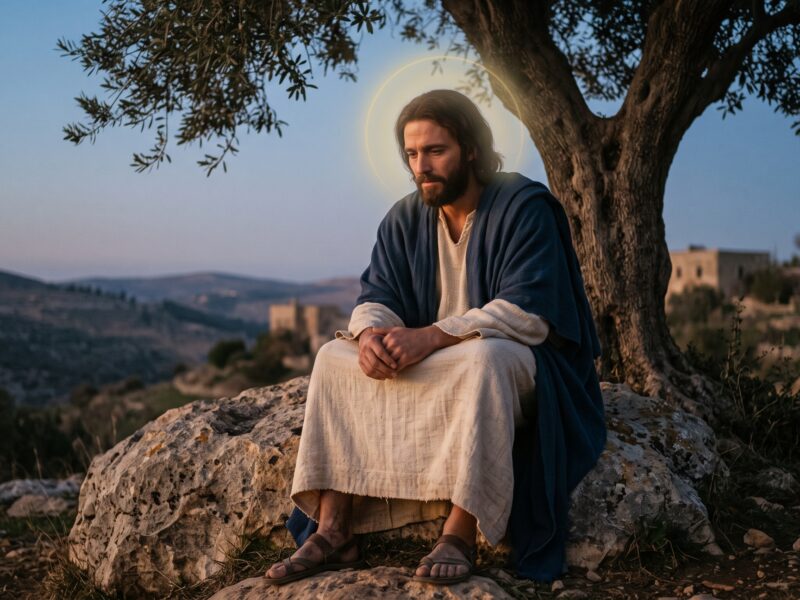
Silent prayer — Jesus often withdrew alone to pray, showing the value of quiet prayer
The Power and Effect of Prayer
The Bible testifies to the extraordinary power of prayer. Elijah’s prayer brought fire from heaven and ended a long drought. King Hezekiah’s prayer saved Jerusalem, and an angel delivered the city. After the apostles prayed, buildings shook, and Peter was freed from prison through the church’s prayer.
But the greatest power of prayer lies not in changing circumstances, but in changing the heart of the one who prays. Prayer aligns our will with God’s, reshapes our values, and deepens our relationship with Him.
Jesus as the Model of Prayer
Jesus’ life was woven through with prayer. He prayed before important decisions, such as choosing the apostles. He withdrew regularly to pray, even amid a demanding ministry. He prayed for children, for His disciples, and even for His enemies on the cross.
In Gethsemane we witness His most intense prayer, where He prayed so earnestly that His sweat became like drops of blood. This reveals that prayer can be a struggle—a place where we wrestle between our will and God’s will.
The Role of the Holy Spirit in Prayer
In Romans, Paul teaches that the Holy Spirit helps us in our weakness, for we do not know how to pray as we ought, but the Spirit Himself intercedes for us. This is a great encouragement—when we lack words, the Spirit knows our hearts and prays according to God’s will.
Obstacles to Prayer
The Bible warns of several things that can hinder prayer:
-
Sin and disobedience — Isaiah 59:2 says our iniquities separate us from God
-
Disharmony in marriage — 1 Peter teaches men to treat their wives with honor so their prayers are not hindered
-
Wrong motives — James writes that we do not receive because we ask wrongly, to spend it on our passions
-
Unforgiveness — Jesus taught that if we do not forgive others, the Father will not forgive us
Prayer for the Kingdom of God
Prayer is not only personal but also missional. Paul asked churches to pray for him to boldly proclaim the gospel. In the Lord’s Prayer, the coming of God’s kingdom and His will on earth as in heaven is central.
Thus prayer becomes an instrument by which God’s kingdom advances—in believers’ hearts and in society at large.
Prayer and Patience
The Bible teaches that answers to prayer may not come at once. Abraham waited 25 years for the promised son. Daniel prayed for 21 days before receiving an answer. Hannah prayed for years for a child.
This teaches persistence in prayer. Jesus told parables of the persistent widow and the friend knocking at midnight. The message is clear—do not give up praying.
Contemporary Prayer in the Light of Scripture
Today, in a fast-paced and distracting world, the biblical teaching on prayer is especially relevant. We need to rediscover:
-
The value of silence — as Jesus withdrew to pray, so also we need time apart
-
The importance of honesty — like the psalmists, we can be fully open before God
-
The power of community prayer — as the early church gathered for prayer, so we also need shared prayer life
-
Perseverance — as biblical figures did not give up, neither should we
Final Thoughts
Prayer is the breathing of the Christian soul. Just as the body needs oxygen, the spirit needs prayer. The Bible does not present prayer as a duty but as a privilege—the opportunity to speak with the Creator of the universe and our heavenly Father.
Throughout Scripture we see that prayer changes circumstances—but even more, it changes us. It draws us closer to God, aligns our hearts with His, and opens our eyes to see life from His perspective.
A Prayer in the Spirit of Scripture
Heavenly Father,
Thank You for the privilege of coming before You in prayer. Through Your Word You have taught us that prayer is not merely a religious obligation but a living conversation with You.
Forgive us when we have turned prayer into a routine or forgotten it altogether. Teach us to pray as Jesus prayed—honestly, humbly, and with trust.
Thank You that You hear our prayers. Thank You that no concern is too small and no problem too great to bring before You. You invite us to bring all our worries and fears, joys and hopes to You.
Give us faith to trust Your promises, patience to wait for Your timing, and wisdom to understand Your answers—whether they are “yes,” “no,” or “wait.”
Thank You for the Holy Spirit, who helps us in our weakness and intercedes for us with words we cannot express.
Help us not only to speak, but also to listen. Not only to ask, but also to be silent in Your presence. Not only to bring our desires, but also to seek Your will.
Teach us to pray for one another, to bear each other’s burdens, to rejoice together, and to weep together. Make us a praying community in which prayer is a natural part of life.
Use our prayers to bring Your kingdom to earth. Use us as answers to someone else’s prayers. Make us people who live in unceasing prayer—continually aware of You and continually in communion with You.
Thank You for Jesus, our greatest example and our Mediator, who intercedes for us at Your right hand.
In His name we pray, Amen.

Trough all this I want to declare this is all from God and to God. All Glory to Him!