Views: 0
Daily Christian Devotional: Building a Stronger Prayer Life in 30 Days
The Orthodox Tradition and the Eternal Wisdom of the Church
Prayer is the very breath of the Christian life—it is the respiration of our soul, without which true religious existence cannot be sustained. The Orthodox tradition teaches that prayer is not merely an activity or religious obligation, but a sacred relationship with the living God. It is participation in the life of the Holy Trinity, a mystical union with Christ in the Holy Spirit. The following 30 days are designed to help you deepen your prayer life, drawing upon the Church’s two-thousand-year tradition and the wisdom of the holy Fathers.
In Orthodox prayer life, we are not dealing with personal spiritual experience separated from the Church. We pray together with the whole Church—the Church on Earth and the Church in Heaven, with the holy angels and saints. Our path of prayer is a journey that leads us into unity with the entire Body of Christ, with the Mother of God and all the saints. It is a process of gradual sanctification, where daily commitment, asceticism, and patient perseverance gradually transform our heart into a holy temple of God’s presence.
Foundations of Orthodox Prayer Life
Before we begin the 30-day journey, it is essential to understand the foundations upon which Orthodox prayer life rests. These are not our inventions or modern methods, but ancient truths shaped by the holy Fathers, which have lived and endured in the Church through the centuries.
- Prayer as communion – In Orthodox teaching, prayer is not a monologue but a dialogue with the Triune God. It is the ascent of the heart to God, who is always present and listening. Prayer is participation in Christ’s suffering, resurrection, and glory.
- The Church’s prayer rule – Orthodox Christians follow a daily prayer rule that includes specific prayers, troparia, akathists, and Scripture reading. This discipline protects us from arbitrariness and unites us with the entire Church.
- The Jesus Prayer – ‘Lord Jesus Christ, Son of God, have mercy on me, a sinner!’ This short prayer is the heart of Orthodox spirituality, a means of achieving the unceasing prayer that the Apostle Paul commanded.
- Asceticism and self-control – Prayer life cannot flourish without the asceticism of fasting. The discipline of body and soul, fasting, abstinence from sleep, guarding all the senses—all these are necessary to strengthen prayer.
- Guidance of a spiritual father – In the Orthodox tradition, one does not embark on the spiritual path without the blessing and guidance of a spiritual father. Prayer life requires an experienced guide who helps avoid errors and delusions.
- Humility and repentance – At the center of all Orthodox prayer life is a humble consciousness of one’s sinfulness. Without true repentance, prayer cannot be genuine. We approach God as the publican, not as the Pharisee.
The 30-Day Journey: Week by Week
First Week (Days 1–7): Establishing the Foundation
The first week is dedicated to establishing a firm prayer routine. In the Orthodox tradition, the day begins and ends with prayer—morning prayers that prepare the heart for the day, and evening prayers that cleanse the conscience and seek forgiveness.
- Days 1–2: Learn to pray before an icon. Choose a holy icon, light a candle or oil lamp before it, and make three full prostrations with the sign of the cross. Read the ‘Our Father’ prayer with deep attention to each word.
- Days 3–4: Add Psalm 50 (51) to your prayer rule (the psalm of God’s mercy, ‘Have mercy on me, O God’). Read it slowly, meditating on each verse. This is the psalm of repentance and purity of heart.
- Days 5–7: Begin repeating the Jesus Prayer. Say it 33 times in the morning and 33 times in the evening, using a prayer rope (komboskini). Focus on humility of heart and consciousness of sin.
Second Week (Days 8–14): Deepening Through the Church Calendar
The second week introduces you to the liturgical life of the Church. Orthodox Christians do not pray in isolation, but in the rhythm of the church year, which commemorates the life of Christ, the Mother of God, and the saints.
- Days 8–9: Learn about the church calendar. Study which feasts and commemorations occur during the current week. Read the hagiography (life) of the day’s saint.
- Days 10–11: Pray the troparia and kontakia of the day. These short hymns contain deep theology and help us incorporate our prayers into the cycle of the church year.
- Days 12–14: If possible, attend church and participate in the Divine Liturgy. The Liturgy is the highest form of prayer. Read through the liturgical texts before the service so that your participation will be conscious.
Third Week (Days 15–21): The Week of Asceticism and Purification
The third week calls us to deeper self-discipline. Saint Basil the Great taught that prayer without the asceticism of fasting is like a bird with one wing—it cannot fly. Asceticism disciplines the body and liberates the spirit.
- Days 15–16: Begin simple fasting on Wednesdays and Fridays, if you are not already doing so. Abstain from meat, dairy products, and eggs, eating only plant-based foods. Pray before and after meals.
- Days 17–18: Practice guarding the senses. Limit idle talk, consumption of news and entertainment. Use this time for reading Scripture, especially the Psalms.
- Days 19–21: Increase the repetition of the Jesus Prayer to 100 times per day. Try to maintain the prayer in your heart even during daily activities—while working, walking, waiting.
Fourth Week (Days 22–28): Prayer of the Heart and Unceasing Prayer
The final week focuses on prayer of the heart—prayer that is not only on the lips but descends into the heart. Saint Gregory Palamas taught that true prayer occurs when the mind descends into the heart and prayer becomes the unceasing breath of the soul.
- Days 22–24: Practice silence and solitude. Choose at least 20 minutes each day of complete silence, where you stand or sit before an icon and pray the Jesus Prayer, focusing on the heart.
- Days 25–26: Learn the breathing technique with prayer. Breathe in ‘Lord Jesus Christ,’ breathe out ‘have mercy on me.’ Descend your attention into the heart, where Christ dwells.
- Days 27–28: Seek the intercession of the Mother of God. Read the Akathist to the Theotokos or at least the ‘Rejoice, O Full of Grace’ prayer 150 times daily with the prayer rope. The Mother of God leads us to Christ.
Days 29–30: Evaluation and Commitment
The final two days are for reflection and commitment. Look back on your journey, but do not boast of progress—this is the trap of pride. Rather, acknowledge how much there is yet to learn, and strengthen your resolve to continue.
- Day 29: Go to confession. Speak to your spiritual father about your prayer journey, confess all sins that may have hindered prayer. Receive absolution and blessing to continue.
- Day 30: Participate in the Divine Liturgy and receive Holy Communion, if you are properly prepared. Let your entire 30-day journey culminate in union with Christ through His Body and Blood.
Practical Guidance for Daily Prayer
The Orthodox tradition is rich in practical instructions for prayer life. These are not merely suggestions, but the wisdom of the holy Fathers, which has proven fruitful through the centuries.
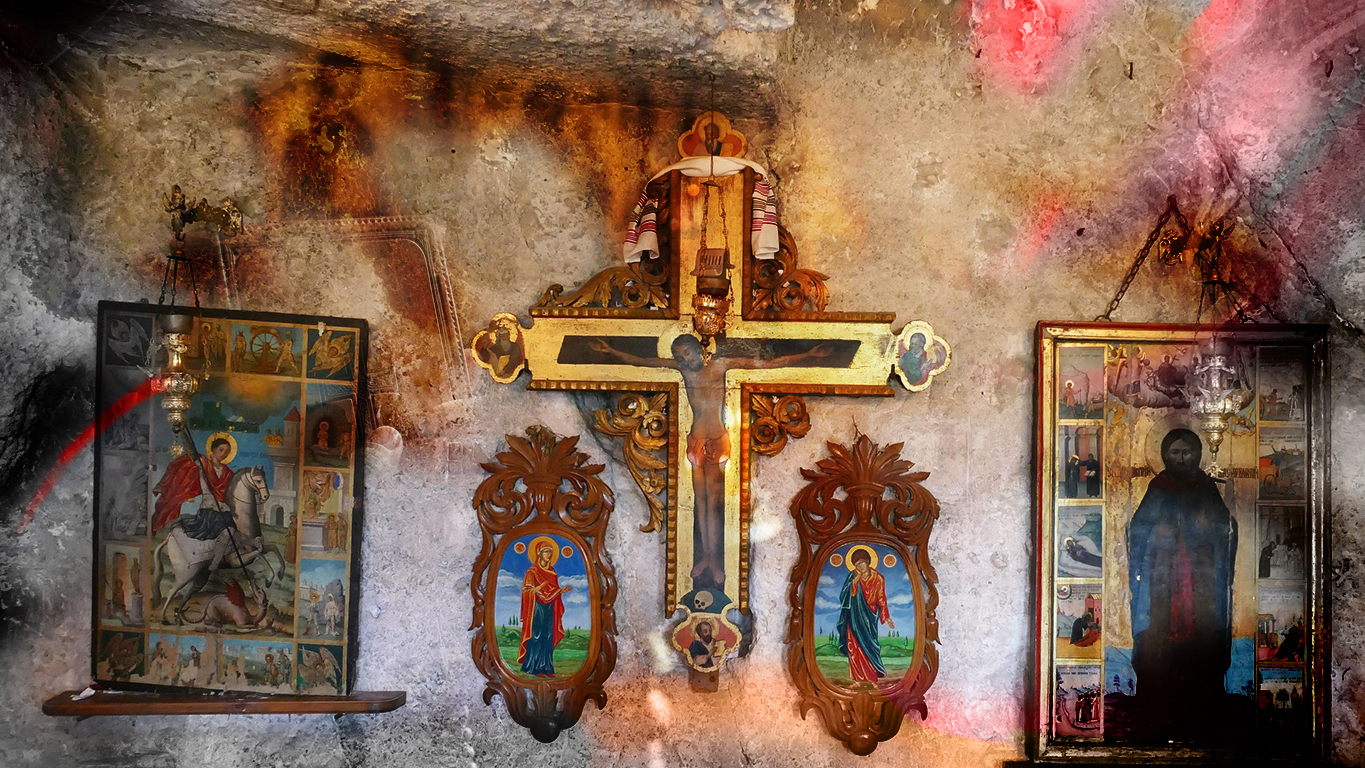
Prayer corner at home: Every Orthodox home should have a prayer corner (krasnoye ugol, or ‘beautiful corner’), where icons are placed, along with an oil lamp or candles, a cross, and a prayer rope. This is a sacred space, set apart from everyday things, where upon entering we sense the presence of God.
Physical posture in prayer: Orthodoxy uses the entire body in prayer. We stand in reverence, kneel in humility, make metanias (deep bows). The sign of the cross is made correctly—with three fingers (symbol of the Trinity) touching the forehead, chest, right shoulder, and left shoulder.
Length of prayer time: For a beginner, the full morning and evening prayer rule may take 20–30 minutes. But quality is more important than quantity. It is better to pray for 10 minutes with a focused heart than 30 minutes with scattered thoughts.
Using the prayer rope: The prayer rope (komboskini or chotki) helps count prayers and keep the mind focused. A traditional prayer rope has 100 or 50 knots. Slide your fingers over each knot while saying the Jesus Prayer.
Common Obstacles on the Path of Prayer and Overcoming Them
Spiritual warfare is real. The experience of the holy Fathers teaches that everyone who seriously strives to develop a prayer life will encounter obstacles. But these are not signs of failure—they are signs that you are fighting the right battle.
Wandering thoughts: Saint John Climacus writes that wandering thoughts in prayer are almost inevitable. When you notice that the mind has wandered, gently bring it back, like a shepherd bringing back a lost sheep. Do not be angry with yourself—this too is a passion. Simply begin the prayer again.
Dryness and lack of feeling: There are days when prayer feels dry and God seems distant. This is a common experience, even for the greatest saints. Saint Teresa of Avila taught that it is precisely in such moments that we show true faithfulness. Continue to pray, even when you feel nothing.
Attacks of the demonic enemy: Orthodox teaching acknowledges that sin and demons fight against our prayer life. Tempting thoughts may come, sleepiness during prayer, unexpected distractions. Use the Jesus Prayer as a shield, arm yourself with the sign of the cross, sprinkle holy water.
Pride and self-congratulation: When prayer life develops and you sense progress, a great temptation comes—pride. Saint Macarius of Egypt warned that pride destroys all spiritual development. Remember that every gift of prayer is God’s grace, not your achievement.
The Role of the Sacraments in Prayer Life
In Orthodox spirituality, prayer is never separated from the sacraments. The sacraments are channels of God’s grace, without which our prayer life remains barren. They are not merely symbolic rituals, but real means through which God shares His life with us.
Confession (the Sacrament of Repentance) is essential. Saint Silouan of Mount Athos taught that without confession the soul cannot abide in grace. Go to confession at least once a month, or more frequently, as your spiritual father advises. Confession cleanses the heart, removes the burden of sin, and opens the heart to God’s grace.
Holy Communion (the Eucharist) is the summit of Christian life. Here we truly unite with Christ, receiving His Body and Blood. Saint Ignatius of Antioch called the Eucharist ‘the medicine of immortality.’ Prepare for Communion through fasting, confession, and night prayers. If possible, receive Communion at least once a month.
The Divine Liturgy is itself prayer. To participate in the Liturgy does not simply mean to watch or listen—it means to pray together with the entire Church, both on Earth and in Heaven. Saint John Chrysostom wrote that during the Liturgy, angels are present and sing with us. Participate every Sunday, if possible.
Conclusion: The Prayer Journey Continues
These 30 days are only the beginning, not the end. In Orthodox spirituality there is no ‘arrival’—there is only an unceasing journey toward God, who is infinite and beyond comprehension. Saint Gregory of Nyssa taught that true perfection consists in perpetual movement toward ever-greater perfection.
Continue your daily prayer rule. Sink your roots deep into the Church’s tradition. Seek guidance from a spiritual father. Participate actively in the sacraments. Maintain humility and a spirit of repentance. And above all—never lose hope. Even if you struggle, even if you fall, rise up and begin again. God’s mercy is infinite.
As Saint Seraphim of Sarov taught: ‘Acquire a peaceful spirit, and thousands around you will be saved.’ Your prayer life is not merely a personal matter—it is a service to the entire world. Your prayers rise like incense before God’s throne and bring blessings to many of whom you know nothing.
May God’s blessing be with you on this holy path. May the Holy Trinity be your protector. May the Mother of God be your intercessor. And may the memory of all the saints be your encouragement. Amen!
Recommended Prayers and Readings
Essential prayers that every Orthodox Christian should know:
- The Jesus Prayer: ‘Lord Jesus Christ, Son of God, have mercy on me, a sinner!’
- The Trisagion Prayer: ‘Holy God, Holy Mighty, Holy Immortal, have mercy on us!’ (3x)
- Prayer to the Mother of God: ‘Rejoice, O Full of Grace, the Lord is with you; blessed are you among women, and blessed is the fruit of your womb, for you have borne the Savior of our souls.’
- Psalm 50 (51): ‘Have mercy on me, O God, according to your steadfast love…’
- Evening Prayer: ‘O Lord Almighty, the God of our fathers…’
Recommended readings:
- The Philokalia – Writings of the holy Fathers on prayer
- The Way of a Pilgrim – Anonymous classic on the Jesus Prayer
- Saint John Climacus – The Ladder of Divine Ascent
- Saint Teresa of Avila – The Interior Castle
- Saint Theophan the Recluse – Letters on the Spiritual Life

Martinus Vaicarius’s mission is to:
- Provide spiritual support and guidance to people seeking peace and hope
- Create prayer texts that bring God’s peace to hearts suffering under fear and anxiety
- Promote deep understanding of the power of the
- God of Sabaoth and the protection of the heavenly hosts
- Help people enter the spiritual sphere where God’s peace reigns over all
AICortex Invest OÜ