Jerusalem Patriarchate’s Second Resurrection 2026: Vespers of Love at the Church of the Holy Sepulchre
Jerusalem, April 12, 2026 | News and Analysis | Orthodoxy
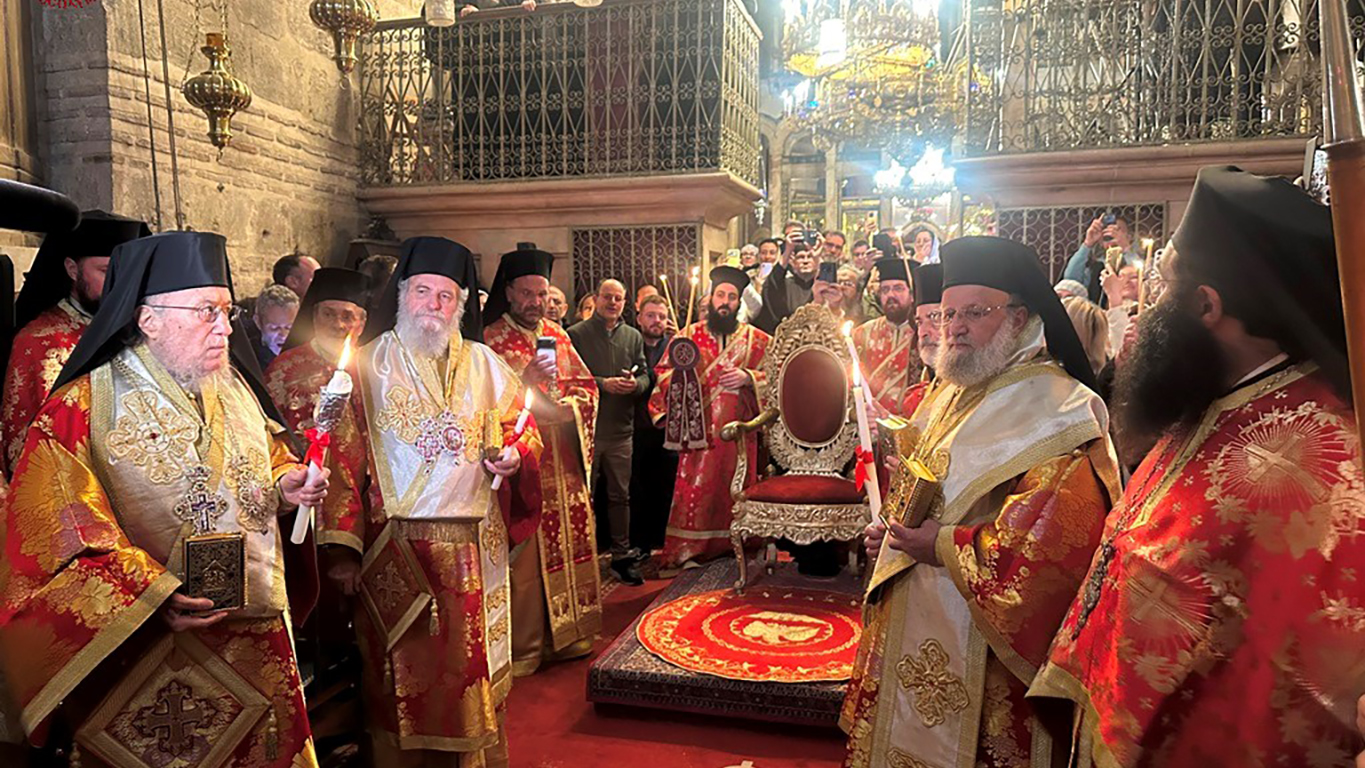
On April 12, 2026, at midday on Orthodox Easter Sunday, the Jerusalem Patriarchate solemnly celebrated the Second Resurrection ceremony — one of the oldest and most sacred liturgical rites in the Christian world — at the Church of the Holy Sepulchre in the Old City of Jerusalem. Under the leadership of Patriarch Theophilos III, bishops, priests, and faithful gathered on Jerusalem’s cobblestone streets to witness a festive procession tied to an ancient tradition that has continued uninterrupted for more than nineteen centuries.
What Is the Second Resurrection, or Vespers of Love?
The Second Resurrection, also known as the “Vespers of Love” (in Greek: Agapē Hesperinos), is one of the most beautiful and emotionally moving services of Byzantine-rite Orthodox Christianity. It is celebrated on Easter afternoon, precisely at noon (the sixth hour), when the church bells proclaim their joyful message across the entire city. The name “Second Resurrection” refers to the tradition that the Resurrection of Christ is proclaimed a second time in solemn form on that day — the first proclamation having taken place at the midnight Holy Liturgy.
At the heart of the service is the reading of the Gospel of John (Jn 20:19–25), which describes Christ’s first appearance to the apostles behind closed doors. The Gospel is read in multiple languages, emphasizing the universal and unifying nature of the Resurrection message. In Jerusalem in 2026, this text was read in Greek, Arabic, German, Russian, Romanian, English, Italian, and other languages — bearing witness that the Resurrection of Christ is a message for all peoples, regardless of language or culture.
The Festive Procession from Christian Street to the Church of the Holy Sepulchre
Tradition requires the procession to begin in the great hall of the Patriarchate. On this holy Easter day in 2026, Patriarch Theophilos III and all the hierarchs assembled there in full episcopal and priestly vestments, while the Easter Ninth Hour was chanted according to the Church’s sacred Typikon (liturgical rule).
At precisely noon, as the joyful ringing of bells resounded over the Old City of Jerusalem, the festive procession set out through the ancient Christian Street — a narrow, cobblestoned alley running alongside the Via Dolorosa, lined on both sides by crowds of onlookers. Bishops, priests, and chanters walked slowly, singing at full voice the Byzantine Easter hymn Christ Is Risen — its slow, majestic melody filling the streets pressed between stone and stone walls, carrying far into the Old City.
At the doorstep of the Church of the Holy Sepulchre, they were welcomed by the hegumen of the Jerusalem Orthodox Monastery and the senior sacristan, Archbishop Isidoros of Hierapolis. A brief litany (supplicatory service) was offered there, after which the procession walked into the Katholikon — the central nave of the Church of the Holy Sepulchre.
The Vespers of Love Service in the Katholikon
In the Katholikon — where golden icons gaze down from every ceiling and wall, and ancient candelabras cast warm light across the ancient church interior — the Vespers of Love began. Patriarch Theophilos III opened the service with the proclamation: “Glory to the Holy, Consubstantial, Life-giving, and Undivided Trinity!” — after which the solemn resurrection hymns were chanted.
The most moving moment is the “Little Entrance” with the Gospel Book, followed by the reading of the Johannine Gospel text in the sacred liturgical language, once after another, each time in a new language. With each reading, a deep silence fell over the church, alternating with the response of the choral singers. The multilingual Gospel reading is a unique and very ancient tradition of the Jerusalem Patriarchate, reflecting Jerusalem’s nature as the heart of world Christianity — a city that belongs to all believers, regardless of their origin.
The unity of the Christian world was further underscored by the presence of representatives from several Orthodox churches, diplomatic officials, and pilgrim faithful from both nearby regions and far away.
The 2026 Celebration under the Shadow of Conflict
This year the ceremony took place amid a particularly complex geopolitical situation. The Jerusalem Patriarchate had already issued an official statement in March 2026, confirming that for the third consecutive year, the Easter celebrations from Palm Sunday to Easter Sunday would be limited to liturgical rites alone — out of respect for the suffering people of the Holy Land and in protection of the dignity of those affected by the conflict.
Despite the tensions, an estimated 2,700–3,000 people were present in the church — far fewer than in previous years, when ten times as many pilgrims might have attended. Israeli authorities enforced stringent security protocols throughout the surrounding area. Yet eyewitnesses unanimously describe the spiritual intensity of the ceremony as extraordinary: what was lost in numbers was gained in emotional depth.
One journalist writing to the Jerusalem Patriarchate’s editorial team described Easter Sunday, April 12, 2026, at the Church of the Holy Sepulchre as an atmosphere closer to a “spiritual revolution” than an ordinary religious ritual. The conflict could not extinguish hope — rather, it made the message of the Resurrection sharper and more personal.
The Divine Liturgy of Bright Monday
The Easter celebrations did not end with the Vespers of Love. On the morning of Bright Monday, April 13, 2026, the Easter Divine Liturgy was celebrated at the Patriarchal Monastery Church of Constantine and Helena. The liturgy was led by Archimandrite Kallistos, with Patriarch Theophilos III praying alongside him. The service was attended by hierarchs, members of the Brotherhood of the Holy Sepulchre, the Greek Consul General in Jerusalem Dimitrios Angelosopoulos, and representatives of other Orthodox churches.
After the liturgy, the patriarchal retinue returned to the Patriarchate singing Easter hymns, where the brotherly kiss of love was exchanged — an ancient sign of peace and unity among the members of the church community. The day concluded with an Easter festive meal in an atmosphere of joy and light.
The History and Significance of the Jerusalem Patriarchate
The Jerusalem Patriarchate is one of the five historic patriarchates of Orthodox Christianity — alongside Constantinople, Alexandria, Antioch, and Rome. The Jerusalem Church was founded in the age of the Apostles, and its first bishop is considered to be the Apostle James the Just, the brother of the Lord. Throughout history, the primary mission of the Jerusalem Patriarchate has been the custodianship and protection of the Holy Sites and the preservation of the Christian presence in the Holy Land.
Patriarch Theophilos III, who has served as Patriarch of Jerusalem since 2005, has borne a heavy responsibility during a period in which the Holy Land has been under relentless tension. Yet the Patriarchate has consistently reaffirmed its commitment to the liturgical life of the Church, the protection of the Holy Sites, and the desire for peace for all people living in the region.
The Church of the Holy Sepulchre itself, built between 326 and 336 AD at the command of the Byzantine Emperor Constantine the Great, is the holiest site in the Christian world — the place where, according to tradition, Jesus Christ was crucified, buried, and rose from the dead. The administration of the church is shared among several Christian communities (the Status Quo system), which has been maintained intact over the centuries.
The Second Resurrection — A Message for Today’s World
The Second Resurrection ceremony of 2026 was not merely a liturgical event — it was a powerful message. A message that even amid conflict, suffering, and uncertainty, hope remains vital. That ancient faith is unafraid of centuries or crises. That Jerusalem — despite political tensions — remains a living beacon of faith, hope, and love, as Patriarch Theophilos III himself expressed in his Easter message.
The reading of the Gospel in multiple languages was this year an especially moving symbol: the languages may change, but the message remains the same. The Resurrection belongs to no single nation, language, or political camp — it is a proclamation of hope that reaches across all borders, and that over the past two thousand years has made its way into every corner of the world.
When the bells rose over the Old City of Jerusalem at noon on April 12, 2026, and the patriarchal procession stepped toward the Church of the Holy Sepulchre, every voice of every chanter carried within it something that political turbulence cannot extinguish: the stronger victory of life over death. That is the meaning of the Second Resurrection — and that meaning is timeless.

Martinus Vaicarius’s mission is to:
- Provide spiritual support and guidance to people seeking peace and hope
- Create prayer texts that bring God’s peace to hearts suffering under fear and anxiety
- Promote deep understanding of the power of the
- God of Sabaoth and the protection of the heavenly hosts
- Help people enter the spiritual sphere where God’s peace reigns over all
Europe Heaven Invest 2072 Gold OÜ
- Jerusalem Patriarchate’s Second Resurrection 2026: Vespers of Love at the Church of the Holy Sepulchre - 15. Apr 2026
- What Is Mount Athos? Everything You Need to Know About the Monastic Republic of Greece - 15. Apr 2026
- The Holy Trinity in Orthodox Theology: The Deepest Mystery of the Christian Faith - 12. Apr 2026