Views: 37
THE JESUS PRAYER – How Seven Words Can Transform Your Spiritual Life
Jesus Prayer Orthodox Christianity • Lord Have Mercy Prayer • Hesychasm for Beginners
Keywords: Jesus Prayer Orthodox, Lord have mercy prayer, hesychasm for beginners, how to pray the Jesus Prayer, Orthodox Christian prayer
Category: Orthodox Christian Spirituality | Prayer and Contemplation
Why Does One Sentence Change Everything?
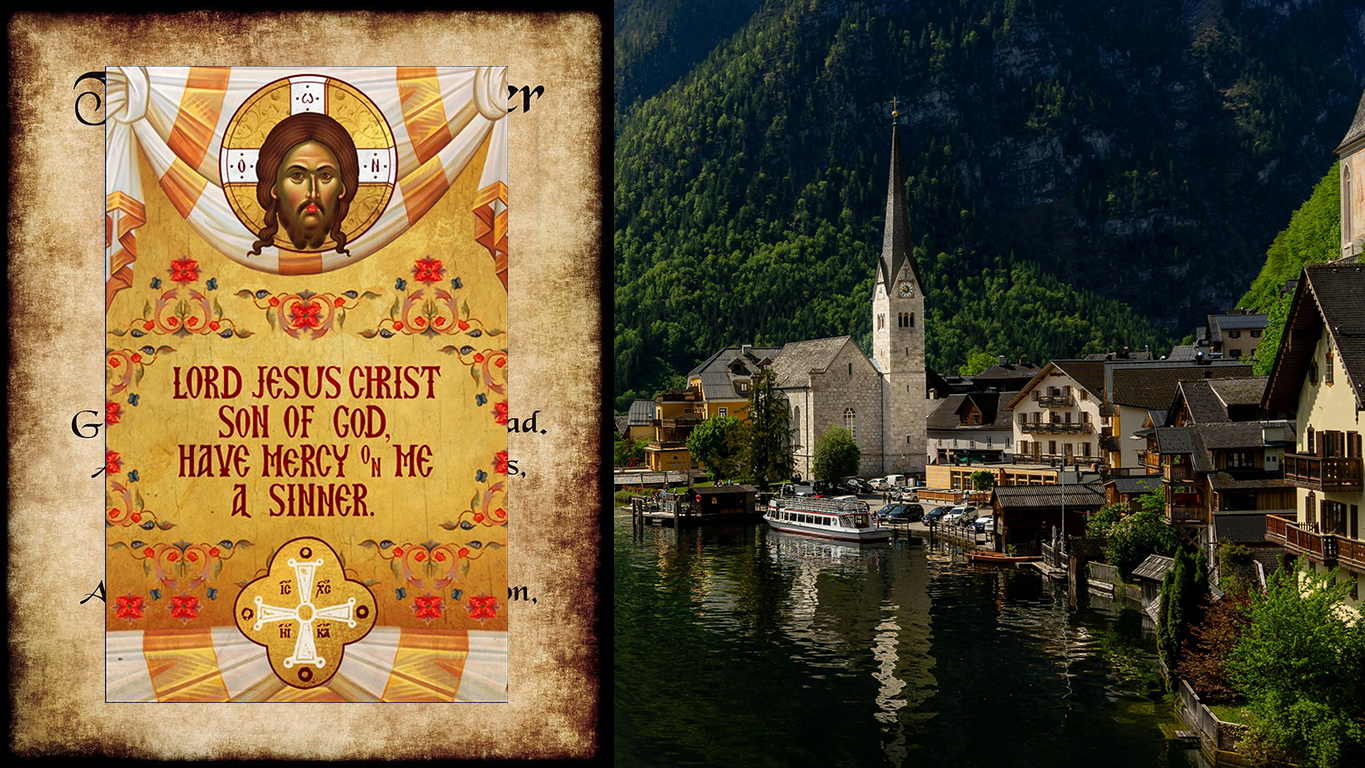
Imagine carrying a single prayer in your pocket — brief, simple, yet of inexhaustible depth. A prayer that has been repeated for over 1,500 years: from desert monks to the monasteries of Mount Athos, from prisoners in labor camps to ordinary city-dwellers today. That prayer is the Jesus Prayer: “Lord Jesus Christ, Son of God, have mercy on me, a sinner.”
Seven words contain within them the whole of Christian theology: the complete divine and human nature of Jesus, humanity’s deepest need, and the entire ground of hope — grace.
This article is a thorough introduction to the Jesus Prayer — from its history and spiritual significance to practical guidance on how to weave it into daily life. Whether you are a complete beginner or an experienced person of prayer, you will find something here for you.
1. The History of the Jesus Prayer: Where Does It Come From?
The Desert Fathers and Mothers (4th-5th Centuries)
The roots of the Jesus Prayer reach back to the deserts of Egypt and Palestine, where the first Christian hermits — the Desert Fathers — withdrew in the fourth century. These men and women left the cities behind to devote themselves to prayer and the search for God in radical poverty and silence.
They sought to fulfill the words of the Apostle Paul: “Pray without ceasing” (1 Thess. 5:17). But how is that actually possible? The answer was found in a short, repeatable prayer-phrase capable of carrying that entire longing.
The earliest known written reference to the full form of the Jesus Prayer appears in the homilies of Philemon, preserved in the Philokalia, dating to around AD 600. Yet this does not mean the prayer itself was new — by that point it was already an ancient custom.
Biblical Roots
The words of the prayer were not invented; they were drawn directly from the pages of Scripture:
-
“Lord, have mercy on me, a sinner” — the tax collector in the temple courts (Luke 18:13)
-
“Lord, save me!” — Peter sinking beneath the waves (Matt. 14:30)
-
“Jesus, Master, have mercy on us!” — the ten lepers (Luke 17:13)
-
“Lord Jesus Christ, Son of God” — Peter’s confession of faith (Matt. 16:16)
Woven together, these lines form a prayer that is at once a personal confession and a creed — humble and bold in the same breath.
Byzantium, Mount Athos, and the Philokalia
Two forces in particular carried the Jesus Prayer through the following centuries. The first was the monastic republic of Mount Athos, where hesychasm — the tradition of praying in stillness — reached its full flowering. The second was the great anthology the Philokalia (Greek: “love of the beautiful”), compiled in the eighteenth century by St. Nikodemos of the Holy Mountain and St. Makarios of Corinth. It became the definitive written source for the practice of the Jesus Prayer.
The prayer was brought to a far wider audience by the nineteenth-century Russian spiritual classic The Way of a Pilgrim (Russian: Otkrovennye rasskazy strannika), in which an anonymous Ukrainian peasant describes his journey toward learning to hold the Jesus Prayer ceaselessly in his heart.
2. What Do the Words of the Prayer Actually Mean?
“Lord Jesus Christ, Son of God, have mercy on me, a sinner.”
“Lord” — Kyrios
The Greek word Kyrios (Lord) was used in the Septuagint as the equivalent of the divine name YHWH in the Old Testament. By addressing Jesus as Lord, the one who prays declares: this is the One whom Israel was waiting for — the eternal God himself, who has stepped into history.
“Jesus Christ” — A Personal Name and a Title
Jesus (Hebrew: Yeshua — “God saves”) is his human name. Christ (Greek: Christos — “the Anointed One”) is the title meaning the Messiah, the one consecrated by God. Placing both side by side is a confession of two natures in one person — the very heart of all Christian Christology.
“Son of God” — A Creed in Three Words
These words echo Peter’s great confession. In saying them, the one who prays does what Peter did near Caesarea Philippi: openly confess the divine origin of Jesus.
“Have Mercy on Me” — Eleison
The Greek eleison is related to the word eleos, which carries meanings of mercy, grace, and the olive tree (symbol of healing). This is not merely a petition for forgiveness — it is a prayer for the healing of one’s entire being. The Church has sung this word from its earliest days: Kyrie eleison — Lord, have mercy!
“A Sinner” — The Door of Humility
Greek has no definite article, so the phrase hovers between “a sinner” and “the sinner.” Tradition encourages one to pray as though there were no other sinner in the world but yourself — not as an exercise in self-torment, but so that personal accountability does not dissolve into the crowd.
3. What Is Hesychasm? A Spiritual Practice for Beginners
Hesychasm (from Greek hesychia — stillness, inner peace) is the name given to the mystical prayer tradition of Eastern Orthodoxy. Its aim is to attain an inner silence in which a person encounters the living presence of God.
Hesychasm must not be confused with passivity. It is an active, disciplined endeavor that calls for perseverance, humility, and, particularly at deeper levels, the guidance of a spiritual father or mother.
Three Levels According to St. Theophan the Recluse
St. Theophan the Recluse (nineteenth century) described the development of the Jesus Prayer in three stages:
-
Prayer of the lips: the words are repeated outwardly, aloud or in a whisper. This is the beginning.
-
Prayer of the mind: the attention rests fully on the words — they become genuinely your own.
-
Prayer of the heart: the prayer descends from the mind into the heart, becoming spontaneous and unceasing. This is the work of the Holy Spirit within a person.
Archimandrite Ilie Cleopa, one of the great spiritual fathers of Romanian Orthodoxy, described nine stages — but all of them are stations along the same road, the road toward theosis: union with God.
The Prayer Rope (Chotki / Komboskini)
The Jesus Prayer is often prayed while holding a prayer rope — a cord of wool or leather tied with a series of knots. In Russian it is called a chotki (chetki), in Greek a komboskini. The prayer rope traces its origins to the fourth century: St. Pachomios the Great devised it for his monks as a way of keeping count of their prayers.
One Jesus Prayer is said for each knot. A standard prayer rope has 33 knots (the years of Christ’s earthly life), 50, or 100. The physical sensation of the knots helps keep the mind present and guards against distraction — it is a meditative aid that anchors the body to the act of prayer.
4. How to Pray the Jesus Prayer: A Practical Step-by-Step Guide
Step 1: Find Stillness
Before you begin, find a quiet place. Sit comfortably but attentively — the posture is for prayer, not for drowsing. Some people prefer to stand, in keeping with the practice of the Eastern Church.
Step 2: Begin Slowly
Say the prayer in a quiet voice: “Lord Jesus Christ, Son of God, have mercy on me, a sinner.” Do not rush. Let the words resound within you. Repeat them ten to twenty times.
In the beginning, five to ten minutes a day is sufficient. You can extend the time gradually.
Step 3: Coordinate with Your Breathing
Many of the Fathers recommend uniting the prayer with the breath: on the inhale — “Lord Jesus Christ, Son of God”; on the exhale — “have mercy on me, a sinner.” This helps the mind remain anchored rather than wandering.
Step 4: Use a Prayer Rope (Optional)
Hold the prayer rope in your left hand. Say one prayer for each knot. The right hand remains free for making the sign of the cross. After praying, you can wrap the rope around your left wrist — a constant reminder to pray throughout the day.
Step 5: Carry the Prayer with You
The full strength of the Jesus Prayer is revealed when it is said outside of formal prayer time as well — while walking, driving, working. “Walking, sitting, working, and standing in church — keep it on your lips and in your heart” (St. Seraphim of Sarov).
An Important Caution: The Role of a Spiritual Guide
The classical sources are clear: hesychasm, especially at its deeper levels, should be practiced under the guidance of an experienced and recognized spiritual father. Without such guidance, there is a risk of spiritual delusion — a state the Eastern tradition calls prelest. That said, the simple repetitive prayer recommended for beginners is safely accessible to everyone.
5. What Does the Jesus Prayer Do to You?
It Cultivates Humility
The words “have mercy on me, a sinner” place the one who prays face-down before God every time. Not for self-pity — but for the realistic recognition that we need a love we cannot produce ourselves. This opens the heart.
It Unites Us to the Practice of Remembering the Name
In Orthodox theology, the name of Jesus bears a particular power. St. Theophan the Recluse considered the Jesus Prayer the strongest of all prayers precisely because of the holy name it invokes. The name is not merely a label — it carries a Presence.
It Orients Us Toward Theosis
Orthodox soteriology is not only about the “forgiveness of sins” — it is about theosis: being transformed into the likeness of God through grace. The repetition of the Jesus Prayer is one of the principal means through which this process of union unfolds. Every repetition is an invitation to draw nearer.
It Fills the Mind with Goodness
Elder Ephraim of Arizona has said that the human mind is like a room — if it is not filled with good, it will be filled with evil. The Jesus Prayer gives the mind a home: whenever a thought begins to drift, there is always a place to return.
It Meets the Needs of Contemporary Life
We live in a fragmented world — screens, noise, relentless speed. The Jesus Prayer is itself stillness and simplicity. Many people have discovered its value in moments of acute difficulty: illness, grief, anxiety. It asks nothing more than a willingness to turn.
6. Frequently Asked Questions
Is the Jesus Prayer Only for Orthodox Christians?
No. The Jesus Prayer is acknowledged and practiced by Roman Catholics and many Protestants as well. It belongs first and foremost to the common heritage of the Church’s first millennium. The Catechism of the Catholic Church refers to the Jesus Prayer favorably. That said, it is most organically woven into the spiritual fabric of the Eastern Church.
Is This the Same as Buddhist Meditation?
There are surface similarities — a repeated phrase, coordination with the breath. But the content is fundamentally different. Buddhist meditation seeks emptiness; the Jesus Prayer seeks a personal God. Its goal is not the switching-off of consciousness, but the presence of a loving God.
Is the Short Form “Lord, Have Mercy!” Just as Good?
Yes. Tradition recognizes several forms. “Lord, have mercy!” (Kyrie eleison) is the liturgical short form and has been in use for as long as the longer version. Many people find it well suited to everyday moments, reserving the full form for dedicated times of prayer.
How Many Times Should the Prayer Be Repeated?
Monastic tradition speaks of hundreds, even thousands of repetitions in a day. There is no point in saying this to a beginner. Start with fifty to a hundred repetitions in a single sitting and notice what happens. The number is a tool, not an end.
7. Where to Go from Here: Recommended Resources for Beginners
Books
-
The Way of a Pilgrim (anonymous, 19th century) — the classic introduction.
-
The Philokalia (selected volumes in translation) — the wisdom of the Church Fathers on the life of prayer.
-
St. Theophan the Recluse, “The Art of Prayer” — a practical guide.
-
Kallistos Ware, “The Orthodox Way” — an excellent overview of Orthodox spirituality.
Practical Recommendations for Beginners
-
Find your local Orthodox parish and ask for guidance in finding a spiritual father or mother.
-
Purchase a simple prayer rope (komboskini) — the 33-knot version is a good starting point.
-
Begin with five minutes in the morning, before opening your phone.
-
Do not evaluate the experience — the value of prayer does not lie in the intensity of feeling.
Conclusion
The Jesus Prayer is one of the deepest and most accessible forms of prayer in Christianity. Seven words hold within them an entire creed, an entire need, an entire hope. They have been repeated for more than fifteen hundred years — in deserts and in cities, in monasteries and in kitchen tables, in sickbeds and on bright mornings.
This is not a technique or a self-improvement exercise. It is an invitation — simple, irresistible — to draw closer to the One who is already waiting.
“Lord Jesus Christ, Son of God, have mercy on me, a sinner.”
Begin today. Five minutes. One knot. And see what happens.

Trough all this I want to declare this is all from God and to God. All Glory to Him!