Views: 8
Patriarch Bartholomew’s 2026 Easter Encyclical: The Proclamation of Resurrection, Peace, and the Depth of Orthodox Theology
CHRIST IS RISEN! TRULY, THE LORD IS RISEN!
ECUMENICAL PATRIARCHATE · ORTHODOX CHURCH · THEOLOGY
Published: April 16, 2026 · Source: ec-patr.org · Author: editor
1. News: From the Phanar to the Whole World
On April 8, 2026, the Archbishop of Constantinople and New Rome and Ecumenical Patriarch Bartholomew published his annual Easter encyclical, addressed to the entire fullness of the Church — to bishops, clergy, and all Orthodox faithful throughout the world. The letter was opened with the liturgical greeting: Grace, peace, and mercy from Christ, who is risen in glory.
The encyclical was published on April 9, 2026, on the official website of the Ecumenical Patriarchate of the Phanar in several languages: English, Greek, Turkish, Russian, and Ukrainian. In the context of the Holy Feast of Easter, which fell this year on April 12, the Patriarch’s message received wide international resonance in Orthodox media — from Orthodox Times and the Orthodox Observer to the official press service of the Patriarchate of Constantinople.
The Patriarch’s encyclical takes on particular significance this year: 2026 marks the tenth anniversary of the Holy and Great Council of the Orthodox Church, which was held in Crete in 2016. That council was historically the most important Orthodox council since the Byzantine era.
2. Who Is Patriarch Bartholomew?
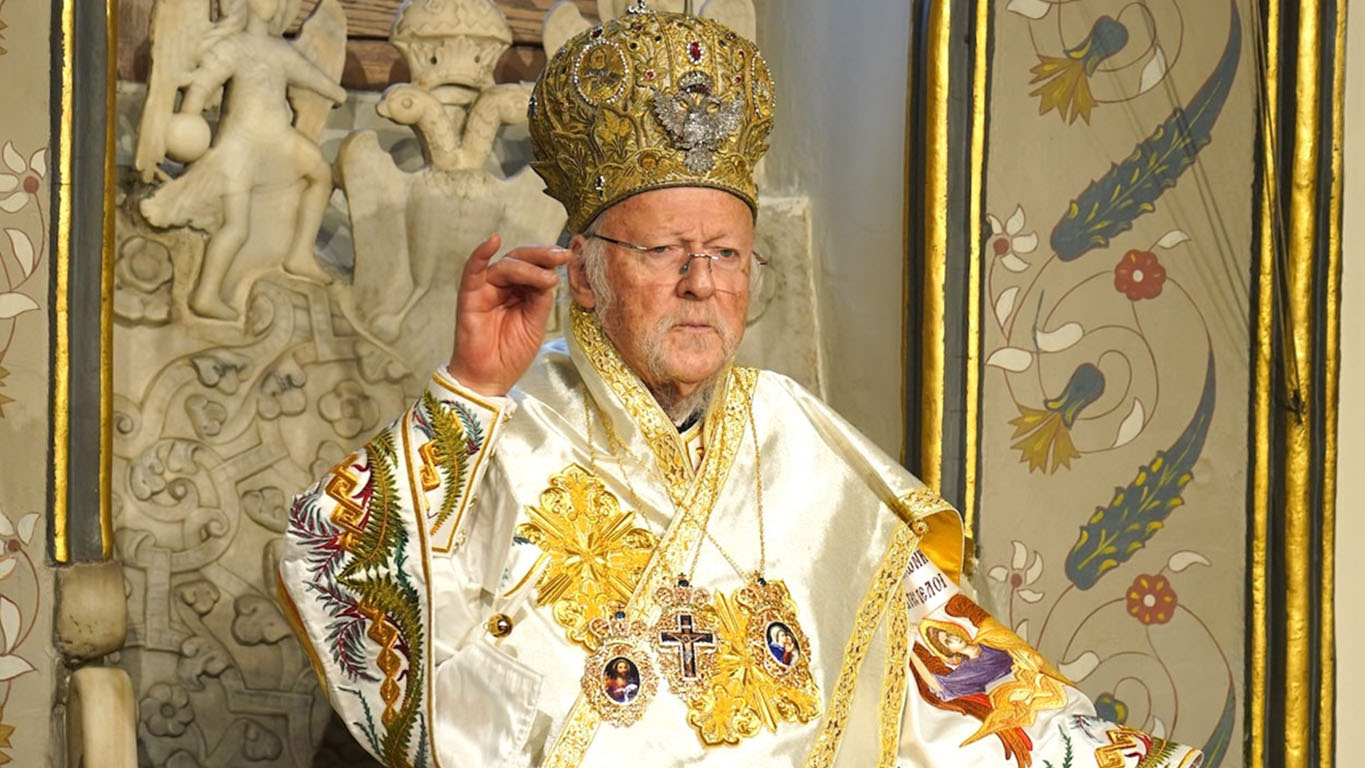
Patriarch Bartholomew (secular name Dimitrios Arhondonis, born February 29, 1940, on the island of Gökçeada in Turkey) is the 270th Patriarch of the Ecumenical Patriarchate — in office since November 2, 1991. The Ecumenical Patriarch of Constantinople bears the historical title of First Among the Whole Oikoumene, making him the bishop of spiritual primacy in the entire Orthodox world.
The Ecumenical Patriarchate is located in Istanbul, the historical Constantinople, in the Phanar district. Despite constant political pressure from the Turkish state — the patriarchate operates in a country where Orthodox Christians constitute only a fraction of the population — this spiritual institution has maintained its role for over two thousand years.
Patriarch Bartholomew is widely known as the Green Patriarch — a world-leading church figure in the field of environmental theology. He has also been an active promoter of ecumenical dialogue, including relations with the Vatican and Pope Leo, who was elected in April 2025.
3. The Theology of Resurrection: Pascha at the Heart of the Orthodox Church
In Orthodox Christianity, Pascha — the feast of the Resurrection — is the center and culmination of all Christian life. Unlike the Western tradition, which has at times emphasized primarily the salvific significance of Christ’s death on the cross, the Eastern Church regards the Resurrection as the absolute victory of life and salvation. The Greek word anastasis (ἀνάστασις) means rising up — yet it is inherently a living reality, not merely the commemoration of a past event.
Holy Pascha is the perfection of our spiritual civilization, the deepest heart of our piety. The Resurrection of the Lord is also our own resurrection in the present age, and at the same time a foretaste and proclamation of the common resurrection of all humanity and the renewal of all creation.
— Patriarch Bartholomew, Phanar, Pascha 2026
In Orthodox theology, the core of the Resurrection is linked to the concept of theosis (θέωσις) — deification. This teaching, articulated with particular clarity by Athanasius the Great (in the fourth century), affirms that the Son of God became man so that man might become divine. The Patriarch refers to this path directly in the encyclical: Christ’s Resurrection opens for humanity the way to deification through grace.
4. The Inseparable Bond Between the Cross and the Resurrection
One of the central theological messages of the encyclical is that the cross and the Resurrection form two faces of one and the same inseparable mystery. Patriarch Bartholomew emphasizes that the experience of the cross is not a passing interlude, but an inseparable part of the path of salvation.
The Resurrection of the Lord is lived as the freedom given by Christ, which inspires, nourishes, and strengthens the creative powers of the human person, and reminds us all that the path of resurrection is inseparably linked with the cross.
The Patriarch categorically rejects the claim of those who portray Christianity as the morality of the weak. He emphasizes that Pascha is a hymn to true freedom — not to passivity, but to courage, existential authenticity, and to love that does not seek its own (1 Cor 13:5). Sacrificial love is not weakness — it is the highest strength.
Maximus the Confessor (580–662), whose work the Patriarch references, is clear: Love toward God in no way tolerates hatred toward one’s neighbor. This message of one of the Orthodox Church’s greatest theologians takes on new dimensions in the encyclical within the context of social peace and an anti-war proclamation.
5. The Proclamation of Peace: The Encyclical’s Message to a World at War
In 2026, Patriarch Bartholomew writes his encyclical at a time when the world is suffering under several major conflicts. The war in Ukraine continues. Tensions in the Middle East are high — in February 2026, Israeli authorities closed the Church of the Holy Sepulchre in Jerusalem in the period before Easter. In this context, the Patriarch’s message is especially sharp and necessary.
War brings lamentation and death; the Resurrection overcomes death and bestows imperishable life. Christ is Risen — this is the negation and condemnation of violence and fear, and a call to a life of peace.
The Patriarch prays specifically: for the victims of military violence, for orphans, for mothers mourning their children, and for all those bearing in both body and soul the consequences of human cruelty and indifference. The Church does not remain a distant spectator to the world’s sorrows — it is an intercessor in the midst of human pain.
The Patriarchate’s message of peace finds additional weight in a remarkable ecumenical event of 2026: November 2025 saw a historic meeting in Istanbul between Pope Leo and Patriarch Bartholomew, at which both hierarchs recited together the Niceno-Constantinopolitan Creed — at a time when both bishops were approaching 1,700 years since the first Council of Nicaea.
6. The Tenth Anniversary of the Holy and Great Council
In 2016, representatives of all Orthodox churches gathered for the first time in centuries in Crete to hold the Holy and Great Council. In 2026, the tenth anniversary of this historic assembly is being celebrated. Patriarch Bartholomew mentions this directly in the encyclical:
The God-inspired Holy and Great Council of the Orthodox Church — whose tenth anniversary we honor this year — emphasized the Church’s obligation to encourage all that truly serves the cause of peace (Rom 14:19) and opens the way to justice, brotherhood, true freedom, and mutual love.
This council was historically significant precisely because the entire Orthodox family was able to gather and affirm its unity. The Russian Orthodox Church declined to participate at the time, which leaves the question of unity still current. The celebration of the tenth anniversary sends a signal: the path to unity is open, but it requires continued theological effort.
7. The Paschal Liturgy and Prayers: The Voice of the Easter Night
The Orthodox Easter night service is one of the most perfect expressions of Christian liturgy. At the Phanar, the solemn Paschal service was celebrated on the night of April 12, 2026, during which Patriarch Bartholomew himself read the Gospel in several languages — Greek, Latin, Slavonic, Romanian, Arabic, and English.
The Paschal troparion, repeated by the entire Orthodox Church at every service of the Easter season until Pentecost, is:
Χριστὸς ἀνέστη ἐκ νεκρῶν, θανάτῳ θάνατον πατήσας, καὶ τοῖς ἐν τοῖς μνήμασι ζωὴν χαρισάμενος.
Christ is risen from the dead, trampling down death by death, and upon those in the tombs bestowing life.
This Paschal troparion concisely expresses the theology of the entire Paschal message. In the liturgical tradition, it is sung at the beginning of every service throughout Bright Week. The Patriarch’s encyclical closes precisely as an echo of this proclamation: crying out the universal announcement of joy: Christ is Risen! Truly the Lord is Risen!
During the Easter period, the Paschal Canon written by Saint John of Damascus is also read — one of the finest poetic works in Orthodox theology. Its first ode proclaims: The day of Resurrection! Let us be illumined, O peoples! Pascha, the Pascha of the Lord! For from death to life and from earth to heaven has Christ our God brought us over.
8. The Voice of the Church Fathers: Gregory the Theologian and Maximus the Confessor
Patriarch Bartholomew’s encyclical is thoroughly enriched by the voices of the holy Church Fathers. Two referenced quotations deserve special attention.
Gregory the Theologian (329–390) — Archbishop of Constantinople and one of the greatest Church Fathers — writes in his oration on Holy Pascha: Acknowledge your dignity, honor the archetype, understand the power of the mystery, and know for what purpose Christ died. This quotation emphasizes the concept of the divine origin of human dignity: humanity is created in the image of God (imago Dei), and Christ’s Resurrection restores this calling.
Maximus the Confessor (580–662) — monk and theologian of Constantinople, who suffered torture and exile for his confession of faith — writes in his Chapters on Love: Love toward God in no way tolerates hatred toward one’s neighbor. This sentence acquires a concrete practical dimension in the encyclical: peace is not merely a political aspiration, but a divine commandment.
9. Closing Reflection
Patriarch Bartholomew’s 2026 Easter encyclical is far more than a ritual letter of greeting. It is a theological manifesto in which the message of the Resurrection resonates as a response to the most painful questions of our age: on war and peace, human dignity, the environment, and ecclesial unity. The Resurrection is not, in the Patriarch’s words, merely the past — it is a living reality.
Orthodox Christians in Estonia — members of both the Estonian Apostolic Orthodox Church and the Estonian Orthodox Church — celebrated this same message of resurrection at the present Easter feast. The Patriarchate’s encyclical speaks to all those who each year stand in the churchyard by candlelight and wait to hear those beautiful words.
Illumined by the eternal light of the face of the Risen Christ, praising in psalms and hymns His all-holy name — the Prince of Peace, who is with us forever, unto the end of the world — we wish you a blessed resurrection, a Bright Week full of divine gifts, crying out the universal announcement of joy: Christ is Risen! Truly the Lord is Risen!
— † Bartholomew of Constantinople, your fervent intercessor before the Risen Lord. Phanar, Pascha 2026
Sources
- Full text of the Ecumenical Patriarchate encyclical: ec-patr.org, April 8, 2026
- Orthodox Times: Ecumenical Patriarch: Christ is Risen as a message of life, freedom, and peace, April 2026
- Saint Maximus the Confessor, Chapters on Love I.15 (PG 90, 964)
- Gregory the Theologian, Oration 1, On Holy Pascha and on Tardiness (PG 35, 397)
- Holy and Great Council of the Orthodox Church, The Mission of the Orthodox Church in Today’s World, Crete 2016
- Orthodox Observer, Patriarchal Paschal Encyclical 2026 (English)

Martinus Vaicarius’s mission is to:
- Provide spiritual support and guidance to people seeking peace and hope
- Create prayer texts that bring God’s peace to hearts suffering under fear and anxiety
- Promote deep understanding of the power of the
- God of Sabaoth and the protection of the heavenly hosts
- Help people enter the spiritual sphere where God’s peace reigns over all
AICortex Invest OÜ
- Spiritual Warfare: From the Abyss to Glory — A Practical Guide to Overcoming Satan - 27. Jul 2026
- The Hierarchy of Angels: 9 Ranks, Names, and Duties Explained - 25. Jul 2026
- HCHC Launches “The Catechist: The Art of Listening and Teaching” — New Orthodox Certificate Program for 2026–2027 - 24. Jul 2026