Views: 144
The History of Christianity: From Jesus of Nazareth to 2.6 Billion Believers Worldwide
A comprehensive guide to 2,000 years of the world’s largest faith — its origins, major turning points, divisions, and global reach today.
Introduction: The Faith That Shaped Civilization
No single movement in human history has touched more lives, shaped more cultures, or influenced more governments, laws, art, and literature than Christianity. What began as a small Jewish sect in a remote corner of the Roman Empire in the first century AD has grown into the world’s largest religion, with over 2.6 billion adherents as of 2025 — roughly one in every three people alive today.
This is the story of how that happened: from a carpenter’s son born in Bethlehem, to a faith that spans every continent and speaks in thousands of languages.
1. The World Into Which Jesus Was Born (c. 6 BC)
To understand Christianity, one must first understand its birthplace. In the first century BC, the land of Judea was a powder keg. It lay under the iron boot of the Roman Empire, governed by officials like Herod the Great (73–4 BC), a client king whose ambitious building projects masked a brutal and paranoid reign. Jewish society was deeply divided among competing factions — the Pharisees, who championed strict Torah observance; the Sadducees, the temple aristocracy; the Essenes, who withdrew into the desert awaiting divine intervention; and the Zealots, who favored armed revolt.
At the heart of Jewish religious life burned a powerful hope: the arrival of a Messiah (Hebrew: mashiach, “anointed one”), a divinely appointed king descended from David who would liberate Israel and usher in God’s Kingdom. This messianic expectation was the soil in which Christianity was planted.
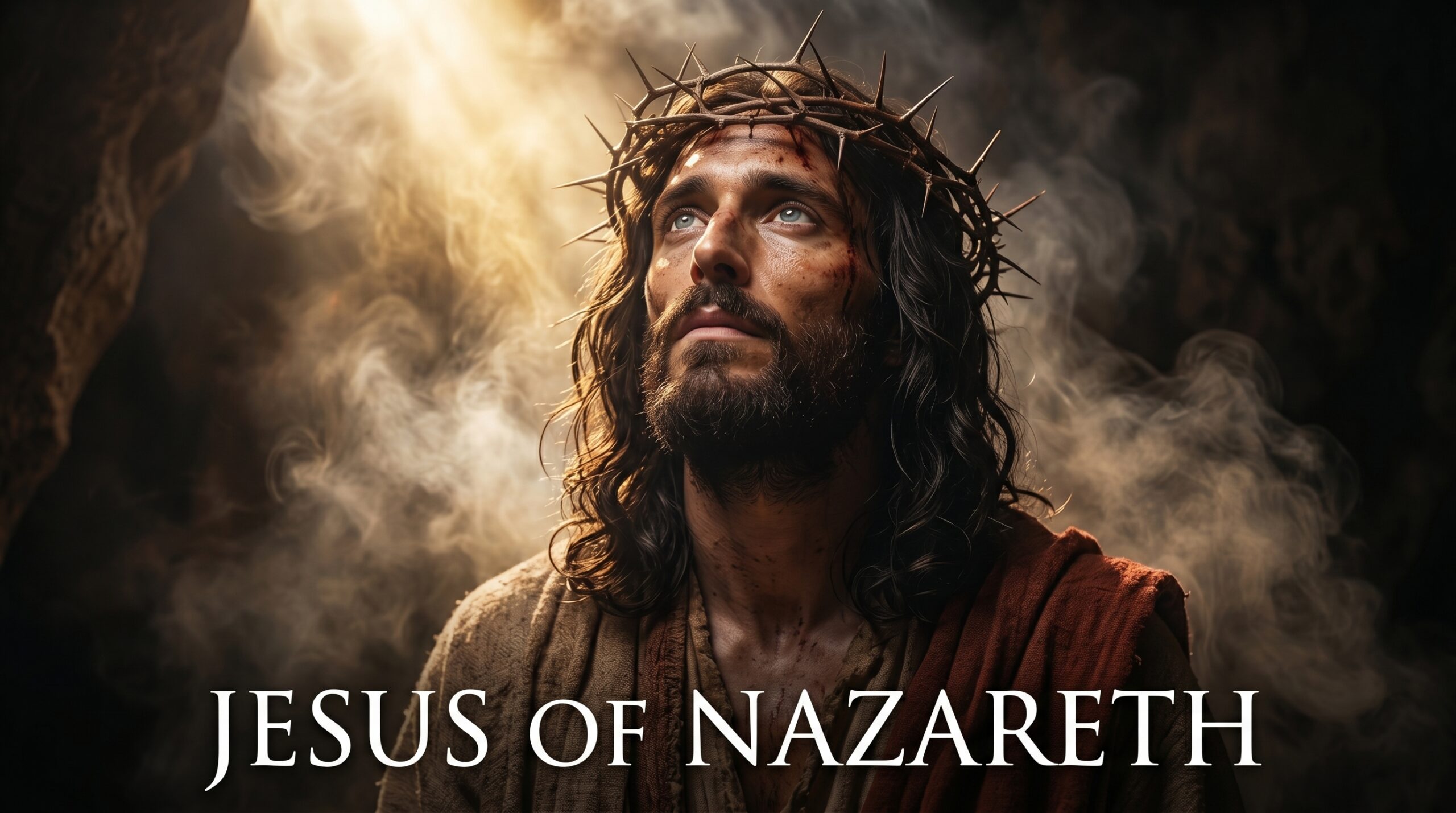
2. Jesus of Nazareth: Life, Ministry, and Death (c. 4 BC – 30/33 AD)
Most modern scholars place the birth of Jesus of Nazareth between 6 and 4 BC, during the reign of Herod the Great. He was raised in Nazareth in Galilee, in a devout Jewish family. The four Gospels — Matthew, Mark, Luke, and John — record that he was the son of Mary and that his birth was miraculous.
Around the age of 30, Jesus was baptized by his cousin John the Baptist in the Jordan River — an event that marked the formal beginning of his public ministry. He gathered twelve close disciples and began preaching a radical message throughout Galilee and Judea: “Repent, for the kingdom of heaven is near” (Matthew 4:17). He performed healings, shared meals with social outcasts, and taught in parables that overturned conventional wisdom.
His central teachings — love of God, love of neighbor, forgiveness of enemies, care for the poor — attracted massive crowds but also fierce opposition from religious and political authorities. Jesus rode into Jerusalem during Passover week, triggering alarm among the temple leadership. He was arrested, tried before the Roman prefect Pontius Pilate, and crucified outside Jerusalem — a death reserved for criminals and rebels — around 30–33 AD.
His followers proclaimed that three days later he had risen from the dead. This resurrection, described in all four Gospels and in Paul’s letters, became the cornerstone of Christian faith: the central claim that distinguishes Christianity from every other world religion.
3. Pentecost and the Birth of the Church (33 AD)
Fifty days after Passover — on the Jewish festival of Pentecost — the disciples of Jesus gathered in Jerusalem. According to the Acts of the Apostles, the Holy Spirit descended upon them, empowering them to proclaim the Gospel in multiple languages. The Apostle Peter addressed the crowds, and approximately 3,000 people were baptized that day.
The Jerusalem church, led initially by Peter, James (the brother of Jesus), and John, was the world’s first Christian community. Early Christians called their movement “The Way.” They shared meals, property, and prayer, met in homes, and continued to attend the Jewish Temple. Their faith was thoroughly Jewish in its Scripture and practice — yet revolutionary in its core conviction that Jesus was the long-awaited Messiah who had conquered death.
4. Paul the Apostle and the Spread Across the Roman Empire (34–67 AD)
The single most important human figure in early Christian history — after Jesus himself — is arguably Saul of Tarsus, who became the Apostle Paul. Initially a zealous persecutor of Christians, Paul underwent a dramatic conversion on the road to Damascus (c. 34 AD), after which he became Christianity’s most tireless missionary.
Over three major missionary journeys, Paul traveled throughout Asia Minor, Greece, Macedonia, and eventually Rome, planting churches in Ephesus, Corinth, Philippi, Thessalonica, and beyond. His letters — the Epistles — are the earliest surviving Christian writings, predating the four Gospels, and they contain the first systematic articulation of Christian theology: salvation by faith through grace, the universal scope of the Gospel for both Jews and Gentiles, and the nature of the church as the “body of Christ.”
By the time of Paul’s martyrdom in Rome (c. 64–68 AD), Christian communities had been established across the eastern Mediterranean and as far west as the imperial capital.
5. Persecution Under Rome: Blood and Growth (64–313 AD)
The Roman Empire initially dismissed Christianity as a minor Jewish sect, but suspicion grew quickly. Christians refused to worship the Roman gods or participate in the imperial cult — acts seen as politically subversive. Under Emperor Nero (64 AD), Christians were blamed for the Great Fire of Rome and subjected to mass executions. Peter and Paul are traditionally believed to have been martyred during this period.
Subsequent emperors — Domitian, Decius, Valerian, and most ferociously Diocletian (303–313 AD) — launched systematic campaigns to destroy the church. Christians were forced to hand over Scriptures, imprisoned, tortured, and killed. Those who died for their faith were called martyrs (from the Greek word for “witness”), and their courage in the face of death became a powerful testimony that paradoxically drew more converts.
The Roman historian Tertullian (c. 197 AD) observed memorably: “The blood of martyrs is the seed of the Church.” Despite — or because of — persecution, Christianity grew from a small movement of thousands in the first century to an estimated 6 to 10 million believers by the early fourth century. The faith spread not only through missionaries but through merchants, soldiers, women, and slaves traveling the Roman road network.
6. Constantine and the Edict of Milan (313 AD): A Turning Point for History
In 312 AD, the Roman general Constantine was marching toward Rome for a decisive battle at the Milvian Bridge. According to both Eusebius and Lactantius, he received a vision — the Christian symbol Chi-Rho — and the words “In this sign, conquer.” He painted the symbol on his soldiers’ shields and won the battle, becoming sole emperor of the West.
The following year, in 313 AD, Constantine and co-emperor Licinius issued the Edict of Milan, formally legalizing Christianity throughout the Roman Empire and returning property confiscated during the Diocletianic persecution. The emperor himself converted to Christianity (whether sincerely or politically is still debated by historians).
The effect was seismic. Christianity went from a persecuted minority to the favored religion of the empire’s ruler almost overnight. Church construction boomed. Bishops gained political influence. Christian art, architecture, and literature flourished as never before. Constantine moved the empire’s capital east to the newly founded Constantinople (330 AD), a city he deliberately built as a Christian city.
7. The Council of Nicaea and the Nicene Creed (325 AD)
With imperial support came new challenges: theological disputes that threatened to fracture the young church. The most urgent was the Arian controversy, ignited by a priest from Alexandria named Arius, who taught that Jesus the Son was created by God the Father and was therefore subordinate to — and not co-equal with — God. This view attracted widespread support, including from several bishops and even some emperors.
Constantine convened the first Ecumenical Council at Nicaea (present-day İznik, Turkey) in 325 AD. Over 300 bishops gathered, debated, and ultimately affirmed that Jesus was “of the same substance” (homoousios) as the Father — the formulation that underpins orthodox Trinitarian theology to this day. The Nicene Creed produced at this council remains the most widely shared statement of Christian belief across Catholic, Orthodox, and most Protestant traditions.
The fourth century also saw the flowering of the great Church Fathers — theologians like Athanasius, Basil of Caesarea, Gregory of Nazianzus, John Chrysostom, Jerome, and most towering of all, Augustine of Hippo (354–430 AD), whose works Confessions and The City of God profoundly shaped Western Christian thought for the next millennium and beyond.
8. The Fall of Rome and the Rise of Christendom (5th–10th Century)
In 410 AD, the Visigoths sacked Rome — an event that shook the ancient world to its foundations. In 476 AD, the Western Roman Empire formally collapsed. Into the power vacuum, the Catholic Church stepped as the primary institution of stability, education, and moral authority across Europe.
The Bishop of Rome — the Pope — emerged as the most powerful figure in the Christian West. Monasticism, pioneered by Anthony of Egypt and Benedict of Nursia (whose Rule became the template for Western monastic life), preserved learning and literacy through the chaos of the early Middle Ages.
In the East, the Byzantine Empire kept Christianity alive and vibrant from Constantinople. Great missionaries like Cyril and Methodius (9th century) brought the faith to the Slavic peoples, creating the Cyrillic alphabet in the process to translate the Scriptures — a profound cultural legacy that endures across Eastern Europe and Russia.
By the year 1000 AD, Christianity had spread across virtually all of Europe, from Ireland to Russia, and had begun to expand into Africa and Asia through trade routes and missionary activity.
9. The Great Schism of 1054: East Meets West — and Parts Ways
Centuries of theological disagreement, cultural divergence, and political rivalry between Rome and Constantinople finally reached a breaking point in 1054 AD. The key disputes included:
- The Filioque controversy: The Western church had added the phrase “and the Son” (filioque) to the Nicene Creed, teaching that the Holy Spirit proceeds from both the Father and the Son. The East rejected this change as unauthorized and theologically unsound.
- Papal authority: Rome claimed the Pope held universal jurisdiction over all Christians; Constantinople disagreed, viewing the Pope as first among equals among the five great patriarchs.
- Liturgical differences: The use of unleavened versus leavened bread in the Eucharist and other ritual distinctions deepened the divide.
In July 1054, Cardinal Humbert of Rome and Patriarch Michael Cerularius of Constantinople excommunicated each other. Though the excommunications applied only to specific individuals, they crystallized a rupture that had been building for generations. The Great Schism divided Christendom into the Roman Catholic Church in the West and the Eastern Orthodox Church in the East — a division that remains to this day, though the mutual excommunications were formally lifted in 1965 by Pope Paul VI and Patriarch Athenagoras I.
10. The Crusades: Faith, Power, and Consequence (1095–1291)
In 1095, Pope Urban II called the first Crusade — a military campaign to recover the Holy Land from Seljuk Turkish control and protect Christian pilgrims. Over nearly two centuries, eight major crusades and numerous smaller ones were launched. The First Crusade (1096–1099) captured Jerusalem; the Third Crusade (1189–1192) featured the legendary conflict between Richard I of England and Saladin.
The Crusades left a deeply complex legacy. For medieval European Christians, they were acts of pilgrimage and devotion. For Eastern Christians and Muslim populations, they were often experienced as brutal invasions. The catastrophic sack of Constantinople in 1204 by crusading forces — attacking a Christian city — permanently deepened Orthodox hostility toward Rome and made reunion between East and West even more remote.
The Crusades also accelerated intellectual exchange between Europe and the Islamic world, reintroducing Aristotelian philosophy that would fuel the great Scholastic thinkers — above all Thomas Aquinas (1225–1274), whose Summa Theologica synthesized Christian theology with classical philosophy in a towering intellectual achievement that shaped Catholic thought for centuries.
11. The Protestant Reformation: Luther’s Hammer Changes Everything (1517)
By the early 16th century, corruption, political entanglement, and theological drift within the Catholic Church had generated widespread dissatisfaction. The sale of indulgences — documents promising remission of sin’s temporal punishment in exchange for payment — was among the most visible abuses.
On October 31, 1517, an Augustinian monk and theology professor named Martin Luther nailed his Ninety-Five Theses to the door of the Castle Church in Wittenberg, Germany — a standard academic challenge to debate. His central arguments: salvation comes through faith alone (sola fide), through grace alone (sola gratia), and the Scripture alone (sola scriptura) is the supreme authority in matters of faith — not papal tradition.
Thanks to the newly invented printing press, Luther’s ideas spread across Europe at unprecedented speed. He translated the Bible into German, making Scripture directly accessible to ordinary people. His movement sparked the Protestant Reformation, permanently fracturing Western Christianity. Among the major Protestant streams that emerged:
- Lutheranism — Germany and Scandinavia
- Calvinism / Reformed tradition — Switzerland, the Netherlands, Scotland (Presbyterianism)
- Anglicanism — England, following Henry VIII’s break with Rome in 1534
- Anabaptism — the radical reformers who insisted on adult baptism and separation of church and state, ancestors of modern Baptists and Mennonites
The Catholic Church responded with the Counter-Reformation, centered on the Council of Trent (1545–1563), which clarified Catholic doctrine, reformed clerical discipline, and launched the Jesuit order as a powerful missionary and educational force. The religious wars that followed — culminating in the devastating Thirty Years’ War (1618–1648) — killed millions and reshaped the political map of Europe.
12. Christianity and the Age of Exploration (15th–18th Century)
As European powers sailed to the Americas, Africa, Asia, and Oceania, Christianity traveled with them — sometimes as a force for genuine conversion and humanitarian concern, sometimes as an instrument of colonial domination. Franciscan, Dominican, and Jesuit missionaries established churches and schools throughout Latin America, East Africa, India, China, and Japan.
The legacy is profoundly ambivalent. The missions brought literacy, medical care, and social uplift alongside the suppression of indigenous cultures and, in too many cases, the justification of slavery and conquest. The Transatlantic Slave Trade was both facilitated and challenged by Christian actors — some using Scripture to defend slavery, others (like William Wilberforce and the Abolitionist movement) invoking Christian principles to dismantle it.
By the 18th century, Christianity had become a genuinely global religion, though still dominated demographically by Europe and the Americas.
13. Revivals, Missions, and the Modern Era (18th–20th Century)
The 18th and 19th centuries witnessed extraordinary revivals that transformed Christianity in the English-speaking world. The Great Awakening in colonial America (1730s–1740s), driven by preachers like Jonathan Edwards and George Whitefield, sparked mass conversions and reshaped Protestant identity. John Wesley’s Methodist movement in Britain emphasized personal holiness and social reform, giving birth to a tradition that would eventually grow into one of the world’s largest Protestant denominations.
The 19th century saw an explosion of missionary activity. Organizations like the London Missionary Society and individuals like David Livingstone (Africa) and Hudson Taylor (China) brought Christianity to previously unreached populations. The World Missionary Conference in Edinburgh (1910) launched both the modern global missions movement and the ecumenical movement — the effort to restore Christian unity.
The Pentecostal movement, born at the Azusa Street Revival in Los Angeles in 1906, would prove to be one of the most significant developments in modern Christianity. Emphasizing gifts of the Holy Spirit such as speaking in tongues, healing, and prophecy, Pentecostalism grew from fewer than one million believers in 1900 to a movement of hundreds of millions today.
The 20th century also brought Christianity face to face with unprecedented suffering and moral challenges: World War I, the Armenian Genocide (1915–1923) — which decimated ancient Christian communities in the Middle East — World War II, the Holocaust, decolonization, and the Cold War. The Second Vatican Council (Vatican II, 1962–1965) under Pope John XXIII launched the most sweeping reforms in the Catholic Church in centuries, embracing dialogue with other faiths and updating the church’s relationship with modernity.
14. Christianity Today: 2.6 Billion Believers — and Growing
Today, Christianity stands as the world’s largest religion, with over 2.6 billion adherents — approximately 32.3% of the global population, according to the Center for the Study of Global Christianity at Gordon-Conwell Theological Seminary (2025).
The Three Major Branches
Roman Catholicism remains the largest single Christian body, with approximately 1.27–1.37 billion members — nearly half of all Christians worldwide. Governed by the Pope from the Vatican, it maintains a centralized structure and emphasizes the authority of both Scripture and sacred tradition.
Eastern Orthodoxy encompasses an estimated 220–260 million believers, organized into autocephalous (self-governing) national churches — Greek, Russian, Serbian, Romanian, and others — united by shared liturgical tradition and theology rooted in the seven Ecumenical Councils.
Protestantism is the most diverse stream, encompassing an estimated 900 million to 1.1 billion Christians across thousands of denominations — from historic Lutherans and Anglicans to Baptists, Methodists, Pentecostals, Evangelicals, and independent charismatic churches. By 2025, approximately 50,000 distinct Christian denominations exist worldwide.
The Great Demographic Shift: Christianity Moves South
One of the most remarkable stories of our time is the southward shift of global Christianity. In 1900, 95% of the world’s Christians lived in the Global North (Europe and North America). By 2025, 69% of all Christians live in the Global South, and that figure is projected to reach 78% by 2050.
- Africa: In 1900, fewer than 10 million Christians lived on the African continent. Today, more than 750 million Africans are Christians — growing at a remarkable 2.59% per year. By 2050, Africa alone is projected to be home to over 1.2 billion Christians.
- Asia: More than 416 million Christians live across the Asian continent, growing at 1.6% annually. Growth is particularly strong in China, South Korea, and Sub-Saharan Asian nations.
- Latin America: Home to more than 600 million Christians, with a significant shift from Catholicism toward Pentecostalism.
- Europe and North America: While still major Christian populations, these regions are experiencing the slowest growth or modest decline in religious affiliation.
The Rise of Pentecostalism and Evangelicalism
Within Christianity, Evangelicals number over 420 million and are growing at 1.47% per year. Pentecostal and Charismatic Christians — those who emphasize direct experience of the Holy Spirit — now number over 663 million and are projected to surpass 1 billion by 2050, making this the fastest-growing stream of Christianity in history.
15. Core Christian Beliefs: What Unites 2.6 Billion People
Despite extraordinary diversity in worship style, governance, and tradition, the vast majority of Christians share a core of essential beliefs:
- One God in Three Persons (the Trinity) — Father, Son, and Holy Spirit
- The Incarnation — God became fully human in the person of Jesus Christ
- The Atoning Death of Jesus — His crucifixion as the means of human redemption
- The Resurrection — Jesus physically rose from the dead on the third day
- Salvation by Grace — Forgiveness of sin and eternal life as a gift from God, received through faith
- The Authority of Scripture — The Bible as the inspired Word of God
- The Second Coming — Jesus will return to judge the living and the dead
- The Church — The community of believers as the body of Christ in the world
16. Christianity’s Enduring Impact on Human Civilization
The influence of Christianity on world civilization is incalculable:
Education: The first universities in Europe — Bologna (1088), Oxford (1167), Cambridge (1209), and hundreds of others — were founded by or in close partnership with the Church. The concept of universal education for all children, regardless of class, was largely a Christian innovation.
Science: Despite popular myths, Christianity and science have coexisted and co-developed for most of Western history. Copernicus, Galileo, Kepler, Mendel, Newton, Pasteur, and countless other founding figures of modern science were devout Christians working within a worldview that affirmed the rationality of creation.
Art and Architecture: The great cathedrals of Chartres, Notre-Dame, and Cologne; the paintings of Michelangelo and Raphael; the music of Bach, Handel, and Mozart; the literature of Dante, Milton, Dostoevsky, and Tolkien — Christianity has been the single greatest patron and inspiration of art in human history.
Human Rights and Social Reform: The abolitionist movement, the hospital system, the founding of the Red Cross, movements for women’s suffrage and civil rights — many of the most transformative humanitarian advances in modern history have been driven by Christian conviction.
17. Conclusion: A Living Story, Still Being Written
The history of Christianity is not a museum exhibit — it is a living story, still unfolding in the megachurches of Lagos, the monastic cells of Mount Athos, the underground house churches of China, the Pentecostal revival meetings of Brazil, and the ancient liturgies of the Ethiopian Orthodox Church.
From one man in first-century Galilee to over 2.6 billion believers on every continent — this is a story of extraordinary scope, profound beauty, genuine tragedy, and undeniable resilience. Whatever one believes about its theological claims, the history of Christianity is inseparable from the history of humanity itself.
As the faith approaches a projected 3 billion believers by 2050, its center of gravity has shifted from the cathedrals of Europe to the grassroots churches of the Global South — and the story is far from over.
Quick Facts: Christianity at a Glance (2025)
| Fact | Detail |
|---|---|
| Founded | c. 30–33 AD, Jerusalem |
| Founder | Jesus of Nazareth |
| Sacred Text | The Holy Bible (Old and New Testaments) |
| Total Believers | 2.6+ billion (2025) |
| Largest Branch | Roman Catholicism (~1.3 billion) |
| Fastest Growing Region | Africa (2.59%/year) |
| Number of Denominations | ~50,000 worldwide (2025) |
| % of World Population | ~32.3% |
| Projected 2050 Believers | 3+ billion |
| Languages with New Testament | ~2,500+ |
Article researched and written using data from the Center for the Study of Global Christianity (Gordon-Conwell Theological Seminary), Wikipedia, Britannica, Lifeway Research, and World History Encyclopedia. All statistics reflect the most current available data as of 2025.

Trough all this I want to declare this is all from God and to God. All Glory to Him!