
Views: 21
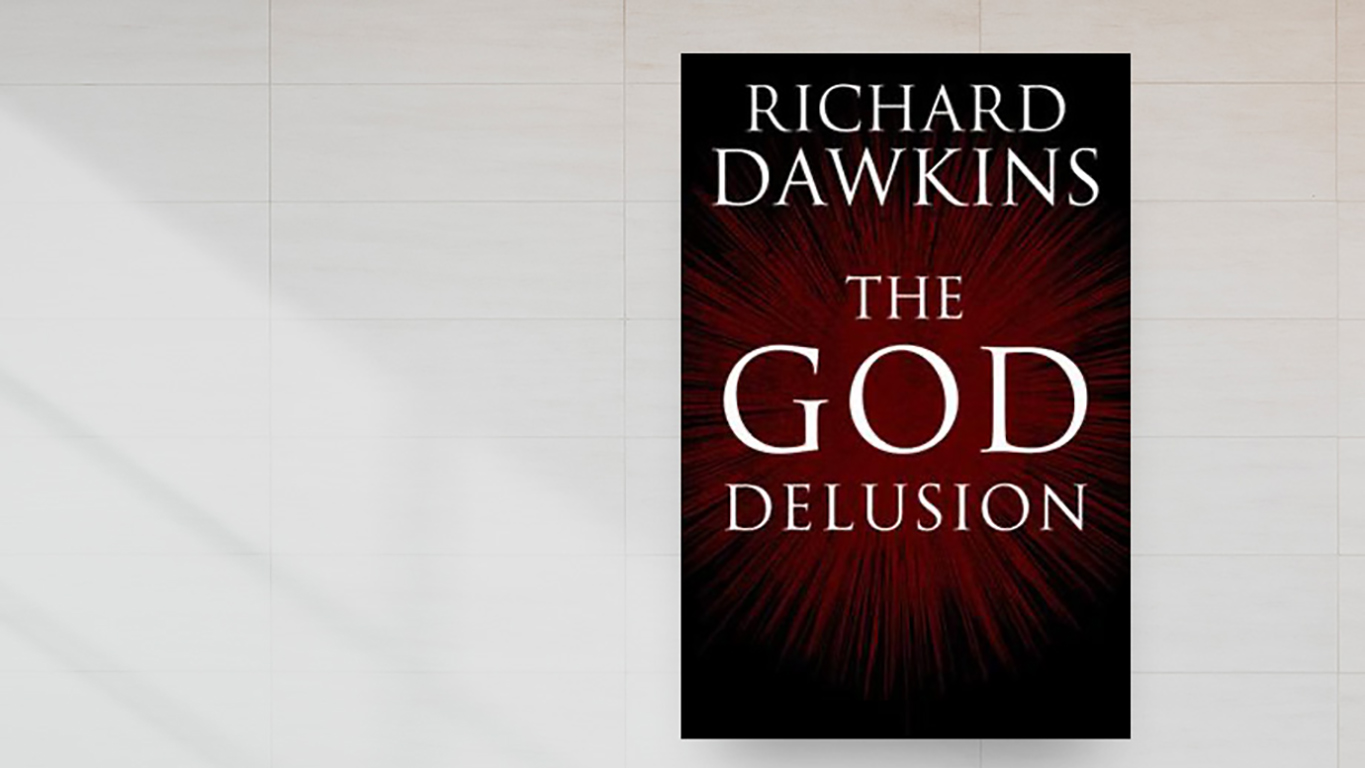
Critique of Richard Dawkins’ Book “The God Delusion”
EELK Institute of Theology
2nd Year Christian Cultural History Master’s Program
Author Allan Kroll – Tallinn March 22, 2020
Introduction
This essay examines the critique of religion in Richard Dawkins’ book “The God Delusion”. The work is divided into three parts, the first of which describes the author’s claims about religion, the second part addresses God and the Bible, and the third analyzes and presents counter-arguments to Dawkins’ criticism. Since the book “The God Delusion” criticizes religion primarily from moral, psychological, sociological, historical, and theological perspectives (unlike some of Dawkins’ other books such as “River Out of Eden” or “The Selfish Gene”, which focus mainly on scientific perspectives), the author’s positions are critiqued primarily from these fields.
-
DAWKINS’ CLAIMS ABOUT RELIGION
In the preface to “The God Delusion”, Dawkins lays his cards on the table and admits that his book’s aim is nothing less than the propagation of atheism, in the hope that it will help people renounce their faith and be realistic, brave, happy, balanced, morally upright, and spiritually satisfied atheists. To this end, he paints a picture of a world without religion for the reader. Against the backdrop of John Lennon’s song about a world without religion, he describes a situation where there are no suicide bombers, crusades, witch hunts, territorial conflicts between countries and peoples, mass murders, anti-Semitism, or televangelists defrauding simple people of their money¹. Without religion, in his view, there would be no labels by which to judge whom to oppress or whom to take revenge upon². No war has been fought under the banner of atheism, according to him³.
From all the above, it logically follows that the author considers religion to be the root of all evil, from which humanity must finally be liberated for the common good.
The desired effect of the book, according to the author, is that a person who begins reading the book as a believer should become an atheist by the time they put it down⁴. The book author’s goal is to vaccinate people against any religion and to “cure” those who have already been infected with the “religion virus”. It is commendable that the author does not hide his true motives.
The author is convinced that science can refute all the pillars of the religious worldview, and even if atheists are not yet able to scientifically prove all their claims, “one day we will have all the answers”⁵.
Dawkins does not, in his own words, attack any particular version of god or gods, but attacks all gods, everything supernatural, wherever and whenever they were invented⁶. He criticizes religions as a whole, but Christianity earns his particular disapproval, which he calls “one of the bloodiest religions in the history of the world”⁷, which he claims has spread from the beginning by the sword⁸. Monotheism in general is, in his view, “the greatest evil of our cultural space” and its “three inhuman religions: Judaism, Christianity, and Islam”⁹ embody all the evil associated with patriarchal social order.
The author questions religion’s right to make prescriptions in the field of morality and proposes that one should be freed from religion as an “intermediary” and make moral choices without any religion¹⁰.
For Dawkins, science is one form of rationalism, while religion is “the most common form of superstition”¹¹. Superstition must naturally be abandoned.
In religion, he sees a kind of malfunction, an unwanted byproduct that was once necessary for human survival. Like a moth flying into a candle flame, a religious person behaves “self-sacrificially” precisely because of this. His hypothesis is that humans as a species survive thanks to experiences accumulated over previous generations. To ensure well-being, these have been passed on, and obedience to them enables survival¹². Religion has thus had a role in promoting well-being and safe existence in human history, but as society has developed, it has become unnecessary.
In addition to the above, religious thinking is also promoted by humans’ “biological programming” to attribute intentions to things and beings whose behavior is of significant importance to us. This makes us attribute benevolence or malevolence where nature is actually simply indifferent¹³. The idea of the immortality of the human soul, for example, is in the author’s view reducible solely to human wishful thinking. Human desires also psychologically influence their beliefs¹⁴.
Dawkins solves the question of the connection between God’s existence and human moral behavior simply. In his assessment, a religious person wants to be good solely to earn God’s approval and receive a reward for it, or to avoid disapproval or punishment¹⁵.
The author’s assessment of Christian (in context, Catholic) upbringing is devastating. Responding to the question about cases of sexual harassment involving Catholic Church priests, Dawkins comments, “As terrible as sexual abuse is, its harm is apparently less than the psychological effect on a child of being raised Catholic in general”¹⁶. “Children have the right not to have their minds filled with all kinds of nonsense, and we as a society have a responsibility to protect them from this. Therefore, parents should not be allowed to teach their children to believe literally what is found in the Bible”¹⁷. Children themselves must have the right to decide what they think, and parents should not force this upon them¹⁸.
-
DAWKINS’ CLAIMS ABOUT GOD AND THE BIBLE
Dawkins reduces religious people’s claims about God’s existence to a primitive “security blanket”, saying that for them, God must exist because “if he didn’t exist, life would be a desert of pointless, meaningless, and useless insignificance”¹⁹.
One must agree with his claim that the “God of the gaps” idea used in religious apologetics is weak and logically flawed²⁰, but at the same time, the author should, in intellectual honesty, admit that science has also used this principle in “proving” various scientific hypotheses. For example, Darwin, in his conviction that in the future numerous transitional fossils would be found to confirm his theory. Dawkins’ own belief that science will one day have all the answers is a scientific faith version of the “God of the gaps”.
Dawkins calls the God of the Old Testament a “psychotic delinquent”²¹, one of the most unpleasant figures in fiction, jealous, narrow-minded, unjust, unforgiving, control-obsessed, vindictive and bloodthirsty ethnic cleanser, misogynist, homophobe, racist, infanticidal, genocidal, fratricidal, pestilential megalomaniac, sadomasochistic and capricious bully²², and a “biblical monster”²³.
The author claims that theologians and scientists have, since the 19th century, “found abundant evidence” that the New Testament gospels do not reliably describe history and that Jesus never emphasized his own divinity²⁴. He goes even further and asserts that “based on historical evidence” it is entirely possible to question whether Jesus existed at all²⁵. The four evangelists “almost certainly” never met Jesus, and no one knows who actually composed these gospels. “Reputable biblical scholars” do not, in his assessment, consider the New Testament historically reliable, and it cannot be considered proof material for the existence of any deity²⁶. Dawkins is convinced that the Bible is a “chaotically cobbled together anthology of unrelated documents, distorted over nine centuries by thousands of anonymous authors, editors, and copyists”²⁷.
According to Dawkins, “the Bible glorifies rape”²⁸. Using Lot as an example, who offered his daughters to the men of Sodom for rape, he thereby gives an assessment of the Bible as a book propagating misogyny²⁹.
The moral principles of both the Old and New Testaments were, in his assessment, meant for a narrowly defined inner circle. Loving one’s neighbor thus meant only loving other Jews³⁰. Jesus, as a loyal Jew, was also supposedly devoted only to the inner circle, along with the accompanying hostility toward those not belonging to the group. The idea of bringing the Jewish God to non-Jews was supposedly invented only by Paul³¹.
-
COUNTER-ARGUMENTS TO DAWKINS’ CRITICISMS
The author’s attempt to reduce violence in history or society to religion is unscientific and one-sided. Religion has unfortunately indeed been the cause of many military conflicts, or at least a slogan hiding political motives, but the attempt to reduce everything to one cause is wrong. The entire process of natural selection in nature operates through violence. A recognized evolutionary biologist should first admit that the struggle for resources is a phenomenon characterizing all of nature. A chimpanzee troop that wants territory belonging to another troop is willing to kill competitors for it. This phenomenon is common to both highly developed primates and lower life forms, such as ants, who kill their own kind to occupy competitors’ territory. Therefore, the cause is in something other than religion. As is known, chimpanzees and ants have no religion, but aggression is nevertheless natural to them.
The weakness of Dawkins’ claims is also characterized by the detail that different logic is applied to human society and nature. If humans are simply highly developed primates, as the book’s author believes, then he has no logical basis to recognize as abnormal what is natural and normal everywhere else in nature. To claim that something is bad presupposes the application of some society- and culture-transcending criterion in assessing events.
Normal and moral is then only what society itself recognizes as such. Social opinion is not a strong argument in this regard, as it is constantly changing. Thus, the right to criticize someone’s “moral transgressions in history” disappears if they were considered normal at the time. Dawkins does acknowledge the principle that one should not criticize past events by today’s standards, but he himself violates this in the book whenever it concerns atrocities committed in the name of religion.
If morality is not divinely given and absolute, but depends on what a certain number of people consider right at a certain time, then we have no basis to condemn all that the author regularly condemns in his book. If we as individuals or as a society ourselves attribute meaning to human life, then we lack the moral right to criticize those who have attributed some other meaning to it.
Keller aptly quotes Sommerville, saying: “where then did we get this list of virtues by which we can determine the church’s sins”³². But Dawkins reproaches religion for “sins” that he, as an evolutionary biologist, considers normal in nature and natural selection. It is difficult not to see hypocrisy in this worldview.
Removing religion from the equation of society’s evil changes nothing. Human society is violent even without any religion. Lennon’s and Dawkins’ dream (or delusion) of a world without religion does not make the world better. This has been convincingly proven by atheistic regimes, which in the 20th century alone killed more people than any previous one and probably more than all previous ones combined.
The author is undoubtedly aware of the atrocities that atheists have committed against believers, so he cannot hide behind the claim that no war has yet been fought under the banner of atheism. What else but war can one call the massive persecution of believing people in atheistic, communist countries?
The author is probably aware that Christianity was a peaceful and persecuted religion for the first three centuries, and that the “sword mission” began to spread as an unbiblical anomaly only after Christianity became a permitted religion in the 4th century and later a state religion. Jesus and the early church did not propagate or practice forced Christianization. One can only speculate why the author has ignored these historical facts and created a distorted picture of the history of Christianity. Islam has indeed spread from the beginning through war and political subjugation, but to reproach early-century Christianity for this is erroneous.
In explaining the origins of religion, the author ignores a large number of facts and reduces it to a few individual factors. Many factors play an important role in the emergence of religion: revelations, visions, miracles, special experiences, holy experience, etc. Humans are by nature religious beings, and apparently for this reason, no irreligious people have been found in human history to date.
A believing person’s desire to live a life pleasing to God cannot be reduced to a desire to gain approval or fear of punishment. Even if this may hold true for some believers, one cannot draw such far-reaching conclusions from it. If the same logic were used to illustrate a marriage relationship, it would be clear to everyone that it is a very primitive explanation. The main factor (love) would go unnoticed, and the explanation would be wrong.
Regarding the critique of Christian upbringing, the author is apparently blinded to the shortcomings of his own worldview. Scientific faith is taught throughout the school system, without asking whether the child wants it or not. Criticizing that believing parents “forcibly impose their worldview on their children”, he assumes at the same time that “scientific faith” may be taught without asking what the child thinks about it. Like the ideologues of totalitarian regimes, he demands society’s intervention in Christian upbringing and would like to prohibit the literal belief and teaching of the Bible. This is essentially a demand for censorship in an allegedly free “John Lennon-like” religion-free world that the author presented as an ideal at the beginning of the book. This sounds more like a George Orwell novel than a free and happy world.
Dawkins’ claims that religion is reducible to superstition while science is rational also do not hold. There are enough believing scientists both in history and today to show the inadequacy of this claim. Dawkins, as a biologist, is an atheist not because he has information that, for example, Michio Kaku does not have, who as a world-famous theoretical physicist is nevertheless deeply religious. The real reason for scientists’ belief or non-belief does not depend on information but on other factors. Scientists are also influenced by the beliefs and attitudes of the people whose respect they desire³³. One must agree with Timothy Keller, who says that “many who oppose Christianity intellectually do so out of personal disappointment with Christians and churches”³⁴. Scientists are probably no exception in this regard. Edgar Andrews aptly points this out: “Richard Dawkins, who is undertaking to prove that God is a ‘delusion’, employs all possible moral, philosophical, historical, and sociological arguments. Why would all this be necessary if he thought he could manage with scientific demolition work alone”³⁵.
What stands out is that the author cannot or will not distinguish between the events described in the Bible and their theological or moral assessments. He does not distinguish between where the Bible describes events and where it gives assessments of them. Bringing up the story of Lot, for example, one cannot in any way justify the protagonist’s behavior, but on the contrary, one should acknowledge the Bible’s honesty in describing the sins of men of faith, not trying to cover them up or portray them hagiographically.
Dawkins’ accusations of “loving only those belonging to the inner circle” are also tendentious. He fails to mention all examples pointing to the contrary, such as the Old Testament laws on treating strangers, the story of the repentance of the people of Nineveh, Jesus’ parable of the Good Samaritan, the story of the Samaritan woman, the healing of non-Jews, etc. The Old Testament does indeed see one’s neighbor primarily as a fellow national (although the OT also has several stories of pagans’ faith and conversion), but this certainly cannot be reproached to the New Testament, because in Christ there is “neither Jew nor Greek, slave nor free, male nor female” (Gal. 3:28). Jesus commanded that the gospel be preached first to the Jews and then to the Gentiles. Dawkins’ claim that this was Paul’s invention has no historical proof and is merely a hypothesis.
Throughout the book, the author’s desire stands out to ridicule the opposing side’s positions by relying on certain authorities, making them into “straw men”. Dawkins selects from among theologians only authors who support his theories (exclusively liberal theologians), ignoring renowned conservative theologians (N.T. Wright, Eta Linnemann), philosophers/apologists (W.L. Craig, Norman Geisler, Ravi Zacharias, et al.) and historians whose positions on Jesus as a historical person and the formation story of the Bible are mostly opposite to those of liberals. One would expect a more honest approach to the topic from a scientist, taking into account all sources and evidence.
Also tendentiously selected are examples characterizing Christians from people whose nerves apparently could not withstand Dawkins’ mockery of believers and who responded unchristianly by threatening or insulting him³⁶. Without justifying their behavior, one must acknowledge that highlighting a marginal minority in the style of “that’s what they’re all like” is unfair, dishonest, and tendentious. These examples certainly do not reflect Christianity as a whole.
In the author’s view, religion is hypersensitive to any insults and protected by a wall of respect, but in Dawkins’ assessment, religion does not deserve such respect³⁷. Religion itself, however, has in his view usurped the right to “insult homosexuals” under the cover of religious freedom³⁸. However, if one were to use Dawkins-type rhetoric against any minority group, this would likely be followed not only by a storm of indignation but probably also by demands to criminally punish hate speakers. But the book’s author does not disdain the most insulting manner of expression to mock believing people. Double standards and double morality should be obvious to any reader. If some religion calls homosexuality a sin, then shouldn’t this be irrelevant to a person who denies sin as a category? Why be offended by a word that designates a category that doesn’t exist? It would be different if there were a call to violence. But calling something a sin cannot be considered an insult, considering that God, in whom Dawkins does not believe, loves the sinner too, and Jesus died for those sins.
The glorification of atheism in Dawkins’ book “The God Delusion” sometimes sounds downright naive. Claiming that they are people who think independently and do not submit to authorities³⁹, one gets the impression of heroic people who, despite the pressure of the religious majority, still remain true to their convictions. The reality is that atheists simply have other authorities whom they sometimes believe blindly and without criticism. Atheists certainly do not have a monopoly on independent thinking.
P.S.! The question of the Estonian translation of the book “The God Delusion” requires separate treatment. It is obvious that the translator has not been up to the task in matters of religion. Attributing the authorship of the Book of Revelation to John the Baptist (in English probably John The Revelator)⁴⁰, the translator makes an unacceptable error, confusing different Johns mentioned in the New Testament. C.S. Lewis becomes C.J. Lewis in the translation, and his famous “Lunatic, Liar, Lord” quote becomes in translation “Mad, Bad, or God”⁴¹, which cannot withstand criticism as a translation. By translating the website “Rapture Ready” into Estonian as “Ready to be Born Again”, the translator shows their unacceptable ignorance of the topic being discussed. The English word “rapture” does not denote being born again, but the rapture of the church at Christ’s return.
Summary
This work analyzed Richard Dawkins’ critique of religion in the book “The God Delusion”. Dawkins criticizes all religions, but especially fervently Christianity, accusing them of being responsible for most of the violence and evil in human history.
In the assessment of the author of this work, Dawkins has used as sources for his criticism only sources that fit with his already existing worldview and has ignored sources that contradict it. The book is tendentious and propagandistic, not an impartial and sober analysis that one might expect from a renowned evolutionary biologist. The author’s treatment of history is deficient and biased and does not even seem to strive for objectivity.
The author of this work considers worthy of respect only that Dawkins does not hide his true motives but lays his cards on the table at the beginning of the book.
Bibliography
- Richard Dawkins “The God Delusion”, Tallinn, Valgus, 2011
- Edgar Andrews “Who Made God”, Tallinn, Allika, 2012
- Timothy Keller “The Reason for God”, Tallinn, Allika 2014

Martinus Vaicarius’s mission is to:
- Provide spiritual support and guidance to people seeking peace and hope
- Create prayer texts that bring God’s peace to hearts suffering under fear and anxiety
- Promote deep understanding of the power of theGod of Sabaoth and the protection of the heavenly hosts
- Help people enter the spiritual sphere where God’s peace reigns over all
AICortex Invest OÜ