Views: 148
The Monastery of the Holy Fathers of Mount Athos in Kirikla: A Living Spiritual Jewel at the Gates of Tallinn
EAOC MONASTIC LIFE · THEOLOGY · ESTONIAN SPIRITUAL CULTURE
How the EAOC’s new monastic community in Harju County is restoring Estonia’s monastic life, strengthening the Constantinopolitan tradition, and bringing spiritual value to the Church, the Republic of Estonia, and the greater Tallinn region
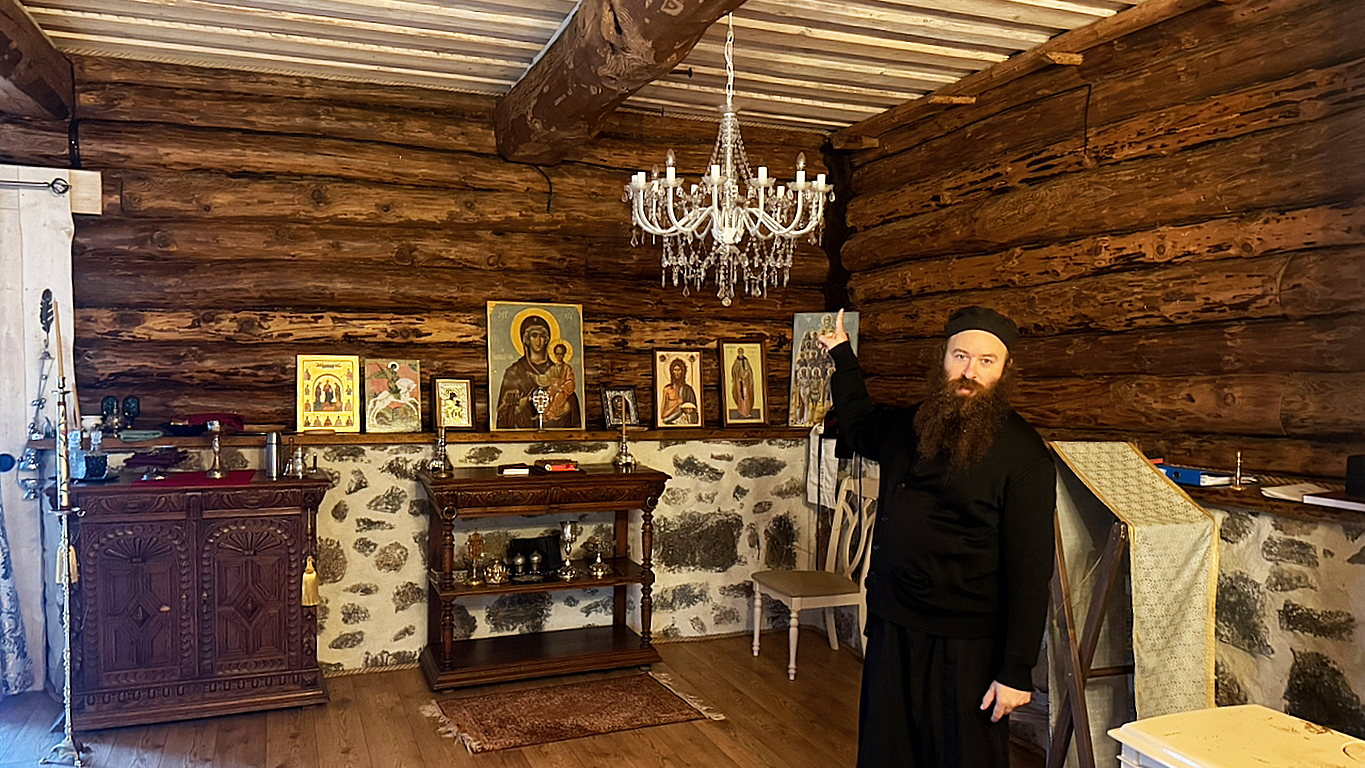
In February 2026, the public learned that the Estonian Apostolic Orthodox Church (EAOC) had established its second monastery: the Monastery of the Holy Fathers of Mount Athos is located in the village of Kirikla, in Saue Parish, Harju County — a mere thirty-minute drive from Tallinn. On a seven-hectare plot surrounded by natural tranquility, two monks have begun living according to the monastic tradition of Mount Athos. This is not merely ecclesiastical news — it is a theological, cultural, and national-identity event whose significance reaches far beyond the borders of a small Estonian village.
Historical Background: Why Estonia Lacked a Functioning Monastery for Monks
In Orthodox tradition, the monastery occupies an irreplaceable place in the life of the Church. And yet for decades, the EAOC had functioned without an active community of monks. During the Soviet period, monastic life on Estonian territory was almost entirely extinguished. Historic EAOC monasteries — such as the Pechory Monastery — remained outside the borders of the Republic of Estonia after the war, or passed to different ecclesiastical jurisdictions. The Pühtitsa Convent on Kuremäe fell under the Moscow Patriarchate, while the Church of St. Michael’s in Tallinn survives today only as a historical monument.
The years following Estonian independence brought renewed hope for the restoration of monastic life — a men’s monastery was considered for Plaan in Võru County, but the financial demands proved prohibitive. EAOC Metropolitan Stephanos has long cherished the vision of reviving monasticism in Estonia. In 2009, a skete dedicated to St. John the Forerunner was established on Saaremaa, which gradually developed into the Reo Monastery — today home to the monastic sisters Porphyria and Maria, with another novice expected to join soon. Now the second part of that vision has been fulfilled: Estonia once again has an active monastery for men.
The Kirikla Monastery: Its Founding, Location, and Canonical Approval
The monastery bears the official name the Monastery of the Holy Fathers of Mount Athos. It is situated in the village of Kirikla, Saue Parish, Harju County — near Hageri, approximately thirty kilometres from Tallinn by road. The EAOC General Assembly granted canonical approval to the new monastery in November 2025.
The founding initiative came from EAOC archon Urmas Sõõrumaa — a prominent Estonian businessman and sports leader whose family roots lie in that very region. His vision and material support laid the foundation for the monastery’s establishment. The property currently encompasses seven hectares, with four kellion (monastic cells), and the community lives in a modest rural farmhouse. Plans are in place for the future construction of a guesthouse complex. The monastery’s services are open to all visitors, though overnight accommodation is presently reserved for men who wish to explore monastic life more seriously.
Two Monks Who Have Laid the Spiritual Foundation
Bishop Damaskinos (Olkinuora) — Bishop of Haapsalu
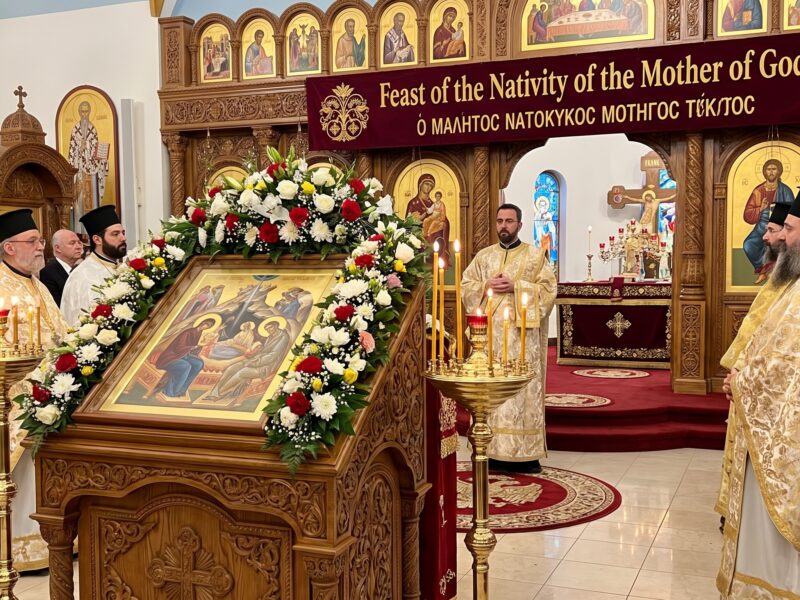
The spiritual father of the monastery is Bishop Damaskinos, who serves simultaneously as the spiritual overseer of both EAOC monastic communities — Kirikla and Reo. Born in Finland in 1985, Bishop Damaskinos was consecrated to the episcopate on 12 January 2025 at the Cathedral of the Transfiguration in Pärnu. The episcopal liturgy was celebrated by Metropolitan Stephanos of Tallinn and All Estonia, Bishop Alexander of Pärnu and Saaremaa, and Metropolitan Cleopas of Sweden and All Scandinavia, joined by abbots, bishops, and clergy from Estonia, Finland, Greece, and beyond.
Bishop Damaskinos brings an exceptional intellectual and spiritual formation to his ministry: he speaks ten languages (including Estonian and Russian) and reads in six classical languages. He holds master’s degrees in theology, philosophy, and musicology, as well as a doctorate in theology. Since 2015 he has served as a lecturer in systematic theology and patristics at the University of Eastern Finland. Tonsured as a monk in 2016 at the Xenophontos Monastery on Mount Athos, he was ordained to the priesthood there in 2018 and spent years immersed in its life of asceticism and prayer — an experience that has profoundly shaped his theological vision and understanding of monasticism.
Father Paisios — The First Estonian Monk of Kirikla
The second resident of the Kirikla Monastery is the Estonian monk Father Paisios, who was tonsured on 21 September 2025. His vocation carries particular symbolic weight: as a local, Estonian-speaking monk, he brings the spiritual inheritance of Athos into direct contact with the Estonian language and culture. This is deeply significant for the identity of the EAOC — a church that unites the universal Greek-Catholic Orthodox tradition with its calling as a national church of the Estonian people.
Theological Foundations: The Athonite Tradition and the Heritage of Hesychasm
The Kirikla Monastery has been established in the tradition of Mount Athos — a theologically weighty choice. The Holy Mountain (Hagion Oros) in Greece has been the civilisational heart of Eastern monastic life for more than a millennium. The Athonite tradition means hesychasm — a distinctive spiritual path of silence, inner prayer, and the seeking of the divine light, given its most articulate classical expression in the fourteenth century by St Gregory Palamas. The monks do not withdraw from the world out of contempt for it, but in order to serve it more deeply — through prayer, liturgy, and contemplative intercession.
The Athonite tradition holds the patristic literature in exceptional reverence. The foundation of its spiritual life is the Philokalia (Greek: “love of the beautiful”) — an anthology of Orthodox mystical writings from the fourth to the fifteenth centuries, addressing the methods of prayer, liberation from the passions, and theosis, the becoming-like-God. This is the backbone of monastic existence.
From the Holy Fathers: The Theological Content of Monastic Life
Understanding the Kirikla Monastery requires patrological context — a familiarity with the teachings of the Church Fathers upon which its entire way of life rests. The following are several of the central theological concepts and their classical sources.
1. Theosis — Deification
The heart of Orthodox theology is theosis — the teaching that the human person is called to become a partaker of the divine nature by grace. This is no mere metaphor, but a real process of spiritual transformation, lived most intensively within the monastery. Athanasius of Alexandria gave it its most celebrated formulation: “God became man so that man might become God.” (“Αὐτὸς γὰρ ἐνηνθρώπησεν, ἵνα ἡμεῖς θεοποιηθῶμεν.” — De incarnatione, §54.) Monastic life is the most complete practical school of theosis.
2. Hesychasm — Prayer Rooted in the Heart
Hesychasm is the most characteristic theological contribution of Mount Athos. The heart is the living centre of prayer. St John Climacus, the sixth- to seventh-century Abbot of Sinai, writes in his Ladder of Divine Ascent: “A hesychast is one who strives to contain the incorporeal within the body. A hesychast is one who has a secure and unshifting dwelling-place in God.” This describes precisely what is practised at the Kirikla Monastery: a silence that is not emptiness, but the fullest possible mode of being.
3. Praxis and Theoria — Action and Contemplation
Evagrius of Pontus (345–399) introduced into monastic theology the distinction between praxis (ascetic practice, which purifies the soul from the passions) and theoria (the pure vision of God). In his framework, the monk stands daily before his own inner world, confronting the fundamental passions — desire, anger, and pride — as the necessary precondition for divine contemplation. This is a path that demands years, not weeks.
4. Ora et Labora — Prayer and Work
In the Eastern monastic tradition, the entire daily rhythm is grounded in the Rule of St Basil the Great (329–379) — the Asketikon. Accordingly, the order of monastic life is threefold: liturgy (divine worship), prayer (including the hesychast Jesus Prayer: “Lord Jesus Christ, Son of God, have mercy on me, a sinner”), and work. Basil writes: “Work disciplines the body; prayer guides the soul; communal life trains one in love.” (Asketica, PG 31.) The daily life of the Kirikla Monastery, with its four kellion, corresponds precisely to this structured rhythm of sanctification.
5. Monasteries as “The Lungs of the Church” — Bishop Damaskinos’s Theological Vision
Bishop Damaskinos has articulated the role of monasteries in the contemporary Church through a compelling metaphor: “Monasteries are the lungs of the Church — always breathing in, always helping the laity.” Monks and nuns live a life of intercession on behalf of the whole Church — a life that not everyone can embrace, but from which all may draw spiritual nourishment. The laity, in turn, support the monastery materially and spiritually. This is a theology of symbiosis, rooted in the early Christian concept of koinonia — the communion of life shared between all members of the Body of Christ.
The Value of the Kirikla Monastery for the EAOC
Canonical and ecclesial dimension: The EAOC is an autonomous church under the Ecumenical Patriarchate of Constantinople. In the Eastern tradition, monasteries have always served as the nursery of ecclesiastical leadership — they are where bishops, theologians, and spiritual directors are formed. The existence of the Kirikla Monastery strengthens the EAOC’s canonical and spiritual identity, forging an organic bond with the Constantinopolitan tradition and the Athonite heritage.
Theological education: Bishop Damaskinos’s academic background — as a lecturer in patristics at the University of Eastern Finland — gives the monastery’s spiritual work a strong intellectual dimension. This means Kirikla is potentially not only a place of prayer, but a centre for theological and patristic study and for the formation of spiritual seekers.
Missionary dimension: The monastery’s services are open to all. This means that people with no Orthodox background — Lutherans, Catholics, or the unchurched from Tallinn and the surrounding region — can come to experience the Eastern tradition’s liturgy and worship. It is a quiet but profoundly effective form of missionary witness.
Value for the Republic of Estonia and the City of Tallinn
Cultural heritage and religious plurality: Estonia is constitutionally a secular state, but its richest cultural heritage is bound up with both Lutheranism and Orthodoxy. The EAOC is a legally recognised religious association whose roots reach back to the first period of Estonian independence in the 1920s. A new monastic community near Tallinn enriches Estonia’s religious and cultural mosaic — it is a living Eastern Christian tradition preserved in the heart of Northern Europe.
Spiritual tourism and regional development: Monasteries have historically been significant pilgrimage sites and destinations for cultural tourism across Europe. In terms of regional development, the Kirikla Monastery may play a meaningful role in the coming years: drawing pilgrims, seekers, and visitors from Tallinn and abroad. The Saue Parish area and the wider Harju County region gain a distinctive point of spiritual culture.
International dimension: Bishop Damaskinos is himself an international bridge-builder. As a Finnish national who speaks ten languages, connected to both the Greek Athonite tradition and the academic world of the University of Eastern Finland, he brings an ecumenical and genuinely European dimension to the Kirikla Monastery. The Estonian monastery is no peripheral phenomenon — it is part of a living network of Orthodox monastic communities under the jurisdiction of Constantinople.
Community life and social value: Monasteries have historically evolved into community centres offering education, hospitality, pastoral care, and spiritual guidance. The present modest beginnings of the Kirikla community — four cells and two monks — carry within them the potential for growth: a future guesthouse, a retreat centre, and a venue for parish formation days and quiet days.
Looking Ahead: Two Monks, and More to Come
At present, two monks live at the Kirikla Monastery. The community is still in its earliest stage — housed in a farmhouse, with four monastic cells. But monasteries have always grown slowly: monastic life is not a career chosen on impulse, but a lifelong vocation tested through a period of novitiate and obedience.
The EAOC anticipates that the monastic family will grow. The reception of novices requires men who are genuinely prepared to leave the secular world and commit to monastic life in the Athonite tradition. The monastery does not currently receive overnight guests, with the exception of men who are seriously considering monastic vocation — a prudent discipline that preserves the monastery’s order and the silence essential to hesychast prayer.
The witness of Bishop Damaskinos and Father Paisios is significant beyond their own community: they demonstrate that Orthodox monastic life is viable in twenty-first century Estonia, within thirty minutes of Tallinn, and that the seeds of Constantinople’s great tradition can take root and flourish in the quiet landscape of Northern Europe.
Conclusion: A Quiet Revolution on the Harju Landscape
The Monastery of the Holy Fathers of Mount Athos in Kirikla village is far more than two monks and four cells. It is a sign of the EAOC’s spiritual maturity — one that anchors the Church more firmly in its own roots: the hesychasm of the Eastern tradition, the heritage of Athos, and the living soil of patristic theology. It is a gift to the Tallinn region, to the Republic of Estonia, and to all those who seek in silence and prayer a living alternative to the accelerating noise of our age.
St John Climacus has written: “The source of light is prayer; the source of prayer is silence; the source of silence is withdrawal from the world.” In the village of Kirikla, thirty minutes from Tallinn, Bishop Damaskinos and Father Paisios have rekindled that light — on Estonian soil, in the Estonian language, yet as bearers of a universal spiritual tradition as old as Christianity itself.
Sources and references: Eesti Kirik newspaper (18.02.2026, Kätlin Liimets); EAOC official website eoc.ee; Reo Monastery website reomaeklooster.ee; ERR News (12.01.2025); Postimees (12.12.2024); Wikipedia — “Estonian Apostolic Orthodox Church”, “St John the Forerunner Skete”. Patristic sources: Athanasius of Alexandria — De incarnatione §54; John Climacus — Klimax tou Paradeisou; Basil the Great — Asketica (PG 31); Evagrius of Pontus — Praktikos.

Trough all this I want to declare this is all from God and to God. All Glory to Him!