Views: 92
Orthodox vs Catholic vs Protestant: A Deep Theological Analysis of the Differences and Unity Between Eastern and Western Christianity
The three main traditions of Christianity—Orthodoxy, Catholicism, and Protestantism—do not merely represent different ecclesiastical forms, but rather three profoundly distinct ways of understanding being, knowledge, and salvation. Questions such as “Orthodox vs Catholic,” “difference between Orthodox and Protestant,” and “Eastern vs Western Christianity” ultimately point to a deeper issue: how to understand the relationship between God and the created world, and in what way a human being can partake in divine reality. To grasp these differences, one must move beyond visible structures into the invisible ontological and mystical foundations.
Orthodox theology begins from a radically apophatic, or negative, approach, expressed in the understanding that God’s essence (οὐσία) is entirely inaccessible and transcends all created thought. This is not merely an epistemological limitation, but an ontological truth: there exists an unbridgeable distinction between the Creator and the created. Yet this does not mean that God remains entirely unreachable. Orthodox theology makes a fundamental distinction between God’s essence (οὐσία) and His operations or energies (ἐνέργειαι). These energies are not created intermediaries but God’s real presence and activity in the world. A human being cannot partake in God’s essence, but can truly participate in divine life through His energies. This participation is not metaphorical, but ontological—it transforms the very being of the human person.
Here emerges the doctrine of deification (θέωσις), which is the central axis of Orthodox soteriology. Salvation does not merely mean forgiveness of sins or a juridical justification, but an ontological transformation in which a human becomes “a partaker of the divine nature.” This process is neither automatic nor mechanical, but deeply personal and at the same time ecclesial—it unfolds within the sacramental life and ascetic practice of the Church. Importantly, θέωσις does not abolish human nature but fulfills it, bringing it to its original purpose.
Catholic theology approaches the same question through a different conceptual framework. The Western theological tradition, especially scholasticism, sought to systematically articulate the relationship between God and creation using philosophical categories such as substance and attributes. Grace is understood as a created quality given to the human person, enabling participation in divine life. Although the ultimate goal—communion with God—is similar to the Orthodox view, the path differs. Catholic emphasis lies on justification and sanctification as sequential yet distinguishable processes.
At the same time, the mystical dimension of Catholic theology must not be underestimated. Though often overshadowed by systematic reasoning, Western tradition also contains a profound understanding of encountering God beyond the limits of reason. Here one may identify a point of convergence between Orthodoxy and Catholicism: both affirm that true knowledge of God is not merely intellectual but existential and transformative.
Protestantism introduces a critical and, in many ways, purifying dimension into this dialogue. The central claim of the Reformation was that a human being cannot contribute in any way to their own salvation; everything is a gift of divine grace. This emphasis safeguards the absoluteness of God and avoids the danger of reducing salvation to human achievement. Yet this raises a tension: if salvation is entirely given from outside, how should one understand real transformation in the human person?
A deeper Protestant theology does not deny transformation but places it in proper order. A person does not change in order to be saved; rather, they change because they are saved. This opens an unexpected point of contact with Orthodox teaching: both affirm the primacy of divine initiative. The difference lies in how human participation is understood. If this participation is interpreted not as merit but as response and cooperation, the opposition becomes significantly less sharp.
One of the most profound differences between Eastern and Western Christianity concerns the inner life of the Trinity. Orthodox theology emphasizes the Father as the sole source (ἀρχή), from whom the Son and the Spirit proceed. This preserves the relational dynamism between the divine persons, where the Father is the origin—not in a hierarchical but in a relational sense. The Western tradition added the teaching that the Spirit proceeds also from the Son, which alters the internal structure of the Trinity. This is not merely a terminological issue, but reflects a different understanding of unity and diversity within God.
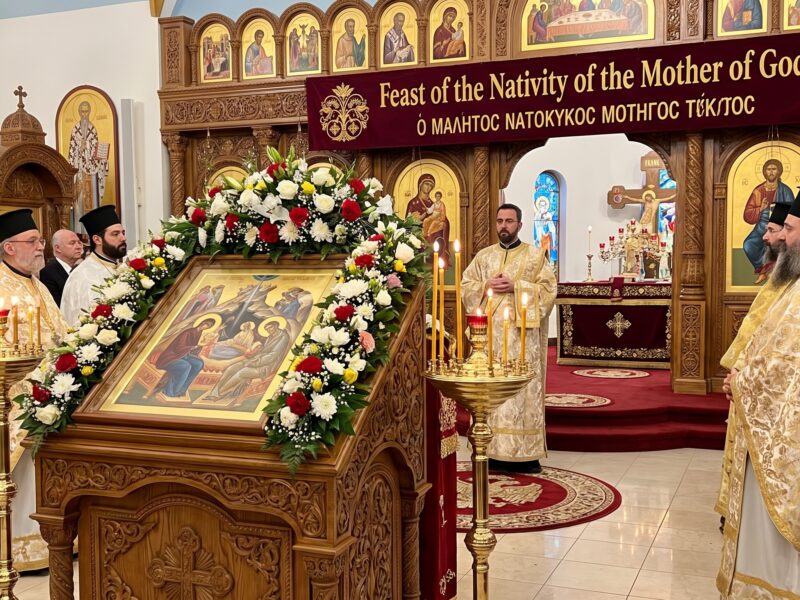
Another significant and often underestimated difference concerns the relationship between time and eternity. Orthodox liturgical experience is not merely a temporal act, but participation in eternal reality. The liturgy does not simply “remember” the events of salvation, but makes them present. Thus, the temporal and the eternal are not strictly separated, but interpenetrate one another. In Western tradition, this understanding is present, but often expressed through juridical or philosophical categories that may obscure its mystical depth.
The possibility of dialogue between these traditions does not lie in smoothing over differences, but in understanding them more deeply. Orthodoxy can offer the West a deeper sense of mystery and participation, while Catholicism and Protestantism can help articulate and clarify what the Eastern tradition often expresses symbolically and liturgically. True encounter occurs when it is acknowledged that no single tradition exhausts the reality of God.
Thus, “Orthodox vs Catholic vs Protestant” is not merely a series of oppositions, but a dialogical space in which different emphases may prove mutually complementary. Eastern and Western Christianity are not only divided, but also profoundly interconnected—like two modes of breathing within the same faith. It is within this tension that the possibility emerges to understand Christianity not as a static system, but as a living and dynamic communion with God.

Trough all this I want to declare this is all from God and to God. All Glory to Him!