Views: 52
Easter 2026: The Deep Theological Meaning of Christ’s Resurrection in the Orthodox Tradition
Christ is risen from the dead, trampling down death by death, and upon those in the tombs bestowing life — the theology, prayers, and iconography of the greatest feast
Table of Contents
- The Date of Easter 2026 and Its Liturgical Significance
- Christ’s Resurrection as the Re-creation of the World
- The Paschal Icon — The Visible Theology of the Resurrection
- The Troparion and Kontakion — The Theology of the Resurrection Hymn
- Prayers to Christ in the Theology of the Resurrection
- The Structure of the Easter Liturgy
- The Meaning of Easter for People Today
I. Easter 2026: The Liturgical Date and Its Context
In 2026, the Orthodox Church celebrates the Resurrection of Christ — Pascha — on April 19th, following the date of Pascha calculated according to the Julian calendar. This date is not merely a calendrical convention; it carries within it the cosmological rhythm of the entire story of salvation. Christ rises in the light of spring’s firstborn sun, as creation itself begins to renew. In the Orthodox tradition, the Resurrection of Christ is called in Greek Anastasis — a rising up, an awakening, a re-entry into being.
From the night of Holy Saturday until the dawn of Resurrection Sunday, the church is held in darkness and silent expectation. At midnight, the first candle is lit — a symbol of the Light of Christ — and its flame spreads from church to church, from person to person. The cry goes forth: “Christos Anesti!” — “Christ is risen!” — and the response echoes back: “Alithos Anesti!” — “Truly He is risen!”
“The Resurrection of Christ is not the return of one man to life — it is the death of death itself and the renewal of all creation in the life of God.”
II. Christ’s Resurrection as the Re-creation of the World — The Theological Essence
In Orthodox theology, the Resurrection of Christ is understood neither as merely a historical event nor as simple spiritual consolation. The Resurrection is an ontological rupture — a transformation at the very depth of all existence. Saint John of Damascus writes that the Resurrection of Christ is a transformation of the entire human nature: the flesh itself participates in immortality.
The cornerstone of Orthodox patristic theology is theosis — deification. Christ became human so that humanity might become divine. The Resurrection is the culmination of this process: the risen body of Christ is a deified body — yet at the same time a real, tangible body, one that ate fish and honeycomb (Luke 24:42–43). This is the paradox and the joy of Orthodox theology: matter itself has been redeemed.
Three Great Theological Dimensions
1. The Cosmological Dimension. The Resurrection of Christ transforms all of creation. Saint Maximos the Confessor teaches that the Logos — the eternal Word of God — is both the origin and the ultimate purpose (telos) of all creation. In the Resurrection, the Logos completes the cosmic passage through human nature and opens the way for the deification of all creation.
2. The Soteriological Dimension. Christ descends into the kingdom of death not as a prisoner, but as a King. Hades — the realm of the dead — cannot hold Him, for in Christ dwells the fullness of divinity, which death is incapable of consuming. The Resurrection troparion declares: “trampling down death by death” — Christ does not flee from death; He tramples it underfoot as God.
3. The Eschatological Dimension. The risen Christ is the Firstborn from the dead (Col. 1:18). His Resurrection is the origin and guarantee of the resurrection of all humanity. Every year, Easter is a liturgical foretaste of what is to come — the eternal Pascha in the Kingdom of God.
III. The Resurrection Icon — Visible Theology
In the Orthodox Church, the Resurrection is not depicted through an empty tomb or Christ standing in a garden, but through the Anastasis icon — the Greek word meaning “resurrection.” This icon portrays Christ standing upon the shattered gates of Hades, grasping Adam by the right hand and Eve by the left, drawing them up from the tomb.
The Anastasis icon is a visual summation of the entire theology of the Resurrection. Christ has not merely vacated His own tomb — He has shattered the very power of death. Beneath His feet lie the crushed gates of Hades, broken locks and chains, and fleeing demons. This is triumph, not merely survival.
Standing among the ranks of the dead are representatives of all humanity: Adam and Eve as symbols of the beginning of creation, the prophets David and Solomon, and John the Baptist. Christ has brought redemption to all of them. The icon proclaims: there is no human soul that Christ does not desire to save.
The Orthodox tradition of iconography does not regard icons as works of art, but as sacred windows into another reality. An icon does not depict a vision of the past; it makes the reality of eternity present. The Resurrection icon — the Anastasis — makes visible before our eyes what is most true of all: that death has been conquered.
IV. The Troparion and Kontakion — The Theology of the Resurrection Hymn
The centrepiece of Orthodox liturgy is the troparion — a brief liturgical hymn that articulates the theological essence of a feast. The Resurrection troparion is among the best-known liturgical texts in Orthodoxy:
Christ is risen from the dead, trampling down death by death, and upon those in the tombs bestowing life.
This three-line text is theologically dense in the extreme. The first line proclaims the fact — Anastasis. The second explains the means: Christ conquers death through death, not by bypassing it. The third opens the cosmic consequence: all who are held in death receive life. This is the very heart of Orthodox soteriology.
The kontakion — a longer liturgical hymn — adds:
Though You descended into the tomb, O Immortal One, yet You destroyed the power of Hades, and rose as victor, O Christ God, crying to the myrrh-bearing women: “Rejoice!” — bestowing peace upon Your apostles, and to the fallen granting resurrection.
V. Prayers to Christ in the Theology of the Resurrection
Prayer 1 — Joyful Thanksgiving for the Resurrection
Lord Jesus Christ, God who is risen,
Stepping into the light of Your resurrection, I lift my heart to You today. You descended into the heart of death, that I might no longer fear death. You laid Your body in the tomb, that my body might be given hope of eternal life. You shattered the gates of Hades — those very gates that had locked away the hope of all humanity.
Christ is risen — and in Your resurrection is my resurrection. In Your life is my life. In Your light is my light.
Grant me, Lord, a share in this joy of the Resurrection — a joy that the world can neither give nor take away. Open my heart to Your presence, as the heart of Mary Magdalene was opened at the tomb when she heard Your voice.
Amen.
Prayer 2 — The Anastasis Prayer of a Sinner
Christ, who draws Adam up from the tomb — draw me out of my own death, my own captivity, the darkness of my sin and my despairing heart.
As You stretched out Your hand to Adam, stretch out Your hand to me, Lord. I am no better than Adam, nor purer than Eve — I am equally in need, equally lost without You.
But Your love is greater than my sin, Your grace is deeper than my shame, Your life is stronger than my death.
Take me, Lord, into the light of the Resurrection. Let me die with You to sin and rise with You into new life.
Amen.
Prayer 3 — A Liturgical Prayer for Easter Morning
Today, Lord, all of creation sings together with Your Church: Christos Anesti!
Today the darkness has retreated before Your great light. Today death has swallowed up victory — but death itself has been swallowed up into eternal life.
Grant us, on this holy Easter of 2026, not merely the joy of the liturgy, but a true experience of resurrection: that our hearts may feel Your nearness, that our lives may reflect the light of Your resurrection, that our relationships and communities may be renewed in the power of Your rising.
Christ is risen — truly He is risen! And in this faith we all live.
Amen.
Prayer 4 — A Prayer for the Departed in the Light of the Resurrection
Lord Jesus, Anastasis — You who are the resurrection and the life of all,
We entrust into Your hands all those who have departed from among us, who sleep in the sleep of death.
You, who stood before the tomb of Lazarus and wept — You know the depths of a grieving heart. You, who proclaimed: “I am the resurrection and the life” — You know that death is not the final word.
Let all our departed ones receive a share in the light of Your resurrection. And to us, who grieve, grant comfort that surpasses all understanding — the knowledge that in You, there is a reunion yet to come.
Amen.
VI. The Structure of the Easter Liturgy in Orthodoxy
Holy Saturday. The church is draped in black and purple — the colours of mourning. A mood of profound silence and expectation pervades the entire day. The passage from Ezekiel 37 is read — the vision of the dry bones, understood as a prophecy of the Resurrection.
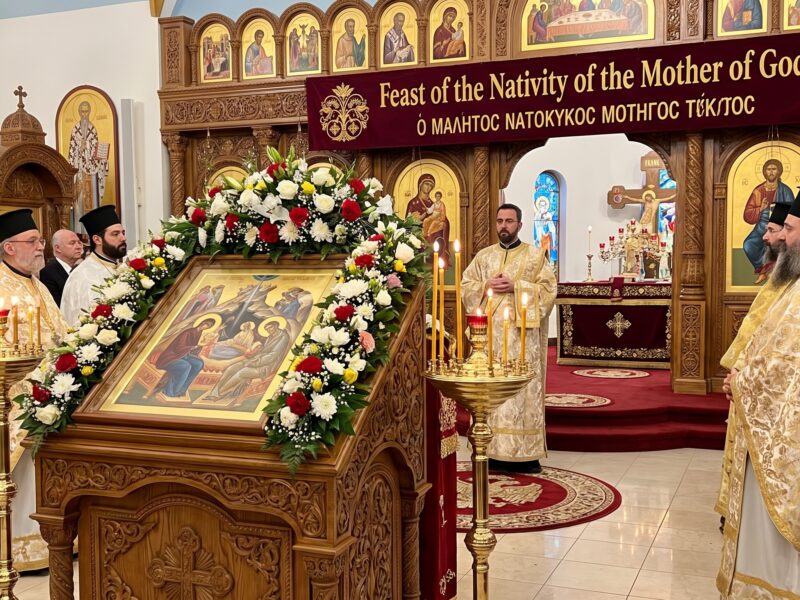
The Paschal Vigil. At midnight, the holiest moment begins. All the lights in the church are extinguished. The priest carries a single candle in from the back door — the Light of Christ — and its flame spreads throughout the entire church. The troparion is sung for the first time. A procession circles the church. The doors are flung open, as the stone once rolled away from the tomb.
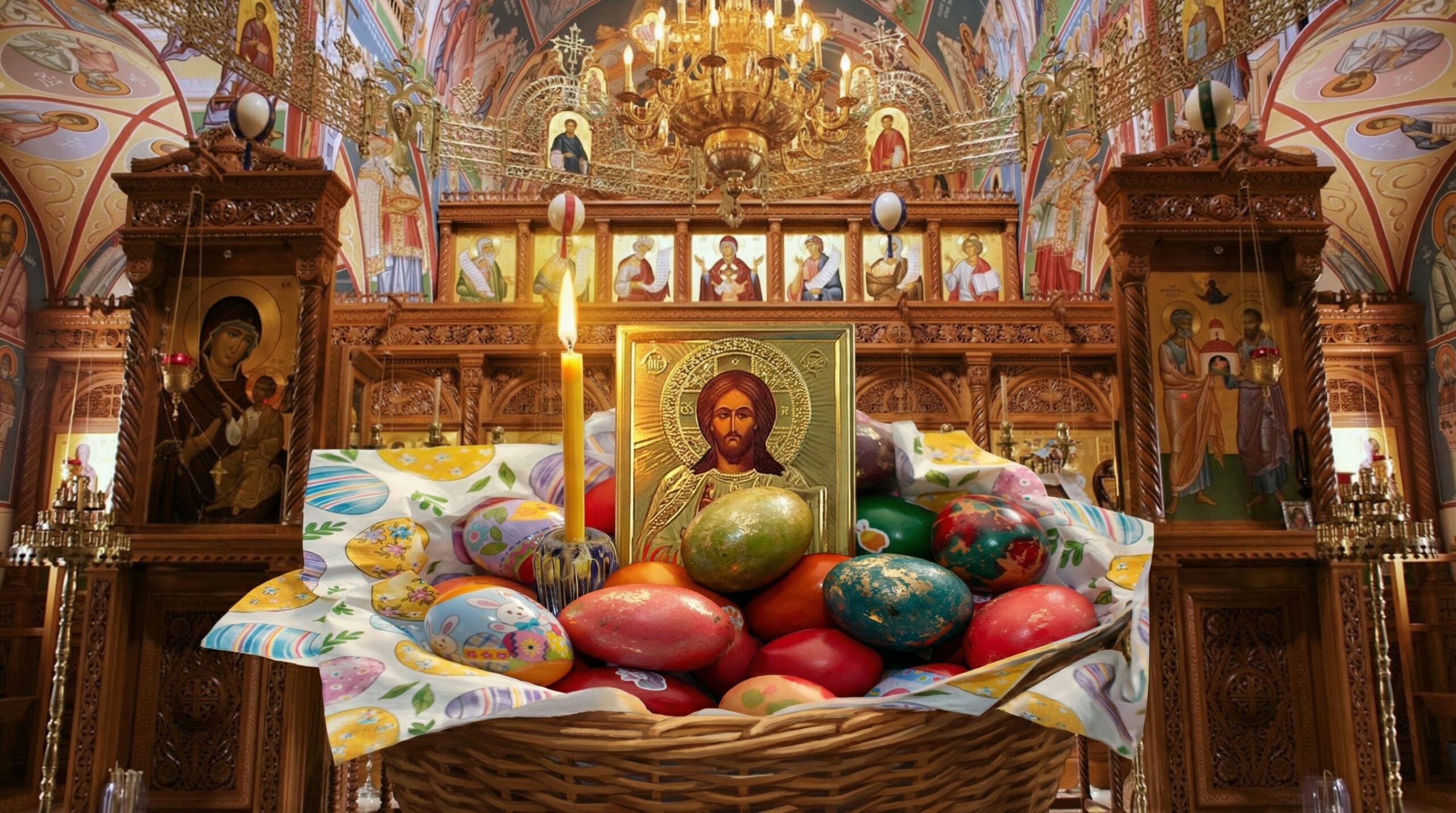
Paschal Matins and the Divine Liturgy. Throughout the night, the Paschal Canon is sung — the garland of hymns by Saint John of Damascus, composed of nine odes. Each ode begins with the cry: “Christos Anesti!” In the morning, the Divine Liturgy is celebrated, followed by the traditional blessing of the Paschal meal.
Bright Week. The entire week following Easter Sunday holds the same rank in the Church calendar as the day of the Resurrection itself. Each day, the full Paschal liturgy is celebrated. The Church sings every day as though it were Easter.
VII. The Meaning of Easter for People Today
It is easy to ask: what relevance can an ancient religious feast hold in today’s secular world? Orthodox theology answers: the Resurrection is not a vision of the past, but the reality of the present. The risen body of Christ is present — in the liturgy, in the sacraments of the altar, in prayer, in icons, in communal love.
Easter 2026 is an invitation to step into that reality. Not merely to celebrate a cultural holiday, but to pass through the liturgical space into eternity, where death has already been conquered. The Orthodox Church does not offer its members a religion of mere comfort — it offers something far more radical: participation in the life of the risen Christ.
“The Resurrection is not one event in history. It is the true meaning of all history — and the deepest reality of all that is present.”
Saint Seraphim of Sarov — Russia’s greatest mystic of the 19th century — greeted his pilgrims with the words: “My joy, Christ is risen!” — even in the depths of winter, even in August. The Resurrection was not, for him, a single annual feast, but a continuous reality in which he lived.
This is the invitation that Easter 2026 extends to each one of us: to step into the reality of the Resurrection — not only in April, not only in the liturgy, but in every moment, before every person who needs hope, in every place of death and grief where the light of the Resurrection is needed most.
Christos Anesti! — Christ is risen! Alithos Anesti! — Truly He is risen!

Trough all this I want to declare this is all from God and to God. All Glory to Him!