
Views: 17
Galatians 1:6-9 – New Testament Texts and Their Hermeneutics
EELC Theological Institute
1st Year (Master’s Program, Christian Cultural History)
Author: Allan Kroll 2019
1. THE GOSPEL OF CHRIST
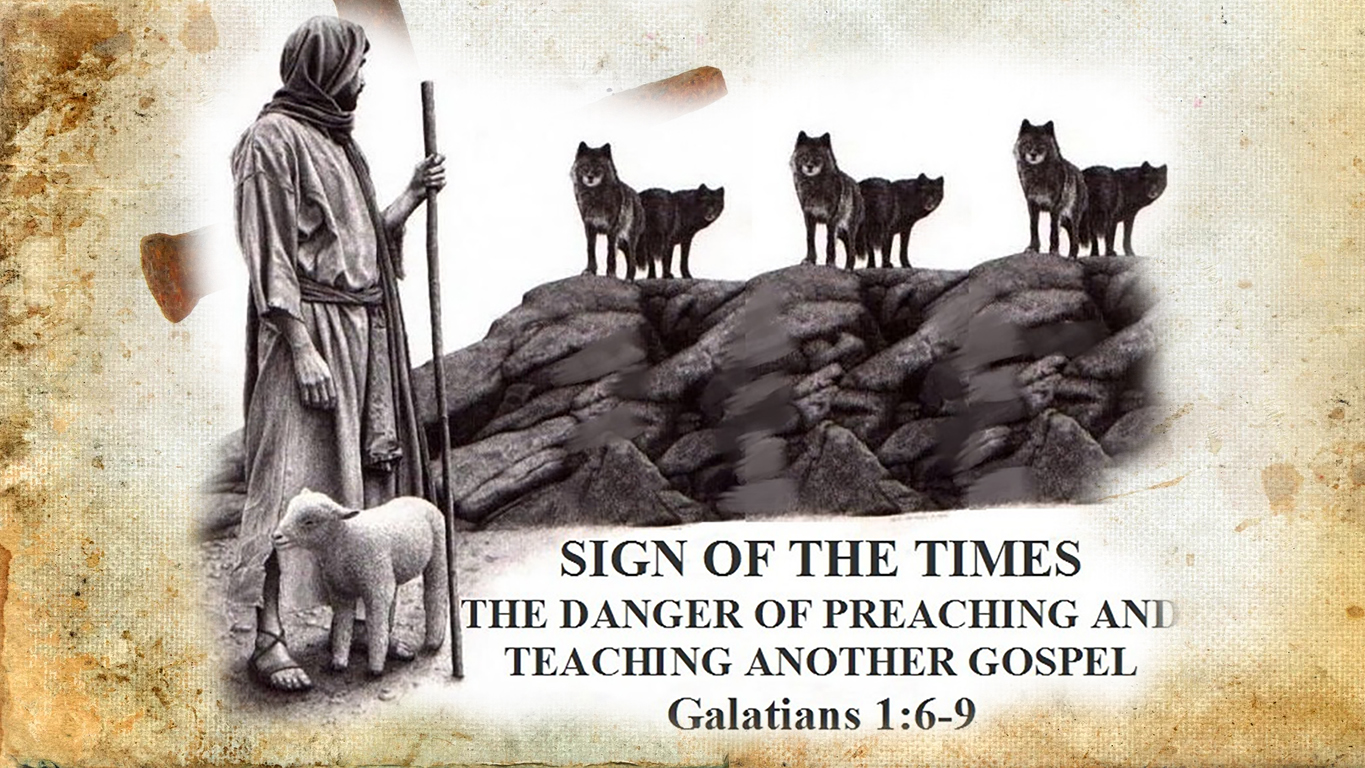
Galatians 1:6 I am astonished that you are so quickly deserting the one who called you to live in the grace of Christ and are turning to a different gospel— 7 which is really no gospel at all. Evidently some people are throwing you into confusion and are trying to pervert the gospel of Christ. 8 But even if we or an angel from heaven should preach a gospel other than the one we preached to you, let them be under God’s curse! 9 As we have already said, so now I say again: If anybody is preaching to you a gospel other than what you accepted, let them be under God’s curse!
Paul begins the Letter to the Galatians by introducing himself as an apostle, or envoy, who received his mandate not from people, but from Jesus Christ and God the Father (ch.1:1). As an envoy, he represents God’s kingdom, not himself or any other person’s interests. The gospel he preached, he calls “the gospel of Christ” (v.7), and in preaching it, he does not seek to please people, but only God (v.10). He received this gospel as a revelation from Jesus Christ, not learned or received it from people (vv.11-12). He sees himself as an apostle chosen from his mother’s womb and called through grace, to whom God revealed His Son and whose gospel he is called to proclaim. This conviction was so firm that he did not consider it necessary, even after receiving the gospel, to consult with other people or apostles (vv.16-17). Only after fourteen years did he present the gospel he was proclaiming to the leaders and apostles of the Jerusalem church (ch.2:1-2). The apostles and leaders of the Jerusalem church neither added anything to nor took anything away from this gospel (ch.2:6-9). Thus, “Paul’s gospel” and the gospel preached (received from Jesus) by the apostles were identical.
It is also striking that Paul emphasizes that this was the gospel that “we” (plural) preached. Although he does not specify whether this “we” meant him and his co-workers who proclaimed the gospel together with Paul while founding churches, or him and Jesus’s apostles who proclaimed the same gospel. The former interpretation should probably be preferred, but it is certain that there was no substantive difference between the gospel proclaimed by Paul and his co-workers and the Jerusalem apostles. There is only one gospel [1]. This was proclaimed by Paul together with his co-workers, and the same gospel was also proclaimed by Jesus’s apostles.
The content of Christ’s gospel is God’s grace, which has appeared to sinful humanity in the person of Jesus and in his gospel.
Paul was so convinced that the gospel he proclaimed to the Galatians was the only gospel that he could pronounce anathema upon those who proclaimed any other gospel [2].
2. A DIFFERENT GOSPEL
The Galatian churches had deviated from the gospel of Christ and had accepted “a different gospel.” The apostle was dismayed that the Galatians so quickly turned away from Christ. It is important to emphasize that he calls turning to “a different gospel” a turning away from Christ, not just from his gospel.
The Galatians had distanced themselves not only from the apostle’s teaching, who had been the instrument through which they were called to participation in the gospel, but also from God himself, by whose command and guidance this was proclaimed to them [3].
Turning away from the gospel of grace means turning away from the God of grace [4].
This was not simply an alternative interpretation of the gospel of Christ, but apostasy from the faith. Therefore, Paul also expresses very emotionally his concern for the churches that had fallen into false teaching. He calls them “foolish and senseless” (ch.3:1, 3), is as if in labor pains (ch.4:19), and perplexed about them (ch.4:20). It seems that the apostle has labored in vain for them (ch.4:11). Hence also the tone of the letter, which the apostle apparently tried to restrain, leaving unexpressed all the emotions that had arisen in connection with the situation (ch.4:20). This is the only letter in which he does not even thank God for the churches at the beginning of the letter. The letter begins with an introduction, wishes of grace and peace, and immediately after that comes harsh rebuke and the pronouncement of anathema upon those who preach another gospel. In all other New Testament letters, Paul mentions that he prays for those to whom he writes and thanks God for them. Only at the beginning of the Letter to the Galatians is there no prayer, praise, or thanksgiving [5].
The “different gospel” was proclaimed to the Galatians after Paul’s departure by Judaizers with a Pharisaic background who had come to that region. Converts were required to keep the Law of Moses and be circumcised, like Jewish proselytes. The Jerusalem Council took a clearly negative position regarding this practice, and a corresponding letter was sent out to Gentile Christian churches (Acts 15). Paul mercilessly calls these Judaizers “false brothers” (Gal.2:4). In Paul’s estimation, the purpose of the “false brothers” was to spy on the freedom of Christians and enslave them, regardless of how these “false brothers” themselves justified or rationalized their activities.
The issue was not the sincerity of the proclaimers of the “different gospel,” but their theology. When sincerity operates in the wrong direction, it can cause even more harm [6]. New conditions were added to Christ’s redemptive work. In other words, they taught that Moses should finish what Christ began [6].
Furthermore, one must not forget that Paul himself was a Christian with a Pharisaic background. He himself had undergone a radical conversion, received the gospel from Christ, which he proclaimed everywhere, and could not tolerate anything or anyone that could distort it.
For today’s reader, Paul’s words are undoubtedly merciless and narrow-minded.
The Judaizers did not deny salvation through Christ, but simply added some teachings to it. They did not deny the need to believe in Jesus as Messiah and Savior [8]. They probably fulfilled the same religious Jewish customs that the majority of the Jewish Christians in the Jerusalem church fulfilled. Paul did not accuse James, John, or Peter of proclaiming a “different gospel” [7].
Of particular interest is the Greek verb (metatithẽmi) that Paul uses in this passage. Its meaning is “to betray” or “to desert.” It was used of soldiers who had begun to mutiny or desert, and also of those who had changed sides in either political or philosophical conflicts. The Galatians had become religious turncoats and spiritual deserters [8]. Cole adds to this the observation that the verb is in the present tense, which means it is a process that was still continuing at the time the letter was written [9].
The apostle calls the proclaimers of the “different gospel” accursed (anathema) (Gal.1:8, 9). Paul pronounces anathema consciously and aware of his responsibility before God. Therefore, he repeats it twice [12].
The Greek word anathema is used in the Greek translation of the Old Testament when referring to a curse sent by God, which was placed upon someone or something, consigning it to destruction [10].
Why such a harsh judgment about people who also believed in Jesus as Messiah and Savior?
First, Christ’s honor was at stake. The very thought that human efforts are also necessary for salvation is offensive to his completed redemptive work. The second reason why Paul relates so sharply to what is happening is that it is a question of human souls. He was not writing about some trivial doctrine, but about the foundation of the gospel. Distorting the gospel meant destroying the path to salvation and sending to perdition those souls who could have been saved [11].
This does not justify pronouncing anathema upon those who differ from us in secondary doctrinal questions [12]. In such a question that directly concerns the foundations of the doctrine of salvation, the apostle was uncompromisingly rigid, not tolerating any diversity of opinions.
The foundation of the church could not be demolished. It is impossible to change the gospel while leaving the church untouched, because it is founded by the gospel and lives through it [13].
Paul writes that even if he himself should ever proclaim some other gospel, then he too belongs under anathema. The fact that Paul adds himself to this list eliminates any doubt that this is Paul’s personal antipathy or hostility [14]. It was not about Paul’s ego, but about Christ’s teaching.
Paul also mentions the possibility that a “different gospel” is proclaimed by “an angel from heaven,” that is, a supernatural being, in a vision or revelation. Satan and his co-workers can also appear to people as “angels of light” (see 2 Cor.11:13-15) to deceive them. Islam and Mormonism originated from an angel’s revelation and a new scripture that was supposed to correct or supplement the existing revelation respectively. Paul affirms that even the alleged revelation of a “heavenly angel” must be rejected if it contradicts the gospel originally proclaimed to them.
Anyone who rejects the apostolic gospel must be rejected, whoever they may be. Even if we are confronted with “an angel from heaven,” we must prefer the apostles to angels [15].
Bibliography
- Alan Cole “Paul’s Letter to the Galatians,” Logos, Tallinn, 2004
- John R.W. Stott “The Message to the Galatians”; St. Petersburg, 1995
- https://www.biblestudytools.com/commentaries/matthew-henrycomplete/galatians/1.html
[1] John R.W. Stott “The Message to the Galatians”; St. Petersburg, 1995, p.27.
[2] https://www.biblestudytools.com/commentaries/matthew-henry-complete/galatians/1.html
[3] Ibid.
[4] John R.W. Stott “The Message to the Galatians”; St. Petersburg, 1995, p.23.
[5] John R.W. Stott “The Message to the Galatians”; St. Petersburg, 1995, p.21.
[6] R.Alan Cole “Paul’s Letter to the Galatians,” Logos, Tallinn, 2004, p.70.
[7] John R.W. Stott “The Message to the Galatians”; St. Petersburg, 1995, p.22.
[8] R.Alan Cole “Paul’s Letter to the Galatians,” Logos, Tallinn, 2004, p.69.
[9] ibid, p.70.
[10] John R.W. Stott “The Message to the Galatians”; St. Petersburg, 1995, p.22.
[11] R.Alan Cole “Paul’s Letter to the Galatians,” Logos, Tallinn, 2004, p.68.
[12] John R.W. Stott “The Message to the Galatians”; St. Petersburg, 1995, p.26
[13] ibid, p.25.
[14] ibid, p.26-27.
[15] https://www.biblestudytools.com/commentaries/matthew-henry-complete/galatians/1.html
ABOUT THE AUTHOR
Allan Kroll
 Allan Kroll is a Christian teacher, preacher, and spiritual author whose writings are marked by deep biblical reflection, spiritual sobriety, and a clear call to personal repentance and dedication. At the heart of his message is a living and honest relationship with God rather than formal religiosity.
Kroll’s teaching is firmly rooted in Scripture and in the historic Christian faith. He addresses with courage themes such as the posture of the heart, spiritual lukewarmness, self‑deception, and the continual need to seek God. His style is direct, pastoral, and at the same time deeply refreshing to the soul.
Allan Kroll’s writings invite the reader not to settle for a superficial faith but to seek God with all their heart throughout their entire life.

Trough all this I want to declare this is all from God and to God. All Glory to Him!