
Views: 6
The Doctrine of Justification Today
EELC Theological Institute
Author: Allan Kroll – Tallinn 2019. a.
Prayer of Salvation (Justification)
Author of the Prayer of Salvation: Martinus Vaicarius (Martin Vaik) – Tallinn 2026. a.
Introduction
The doctrine of the justification of the sinful person before God was the most significant doctrine of the Lutheran Reformation and the greatest contribution to church history, and remains a doctrine of fundamental importance for Protestant churches to this day. This work analyzes whether the doctrine of justification is relevant in today’s world.
The work is divided into three parts, the first of which explains what is meant by the doctrine of justification, the second part addresses the most frequently raised objections to it today, and the third part provides reasons why, in the opinion of the author of this work, the doctrine of justification is important today as well.
The main sources used in the work are Elmar Salumaa’s “Handbook of Systematic Theology” and Wilfried Härle’s article “Justification Today” from the collection “Reformation 500.”
1. WHAT IS THE DOCTRINE OF JUSTIFICATION
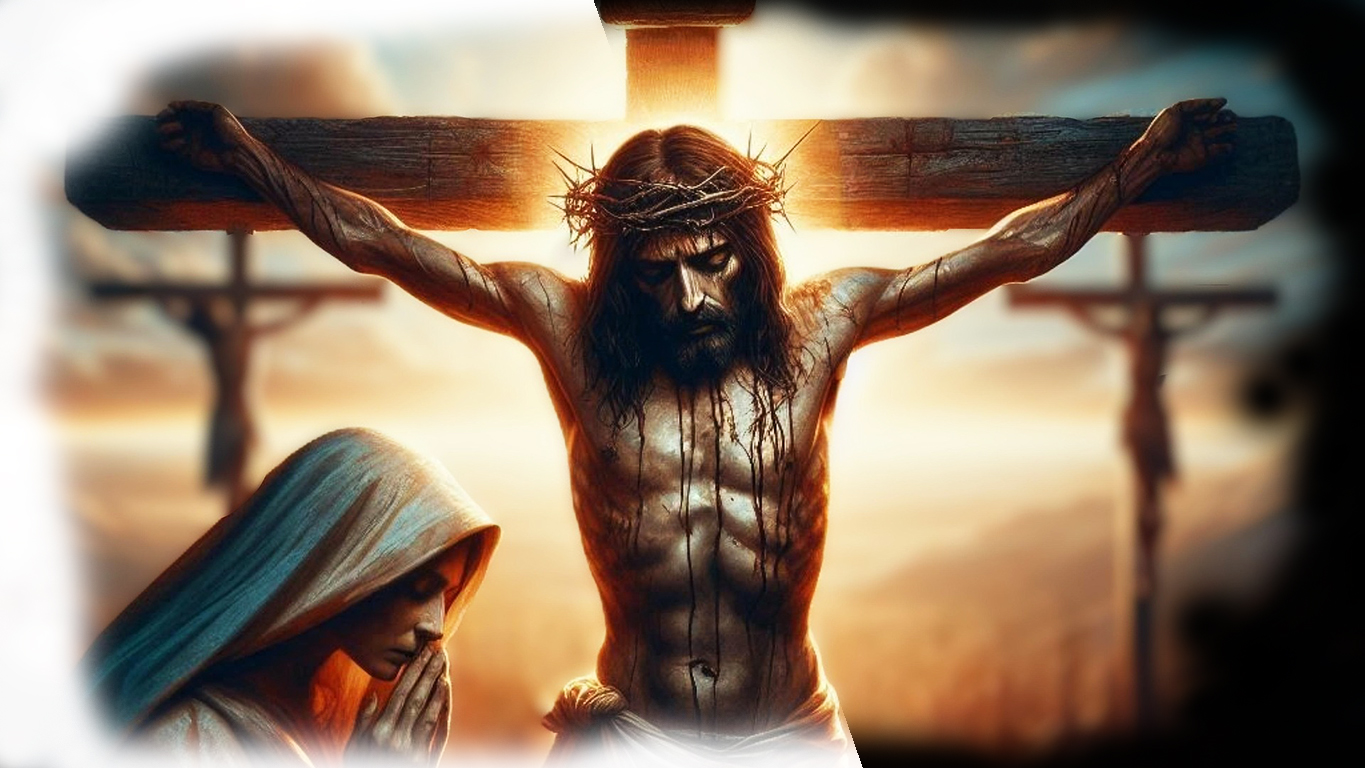
Before addressing the importance of the doctrine of justification in today’s world, it is necessary to clarify what is meant by this concept. The doctrine of the justification of the sinful person before the holy God, solely by grace and solely through faith, was for Martin Luther a doctrine on which depends whether the church stands or falls (articulus stantis et cadentis ecclesiae) [1]. This does not mean that it is the most important doctrine in Christian dogmatics, but the doctrine of justification is undoubtedly the doctrine of the most significant importance regarding the relationship between man and God. This is where the relationship of the redeemed person with God begins. According to New Testament teaching, man is, both by nature and by choice, a sinful being, having transgressed God’s laws in thoughts, words, deeds, and in the omission of righteous acts. Sin is treated as a debt that man is unable to pay. God became man in Jesus Christ to pay the debt of sin on behalf of the “insolvent and bankrupt” man. Jesus perfectly fulfilled all the requirements of the Law, died for the transgressions of men, and was raised for their justification (Rom. 4:25). The sinless and perfect Son of God became sin so that man could become righteous before God (2 Cor. 5:21). Justification becomes the portion of the person who does not rely on their own good works but on Christ’s redemptive work and receives Christ’s righteousness through faith awakened by God in them. God justifies man through grace (Eph. 2:8). Justification is entirely God’s act of grace, a manifestation of His sovereign will of grace, the purpose of which is forgiveness and man’s complete salvation from perdition [2]. Moreover, this is not a matter of “man’s own righteousness,” but “Christ’s righteousness,” which is imputed to man. In the Apostle Paul’s treatment of justification, its legal nature is particularly striking. Man, having violated God’s law, is not simply a defendant subject to the presumption of innocence, but a guilty party with no hope of justification. God is a perfectly just Judge who cannot leave sin unpunished. The wages (punishment) of sin is death (Rom. 6:23), and the sinful person is sentenced to death. Jesus is the defendant’s advocate in this “court proceeding” (Rom. 8:34). The same idea also appears in John (1 John 2:1). The defendant is justified solely through the judge’s corresponding decision [3]. Man’s faith is thereby only a means by which justification is received, not something that causes it.
2. CONTEMPORARY OBJECTIONS TO THE DOCTRINE OF JUSTIFICATION
The author of this work is convinced that the doctrine of justification was not important only in the times of Paul, Augustine, or Luther, but is so today as well. There are, of course, several objections to this position. While medieval man was interested in the salvation of his soul, feared God as a heavenly judge, and sought reconciliation with Him, these are not primary issues for today’s person to deal with. However, this does not mean that religion is not important to today’s person. According to various surveys, atheists or non-religious people make up about 9-14% of the world’s population, so the vast majority of the population associates itself with some religion or spiritual teaching. Among them are religions that do not deal with a personal god (Buddhism), religions where there are millions of gods (Hinduism), and also monotheistic religions (Judaism, Christianity, Islam, etc.). The doctrine of justification as the New Testament treats it is certainly not important to representatives of many religions, where the emphasis is on man’s own spiritual development through certain spiritual practices and whose goal is to be liberated from the painful cycle of reincarnations and then to dissolve into nothingness. In Judaism and Islam, one cannot speak of Jesus as Redeemer or of someone else’s righteousness becoming the basis of man’s justification. In addition to faith, for example in Islam, emphasis is placed on man’s righteous deeds, which must outweigh sinful deeds on the day of judgment. Thus, a critic might say that the doctrine of justification can only be important in a cultural space with Christian history and background.
Also, analyzing the study “Faith, Life and Religious Life 2015” by the Estonian Lutheran Church and Saar Poll OÜ [3], one can conclude that today’s Estonian person, like many people in the Western world, wants to mix together a so-called “own faith” from various spiritual and religious teachings and practices, the components of which are fragments from Eastern religions, esotericism, and the teachings of various “knowing men/women.” Rather, self-development, self-help teachings, and self-actualization are valued over seeking a right relationship with one’s Creator. The Creator is often represented as an abstract force or impersonal power. Spiritual practices are important because they offer peace of mind and harmony, success in relationships or work, and also the feeling of being “people with spiritual interests,” not “base souls.” The doctrine of justification is probably not attractive to the practitioner of “own faith” because it presupposes man’s hopelessness and complete sinfulness and the confession of guilt. Rather, it is believed that there are no mistakes, only lessons, and that man did the best that could be done in those circumstances in any situation. Thus there can be no question of guilt, because he could not have done otherwise. According to today’s militant atheist Sam Harris, man is a biological machine that is pre-programmed to make certain choices and is simply incapable of making others. Thus justification seems to be completely unnecessary and irrelevant.
Härle rightly points to the fact that today’s person has difficulty understanding the doctrine of justification also due to linguistic difficulties [5]. In the sense that Paul or Luther used it, this word is no longer used today anywhere except in church circles. It is used primarily in the context of self-justification (though less frequently in Estonian), which is however the complete opposite of the meaning of this concept in the writings of Paul or Luther.
The doctrine of justification also seems to be absurd in a world that at least in words emphasizes justice and calls people to fight against injustice. According to this starting position, the guilty party must be fairly punished, not justified by grace. Modern man seems to have a heightened sense of social justice, and the idea that someone could be justified through faith, solely by grace and apart from their deeds, seems downright scandalous to today’s person. It would be like justifying a Nazi war criminal in court. Grace is not “incomparable and amazing” for a person with such an attitude, but scandalous and irritating.
The doctrine of justification is inseparably connected with man’s image of God. Luther knew God as He reveals Himself in the Law and the Gospel. Paul’s understanding of how God’s righteousness was revealed in the Gospel was revealed to Luther years later [4]. The Law did its work as an “tutor” (Gal. 3:24-25) to then lead man to the righteousness of faith. Today’s person does not usually trouble themselves with such searches, because the importance of positive communication and shaping a positive self-image is greater for them. If God exists for them at all, then it is certainly not a heavenly Judge, but an all-loving “heavenly grandfather” without conditions, to win whose favor requires nothing more than simply existing.
For modern man, the understanding of man as a lost sinner who is incapable of saving himself is hard to bear. This is true both for church people and for people outside the church. The humanistic conception of man considers this an insult to man, a degradation, and a negative image of man [5]. This message gives the impression that the preacher has not yet moved from the Middle Ages to the Age of Enlightenment.
It is also characteristic of today’s person to blame God for all the troubles of the world and to consider them proof of God’s non-existence. The doctrine of justification is supposedly a typical example of church teaching that tries to answer questions that no one is asking [8]. Or as it is said, “the church scratches where no one itches.” Instead of seeking God who can justify, man would like to judge God himself, accusing Him of the troubles of this world or at least of not intervening in them.
3. WHY THE DOCTRINE OF JUSTIFICATION IS IMPORTANT TODAY
After such a number of objections, one might think that the doctrine of justification is no longer relevant for today’s people and that instead one should focus on self-help teachings. This is not the case, however.
The church, which confesses the Bible as God’s Word, cannot retreat from the doctrine of justification already for this reason, because it is clearly New Testament teaching. The Lutheran principle “when Scripture speaks, God speaks” certainly applies also to this doctrine. This is God’s Word, not human teaching. Since God is unchangeable and one cannot, as from a restaurant menu, choose teachings to take and leave, the doctrine of justification is as relevant today as it was in the time of the Apostle Paul or Martin Luther.
Härle rightly points to the truth that today’s person does not ask for a gracious God in those words as in Luther’s time. Today’s person may not feel that they face divine demands whose fulfillment may prove overwhelming, because human and social demands are more pressing [6]. A society that values achievements and, according to Abraham Maslow’s hierarchy of needs, places the need for achievement in the first place among its life goals, demands from its “subjects” what remains unattainable for most. Although this is not associated with God, the pressure of social demands is often unbearable for a more sensitive person. This, however, can in turn be a stimulus that directs the weary and burdened person toward the gracious God, who gives them rest through justification. The need for love is coded deep in man’s heart. Quoting Marie von Ebner-Eschenbach, Härle writes: “Most people need more love than they have earned” [10]. We need what we are actually not worthy of. This means that there is a need for someone who could give us “by grace” what we have not earned by works. The doctrine of justification testifies to this.
The doctrine of justification essentially presupposes also an understanding of man’s sin and guilt. Man, however, has since the Garden of Eden tried to cover his guilt and the accompanying shame with so-called “fig leaves.” At some point, however, it is felt that this is not enough. Man is not capable of justifying himself. For this, there is a need for someone who is “higher.” A classic example of this psychological effect in human society is the desire to be accepted and recognized by one’s parents. People who have achieved much by society’s standards are nevertheless in internal crisis because they have not received this “justification” from their father or mother. The restless heart, however, can find its rest in God. Freud’s claim that religion is “a search for the father” interprets this problem distortedly, but nevertheless points to the fact that man needs approval from outside and usually from a person close to them and with authority.
In response to Freud, one can say that by the same logic, atheism is simply rebellion against the father. Man who has rebelled against God is separated from the Creator and finally from himself as well. Many psychological problems in human life stem from this. Man is separated from fellow humans, the consequence of which is social problems. Finally, he is separated from nature [11]. Despite all efforts, mankind has not succeeded in overcoming these divisions. The most atheistic century (the 20th century) in mankind’s recorded history was also the bloodiest century in history. Man has not managed to create an earthly paradise, but has repeatedly managed to create various hells and suffering. The problem of man’s sinfulness no longer needs any proof, looking at how godless societies have behaved. Man rebelling against his Creator is incapable of finding either internal or social peace.
The doctrine of justification, provided it is correctly understood, offers man the possibility of finding peace with his Creator and thereby also finding peace within himself. The knowledge that the Creator of all has in His great love given His Son to erase our guilt and restore a right relationship with God is undoubtedly the most effective way to find that peace which man does not find anywhere else. The fact that the doctrine of justification is a psychologically effective way of neutralizing man’s anxiety, guilt, and shame does not, of course, prove its theological correctness, but should give a person familiar with the correspondence theory of truth pause for thought. If something corresponds to reality, then it is probably truth. Especially considering the poor effect of alternatives in dealing with the same problems. A justified person living in divine harmony brings this with them also into the world in which they live.
The doctrine of justification has not lost its relevance in today’s world, which desperately struggles to avoid falling into nihilism and to give its life some meaning without God. Justification before God gives the rebellious person peace of heart and through this also peace with the surrounding world and mankind.
Summary
The doctrine of justification encompasses all the most important aspects of the relationship between man and God. Man is sinful and incapable of making himself righteous before the holy God. In Jesus, God redeemed man’s guilt of sin and offers justification to those who receive it through faith.
Today, the doctrine of justification is often considered obsolete because today’s person no longer seeks a gracious God and considers it absurd that someone else’s death could justify a guilty person. In the justification of the guilty, injustice is seen rather than special grace and mercy. Today’s person’s image of God does not favor the acceptance of the doctrine of justification. If the existence of God is acknowledged at all, they do not want to acknowledge Him as Judge. Today’s person’s image of man also does not favor the acceptance of the doctrine of justification. Calling man a sinful being is considered degrading and insulting.
Despite this, in the opinion of the author of this work, the doctrine of justification is relevant today as well. Social pressure that emphasizes achievements can create a feeling of inadequacy and lead to seeking grace. This is mostly sought from above. A person cornered by society’s pressure needs peace of heart, which can only be offered by someone who is in a higher position than them. That man cannot justify himself has been convincingly and repeatedly proven by history. Peace with the Creator, which Jesus’s righteousness brings, enables one to find peace within oneself, with one’s neighbor, and with society.
Personal Prayer of Salvation (Justification)
Dear Jesus!
I Believe You are the Son of od and only way to Father ning, that You died on the Cross for my sins and You are the only way to God. You have been risen from the dead and I believe You are Alive God. I repent that I have been living a sinful life, where I didnt know You (Rm 3:13)
I believe You shed Your Blood on the Cross Redeemed me from sin, saving me for makeing free from Your Grace (Rm.23:24). I ask You to Come Into My Heart.I take You now as an Lord and Saviour over my life. Free mind from everything that satan has binded me from the concequence of sin. Heal my Body Heal my Soul. I believe You took my sins on the Cross (Mat.8:17),to heal and free me. Guide me by my calling.
Now I Believe that in You I have Eternal life (Joh.3:16)
I Pray thet you would fill me with the Holy Sprit and Baptise me whit Holy Ghost and FIre (Mat.3:11).From now on I surrender in everything on Your Divine Will in my life and I ask You for a Guidance by The Holy Spirit like you guided Your Son, when He walked on earth
I Give myself wholly to You Jesus. I give myself wholly to You Holy Spirit;
Jesus – In You I have ETERNAL LIFE. This is Eternal Life, that they know You the only True God. I Surrender to be anointed with the Power of The Holy Spirit
And Now I confess :
Allmighty God is My FATHER
Jesus Christ is My SAVIOUR
Holy Spirit is my CONFORTER ( Johannese 16:7-15 ).
I Born Again From The Spirit and Water ( Johannese 3:5-6 ).
Inherited Eternal life, and part of the true Vine ( Roomlastele 12:5 ).
Amen
Holy Bible assurance
John 1:12 – KJV, 1978
12. But as many as received him, to them gave he power to become the sons of God, even to them that believe on his name:
Rejoice! Welcome to God’s family. You are a New Creation with the Holy Spirit. Born again and in the Kingdom of God. All former things have passed away.
Put your hand on your heart and start to speak and utter, if the tongues of the Holy Spirit come…Be sure of your Baptism with the Holy Ghost! There can be in the beginning only few words. If there are no tongues. Bible declares still that you are saved and born again. They come later for confirmation of Baptism.
References
Reformation 500, spirituality, cultural influences, perspectives, Wilfried Härle “Justification Today,” EELC Institute of Theology, Tallinn 2017
Elmar Salumaa “Handbook of Systematic Theology,” EELC Institute of Theology, Tallinn, 2008
Francis A. Schaeffer “The God Who Is There,” Allika, Tallinn, 2013
http://www.saarpoll.ee/UserFiles/File/Elus,%20usust%20ja%20usuelust_2015_ESITLUS_FINAL.pdf
Notes
[1] Elmar Salumaa “Handbook of Systematic Theology,” EELC Institute of Theology, Tallinn, 2008, p. 438.
[2] Elmar Salumaa “Handbook of Systematic Theology,” EELC Institute of Theology, Tallinn, 2008, p. 434.
[3] ibid, p. 434.
[4] Reformation 500, spirituality, cultural influences, perspectives, Wilfried Härle “Justification Today,” EELC Institute of Theology, Tallinn 2017, p. 237.
[5] ibid, p. 238.
[6] Reformation 500, spirituality, cultural influences, perspectives, Wilfried Härle “Justification Today,” EELC Institute of Theology, Tallinn 2017, pp. 241-242.
[8] ibid, p. 238.
[10] ibid, p. 244.
[11] Francis A. Schaeffer “The God Who Is There,” Allika, Tallinn, 2013, pp. 220-221.
ABOUT THE AUTHOR
Allan Kroll
 Allan Kroll is a Christian teacher, preacher, and spiritual author whose writings are marked by deep biblical reflection, spiritual sobriety, and a clear call to personal repentance and dedication. At the heart of his message is a living and honest relationship with God rather than formal religiosity.
Kroll’s teaching is firmly rooted in Scripture and in the historic Christian faith. He addresses with courage themes such as the posture of the heart, spiritual lukewarmness, self‑deception, and the continual need to seek God. His style is direct, pastoral, and at the same time deeply refreshing to the soul.
Allan Kroll’s writings invite the reader not to settle for a superficial faith but to seek God with all their heart throughout their entire life.

Martinus Vaicarius’s mission is to:
- Provide spiritual support and guidance to people seeking peace and hope
- Create prayer texts that bring God’s peace to hearts suffering under fear and anxiety
- Promote deep understanding of the power of theGod of Sabaoth and the protection of the heavenly hosts
- Help people enter the spiritual sphere where God’s peace reigns over all
AICortex Invest OÜ