Views: 26
The Jesus Prayer: How to Pray with the Name of the Lord and Find Deep Peace in God
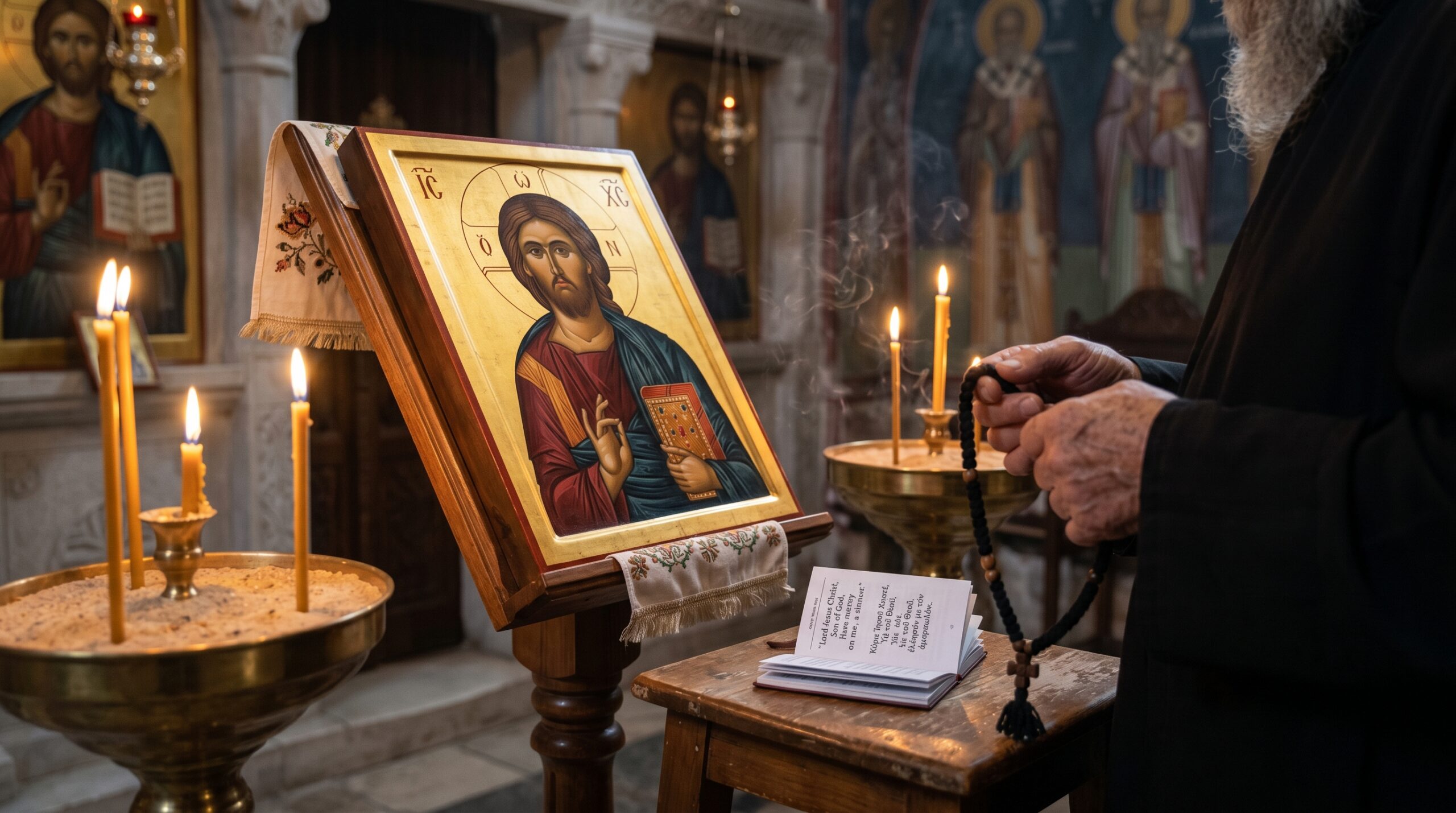
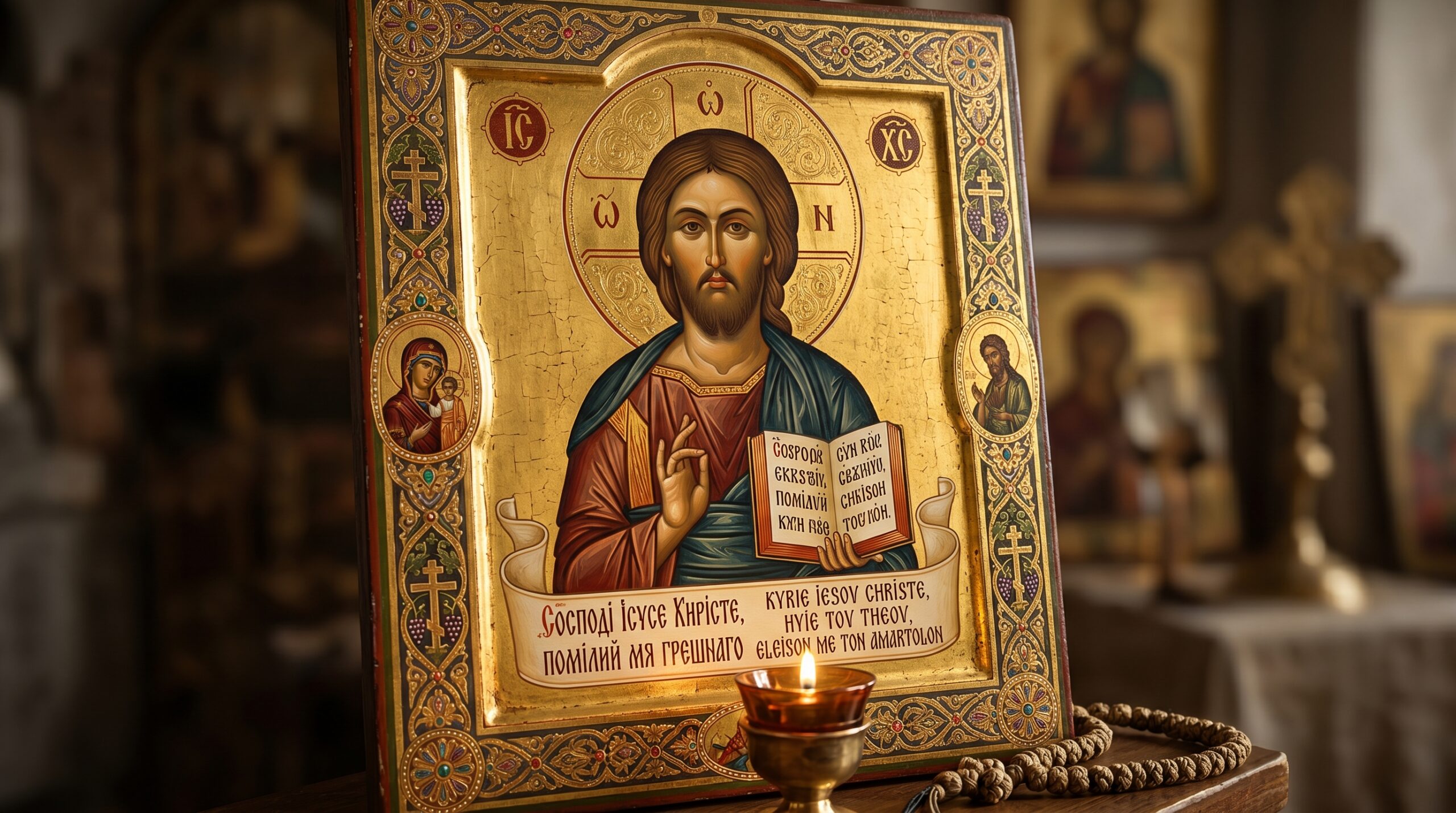
The Jesus Prayer is one of the simplest yet most powerful forms of prayer in the Christian tradition, especially within the Orthodox Church. Its complete Estonian version is: “Issand Jeesus Kristus, Jumala Poeg, heida armu minu peale.” In English, the traditional form is: “Lord Jesus Christ, Son of God, have mercy on me, a sinner.” This short prayer combines confession of faith, humility, and an invocation of God’s mercy. It is often repeated rhythmically, united with breathing, to draw the mind into the heart and attain hesychia – inner stillness and peace.
Historical and Theological Background of the Jesus Prayer
The roots of the Jesus Prayer reach back to the early Christian desert fathers, but its profound theological foundation was clarified in the 14th century on Mount Athos through Hesychasm. Hesychasm (from the Greek ἡσυχία – stillness, silence, peace) is an eremitic prayer tradition whose goal is the purification of the mind and heart so that a person may partake in God’s energies. Saint Gregory Palamas (1296–1359) defended this practice against the criticisms of Barlaam, emphasizing the crucial Orthodox dogmatic distinction between God’s essence (which remains forever inaccessible to creatures) and God’s uncreated energies (through which we can truly unite with God).
According to Palamas, Hesychasm is not merely a psychological exercise but a real communion with the living God. Through the Jesus Prayer, the practitioner descends into the heart, where noetic prayer – prayer of the mind – becomes prayer of the heart. This leads to theosis, or deification: the elevation of the human person by God’s grace without losing one’s created nature. This teaching fully aligns with Orthodox dogma, which holds that salvation is communion with the Holy Trinity.
How to Practice the Jesus Prayer
For beginners, a simple method is recommended:
- Find a quiet place and sit upright, with your head slightly inclined forward.
- Close your eyes or direct your gaze downward (toward the heart area).
- Breathe calmly; on the out-breath, say: “Lord Jesus Christ, Son of God, have mercy on me.”
- Begin slowly, then gradually link the prayer to your breathing or heartbeat.
The goal is not mechanical repetition but the concentration of attention on the Name of the Lord. The Holy Fathers of Orthodoxy teach that the Name of Jesus carries the power of God’s presence. Saint Theophan the Recluse (19th century) called it one of the most powerful prayers for this reason. At first, the mind may wander into thoughts, but with perseverance the heart is purified and the prayer becomes unceasing, as the Apostle Paul exhorts: “Pray without ceasing” (1 Thessalonians 5:17).
The Peace That the World Cannot Give – Biblical Message
The Jesus Prayer leads to a deep peace that does not depend on external circumstances. It is the same peace spoken of by the Lord Jesus Christ in the Gospel of John:
“Peace I leave with you; my peace I give to you. Not as the world gives do I give to you. Let not your hearts be troubled, neither let them be afraid.” (John 14:27)
This peace is Christ’s own peace – the peace of reconciliation with God. The Apostle Paul writes: “Therefore, since we have been justified by faith, we have peace with God through our Lord Jesus Christ” (Romans 5:1).
The Bible speaks of peace on several levels. In the Old Testament, “shalom” means wholeness, well-being, and reconciliation with God. In the New Testament, it becomes Christ’s gift. Jesus says: “I have said these things to you, that in me you may have peace. In the world you will have tribulation. But take heart; I have overcome the world!” (John 16:33). In the Hesychast tradition, this biblical promise becomes a lived reality: by praying the Name of the Lord, one steps out of the world’s turmoil and enters God’s rest.
In-Depth Analysis: The Jesus Prayer and Hesychasm Today
In today’s restless world, where anxiety and scattered attention are commonplace, the Jesus Prayer offers a radical alternative. Hesychasm is not an escape from the world but a deeper engagement with it through a purified heart. Gregory Palamas teaches that God’s uncreated energies illuminate the one who prays – this is not imaginary light but a true communion, as experienced by the Athonite fathers in the vision of the Taboric Light.
Orthodox theology emphasizes that this prayer is not elitist but accessible to all. Even in the midst of a busy life, one can repeat the prayer at work, while driving, or walking. It leads to purification of the mind (katharsis), contemplation (theoria), and ultimately union (theosis).
Spiritual fathers recommend starting with short sessions (10–15 minutes) and gradually increasing the time. Spiritual guidance is important to avoid illusions or spiritual pride. The prayer must be accompanied by humility, repentance, and the Sacraments (especially Holy Communion and Confession).
Conclusion: An Invitation to Prayer of the Heart
The Jesus Prayer – “Lord Jesus Christ, Son of God, have mercy on me” – is a gift to the whole of Christianity. It leads us to the biblical peace that surpasses all understanding (Philippians 4:7). The Hesychast path is not only for monks; it is an invitation to every Christian to seek God in the stillness of the heart.
Begin today. One prayer at a time. One breath at a time. And you will discover how the Name of the Lord brings forth within you that peace which the world cannot give or take away. May this prayer be your constant companion on the path to theosis – union with the Triune God.

Trough all this I want to declare this is all from God and to God. All Glory to Him!