Views: 206
Õigeusu Ristimine: Kuidas Toimub Õigeusu Kiriku Ristimise Tseremoonia, Samm-Sammult Juhend, Traditsioonid ja Erinevus Teistest Kirikutest 2026
Õigeusu ristimine on üks Kiriku kõige pühamatest ja elumuutvamatest saladustest, milles inimene sureb vanale patusele elule ning sünnib uuesti veest ja Vaimust, nagu Issand Jeesus Kristus õpetas Nikodeemusele: „Tõesti, tõesti, ma ütlen sulle, kui keegi ei sünni veest ja Vaimust, ei või ta Jumala riiki näha“ (Jh 3:5). See ei ole lihtsalt sümboolne tegu ega ühiskondlik tähistamine, vaid tegelik osasaamine Kristuse surmast ja ülestõusmisest. Ristimise kaudu puhastatakse pärispatt, inimene riietatakse Kristusesse ja saab Kiriku täieõiguslikuks liikmeks. Eesti Apostlik-Õigeusu Kirikus järgitakse seda apostellikku pärimust, mis on säilinud muutumatuna esimesest sajandist alates, rõhutades täielikku kastmist ja vahetut sidet teiste initsiatsiooni saladustega.
Ristimise teoloogiline sügavus ulatub kaugele minevikku. Püha Apostel Paulus kirjeldab seda Rooma kirjas järgmiselt: „Kas te ei tea, et me kõik, kes oleme ristitud Kristusesse Jeesusesse, oleme ristitud tema surma? Me oleme siis koos temaga maha maetud ristimise kaudu surma, et nagu Kristus äratati üles Isa kirkuse läbi, nõnda peame ka meie käima uues elus“ (Rm 6:3–4). See ei ole ainult pattude andestamine, vaid täielik uuestisünd, uus loomine. Püha Johannes Kuldsuu, üks suuremaid Kiriku isa, rõhutas, et ristimise vees sureb vana inimene koos oma kirgedega ning tõuseb uus, Jumala laps, kellele on antud Püha Vaimu pitser. Ristimine on kosmiline sündmus – inimloomuse taastamine selle algses ilus, mis kadus Aadama langemises. See avab tee theosis’ele, jumalikustumisele, milles inimene kasvab üha enam Jumala sarnasuseks.
Õigeusu traditsioonis nähakse ristimist kui Kiriku ust, millest algab kristlik elu. Erinevalt mõnest teisest kristlikust suunast ei ole see pelgalt isiklik usutunnistus või sümbol, vaid tegelik armu vahend, mis toimib Jumala initsiatiivil. Imikuid ristetakse usus, et Jumal tegutseb hinges juba enne teadvust, ning täiskasvanute puhul eelneb põhjalik katehhees ehk usuõpetus. See tagab, et inimene liitub Kirikuga teadlikult ja sügava sisemise valmisolekuga.
Ristimise tseremoonia kulg õigeusu kirikus
Õigeusu ristimise tseremoonia on rikas, mitmekihiline ja täis sügavat sümboolikat, mis viib osaleja samm-sammult surmast ellu. Tavaliselt algab see kiriku eesruumis või spetsiaalses paigas, kus ristitav või tema eestkostjad – ristivanemad – loobuvad saatanaast ja tema tegudest. See eksortsism, kurja vaimude väljatõrjumine, on väga oluline: inimene ei saa siseneda Kristuse kuningriiki enne, kui ta on lahti öelnud pimeduse võimust. Loobumise järel järgneb pöördumine Kristuse poole, usutunnistus ja õnnistused.
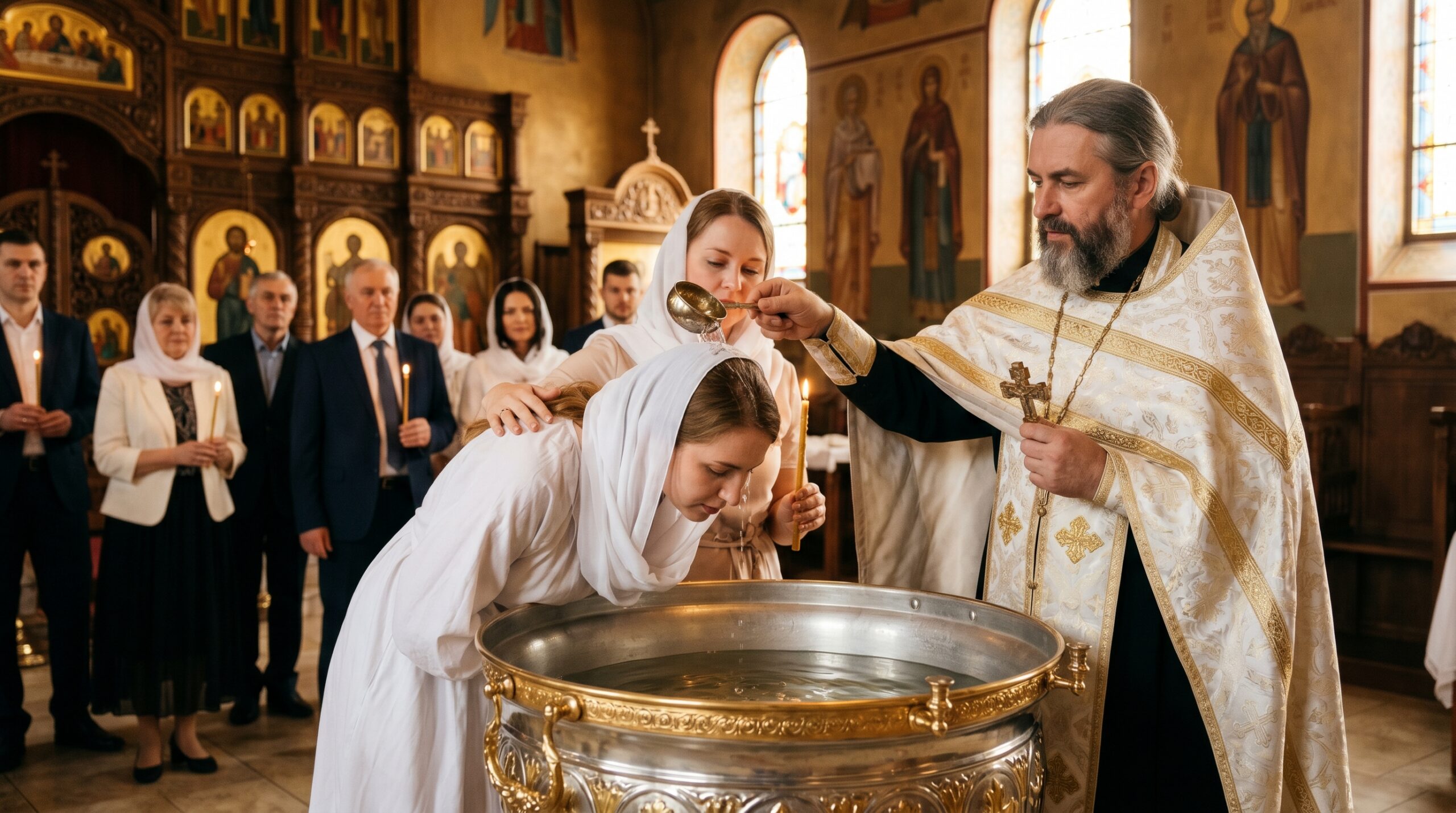
Seejärel pühitsetakse vesi. Preester loeb palveid, milles palutakse Pühal Vaimul muuta vesi elavaks veeks, mis puhastab ja taaselustab. Vee pühitsemine on üks tseremoonia kõrghetki, kus nähtav ja nähtamatu maailm kohtuvad. Seejärel toimub kolmekordne täielik kastmine. Ristitu – olgu laps või täiskasvanu – kastetakse kolm korda vee alla, iga kord lausudes: „Jumala sulane (nimi) ristetakse Isa nimes, aamen; ja Poja nimes, aamen; ja Püha Vaimu nimes, aamen.“ See kolmekordne kastmine peegeldab Kristuse kolme päeva hauda ning Kolmainu Jumalat. Vesi ei ole siin lihtsalt sümbol, vaid Püha Vaimu toimel muutub ta salapäraseks vahendiks, mis ühendab inimese Kristusega.
Kohe pärast kastmist võidab preester ristitu püha mirriga – see on salvimine ehk kinnitamine, mis annab Püha Vaimu täiuse kingitused. Õigeusu traditsioonis on ristimine, salvimine ja esimene armulaud ühtne initsiatsiooni saladus. See tähendab, et uus Kiriku liige saab kohe osa täielikust sakramentaalsest elust. Pärast seda riietatakse ristitu valgesse rüüsse, mis sümboliseerib puhastust ja taassündi, ning antakse kätte ristimisküünal, mis viitab valgusele, mille Kristus toob pimedusse. Valge rüü ja küünal tuletavad meelde, et ristitu on nüüd Kristuse valgusriietuses ning peab hoidma seda puhastust kogu elu.
Eestis, kus Eesti Apostlik-Õigeusu Kirik säilitab elavat sidet idakristliku pärimusega, toimub ristimine sageli koguduse osavõtul. See rõhutab, et ristimine ei ole eraldatud sündmus, vaid kogu Kiriku keha laienemine. Ristivanemad võtavad endale vastutuse aidata ristitul kasvatada usku ja elada kristlikku elu. Traditsiooniliselt valitakse ristivanemad hoolikalt, sest nemad on vaimsed käendajad.
Traditsioonid ja nende tähendus
Õigeusu ristimistraditsioonid on sügavalt juurdunud apostellikus pärimuses ja Kiriku isaade õpetuses. Kolmekordne kastmine ei ole juhuslik; see kehastab täielikku osasaamist Kristuse surmast ja ülestõusmisest. Vesi sümboliseerib nii surmahauda kui ka emaüska, millest sünnib uus inimene. Mirriga võidmine toob meelde Vanas Testamendis kuningate ja prohvetite salvimist ning annab Püha Vaimu kingitused juba ristimise hetkel.
Valge rüü tuletab meelde Kristuse ülestõusmise valgust ja ristitud inimese uut seisundit. Küünal esindab Kristust kui maailma valgust. Paljudes kogudustes säilitatakse ristimisküünal ja rüü kui püha mälestusese. Ristimise nimi, mis antakse, on oluline – see on pühaku nimi, kes saab taevaseks eestkostjaks ja eeskujuks.
- aastal, mil Eesti Apostlik-Õigeusu Kirik tähistab olulisi tähtpäevi ja areneb edasi, jääb ristimine elavaks ukseks, mis ühendab eestlasi apostellikuga traditsiooniga. See ei ole moeröögatus ega pelgalt kultuuriline ritus, vaid sügav kohtumine elava Jumalaga, kes kutsub igaüht uude, täisväärtuslikku ellu.
Erinevus teistest kristlikest traditsioonidest
Õigeusu ristimine erineb oluliselt teistest kristlikest suundadest just oma teoloogilise realismi tõttu. Katoliku kirikus on tavapärasem kolmekordne vee valamine pea peale, kuigi kastmist kasutatakse ka. Õigeusus on normiks täielik kastmine, mis kehastab tugevamini surma ja ülestõusmist. Protestantlikes kirikutes on ristimine sageli peamiselt usutunnistuse avalik akt või sümbol, kus rõhk on isiklikul otsusel, eriti täiskasvanute ristimisel. Paljud protestantlikud kogudused ei praktiseeri imikute ristimist, nähes selles usku, mis peab olema teadlik.
Õigeusus on ristimine alati armu kingitus, mis toimib ka imikute puhul. Kirik usub, et Jumal tegutseb hinges salajas. Püha Kirill Jeruusalemma rõhutas juba 4. sajandil: ärge vaadake vett lihtsalt veena, vaid vaimulist armu, mis antakse koos veega. See müstiline realism on õigeusu tuum – ristimine ei ole vaid mineviku pattude kustutamine, vaid tuleviku avamine jumalikustumisele.
Erinevalt reformatsiooni järgsetest vaadetest, kus rõhk on sageli ainult usul, õpetab õigeusu, et usk ja armu saladus käivad käsikäes ning nõuavad edasist asketilist elu, et ristimise arm kasvaks. Sakramendid ei ole sümbolid, vaid tegelikud armu vahendid. See terviklik lähenemine – kus ristimine, salvimine ja armulaud on ühendatud – annab ristimisele sügavama mõõtme.
Ristimine kutsub meid kõiki, nii ristituid kui ka neid, kes alles kaaluvad, elama välja seda, mis seal saladuses anti: surra patule iga päev ja tõusta Kristuses uuele elule. Just selles pidevas taassünnis seisneb õigeusu ristimise igavene vägi. See on kutse elada Kirikus, osaleda jumalikul liturgial, palvetada ja armastada ligimest, et ristimise arm kannaks vilju kogu elu jooksul.
Eestis pakub õigeusu ristimine ainulaadset võimalust ühendada end iidse idakristliku traditsiooniga, mis on rikastanud meie kultuuri ja vaimuelu sajandeid. Kes iganes toob oma lapse ristimisele või otsustab ise ristuda, astub ta sammu, mis ületab aja ja ühendab ta pühade kogukonnaga läbi sajandite. See on tee, mis viib sügavama rahu, mõtestatuse ja igavese lootuseni.
Õigeusu ristimine ei lõpe tseremooniaga. See on algus teekonnale, kus inimene õpib iga päev elama oma ristimise vääriliselt – palves, paastumises, armastuses ja osaduses Kirikuga. Just selline elu teeb ristimise tõeliseks ja viljakaks, tuues endaga kaasa rõõmu, mis ei kao. 2026. aastal ja edaspidi jääb see saladus kutseks igale eestlasele avastada õigeusu rikkust ja leida seal oma koht Jumala riigis.

Trough all this I want to declare this is all from God and to God. All Glory to Him!
- Õigeusu Palve, paast ja usk: õigeusu tee deemonite väljaajamiseks - 8. okt. 2026
- Kreeka õigeusu rist – tähendus, sümboolika ja kristlik traditsioon - 6. okt. 2026
- Kreeka õigeusu mungad – elu, usk, palve ja kloostrid - 6. okt. 2026