Views: 565
Pentecost 2026 in Orthodoxy: Liturgy, Traditions, Meaning and Church Calendar
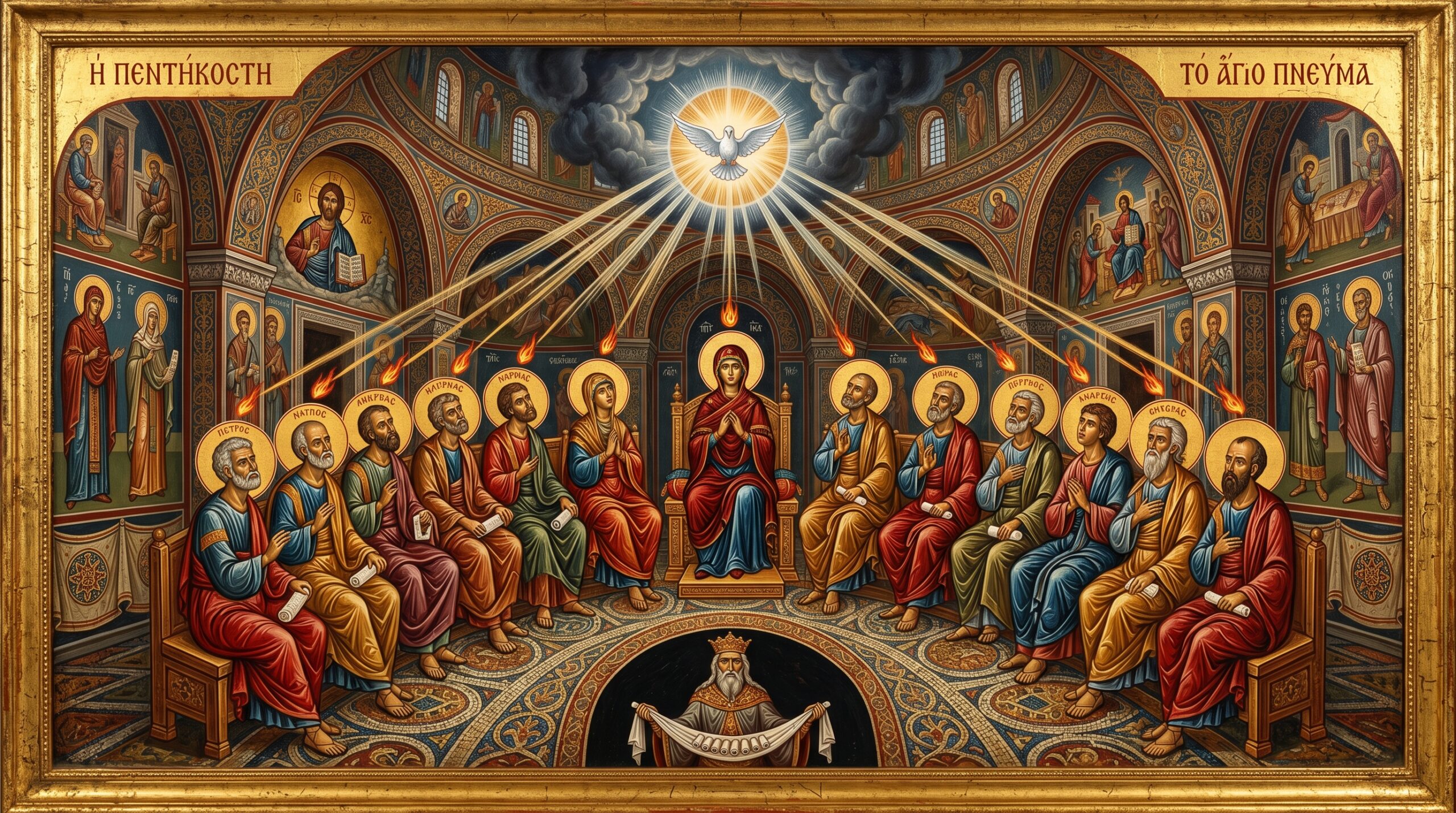
Pentecost, also known as the Feast of the Holy Trinity or Descent of the Holy Spirit, stands as one of the most profound and joyful celebrations in the Orthodox Christian tradition. It is one of the Twelve Great Feasts and marks the culmination of the Paschal season. In 2026, Orthodox Christians worldwide, including the faithful of the Estonian Apostolic Orthodox Church, will celebrate this radiant feast on Sunday, 31 May. This day commemorates the descent of the Holy Spirit upon the Apostles in the Upper Room in Jerusalem, the birth of the Church, and the full revelation of the Triune God to humanity.
Far more than a historical anniversary, Pentecost represents a living encounter with the Third Person of the Holy Trinity. It completes the divine economy of salvation: the Father sends the Son, the Son ascends to the Father so that the Holy Spirit may be sent, and the Spirit remains with the Church until the end of the age. As Saint John Chrysostom proclaimed in his famous Pentecost homilies, this feast is “the summit of all blessings, the capital of feasts, and the fulfilment of the Lord’s promise.”
Biblical and Historical Foundation
The event is vividly described in the second chapter of the Acts of the Apostles. Ten days after Christ’s Ascension and fifty days after His Resurrection, the Apostles were gathered together when suddenly a sound like a mighty rushing wind filled the house, and tongues as of fire appeared and rested on each of them. They were all filled with the Holy Spirit and began to speak in other languages, proclaiming the mighty works of God. Devout Jews from every nation under heaven heard them in their own tongues, reversing the confusion of Babel.
This was not merely an emotional experience or temporary empowerment. It was the empowerment of the Church for its universal mission. The timid disciples were transformed into courageous witnesses ready to spread the Gospel to the ends of the earth, even at the cost of their lives.
The Deep Theological Significance
In Orthodox theology, Pentecost is the feast of the Holy Trinity par excellence. On this day, the Church received the full revelation of God as Father, Son, and Holy Spirit – one God in three Persons. Saint Gregory the Theologian emphasised the progressive revelation of the Trinity throughout salvation history, noting that the full illumination came with the coming of the Spirit.
The Holy Spirit is not an impersonal energy or force, but the living, personal presence of God Himself. Saint Basil the Great, in his treatise On the Holy Spirit, defended the divinity and co-equality of the Spirit against the Arians, teaching that the Spirit is worshipped and glorified together with the Father and the Son. Without the Holy Spirit, there is no true knowledge of God, no sanctification, and no deification (theosis).
Pentecost opens the gate to theosis – the process by which human beings become partakers of the divine nature (2 Peter 1:4). Through the indwelling of the Holy Spirit, believers are not only forgiven but transformed, healed, and elevated. This is the ultimate purpose of the Christian life: to become by grace what God is by nature.
Connection to Baptism and the Sacramental Life
One of the central themes of Orthodox Pentecost is its intimate link with the mystery of Baptism. In the Orthodox Church, baptism is not merely a symbolic act but a true spiritual rebirth. The main tradition involves triple full immersion in the name of the Trinity, immediately followed by chrismation (anointing with Holy Myrrh), which bestows the seal and gifts of the Holy Spirit.
This practice differs markedly from many other Christian traditions. In the Orthodox understanding, baptism and chrismation together constitute the full initiation into the Church, granting immediate access to the Holy Eucharist. The grace of Pentecost is mystically present in every baptism. While many Western Protestant communities separate water baptism from the reception of the Spirit (sometimes viewing the latter as a later “baptism in the Holy Spirit”), Orthodoxy maintains the ancient unity: the Spirit is given sacramentally at the very moment of initiation. This holistic approach reflects the belief that the sacraments are genuine means of grace, not merely symbolic ordinances.
Saint Cyril of Jerusalem, in his Catechetical Lectures, taught the newly baptised that the same Spirit who descended at Pentecost now seals and empowers every Christian in the sacrament of chrismation.
How Pentecost is Celebrated: Liturgy and Traditions
The liturgical celebration of Pentecost is exceptionally rich and beautiful. It begins on the eve with the All-Night Vigil, filled with special hymns composed by great hymnographers such as St. John of Damascus and St. Cosmas of Maiuma.
On the day itself, the Divine Liturgy features:
- Readings from Acts 2:1–11 and John 7:37–52 together with 8:12
- The powerful troparion: “Blessed art Thou, O Christ our God, Who hast made fishermen most wise, by sending down upon them the Holy Spirit, and through them didst draw the world into Thy net…”
- Kneeling prayers (genuflections) in the Vespers service that follows the Liturgy – the first time the faithful kneel since Pascha
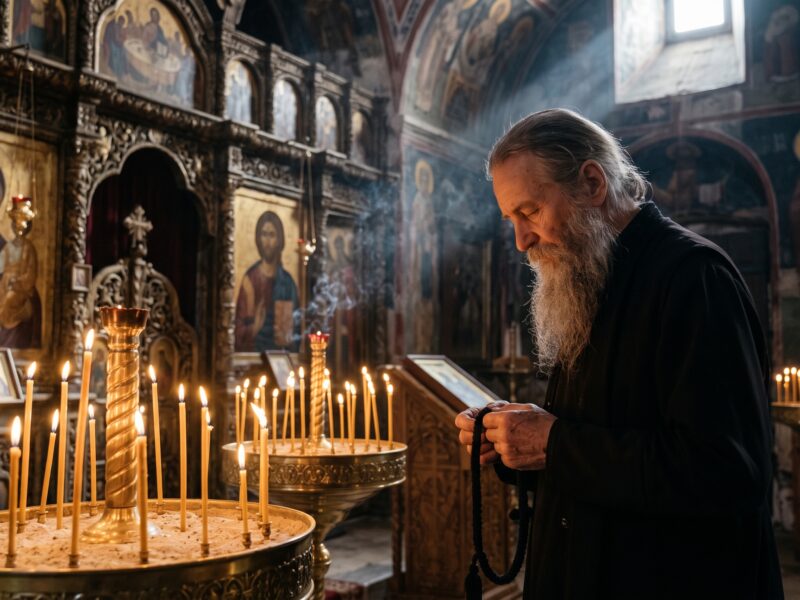
Churches are adorned with green branches, flowers, and grass, symbolising the renewal of creation by the life-giving Spirit. The colour green dominates the vestments and decorations, representing life, hope, and spiritual fertility.
In Estonia, the Estonian Apostolic Orthodox Church celebrates with a blend of ancient Byzantine tradition and local expressions. Services are often conducted in both Estonian and Church Slavonic. Many parishes organise processions, outdoor services, and communal meals that strengthen the bonds of the relatively small but vibrant Orthodox community in the country.
The feast is followed by an eight-day afterfeast, during which the joy of the Holy Spirit continues. It concludes with the Sunday of All Saints, after which the Apostles’ Fast begins in preparation for the feast of Saints Peter and Paul on 29 June.
Differences from Western Christian Traditions
While Pentecost (Whitsunday) is observed in many Western churches, the Orthodox celebration retains a distinctly mystical, Trinitarian, and ecclesial character. In Catholicism, the feast remains important but is often more focused on the historical event and the gifts of the Spirit. In many Protestant denominations, especially evangelical and charismatic ones, Pentecost may emphasise personal spiritual experiences, speaking in tongues, or individual empowerment, sometimes detached from the sacramental and liturgical context.
Orthodoxy maintains a balanced, patristic approach: the Holy Spirit works both personally and corporately within the Church. The emphasis is not primarily on extraordinary manifestations but on the quiet, transforming presence of the Spirit in the sacraments, prayer, and daily ascetic struggle. The strong liturgical and iconographic expression – including the kneeling prayers and the rich hymnography – creates a holistic encounter that engages the whole person: body, soul, and spirit.
Relevance for Contemporary Christians
In our fast-paced, secularised world of 2026, the message of Pentecost remains urgently needed. The same Holy Spirit who empowered the Apostles can renew individuals, families, and entire societies today. The feast calls believers to move beyond formalism into a living relationship with God.
It invites us to:
- Open our hearts to the transforming work of the Spirit
- Live in unity despite differences of language, culture, and background
- Participate actively in the sacramental life of the Church
- Become witnesses of Christ in our daily environments
For the Estonian Orthodox community, Pentecost carries additional meaning as a feast of spiritual renewal in a country with a complex religious history. It reminds believers that the Church’s strength does not depend on numbers or worldly influence, but on the abiding presence of the Holy Spirit.
Conclusion
Pentecost 2026 is far more than a date on the calendar. It is a powerful invitation to experience anew the living God. As we celebrate the descent of the Holy Spirit, we are reminded that the same Spirit who birthed the Church continues to sustain and guide it through every challenge.
“ Come, Holy Spirit, fill the hearts of Thy faithful, and kindle in them the fire of Thy love.”
May the joy, power, and grace of the first Pentecost fill every heart in 2026 and lead us deeper into communion with the Triune God – Father, Son, and Holy Spirit, now and forever.

Trough all this I want to declare this is all from God and to God. All Glory to Him!