Views: 48
The Holy Trinity and the Filioque: The Mystery of the Trinity, Eastern Orthodox Theology, and Christianity’s Greatest Schism – A Deep Analysis
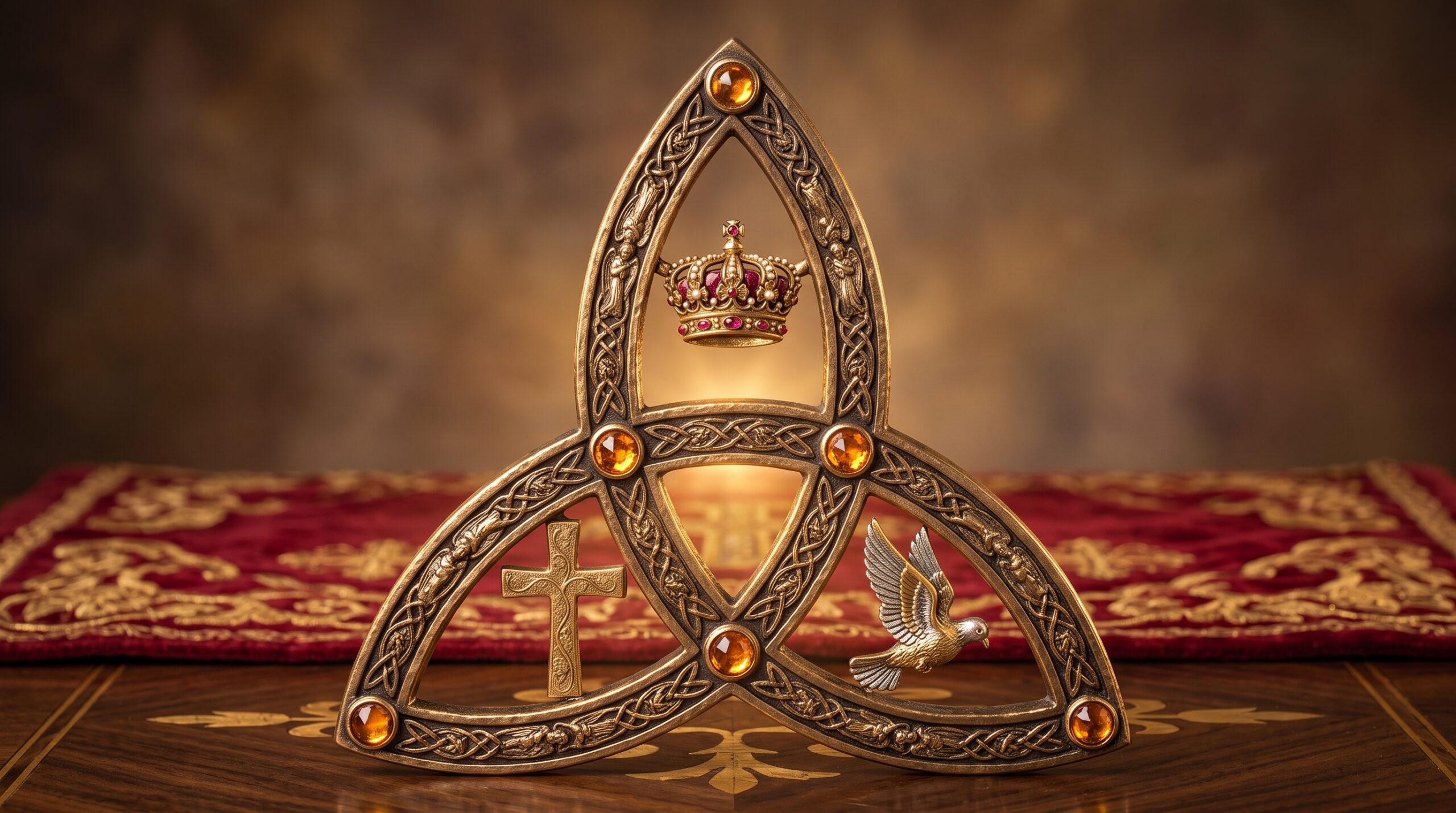
The Holy Trinity — one God in three eternally equal yet distinct persons: the Father, the Son, and the Holy Spirit — is Christianity’s deepest and most paradoxical doctrine. It is not an abstract philosophical construction but a living reality that reflects God’s inner dynamic of love and invites humanity into communion with Him. This extended essay analyses the Trinity from the perspective of Eastern Orthodox theology, focusing on the Filioque question, church history, the 1054 Schism, the divinity of the Holy Spirit in the Gospel of John, and the theological imperatives and paradigms involved. Drawing on lesser-known but authentic theological positions, it offers a cohesive view that is relevant for both believers and those interested in theological reflection.
The Theological Imperative and Paradigms of the Holy Trinity
The doctrine of the Trinity is not merely a teaching but a theological imperative — a call to participate in God’s own life of communion. Eastern Orthodox theologians, especially the Cappadocian Fathers (St. Basil the Great, St. Gregory of Nazianzus, and St. Gregory of Nyssa), emphasised that in the Trinity the divine essence (ousia) is one, while the persons (hypostaseis) are distinguished by their relations. The Father is the sole source (arche) who eternally begets the Son and spirates the Holy Spirit. This monopatria (the Father’s sole monarchy) safeguards the unity of God without introducing subordination.
The Western Filioque paradigm adds that the Holy Spirit proceeds from the Father and the Son, emphasising the unity of the Father and the Son in love. Although this may seem logical, Eastern theology sees a danger: the Son becomes a co-source, which can diminish the Father’s unique monarchy and make the Trinity more static or hierarchical. A lesser-known but significant critique comes from St. Photius I of Constantinople (9th century): the Filioque is not merely a grammatical addition but alters the Spirit’s status, making Him “subordinate” to the Son and reducing the Spirit’s independent role in sanctification and the cosmos.
The Eastern paradigm views the Trinity as a dynamic circle of love: the Father loves the Son perfectly, the Son responds perfectly, and the Spirit is that love itself, freely proceeding from the Father. This paradigm supports theosis (deification) — humanity’s participation in the divine nature through communion with the Spirit — which is the heart of Orthodox spiritual life. The Western approach tends to emphasise institutional unity and authority, which is reflected in the defence of the Filioque.
Church History, the Development of the Filioque, and the 1054 Schism
The early Church used the Nicene Creed (325) and its expansion at Constantinople (381) without the Filioque. It was added in the West in the 6th century in Spain to combat Adoptionism (the teaching that Jesus was merely a man). In the Carolingian court (8th–9th centuries) it became a political tool to strengthen Roman authority. Rome officially adopted the Filioque in the 11th century, despite earlier papal reservations (e.g., Leo III).
The Great Schism of 1054 was the culmination of centuries of tensions. Cultural differences (Latin rationality vs. Greek mysticism), political conflicts (Rome’s claim to universal jurisdiction vs. Constantinople’s status as the “New Rome”), and theological disputes (Filioque, unleavened bread, papal primacy) created the divide. Papal legate Humbert and Patriarch Michael Cerularius excommunicated each other in Hagia Sophia. The Filioque was a central accusation: the East saw it as a distortion of the divine nature.
A lesser-known fact is that the schism was not immediately total — communities continued to live in relative unity for decades. However, the sack of Constantinople by the Crusaders in 1204 deepened the rift. Today, ecumenical efforts (such as the mutual lifting of excommunications in 1965 and the International Catholic-Orthodox Dialogue) have brought some rapprochement, but the Filioque remains unresolved. Some modern theologians (e.g., Joseph Ratzinger / Benedict XVI) have suggested compromises such as “through the Son” (per Filium), yet the East remains committed to monopatria.
The Divinity of the Holy Spirit in the Gospel of John and Scripture
The Gospel of John provides rich testimony to the divinity of the Holy Spirit. Jesus promises: “But the Helper, the Holy Spirit, whom the Father will send in my name, he will teach you all things and bring to your remembrance all that I have said to you” (John 14:26). Here the Spirit is an active person, not an impersonal force.
The clearest statement is John 15:26: “But when the Helper comes, whom I will send to you from the Father, the Spirit of truth, who proceeds from the Father, he will bear witness about me.” Eastern theology emphasises “proceeds from the Father” — the Spirit’s origin is the Father, with the Son as sender, not co-source. Further, John 16:13–15 states: “When the Spirit of truth comes, he will guide you into all the truth… for he will not speak on his own authority, but whatever he hears he will speak, and he will declare to you the things that are to come. He will glorify me, for he will take what is mine and declare it to you.”
These texts demonstrate the full divinity of the Spirit: He is truth, guide, prophet, and glorifier. In the Acts of the Apostles the Spirit is clearly God: “Ananias, why has Satan filled your heart to lie to the Holy Spirit?… You have not lied to man but to God” (Acts 5:3–4). The Spirit participates in creation (Genesis 1:2), prophecy, and the founding of the Church. Eastern theology sees the Spirit as the perfecter of God’s energies and presence, enabling humanity to partake of the divine nature (2 Peter 1:4).
Contemporary Relevance and Analysis
The mystery of the Trinity offers an answer to modern individualism: God Himself is communal love. The Filioque debate reminds us that theology is not merely doctrine but life. The East emphasises the freedom and personhood of the Spirit, which is vital in the ecological crisis (the Spirit as Giver of Life) and spiritual thirst (the Spirit as Comforter).
The Triune God calls us into communion where difference enriches unity. As St. John of Damascus said, the Trinity is “immovable movement and movable immobility” — an eternal dance of love.
Troparion to the Holy Trinity: “Glory to the Father and to the Son and to the Holy Spirit, now and ever and unto the ages of ages. Amen. Holy God, Holy Mighty, Holy Immortal, have mercy on us.”
Prayer to the Holy Trinity: “Holy Trinity, Father, Son, and Holy Spirit, one God eternally united in love, open our hearts to Your mystery. Holy Spirit, come and dwell within us, cleanse us, and lead us into truth. Father the Creator, Son the Redeemer, be the centre of our life. Glory to You now and forever. Amen.”

Trough all this I want to declare this is all from God and to God. All Glory to Him!
- God-Man – The Bible Reveals: The Secret of Human Creation No One Talks About - 23. Aug 2026
- September 1: The Beginning of the Ecclesiastical New Year, or the Indiction — The First Day of the Orthodox Liturgical Year - 21. Aug 2026
- Mother of God, September 8, 2026: The Nativity of the Theotokos — Celebrating the Birth of the Virgin Mary - 20. Aug 2026