Views: 19
Russia Attacks Ukrainian Churches, But Worship Services Continue
Russia’s full-scale invasion of Ukraine has now entered its fifth year, bringing with it immense human suffering, widespread destruction of infrastructure, and deep spiritual wounds. One of the most brutal aspects of this war is the deliberate targeting of churches and religious sites. Despite hundreds of sacred buildings being damaged or completely destroyed, the Ukrainian people’s faith remains unbroken — worship services continue amid shelling, in basements, and among the ruins. This article examines the factual pattern of Russian attacks, their underlying motives, and the remarkable resilience of Ukrainian Christians.
Scale of Destruction: Facts and Figures
Since February 2022, Russian forces have damaged or destroyed at least 737 religious buildings, the vast majority of them Christian churches. Data comes from organizations such as Mission Eurasia, the Ukrainian Institute for Religious Freedom, and the Religion on Fire project. Approximately 200 churches have been completely leveled. The hardest-hit areas are Donetsk and Luhansk regions, where attacks have been particularly intense.
In June 2026, one of the most shocking incidents targeted the Kyiv Pechersk Lavra (Kiev Pechersk Lavra) — one of Eastern Christianity’s holiest sites. Russian drones and missiles caused a major fire at the Dormition Cathedral. This 11th-century UNESCO World Heritage site sustained serious damage. Metropolitan Epiphanius of the Orthodox Church of Ukraine described the attack as a crime against humanity, history, and Christianity itself. President Zelenskyy emphasized that it was a deliberate strike against the heart of Ukrainian Christian culture.
Protestant communities, particularly Baptists and evangelicals, have also suffered heavily. In Zaporizhzhia, a rocket struck the House of the Gospel Church. In occupied Melitopol, congregations not aligned with the Moscow Patriarchate have been forcibly closed. The attacks go beyond buildings: priests and pastors have been killed, tortured, or forced into exile. In occupied territories, churches are often seized for military use or handed over to Moscow-aligned groups.
Why Are Churches Being Targeted? An Analytical Perspective
Russia’s actions are not random. They form part of the broader “Russian World” (Russkiy Mir) ideology, which blends political imperialism, Orthodox Christianity, and cultural domination. The Moscow Patriarchate has publicly blessed the war, calling it a “holy war” against Western decadence. Destroying Ukrainian churches is therefore an attempt to break Ukrainian national identity and spiritual resistance.
In response, Ukraine has restricted the activities of Moscow Patriarchate-linked structures for national security reasons. While this has sparked debates about religious freedom, most Ukrainian Christians support the state’s efforts to protect itself from internal threats. The war has paradoxically strengthened unity among churches: Orthodox, Catholic, Protestant, and other communities cooperate in providing humanitarian aid, shelters, and moral support.
International organizations such as International Christian Concern and U.S. lawmakers have labeled this a “war on faith.” Proposals for sanctions against those responsible for church destruction have been made. The UN and UNESCO have documented cultural heritage damage, but practical assistance often falls short.
Resilience: Faith Under Fire
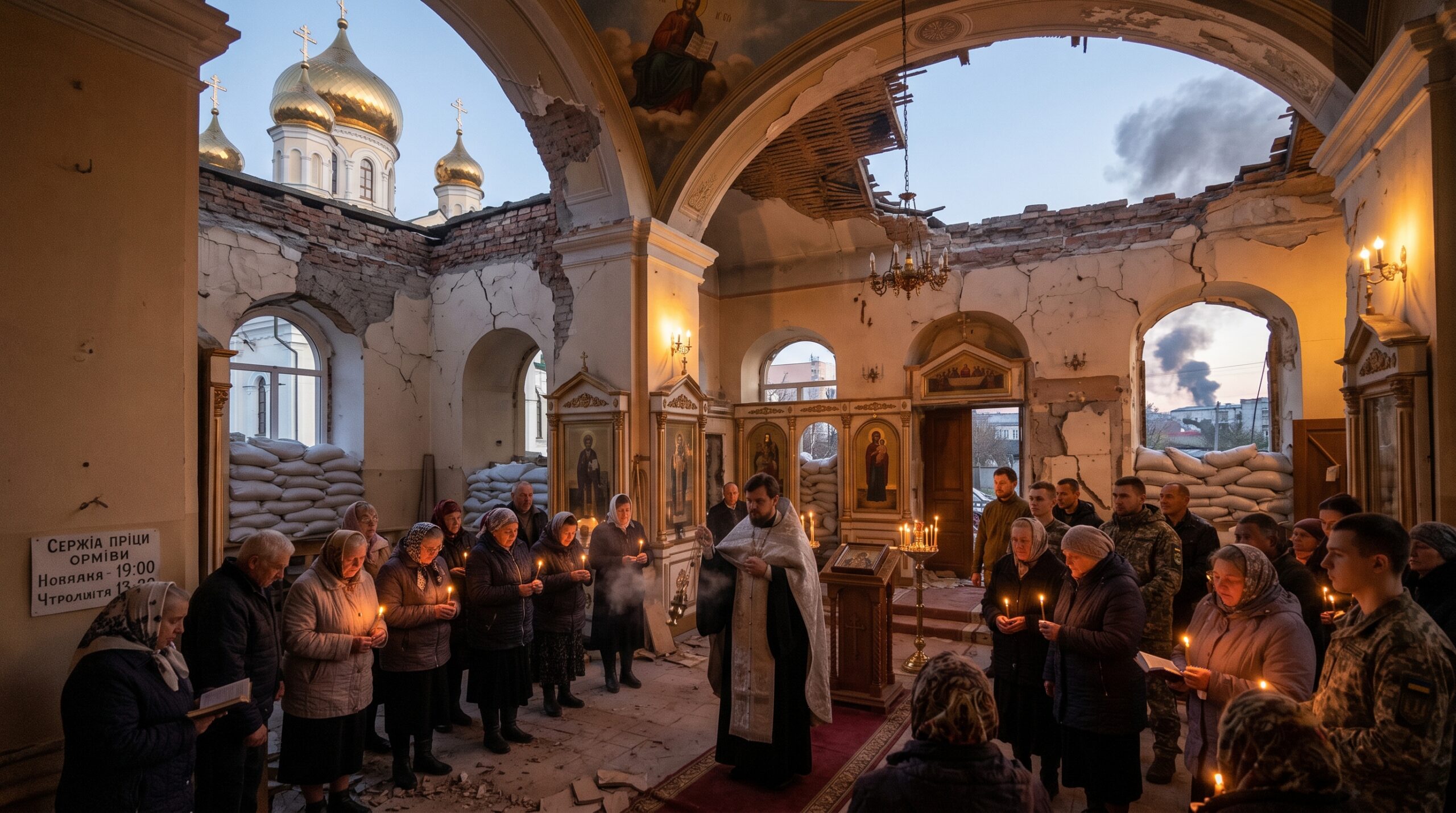
Despite the devastation, worship services in Ukraine have never stopped. Pastors report congregations gathering in ruins, basements, or neighboring churches. “Church life continues,” said one Melitopol pastor after a bombing. Many congregations have become humanitarian hubs, distributing food, medicine, warmth, and hope. The church’s role in resistance has given the war a deeper meaning — it is not only a fight for territory but also for spiritual freedom.
Evangelical churches have been especially active on the frontlines and in occupied areas. Many Christians view the war as a battle for Gospel witness. In the fourth year of the conflict, church attendance has actually increased as people seek hope where the material world has been shattered. This resilience echoes the experience of early Christians under Roman persecution: death and destruction cannot extinguish true faith.
International Reaction and Future Outlook
Pope Leo XIV has repeatedly called for peace and expressed solidarity with Ukrainian victims. Protestant and Orthodox leaders worldwide have organized prayer events and sent humanitarian aid. European and American Christians continue to provide support, though sustaining attention amid a prolonged war remains challenging.
Rebuilding Ukraine will involve not only physical reconstruction but also spiritual healing. Churches will play a pivotal role in reconciliation, trauma recovery, and societal unity. The war has strengthened Ukrainian identity, with faith becoming a powerful symbol of resistance.
Prayer for Ukraine’s Freedom: Dear Heavenly Father, we pray today for the people of Ukraine. Protect those standing under bombardment, give strength to the churches in ruins, and comfort every family that has lost loved ones. Bring peace to this land, guard its freedom, and let the Gospel shine even in darkness. Bless Ukraine with liberty, justice, and renewed hope. In Jesus’ name, Amen.

Trough all this I want to declare this is all from God and to God. All Glory to Him!