Views: 25
Trust in God in Hard Times: How to Preserve Faith in Suffering and Pain
Meta description: How can we preserve our trust in God amid suffering and pain? A deep analysis drawing on Scripture, the teaching of the Church Fathers, and the testimonies of the Desert Fathers — a practical path toward restored trust.
Introduction: When Faith Passes Through Fire
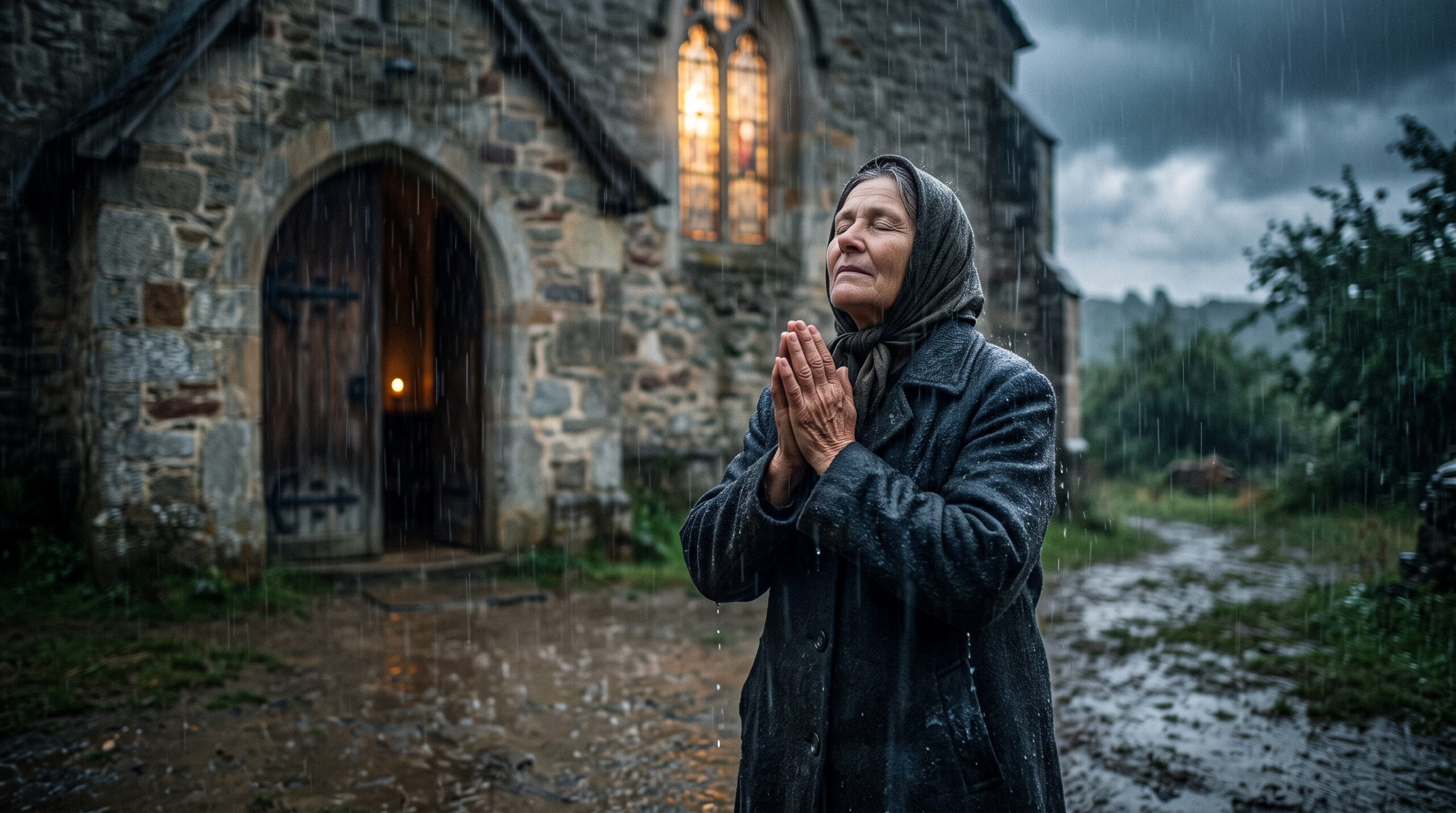
There are moments in a person’s life when everything they have believed about God seems to collapse. An illness that leaves doctors shrugging their shoulders. A loss no one saw coming. A silence that persists even after years of prayer. It is precisely in these moments that faith becomes something more than mere conviction — it becomes a choice that must be made anew each day, sometimes each hour.
The Christian tradition does not try to deny suffering, nor does it reduce it to a tidy rational formula. Instead, it offers something deeper: a way of walking with God within suffering itself. This article explores what Scripture, the Church Fathers, and the ascetics of the desert have taught about suffering and trust, and highlights specific testimonies and wonders that have helped believers hold onto their faith across the centuries.
1. Why Suffering Shakes Faith — and Why That Is Human
Suffering’s assault on faith is not a sign of weakness; it is a natural response. The human mind searches for causality: when something bad happens, we want to know why. When no answer comes, we are tempted to conclude that God is either powerless, indifferent, or simply not there.
Scripture itself does not shy away from this tension. The Book of Job is, in its entire structure, an argument over the meaning of suffering — and remarkably, God’s final answer to Job is not an explanation but a self-revelation: “Where were you when I laid the foundations of the earth?” (Job 38:4). The answer to suffering is not a logical formula, but an encounter with God himself.
We see the same pattern throughout the Psalms. Nearly a third of the Psalms are laments, in which the psalmist cries out to God from pain, abandonment, even anger — and yet ends in trust. Psalm 13 opens with the words “How long, O Lord? Will you forget me forever?” and closes with “But I have trusted in your steadfast love.” Complaint and trust are not opposites in Scripture; they walk hand in hand.
2. The Theological Framework of Suffering: Sharing in the Cross
In the light of the New Testament, suffering takes on a new meaning. The apostle Paul writes: “…if indeed we suffer with him in order that we may also be glorified with him” (Romans 8:17), and “our light momentary affliction is preparing for us an eternal weight of glory beyond all comparison” (2 Corinthians 4:17).
This does not mean pain is illusory or insignificant — Paul himself calls it “affliction,” not a trifle. Rather, he places suffering within a wider horizon: the Cross of Christ is not merely a historical event but a pattern into which the Christian’s own life is woven. In Christian thought, suffering takes on a participatory meaning — it is not punishment, but a sharing in Christ’s own passage from death into life.
The Eastern Fathers developed this idea further through the doctrine of theosis (deification). Maximus the Confessor taught that it is precisely through suffering and trial that the human will is purified and becomes increasingly receptive to divine grace. Suffering borne in faith is not an end in itself, but a place where the human will and the divine will begin to converge — a process the Greek Fathers called synergia, cooperation with grace.
3. The Teaching of the Church Fathers: Suffering as Pedagogue
John of the Ladder (Climacus) wrote in his Ladder of Divine Ascent that patient endurance in trials is one of the chief marks of spiritual maturity — not in the sense that one feels no pain, but in the sense that one does not let pain come between oneself and God.
Basil the Great taught that God permits trials not to punish a person, but to reveal what is already hidden within the heart — just as fire does not create gold, but purifies what is already there.
Gregory of Nyssa, in his Life of Moses, wrote of suffering as a darkness through which the soul draws nearest to God — recalling how Moses met God in the thick darkness on Mount Sinai (Exodus 20:21). According to this insight, spiritual darkness is not a sign of God’s absence but, often, precisely the mark of his special nearness — a nearness that exceeds the capacity of human reason to grasp.
Isaac the Syrian, one of the most profound theologians of suffering, wrote that God never sends a trial beyond a person’s capacity to bear it, and that through trials the soul comes to know its own true frailty — and, in knowing this, learns to lean truly upon God rather than upon itself.
4. Testimonies and Wonders of the Desert Fathers: Faith That Carried Them Through Suffering
The tradition of the Egyptian and Syrian Desert Fathers (4th–6th centuries) — preserved chiefly in the collections known as the Apophthegmata Patrum (“Sayings of the Desert Fathers”) and Palladius’s Lausiac History — is full of accounts of men and women who, amid solitude, hunger, and spiritual struggle, found extraordinary steadfastness of faith. Across the centuries, these accounts have brought encouragement to countless Christians in the midst of suffering.
Abba Anthony the Great and the Assault of the Demons
According to tradition, Anthony the Great (251–356), father of the desert monks, endured a long period of grievous spiritual and physical exhaustion, described as a demonic assault. When the assault finally subsided and light filled his cave, Anthony asked, “Where were you, Lord? Why did you not come to help me from the beginning?” In answer, he heard a voice say, “Anthony, I was here. I stayed to watch your struggle.” Across the centuries, this account has helped countless suffering souls understand that God’s silence does not mean his absence.
Abba Macarius the Great and the Gift of Consolation
It is told of Macarius of Egypt (c. 300–391) that after years of inward dryness and desolation in prayer, he was visited one night by a sudden and overwhelming joy that filled his entire being — an experience he later described as an “inward resurrection.” He taught his disciples that spiritual dryness is not a sign of being forsaken by God, but a preparation for a deeper encounter with him.
Abba Poemen and the Gift of Long-Suffering
Poemen, among the most frequently quoted of the Desert Fathers, taught his disciples a simple yet profound truth: “Patient endurance in one thing is like a jar of oil that extinguishes a fire.” His own life — the loss of his family, decades of asceticism, bodily hardship — became, in the eyes of his disciples, a living proof that steadfast prayer in suffering transforms pain into spiritual fruitfulness.
Abba Sisoes and Peace at the Hour of Death
The account of Sisoes the Great’s deathbed tells how this desert father, who had spent his whole life in asceticism, saw at the hour of death a vision that filled him with such great peace and joy that his face shone. The disciples at his side testified that they themselves were confirmed in faith upon witnessing how decades of suffering and self-denial had, at last, borne fruit as complete peace before the face of God.
Amma Syncletica and Inner Steadfastness
Among the desert ascetics there were also women — among them Amma Syncletica, who taught that spiritual struggle resembles a sea voyage: at the outset there are many enemies and storms, but the further one sails into open water, the calmer the journey becomes. In her own final years, though afflicted by grievous illness, she testified to her disciples that the inward peace God had given her surpassed all bodily suffering.
These accounts are not merely historical anecdotes — they belong to a living spiritual heritage that reveals the same pattern, repeated across the centuries: suffering borne in prayer and trust becomes, in time, the very place where the nearness of God becomes most tangible.
5. Practical Steps for Preserving Faith in the Midst of Suffering
1. The right to honest lament. Like the authors of the Psalms, the Christian need not hide their pain from God. Honest complaint in prayer is a sign of trust, not a lack of faith — it presupposes that there is Someone to cry out to.
2. Regular, rhythmic prayer. The Desert Fathers emphasized continuous, brief prayer (“Lord Jesus Christ, have mercy on me”) rather than reliance on fleeting emotion. Rhythm sustains us when feelings waver.
3. Community and spiritual guidance. No Desert Father lived in total isolation — each had teachers and disciple relationships. Complete isolation is dangerous in suffering; spiritual companionship helps carry what is too heavy to bear alone.
4. Sacramental life. The Eucharist, confession, and the reading of Scripture have, throughout the history of the Church, been the primary channels through which believers have drawn strength in suffering — these are not abstract symbols, but concrete places of encounter with God.
5. Holding to an eternal perspective. As Paul wrote, present suffering is a temporary “light affliction” when set against the perspective of eternity — this does not diminish the reality of the pain, but places it within a larger context.
6. An Extended Prayer for Trust in God and the Preservation of Faith
Lord God, Creator and Sustainer of all things,
I come before you today just as I am — weary, sometimes doubting, sometimes nearly broken beneath the burden I carry. You know my heart better than I know it myself. You see the tears I have not yet wept, and the fears I have not yet put into words.
Lord, I do not ask you today to take away everything that pains me — I ask you instead to be with me within this pain. Just as you were with Anthony in his desert cave, be with me in mine — whether it be illness, loss, loneliness, fear, or a silence I cannot understand.
Grant me the grace not to mistake your silence for your absence. Teach me to believe that even when I cannot feel you, you are carrying me. Teach me to bear my suffering as the Desert Fathers bore their trials — not with bitterness, but with a patience that, in time, becomes peace.
Lord, strengthen my faith where it is weak. Rekindle my hope where it is fading. Grant me the grace to see that your Son, Jesus Christ, himself bore the heaviest suffering — loneliness, abandonment, pain, and death — and that through all of it he brought forth resurrection into life. If you, Lord, did not leave him in the tomb, then I believe you will not leave me where I am now.
Give me a patient heart like Poemen’s, an inward peace like Sisoes’s, hope like Macarius’s, and steadfastness like Syncletica’s. Send me people who will help me carry what I cannot carry alone.
And should a day come when I can no longer pray in my own words, I ask you to hear my sighs and my silence as prayer. Your Spirit prays within me, even when I myself can find no words (Romans 8:26).
I entrust myself into your hands, Lord — now, here, just as I am. Let your will be done, not mine. May your peace, which surpasses all understanding, guard my heart and mind in Christ Jesus (Philippians 4:7).
Amen.
Conclusion
Trust in God in hard times does not arise from denying suffering, nor from explaining it away rationally, but from the resolve to remain close to God even when no answers come. Scripture, the Church Fathers, and the living witness of the Desert Fathers all point to the same pattern: pain borne in prayer and trust becomes, over time, the very place where God’s nearness is felt most tangibly. This does not make suffering lighter — but it gives it meaning, and with meaning, a hope that does not put us to shame (Romans 5:5).

Trough all this I want to declare this is all from God and to God. All Glory to Him!
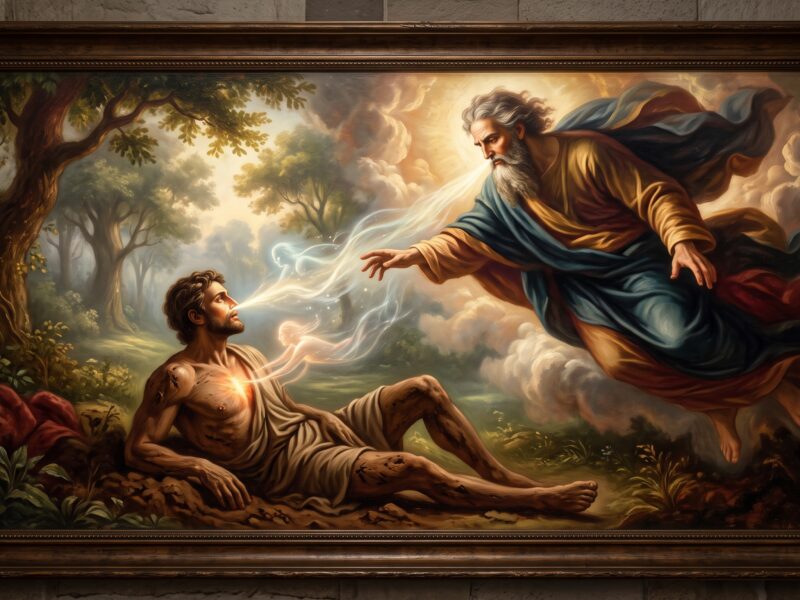
- God-Man – The Bible Reveals: The Secret of Human Creation No One Talks About - 23. Aug 2026
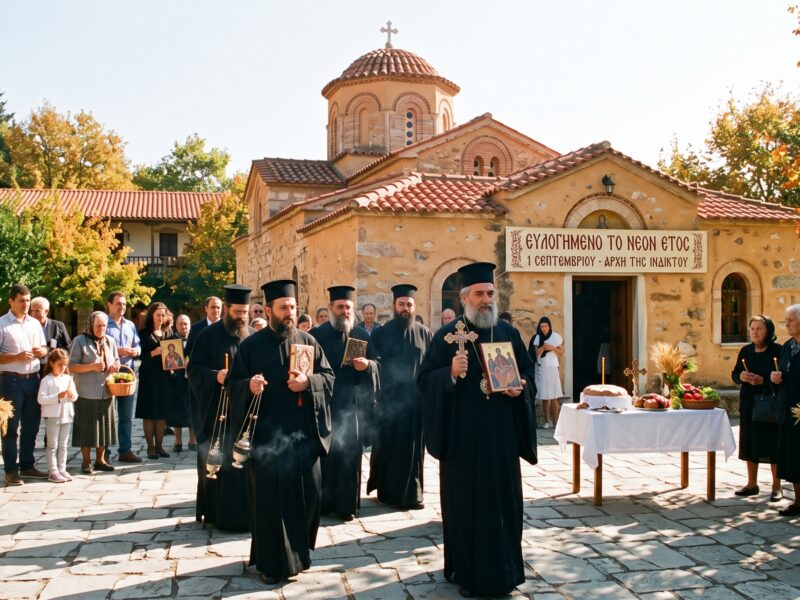
- September 1: The Beginning of the Ecclesiastical New Year, or the Indiction — The First Day of the Orthodox Liturgical Year - 21. Aug 2026
- Mother of God, September 8, 2026: The Nativity of the Theotokos — Celebrating the Birth of the Virgin Mary - 20. Aug 2026