Views: 128
What is Theosis? — What Does It Mean to Become Like God
Theosis, or deification, is one of the most profound and inspiring teachings in Eastern Orthodox Christianity. It represents the ultimate purpose of human life: a living, transformative process through which a person participates in God’s divine life while remaining fully human. As St. Athanasius of Alexandria famously stated, “God became man so that man might become god.” This does not imply pantheism or ontological identity with God, but rather a real participation in God’s uncreated energies and grace, which conforms us to the likeness of Christ.
Theosis as the Meaning of Salvation in Orthodoxy
In the Orthodox tradition, salvation goes far beyond the common Western Christian emphasis on forgiveness of sins and entry into heaven. Theosis is the fulfillment of humanity’s original vocation — created in the image and likeness of God (Genesis 1:26). The Fall damaged this image, but Christ’s Incarnation, Crucifixion, Resurrection, and the gift of the Holy Spirit restore and elevate it. As 2 Peter 1:4 invites us, believers are called to become “partakers of the divine nature.” This means sharing in God’s life, love, light, and holiness — without ever possessing or becoming God’s essence.
Theosis is synergistic: a cooperation between human free will and God’s grace. It unfolds within the life of the Church through the sacraments (Baptism, Confession, Eucharist), liturgical worship, fasting, almsgiving, and unceasing prayer. Far from being an elitist path, theosis is open to every Christian who seeks God with a sincere heart.
Orthodox Illumination (Theoria) and Its Connection to Theosis
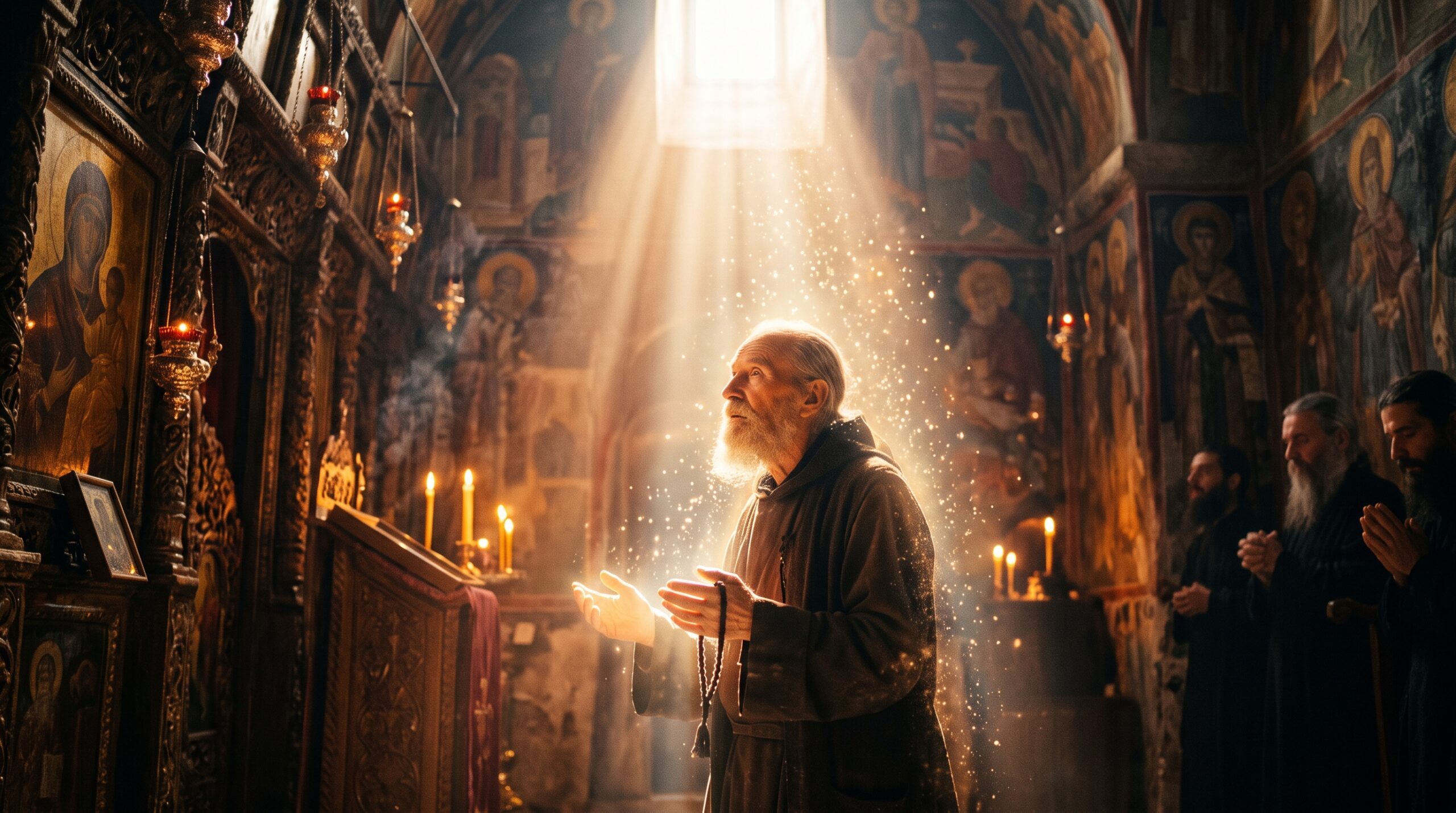
Illumination, or theoria, forms the central stage of theosis. It is not mere intellectual understanding or philosophical insight, but the opening of the eyes of the heart to God’s presence and the uncreated Light of Tabor — the same divine radiance that shone around Christ at His Transfiguration. St. Gregory Palamas (14th century) emphasized the distinction between God’s unknowable essence and His accessible energies. Through theoria, one experiences God directly, leading to deeper union and transformation.
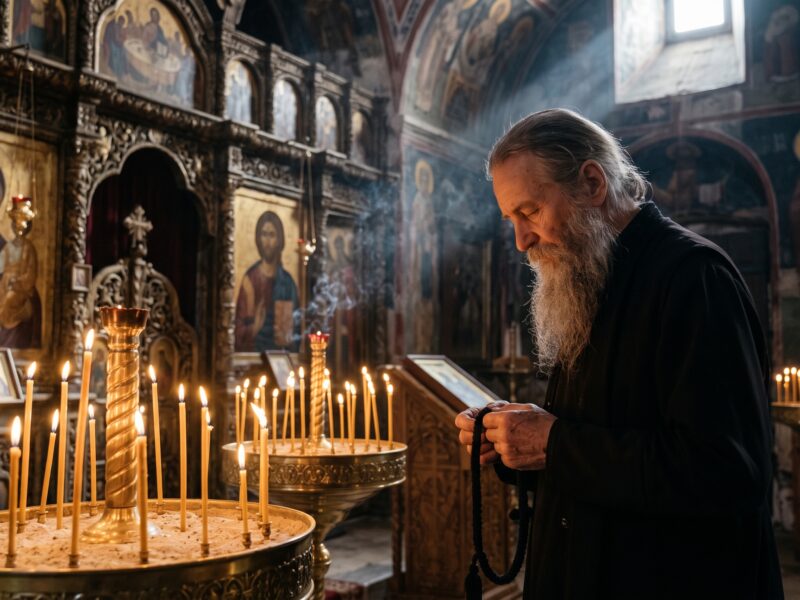
The hesychast tradition, especially among the monks of Mount Athos, embodies this practice. The Jesus Prayer — “Lord Jesus Christ, Son of God, have mercy on me, a sinner” — becomes united with one’s breath and heartbeat, bringing inner stillness and divine presence. Theoria is not the end but the pathway to theosis: a purified soul not only sees God but unites with Him in love.
The Lives of Monks and Saints: Theosis in Practice
Theosis is not theoretical; it is vividly embodied in the lives of Orthodox saints and monks. St. Anthony the Great, the Desert Father, spent decades in solitude, battling temptations through prayer and fasting. His life powerfully demonstrates the stage of katharsis (purification). St. John Climacus, in The Ladder of Divine Ascent, outlines thirty steps of spiritual progress involving the conquest of vices and cultivation of virtues.
St. Seraphim of Sarov radiated divine light while praying and taught that “the true aim of our Christian life is the acquisition of the Holy Spirit.” St. Symeon the New Theologian described the divine light as a consuming fire of love. These examples show that theosis encompasses bodily, psychological, and spiritual transformation, lived out within the Church community.
Theosis in Comparison with Enlightenment Experiences in Other Religions
Theosis offers a uniquely Christian response to humanity’s universal longing for union with the Divine, yet meaningful parallels exist in other traditions. Comparative reflection highlights both similarities and crucial differences.
In Hinduism, moksha (liberation) and Advaita Vedanta’s non-dual union with Brahman (the Absolute) involve realizing that the individual self (atman) is identical with the ultimate reality. This shares with theosis an emphasis on participation in the divine, but differs fundamentally: theosis preserves personal identity and distinction from God (who remains the Creator), whereas Advaita views distinction as illusion (maya). Theosis is a gracious gift through Christ, not solely self-realization.
In Buddhism, enlightenment (bodhi) involves ending suffering through realizing nirvana and the emptiness (shunyata) of the ego. Zen’s satori represents sudden insight. Similarities appear in the purification of the mind and transcendence of ego, yet Buddhism is non-theistic. Theosis, by contrast, is relational — a loving communion with the personal Trinity — rather than absorption into emptiness. Orthodox monks affirm that true peace comes not from void but from the fullness of God.
In Sufism (Islamic mysticism), fana (annihilation of the ego) leads to baqa (subsistence in God) through dhikr (remembrance of God). Poets like Rumi describe ecstatic union, akin to theoria. However, theosis is distinctly Christological, rooted in the Incarnation, and lived sacramentally in the Church. Sufism emphasizes submission to Allah without the full Trinitarian framework or Palamite theology of energies.
Judaism, particularly in Kabbalah and Hasidism, speaks of devekut (cleaving to God). These mystical experiences parallel aspects of illumination, yet theosis is uniquely incarnational: God became flesh so that humanity might be deified.
Other traditions offer valuable insights into purification and contemplation. Theosis, however, stands apart through its insistence on the preservation of personhood, grace-centered Christology, and ecclesial communion. It invites respectful dialogue without syncretism, presenting Christ as “the Way, the Truth, and the Life.”
What Theosis Truly Is: A Broader Analysis
Theosis is a dynamic synergy of grace and human freedom that engages the whole person — body, soul, and spirit. It is eschatological: beginning in this life and reaching fulfillment in eternity, while already offering a foretaste of the age to come. Unlike more individualistic Western models of salvation, it emphasizes communal life in the Church and love for neighbor. Theosis has social implications, inspiring justice, mercy, and the sanctification of the material world.
In the modern secular context, theosis challenges both radical autonomy and materialism by calling humanity to a fully alive existence in God.
Practical Steps Toward Theosis
- Katharsis (Purification): Acknowledge sins through regular Confession, practice fasting, prayer, and charity. Study the lives of the saints.
- Theoria (Illumination): Cultivate the Jesus Prayer, participate faithfully in the Liturgy and sacraments, and seek silence. Read the Philokalia.
- Theosis (Union): Surrender fully to God in love. Seek guidance from a spiritual father. Live out Christ’s light both in the Church and in the world.
These stages are cyclical rather than strictly linear, requiring perseverance and reliance on divine grace.
Closing Prayer
O Lord Jesus Christ, our God and Savior, who came into the world not only to save us from sin but to elevate us to divine life! By Your great mercy, we beseech You: purify our hearts, minds, and bodies from every sin and temptation. Illumine us with Your Taboric Light, that we may experience Your presence as the monks and saints have throughout the ages. Fill us with Your Holy Spirit so that we may walk the path of theosis — in synergy with Your grace, in love for our neighbors, and in communion with Your Church. Help us learn from the spiritual quests of other traditions while remaining faithful to Your Gospel. May our lives become living witnesses to Your transforming grace. Hear our prayer through the intercessions of the Theotokos, all the saints, and Your Most Pure Mother. Grant us peace, hope, and love, now and forever. Amen.

Trough all this I want to declare this is all from God and to God. All Glory to Him!