Views: 14
St. Methodius of Peshnosha and the Nikolo-Peshnosha Monastery: The Blessed Disciple of St. Sergius of Radonezh
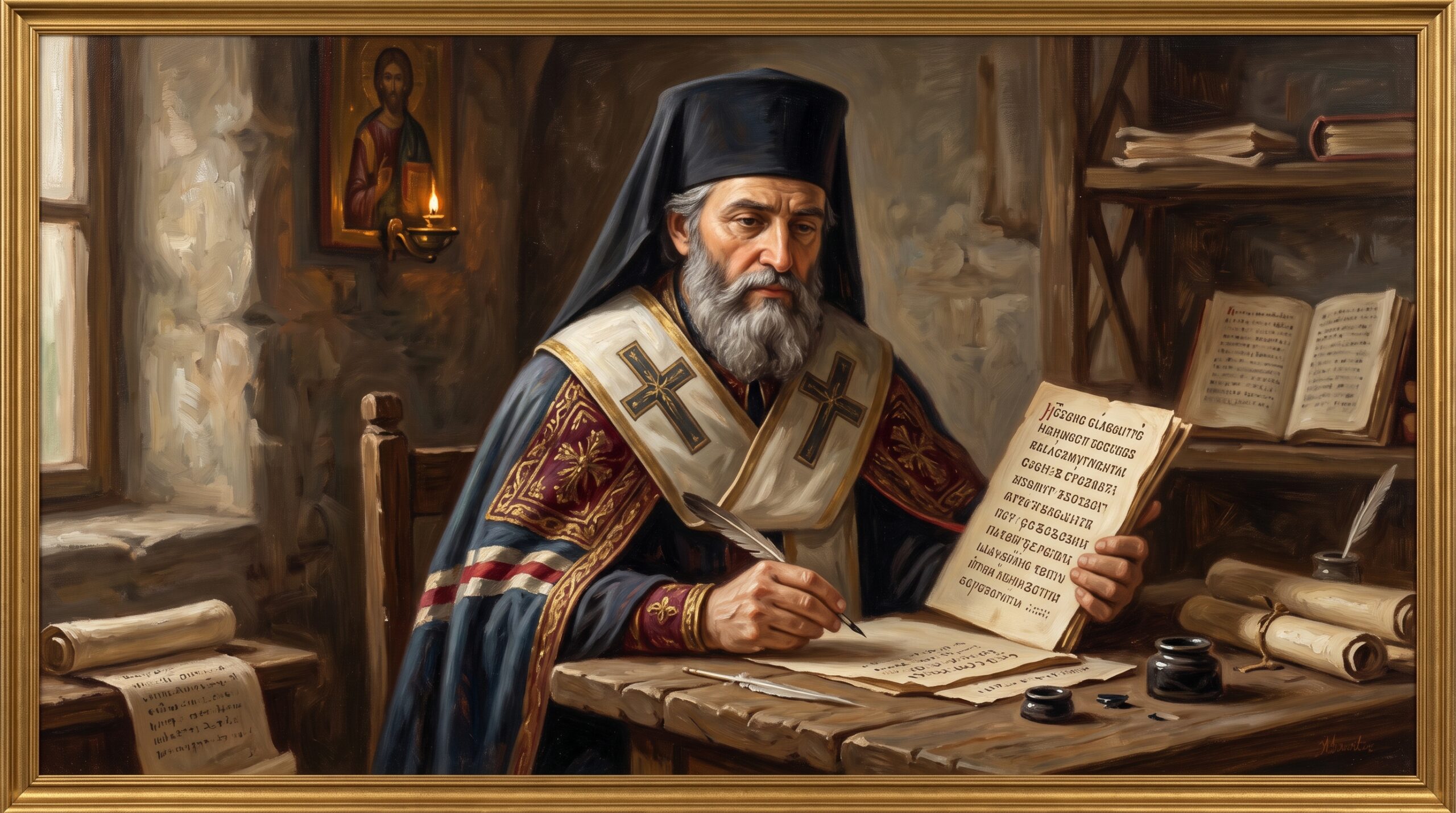
On June 14/27, the Russian Orthodox Church honours the memory of St. Methodius of Peshnosha. According to tradition, he was one of the favourite disciples of the “Abbot of the Russian Land” — St. Sergius of Radonezh. As the akathist to St. Methodius says: “Thou didst come into the monastery of Venerable Sergius, and clothed in the monastic rank by him, thou wast a zealous imitator of his ascetic labours.”
The Life of St. Methodius and the Founding of the Monastery
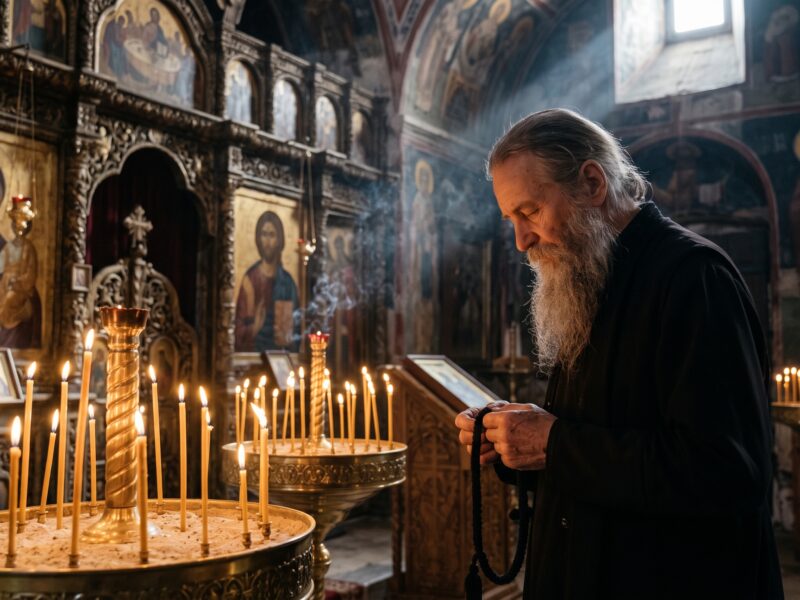
Having matured spiritually, he wished to find a secluded place for his ascetic labours. In 1361, he set out in search of such a place with the blessing of his mentor. Across the Yakhroma River, not far from the town of Dmitrov, in the midst of swamps and forests, St. Methodius built himself a cell where he lived for some time in prayer and fasting. But his holy life could not remain unnoticed, and monks began to gather around him. St. Sergius blessed his disciple to build a monastery, but in a drier place — at the mouth of a small river. And the saint obeyed him.
“St. Methodius carried logs for the monastery on foot across the river — hence the name St. Nicholas-Peshnosha Monastery, which he founded. St. Methodius built the monastery on his own, ‘performing great labours’, as the prayer to the saint says. He set up a wooden church of St. Nicholas the Wonderworker. In 1391, he became abbot of the monastery, setting a good example in virtues to the brethren.” Those in need and sorrow flocked to him for comfort. He welcomed everyone, consoled them in their sorrows, and, as the kontakion to him says, “healed those who came to him with faith.” He was a humble and quiet ascetic of the Russian land. He introduced the rule in his monastery following the example of the Holy Trinity-St. Sergius Monastery.
Occasionally, he went to a secluded spot not far from the monastery to meet with St. Sergius, which is why this area was named Beseda (“Conversation” in Russian). Earlier, during the Battle of Kulikovo on September 8, 1380, St. Methodius came to the Holy Trinity-St. Sergius Monastery and prayed together with the brethren for the victory of the Russian army. The saint reposed in the Lord in 1392 — less than a year after his holy mentor — and was buried at the Peshnosha Monastery. In 1549, he was canonised by the Russian Church, and his relics remained intact.
The History of the Monastery Through the Centuries
The monastery was regularly visited by princes and tsars of Muscovy in the Middle Ages, including Peter, a son of Grand Prince Dmitry Donskoy, and Tsar Ivan IV the Terrible, who donated the Tsar’s estate village and twenty-five villages to the monastery. The monastery especially flourished under the holy Abbot Barsanuphius of Kazan. His favourite handiwork was “knitting klobuks for monks.” During his abbacy, the monastery even had ships carrying bread for sale, as it grew a lot of grain. It was Abbot Barsanuphius who contributed to the canonisation of St. Methodius in the sixteenth century.
In the early seventeenth century, the monastery was ravaged by Polish invaders. Tsar Alexei Mikhailovich Romanov regarded the Peshnosha Monastery as his “favourite royal pilgrimage site.” In the eighteenth century, it was affiliated with the Holy Trinity-St. Sergius Monastery, leading to further decline.
In 1788, Archimandrite Macarius (Bryushkov), a disciple of St. Theodore of Sanaxar, became the abbot. Upon arriving at the desolate monastery, he initially regretted his decision, but Sts. Sergius of Radonezh and Methodius appeared to him and said: “Don’t leave — and everything will be in abundance here.” Macarius revived the monastery, which reached its peak of prosperity under him. Metropolitan Platon of Moscow said: “In my diocese, the Peshnosha Monastery is the second Lavra.” He introduced the Athonite rule and the Jesus Prayer. He sent monks who helped in the founding of the Optina Monastery.
In the nineteenth century, the Peshnosha Monastery was one of the best organised Russian monasteries, with six churches, wonderworking icons and shrines. The number of brethren reached about 150. In 1895, with the blessing of the abbot, inventor Alexander Popov conducted the first experiments on the passage of radio waves within the walls of the monastery.
Twentieth-Century Trials and Revival
After the 1917 Revolution, difficult times began. In 1921, Bishop Seraphim (Zvezdinsky) delivered a beautiful sermon at the monastery on St. Methodius’s day, comparing the pilgrims to the three gifts: “You have brought three gifts to St. Methodius: bright gold — your faith; fragrant frankincense — your prayers; and the wondrous and most precious of the gifts — the aromatic myrrh of your love… These wonderful sparkling gifts, these wondrous diamonds are your tears.”
The monastery was closed in 1927. Some of the brethren were later canonised as New Martyrs of Russia. Later, the buildings housed a home for the disabled and a mental hospital. In 2007, a service was celebrated again in the Theophany Church, and on August 24, 2014, after renovation work, the entire territory of St. Nicholas-Peshnosha Monastery was opened to the joy of the faithful.
The life of St. Methodius and the history of the monastery testify to the resilience of Russian Orthodoxy. As the troparion says: “Inflamed by Divine love from thy youth and having scorned all that is beautiful in the world, thou didst love Christ alone; and for His sake having come to dwell in the wilderness, thou didst found a monastery there; and, having gathered a multitude of monks, thou didst receive from God the gift of working miracles, O Father Methodius; and thou didst converse with Christ and fast with the Venerable Sergius, together with whom beseech Christ our God to grant good health and salvation to Orthodox Christians, and great mercy upon our souls.”

Trough all this I want to declare this is all from God and to God. All Glory to Him!