
Views: 64
Christianity 101: The Complete Guide to Christian Faith, Jesus, and Modern Beliefs
Christianity is the world’s largest and most influential religion, having shaped human history, culture, and values for over two thousand years. This comprehensive guide, “Christianity 101,” provides an in-depth overview of the Christian faith, its core doctrines, the central role of Jesus Christ, and its contemporary expressions. Whether you are a curious beginner or someone seeking deeper understanding, this article offers clear insights. We explore the topic broadly, analyzing historical, theological, and social dimensions to explain why Christianity continues to touch the lives of billions.
The Nature of Christianity and Its Core Beliefs Explained in Depth
Christianity is a monotheistic Abrahamic faith that originated in the 1st century AD in the region of Palestine. At its heart is Jesus of Nazareth, whom Christians regard as the Messiah, the Son of God, and the Savior of humanity. Unlike many other religions, Christianity is not merely a system of rules or rituals but a living relationship with God through Jesus Christ.
The fundamental beliefs include:
- The Trinity (Holy Trinity): Christians believe in one God who exists in three persons—God the Father (the Creator), God the Son (Jesus Christ), and the Holy Spirit (the Comforter and Guide). This doctrine, though profound and mysterious, expresses God’s loving and relational nature. As the Apostle Paul wrote: “The grace of the Lord Jesus Christ, the love of God, and the fellowship of the Holy Spirit be with you all” (2 Corinthians 13:13).
- Sin and Salvation: Humanity has fallen into sin, but God sent His Son to reconcile this separation. Salvation comes not through works but by grace through faith in Jesus.
- The Bible as Authoritative Scripture: The Old Testament prepares the way for the Messiah, while the New Testament testifies to Jesus’ life, death, and resurrection. The Bible is not just a historical document but the living voice of God.
- The Resurrection: This is the cornerstone of Christianity. Without the resurrection, as Paul declares, “our preaching is useless and so is your faith” (1 Corinthians 15:14).
- The Church and Sacraments: The Church is the Body of Christ on earth. Baptism and Communion (the Lord’s Supper) are visible signs of grace.
These truths form a cohesive whole, providing answers to life’s greatest questions: Where do we come from? Why are we here? And where do we go after death? Expanding our thinking, we see that Christianity is not static—it is a dynamic faith that has adapted to every age while remaining true to its roots.
Why Christianity Is the World’s Largest Religion: In-Depth Analysis and Justifications
Christianity has an estimated 2.3 to 2.4 billion followers, representing approximately 28–31% of the global population. This surpasses the number of adherents in Islam, Hinduism, or Buddhism. Why has Christianity achieved such global dominance?
First, historical and geographical expansion. It began as a small Jewish sect in Jerusalem but spread rapidly across the Roman Empire through the missionary work of the apostles. In the 4th century, it became the state religion of Rome under Emperor Constantine the Great. Further growth occurred through missionaries, traders, and colonization in Africa, Asia, and the Americas. Unlike many religions tied to a single ethnic group, Christianity offered a universal appeal.
Second, cultural and societal impact. Christianity laid the foundation for Western civilization, including hospital systems, universities (e.g., Oxford and Cambridge), human rights, and charitable organizations like the Red Cross. It has inspired art (Michelangelo, Bach), music, and literature. This cultural capital creates lasting strength and sustainability.
Third, demographic dynamics. According to Pew Research Center projections, Christianity is growing especially in the Global South—Sub-Saharan Africa and Latin America—due to higher birth rates, active evangelism, and relevant responses to crises such as poverty, disease, and spiritual emptiness. While secularization has occurred in the West, the global picture remains strong.
Fourth, the power of its message. Christianity offers a personal relationship with God, forgiveness, purpose, and hope of eternal life. It addresses humanity’s deepest longings. In comparison, while Islam is also growing rapidly, Christianity is already more widely distributed and institutionalized. Ultimately, Christianity’s success stems from a combination of historical momentum, adaptability, moral authority, and spiritual fulfillment. Without these factors, it would not hold its current position.
Jesus Christ as Savior: His Mission and Connection to the Foundations of Christian Faith
Jesus is the absolute center of Christianity. The New Testament portrays Him as the Son of God, born of the Virgin Mary, who lived a perfect life, taught, performed miracles, died on the cross, and rose again. His mission was to redeem humanity from sin and restore relationship with God.
Key aspects of His mission:
- Teaching: The Sermon on the Mount (Matthew 5–7) establishes new standards—blessed are the meek, the merciful, and the peacemakers. Jesus emphasized inner purity over external rules.
- Miracles: Healing the blind, curing the sick, and raising the dead demonstrated the arrival of God’s kingdom.
- Crucifixion: This was a voluntary sacrifice—“For God so loved the world that he gave his one and only Son” (John 3:16). Jesus took humanity’s sin upon Himself.
- Resurrection: It confirms victory over death and provides the basis for hope.
Jesus unites all core doctrines: the Trinity (He is the Son), salvation (He is the mediator), love (He embodied it), and the Church (He is its head). Without Jesus, there is no Christianity—He is “the way and the truth and the life” (John 14:6). This personal relationship distinguishes Christianity from religions centered on laws or rituals. Jesus invites everyone to follow Him personally, radically transforming lives.
Orthodox and Protestant Perspectives – Comparison and Analysis
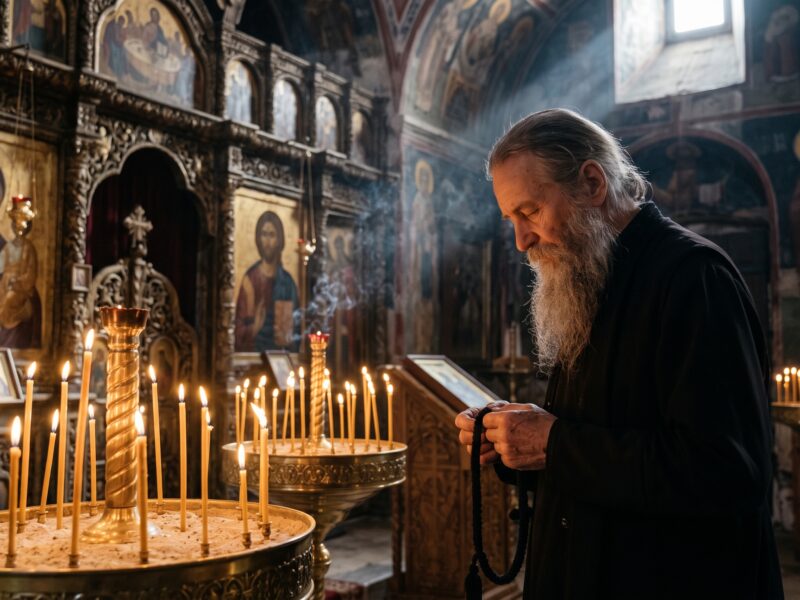
Christianity is not monolithic. The Orthodox tradition (Eastern Christianity) emphasizes continuity with the apostolic era. Liturgy is mystical, icons aid prayer, and sacraments are central. Salvation is viewed as theosis—humanity’s divinization through grace. Orthodox churches (e.g., Greek, Russian) preserve tradition strongly, offering stability but sometimes less flexibility on contemporary issues.
Protestantism / Evangelical Christianity, born from the Reformation (16th century, Martin Luther), stresses Sola Scriptura (Scripture alone), Sola Fide (faith alone), and Sola Gratia (grace alone). It emphasizes personal faith, Bible study, preaching, and mission. Modern Protestant congregations often use contemporary music, technology, and highlight the gifts of the Holy Spirit (speaking in tongues, healing).
Analysis: Orthodoxy’s strength lies in deep mysticism and communal worship, while Protestantism excels in individual responsibility and evangelism. Both honor Jesus as Savior, yet differences spark debate (e.g., sacraments as means of grace versus symbols). Nevertheless, ecumenism (cooperation) has grown in recent decades through joint prayers and social initiatives. This diversity demonstrates Christianity’s vitality.
Contemporary Aspects of the Christian Faith Today
Modern Christianity is multifaceted. In the digital age, the gospel spreads through Bible apps (YouVersion), online sermons, and social media. Young Christians engage with mental health, environmental care, and social justice—such as fighting racism or poverty.
In the Global South, Christianity is vibrant and charismatic, with rapidly growing megachurches in Africa. In the West, faith faces secularism but new forms emerge, including house churches and online communities. Contemporary discussions address theology around artificial intelligence, bioethics, and global crises. Christianity remains relevant because it offers hope amid chaos.
Conclusion: A Longer Prayer and Invitation to Accept Jesus Christ
Extended Prayer:
Heavenly Father, we thank You with all our hearts for creating the world in love and sending Your Son Jesus Christ to redeem us. Thank You that Christianity is not an empty religion but a living path to You. Help us understand the mystery of the Trinity, the depths of the Bible, and the significance of Jesus’ sacrifice. Be with us in Orthodox liturgies, Protestant sermons, and every heart seeking You. Grant us courage to stand for truth, love our neighbors, care for creation, and share the good news with all peoples. Fill us with the Holy Spirit so we may be light in darkness, hope for the hopeless, and grace to the world. Forgive our weaknesses, strengthen our faith, and lead us toward eternal life. We ask all this in the name of Jesus Christ, who lives and reigns forever. Amen.
Simple Prayer to Accept Jesus Christ:
“Jesus Christ, I believe that You are the Son of God, who died for me on the cross and rose again on the third day. I repent of my sins and turn to You. Come into my life as Lord and Savior. Change me, give me a new heart, and fill me with Your love. Thank You for forgiveness and eternal life. Amen.”
If you prayed this sincerely, you have stepped onto the path of faith. We recommend finding a local believing community, reading the Bible (starting with the Gospel of John), and praying daily.

Trough all this I want to declare this is all from God and to God. All Glory to Him!