Views: 17
What Is Christianity? A Complete Overview of the Religion’s History, Teachings and Present Day
Christianity is the world’s largest religion, with approximately 2.6 billion followers across the globe. This faith has shaped the philosophy, art, culture, legal systems and ethics of Western civilisation over more than two thousand years. But what does Christianity actually mean, where does it come from and what do Christians believe? This article provides a thorough and balanced overview of Christianity from the perspective of its history, core teachings and contemporary influence.
Table of Contents
1. The Origins and History of Christianity
2. The Core Teachings and Beliefs of Christianity
3. The Main Branches of Christianity
4. Christianity’s Influence on Culture and Society
5. Christianity Today
6. Christianity in Estonia
7. Conclusion: Why Does Christianity Matter?
1. The Origins and History of Christianity
Christianity began in the 1st century AD in the Roman province of Judea. Its founder is considered to be Jesus of Nazareth, whose life story, teachings and miracles are recorded in the Gospels of the New Testament. Jesus was born in Bethlehem, grew up in Nazareth and began his public ministry at around the age of thirty. He proclaimed the coming of the Kingdom of God, taught about love, mercy and repentance, and performed miracles. Under pressure from Roman authorities and Jewish religious leaders, Jesus was crucified around the year 30 AD.
Jesus’s followers believed in his resurrection from the dead three days after the crucifixion. This event is the cornerstone of the Christian faith. Following his death, a small group of disciples began spreading his message — first throughout Judea and Galilee, then across the entire Roman Empire.
Early Christians and Persecution
The first centuries were difficult for Christians. The Roman Empire regarded Christians as a dangerous sect, and they were persecuted, imprisoned and executed. Despite this, the number of Christians grew remarkably, as the faith offered comfort, community and the hope of eternal life. Christianity spread especially rapidly thanks to the missionary work of the Apostle Paul, who founded congregations in Asia Minor, Greece and Rome.
Christianity as the State Religion
A turning point came in 313 AD, when Emperor Constantine I issued the Edict of Milan, which guaranteed religious freedom for Christians throughout the Roman Empire. In 380 AD, Emperor Theodosius I declared Christianity the state religion of Rome. This marked the beginning of Christianity’s rapid spread across Europe, which over the following centuries reached every corner of the world.
2. The Core Teachings and Beliefs of Christianity
Christianity is a monotheistic religion, meaning it holds belief in one God. At the centre of Christian theology are several core teachings that distinguish it from other religions.
The Trinity
Most Christians believe that God exists in three persons: the Father, the Son (Jesus Christ) and the Holy Spirit. This teaching is known as the Trinity. Although God is one, he manifests in three distinct persons. This is one of the most complex and significant doctrines of Christian theology.
Sin and Redemption
According to Christian teaching, all people are sinful — that is, separated from God since the fall of Adam and Eve in the Garden of Eden. This is known as the doctrine of original sin. Christians believe that God sent his Son, Jesus Christ, to earth to redeem humanity from sin. The death of Jesus on the cross was the redemptive price that opens the way back to God for all people.
Resurrection and Eternal Life
Christians believe in the physical resurrection of Jesus from the dead, which demonstrates that death does not have the final word. Eternal life in the presence of God is one of the central hopes of the Christian faith. This can be attained through faith and turning to Jesus Christ.
The Bible — The Holy Book of Christians
The sacred scripture of Christians is the Bible, which consists of two parts: the Old Testament (shared with Judaism) and the New Testament. The New Testament contains four Gospels (Matthew, Mark, Luke and John), the epistles of the apostles and the Book of Revelation. The Bible has been translated into more than 3,300 languages and is the most printed book in the world.
3. The Main Branches of Christianity
Christianity is not a uniform religion — throughout history it has divided into numerous branches and churches. The three main branches are as follows.
The Catholic Church
The Roman Catholic Church is the world’s largest Christian denomination, with over 1.3 billion members. Its leader is the Pope, who resides in Vatican City in Rome. The Catholic Church emphasises the importance of tradition, sacraments and the authority of the Church. It emerged from early Christianity and has preserved much of the original church’s structure and teachings.
The Orthodox Church
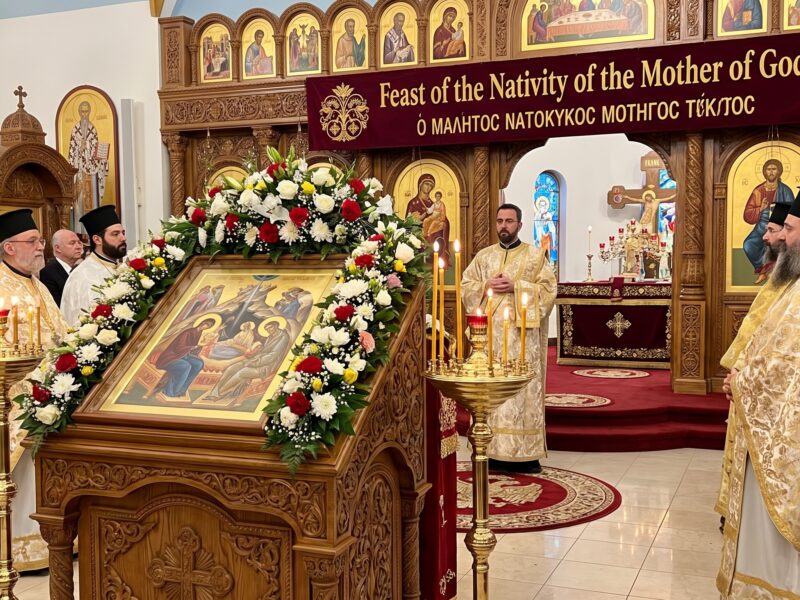
In 1054, Christianity officially split into two: the Western (Catholic) and Eastern (Orthodox) churches. The Orthodox Church is dominant in Russia, Greece, Serbia, Romania and other Eastern European countries. In Orthodoxy, great importance is placed on the veneration of icons, liturgy and mystical experience. Estonia also has a significant Orthodox community.
Protestantism
Protestantism emerged in the 16th century as a result of the Reformation, initiated by Martin Luther in 1517. Luther criticised the practices of the Catholic Church, particularly the sale of indulgences, and emphasised that salvation comes through faith alone, not through works. Protestantism today encompasses countless denominations: Lutheranism, Calvinism, Baptism, Methodism, Adventism, Pentecostalism and many others.
4. Christianity’s Influence on Culture and Society
The influence of Christianity on Western civilisation can barely be overstated. The Christian worldview has shaped almost every area of human life.
Art and Architecture: Cathedrals such as Notre-Dame in Paris, Cologne Cathedral and Tallinn’s Dome Church are pinnacle achievements of Christian architecture. Among Renaissance paintings are countless biblical scenes — Michelangelo’s Sistine Chapel fresco, Leonardo da Vinci’s “The Last Supper” and Raphael’s “Sistine Madonna”.
Education and Science: The first universities in Europe — including those of Bologna, Oxford and Paris — were founded under the auspices of the Church. Many great figures of science, such as Galileo Galilei, Isaac Newton and Gregor Mendel, were devout Christians.
Law and Ethics: Christian ethics — love of one’s neighbour, forgiveness, human dignity — have become the foundation of the legislation and human rights of many democratic nations. Concepts such as “the equal dignity of all people” and “love thy neighbour” are of Christian origin.
Music: Johann Sebastian Bach, George Frideric Handel and Wolfgang Amadeus Mozart composed a great part of their works inspired by the Christian faith. Gregorian chant, chorales and oratorios have shaped the entire development of Western music.
5. Christianity Today
In the 21st century, Christianity remains the world’s most widespread religion, but its geographical centre of gravity is shifting. In Europe, where Christianity has dominated for centuries, the number of believers is steadily declining as secularisation advances. By contrast, the number of Christians in Africa, Asia and Latin America is growing remarkably.
In China, the number of Christians has grown from an estimated ten million to over one hundred million in the past thirty years. In South Korea, Christianity has become one of the strongest religions. Nigeria, Brazil and the Philippines currently rank among the countries with the highest numbers of Christians in the world.
Today’s Christians face many challenges: secularisation, inter-religious tensions, internal fragmentation and questions about preserving a Christian identity in a pluralistic society. At the same time, the Christian community brings comfort to millions, gives meaning to life and motivates social action.
6. Christianity in Estonia
Christianity reached Estonia in the 13th century during the Livonian Crusades, although the first encounters with the faith date back to an even earlier period. Today, Estonia is one of the most secular countries in the world — the proportion of believers in the population is among the lowest in Europe. Nevertheless, Christianity holds an important place in Estonian culture and identity.
Estonia’s largest churches are the Estonian Evangelical Lutheran Church (EELC) and the Estonian Apostolic Orthodox Church. The EELC played an important role in shaping the cultural identity of Estonians, particularly during the national awakening of the 19th century. The Estonian Song Festival tradition, listed on UNESCO’s World Heritage register, is closely linked to church music and choral culture, both of which have their roots in Christianity.
7. Conclusion: Why Does Christianity Matter?
Christianity is not merely a religion — it is a civilisation, a philosophy and a way of life that has shaped human history over more than two thousand years. Regardless of whether one is a believer, agnostic or atheist, understanding Christianity is essential to understanding Western culture, art, ethics and history.
At the heart of Christianity is a message of hope, love and reconciliation: the belief that a person is never alone, that life has meaning and that mercy is stronger than death. This message has reached hearts on every continent and continues to speak to people today — whether in an African congregation, a rural Estonian church or a South Korean megachurch.
Christianity is a living, evolving and multifaceted religion that adapts to the times while preserving its core message: God loves humanity and desires to be in fellowship with it.

Trough all this I want to declare this is all from God and to God. All Glory to Him!