Views: 11
Orthodox Church Leadership Structure Explained – Patriarchs, Synod, Bishops. How is the Orthodox Church governed? An overview of patriarchates, autocephaly, the Holy Synod, bishops, priests and church councils.
1. A Brief Overview of the Orthodox Church
The Eastern Orthodox Church regards itself as the same Church that the apostles founded in the first century. It therefore claims apostolic succession, an unbroken line of episcopal ordination. Its faith rests on Holy Scripture, Holy Tradition and the decisions of the seven Ecumenical Councils (325–787).
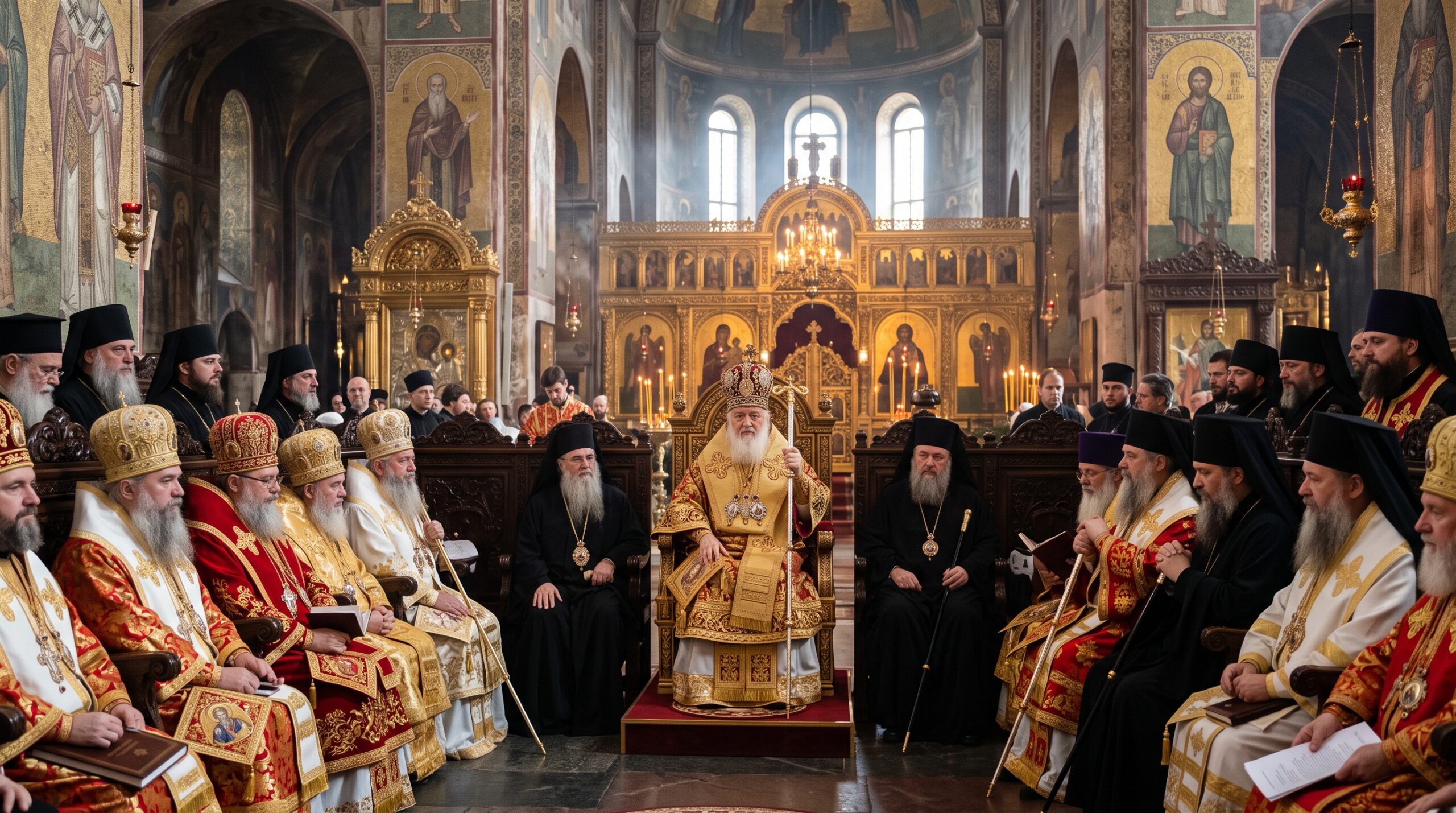
The Orthodox Church is not governed by a single head, as the Roman Catholic Church is. It consists of independent local churches that share one faith, the same sacraments and the same canons. Its governance is based on conciliarity, the principle of collective decision-making. Decisions are made by councils and synods, not by the command of one person.
2. Keyword Analysis
Three keywords in the title carry a distinct meaning in Orthodoxy:
- Church means, from the Greek ekklēsia, the community of believers, not merely an institution.
- Leadership in Orthodoxy means above all service, not power. A bishop is a shepherd and teacher, not a boss.
- Structure is hierarchical but not monarchical. The highest authority belongs to the council, not to an individual.
It is therefore more accurate to speak of church governance and church order than of a “chain of command”. According to Orthodox teaching, the only true Head of the Church is Jesus Christ (cf. Eph 5:23, Col 1:18).
3. Foundations of Governance: Scripture and Canons
- Acts 15 describes the Council of Jerusalem. It is the model for Orthodox decision-making: the decision was reached through the shared deliberation of the whole Church.
- 1 Timothy 3 and Titus 1:5 name the orders of ministry: bishop, priest and deacon.
- Apostolic Canon 34 states that the bishops of each nation must recognize the first among them and do nothing of importance without his consent. The first, in turn, must do nothing without the consent of the others.
- The First Council of Nicaea (325) confirmed the regional organization of bishops.
- Canon 28 of the Council of Chalcedon (451) granted Constantinople, as New Rome, privileges of honor equal to those of Old Rome. Constantinople’s prerogatives also rest on Canon 3 of the Second Ecumenical Council and Canon 36 of the Council in Trullo.
4. Church Government: Local Churches and Autocephaly
Autocephaly (Greek for “self-headed”) means that a church elects its own primate and bishops and is not governed by another church. An autonomous church also governs itself, but its primate is confirmed by the mother church.
The exact number of autocephalous churches is disputed. The Church of Constantinople is one of fourteen or fifteen autocephalous churches. The difference arises from the status of the Orthodox Church of Ukraine (2019), which some local churches recognize and Moscow does not.
The main local churches and their primates (in traditional order):
- Constantinople: Patriarch Bartholomew I
- Alexandria: Patriarch Theodoros II
- Antioch: Patriarch John X
- Jerusalem: Patriarch Theophilos III
- Moscow: Patriarch Kirill
- Georgia: Catholicos-Patriarch Shio III, elected primate on 11 May 2026
- Serbia: Patriarch Porfirije
- Romania: Patriarch Daniel
- Bulgaria: Patriarch Daniil
- Cyprus: Archbishop Georgios III
- Greece: Archbishop Ieronymos II
- Albania: Archbishop Ioannis
- In addition, the churches of Poland, the Czech Lands and Slovakia, and America (OCA)
Note: the names are accurate as of 2026 and were checked against Orthodox Times news reports. Changes of primate can occur unexpectedly.
5. The Governing Bodies and How They Work
5.1 The Ecumenical Council
This is the Church’s highest doctrinal authority. The seven councils defined the Trinitarian and Christological dogmas and the Nicene-Constantinopolitan Creed. No new ecumenical council has been held since 787.
5.2 The Holy and Great Council (Crete, 2016)
This was the first pan-Orthodox council in a very long time. Ten of the fourteen churches attended. Antioch, Bulgaria, Georgia and Russia stayed away. The Moscow Synod called the council an important event but did not consider it pan-Orthodox. The reception of its documents, that is, their acceptance by the Church, is therefore still ongoing.
5.3 The First in Honor (Primus inter Pares)
The Ecumenical Patriarch of Constantinople is the “first among equals”. He holds a primacy of honor, not a power of rule over the others. His responsibilities include:
- convening worldwide gatherings (synaxes)
- coordinating pan-Orthodox dialogue
- handling matters connected with autocephaly, although the extent of this role is disputed
- representing Orthodoxy in ecumenical relations
5.4 The Patriarch, or Primate of a Local Church
The patriarch (or archbishop, or metropolitan) leads his church together with the synod. He presides at synod meetings, represents the church before the state and oversees the observance of the canons. He is the first among the bishops of his church, not their superior.
5.5 The Holy Synod
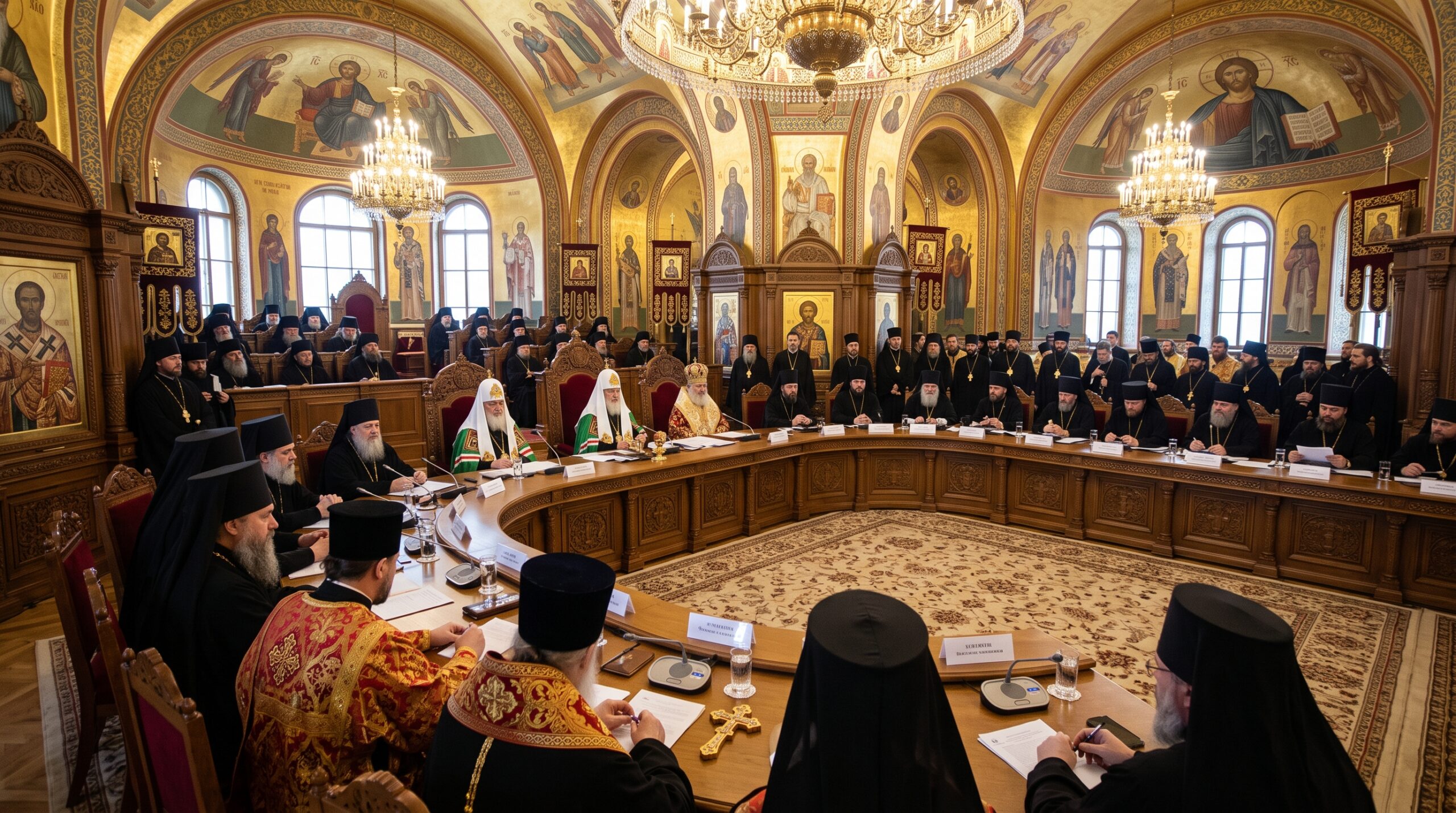
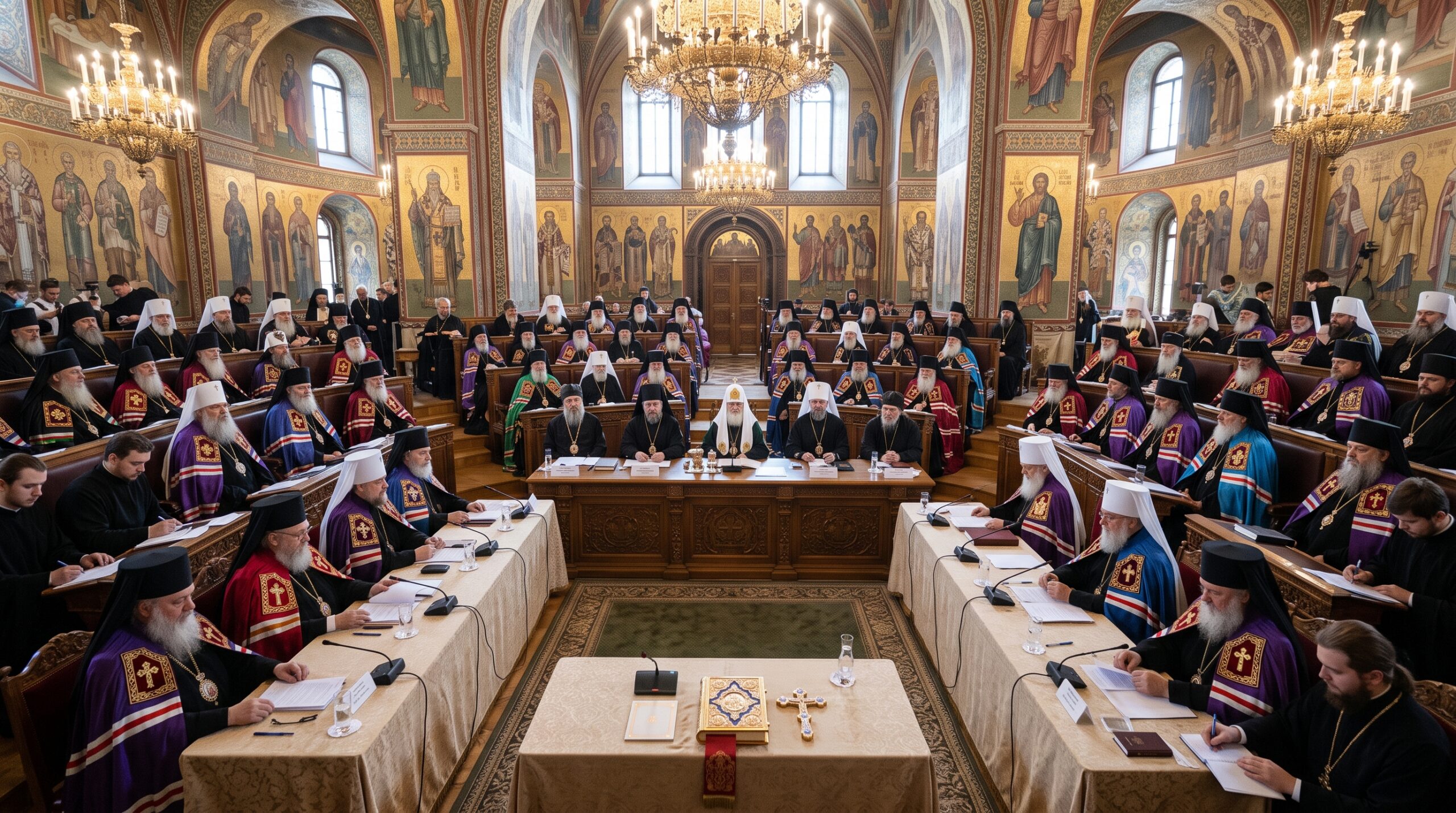
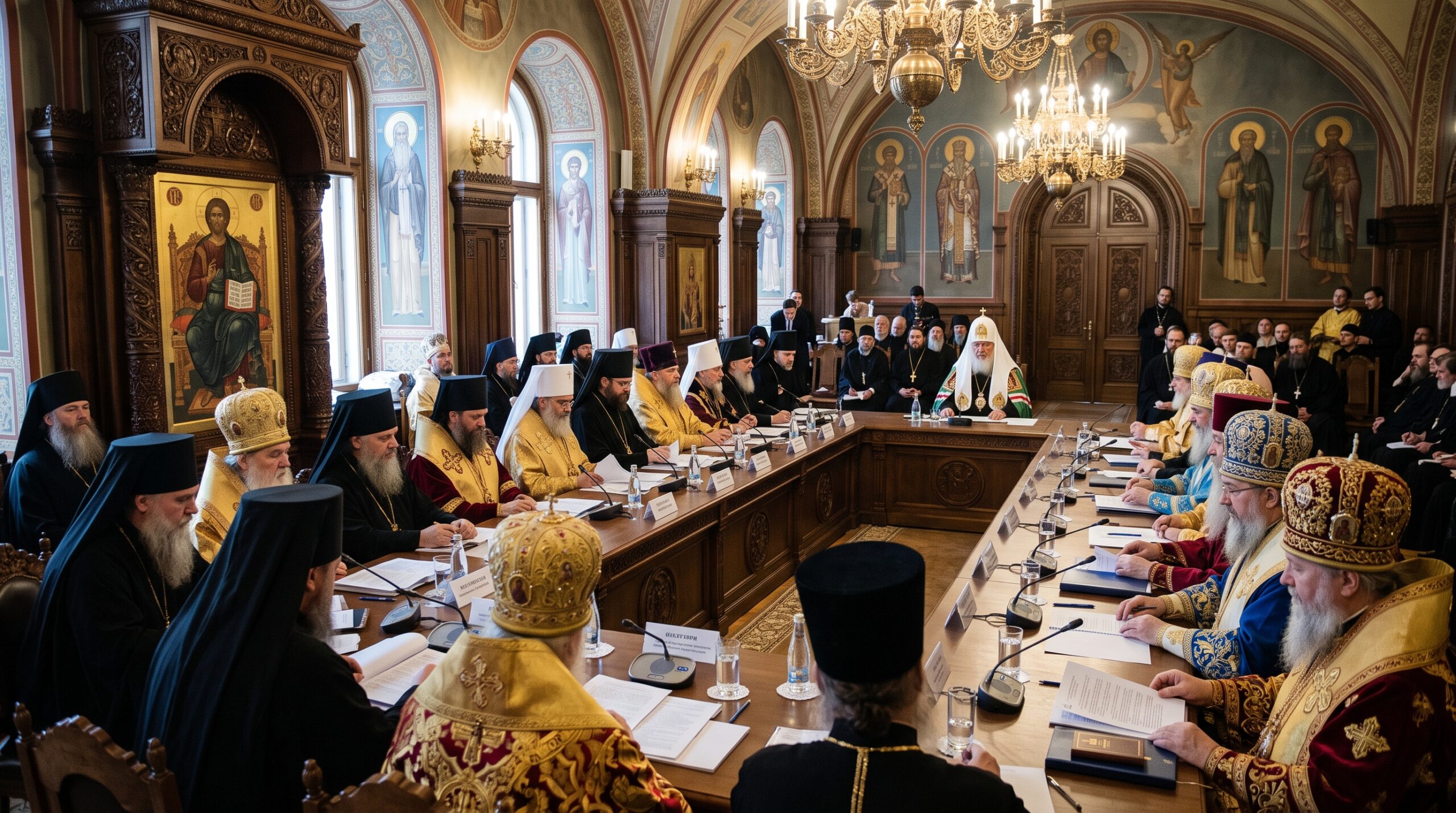
This is the standing body of bishops that governs the church between larger assemblies. The synod:
- prepares the decisions of the Council of Bishops
- resolves doctrinal and disciplinary questions
- elects or confirms bishops (procedures differ between churches)
- oversees the work of the church’s central administration
5.6 The Council of Bishops
The assembly of the whole episcopate usually meets once or twice a year. It adopts fundamental decisions, elects the patriarch in some churches and approves church statutes.
5.7 The Bishop and the Diocese (Eparchy)
The bishop is the teacher of his diocese, the ordainer of priests and the head of its sacramental life. He:
- appoints and reassigns priests
- ordains priests and deacons
- is responsible for the purity of doctrine
- is usually a monk, because a married man cannot be consecrated bishop
5.8 The Priest, the Deacon and the Parish
The priest leads the parish, celebrates the services and sacraments, and acts under the bishop’s authority. The deacon assists at the services and in charitable work. Priests and deacons may marry before ordination. The practical work of the parish is carried out by the parish council, which includes lay members and handles property, finances and administration. Doctrine and the sacraments remain the responsibility of the clergy.
5.9 Monasteries and Abbots
Monasteries are spiritual centers, led by an abbot (hegumen) or an abbess (hegumeness). Bishops are often chosen from among the monks. Some monasteries, such as those on Mount Athos, are directly subject to the patriarch (stavropegial status).
6. Points of Dispute and Tension
- Diptychs, the official order of the local churches. In the diptychs of some churches in the Moscow tradition, the order of four patriarchates differs from that of Constantinople.
- Diaspora jurisdiction. Constantinople claims competence beyond the traditional boundaries, while Moscow and others dispute this.
- Ukraine, 2019. Constantinople’s tomos for the Orthodox Church of Ukraine led to the rupture of communion between Moscow and Constantinople.
7. Orthodoxy in Estonia: Two Churches
Two Orthodox churches operate in Estonia. The Estonian Apostolic Orthodox Church (EAOC) received its tomos from Constantinople in 1923. The other church, formerly the Estonian Orthodox Church of the Moscow Patriarchate, is now called the Estonian Christian Orthodox Church (ECOC). It is affected by the new Churches and Congregations Act, which requires it to sever communion with the Moscow Patriarchate. Both sides present their own historical and canonical arguments. It is important here to keep the theological and political dimensions apart and to present the facts impartially.
8. Source Validity and Analysis
The foundations of Orthodox governance (the canons, the councils, the synod and the episcopate) are consistent across the sources. The disputes concern the granting of autocephaly, diaspora jurisdiction and the status of the Council of Crete. These should be presented as disputes, not as settled facts.
9. A Prayer for the Leaders and Governance of the Orthodox Church
Lord Jesus Christ, the only Head of the Church and the Good Shepherd! We pray to You for Your Church. Bless the Ecumenical Patriarch and all patriarchs, metropolitans, archbishops and bishops. Grant them wisdom, humility and strength to teach Your truth rightly and to shepherd Your flock with love. Keep the priests and deacons faithful, and give them the right word and patience. Bless the monasteries and all who serve You in peace. Grant Your Holy Spirit’s guidance to councils and synods, that they may seek not their own will but Yours. Heal divisions, quench enmity and unite Your Church in truth and love. Keep our nation and all Christians in peace. To You belongs glory, with the Father and the Holy Spirit, now and ever and unto ages of ages. Amen.
Trough all this I want to declare this is all from God and to God. All Glory to Him!