Views: 576
Orthodox Church Fasting Rules: When, What and How to Fast (2026 Guide)
Fasting is one of the foundational spiritual disciplines in the Orthodox Church. It is not merely a dietary restriction but a holistic practice combining prayer, repentance, and almsgiving to draw the believer closer to God. As Christ taught, “When you fast…” (Matthew 6:16), fasting is assumed as a normal part of Christian life, not an optional extra. This 2026 guide provides a clear, practical overview of Orthodox fasting rules, enriched with biblical foundations, teachings from the Church Fathers, and the ascetic wisdom of Mount Athos.
The Spiritual Meaning of Fasting
Fasting trains the soul to master the passions of the body. St. Basil the Great teaches: “Fasting is the change of every part of our life. Because the sacrifice of the fast is not the abstinence from food, but the estrangement from sins.” True fasting involves not only avoiding certain foods but also refraining from sin — anger, gossip, judgment, and greed.
Key Bible verses on fasting include:
- Matthew 6:16-18: “When you fast, do not look dismal, like the hypocrites… But when you fast, anoint your head and wash your face, that your fasting may not be seen by men but by your Father who is in secret.”
- Matthew 17:21: “This kind does not go out except by prayer and fasting.” (Some manuscripts include this verse.)
- Isaiah 58:6-7: True fasting “looses the bonds of wickedness… shares your bread with the hungry.”
- Joel 2:12: “Return to me with all your heart, with fasting.”
The Church Fathers emphasize that fasting without prayer and charity is empty. St. John Chrysostom warns: “What good is it if we abstain from birds and fishes, but bite and devour our brothers and sisters?”
Major Fasting Periods in 2026
The Orthodox calendar includes several fasting seasons and weekly fast days:
- Great Lent (February 23 – April 11, 2026) The longest and strictest fast, imitating Christ’s 40 days in the wilderness. It begins on Clean Monday (February 23) and ends on Great and Holy Saturday (April 11).
- Apostles’ Fast (June 29 – July 11? Wait, variable) In 2026 it runs approximately from early June to June 28 (depending on Pentecost). It prepares for the feast of Saints Peter and Paul.
- Dormition Fast (August 1–14) Two-week fast before the Dormition of the Theotokos.
- Nativity Fast (November 15 – December 24) Also called St. Philip’s Fast, preparing for the Nativity of Christ.
- Weekly Fasts Every Wednesday (betrayal of Christ) and Friday (Crucifixion) throughout the year, except during fast-free weeks (Bright Week after Pascha, the week after Pentecost, etc.).
Other single fast days include the Beheading of St. John the Baptist (August 29) and the Exaltation of the Holy Cross (September 14).
Levels of Fasting: What You Can and Cannot Eat
Orthodox fasting follows a graduated system:
Strict Fast (Xerophagy – “dry eating”)
- No meat, fish with backbone, dairy, eggs, olive oil, or wine.
- Allowed: Vegetables, fruits, grains, legumes, nuts, bread, shellfish (no backbone), and water. Food is preferably eaten uncooked or simply boiled with salt. This applies especially on weekdays in Great Lent.
Fast with Oil and Wine Permitted on weekends and certain feast days during fasting periods. Olive oil and wine (in moderation) are allowed.
Fish Allowed On major feasts like the Annunciation (March 25) and Palm Sunday, fish with backbone is permitted.
What is always avoided during fasting periods:
- Meat and meat products
- Dairy (milk, cheese, butter, yogurt)
- Eggs
- Fish with backbone (except on allowed days)
- Olive oil and wine (except on allowed days)
- Strong alcohol and luxury foods
Shellfish, squid, octopus, and plant-based oils (in some traditions, though olive oil is traditional) are often permitted as they are not considered “blood foods.”
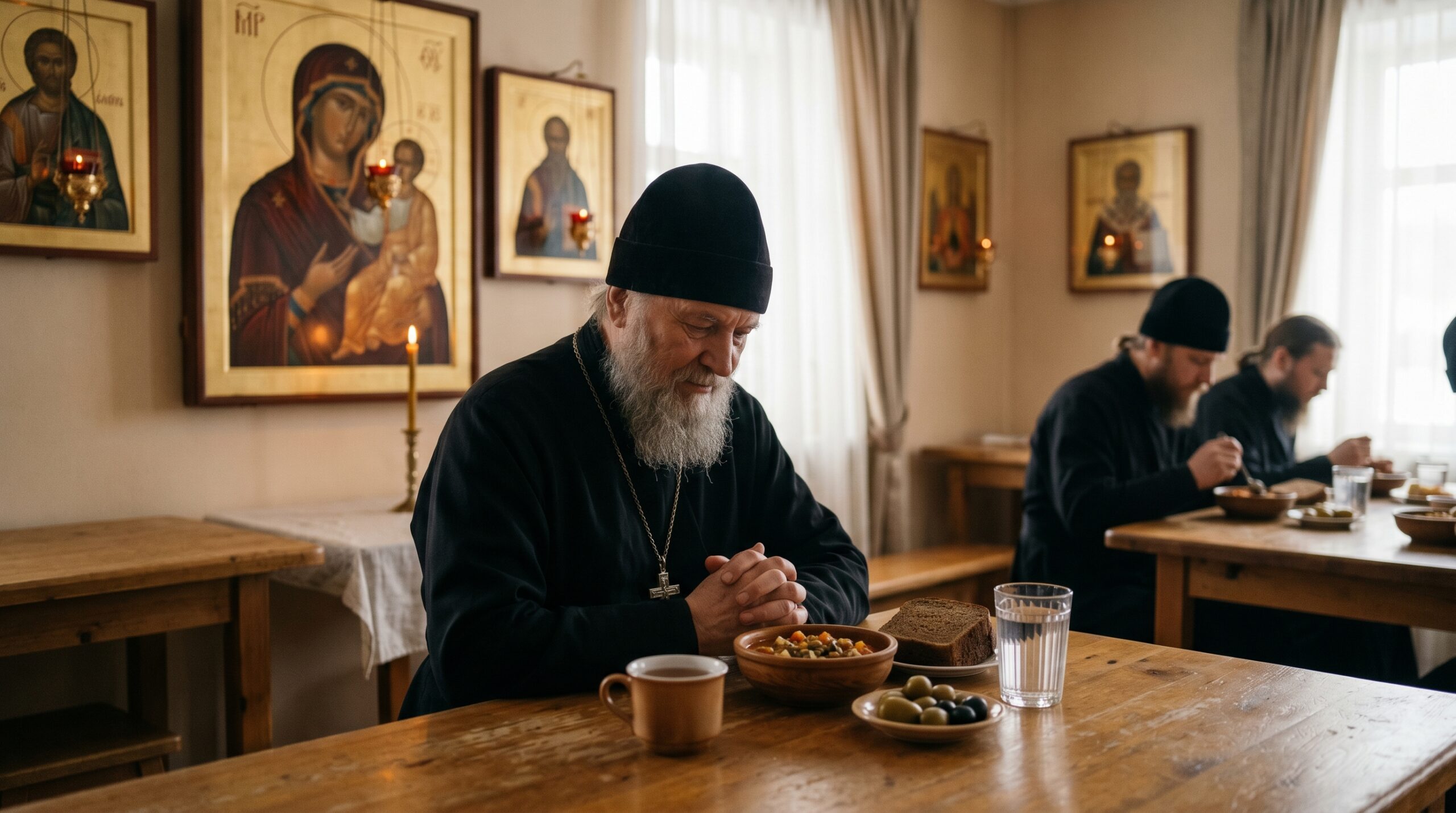
Mount Athos Connection On the Holy Mountain (Mount Athos), monks follow an even stricter ascetic rule. They never eat meat at all. Fasting days (especially Mondays, Wednesdays, Fridays) often mean one meal of legumes, vegetables, or bread without oil. Their diet — rich in plant foods, herbs, and moderation — has been linked in studies to excellent cardiovascular health and longevity. The Athonite tradition shows that fasting is sustainable and spiritually transformative when combined with prayer and manual labor. Many monks live well beyond 90 years, attributing it partly to this disciplined, humble way of eating.
How to Fast Practically
- Beginners: Start gradually. If full fasting is difficult, abstain from meat on Wednesdays and Fridays first, then add more as you grow.
- Quantity: Eat less. Many follow the tradition of not eating until after the Divine Liturgy or midday.
- Spirit: Combine with increased prayer, reading Scripture, and charity. Avoid entertainment and arguments.
- Health: Consult a doctor if you have medical conditions. Pregnant women, nursing mothers, the ill, and young children often receive economia (dispensation) from their priest.
- Preparation: Before Great Lent, there is Cheesefare Week (when dairy is still allowed) to ease the transition.
Sample Daily Meals During Strict Fast:
- Breakfast: Oatmeal with fruits and nuts.
- Lunch: Lentil soup, rice with vegetables, salad.
- Dinner: Baked potatoes, beans, or vegetable stew (no oil on strict days).
On oil days, add olive oil, tahini, or avocado.
Teachings of the Church Fathers
- St. Basil the Great: “Fasting is a medicine… Let the stomach be small, the tongue silent, the mind clear, the heart pure.”
- St. John Chrysostom: “Fasting of the body is food for the soul.” He stressed that fasting must include control of speech and thoughts.
- St. Isaac the Syrian and Athonite elders emphasize that fasting weakens the body’s rebellion so the soul can pray more clearly.
The monks of Mount Athos continue this living tradition today, serving as a beacon for the entire Church.
Fasting as Joyful Discipline
In 2026, let us embrace fasting not as a burden but as a ladder to heaven. As the Church teaches, it prepares us for the Resurrection joy of Pascha and the coming of Christ. Approach it with humility, seek guidance from your spiritual father, and remember the words of Christ: your Father who sees in secret will reward you.
May the prayers of the Theotokos, the saints, and the holy fathers of Mount Athos strengthen us all on this ascetic journey.

Trough all this I want to declare this is all from God and to God. All Glory to Him!