Views: 23
The Nevsky Cathedral on Toompea: A Century-Old Dispute Over a Symbol of Russification
The history of Alexander Nevsky Cathedral, the political motives behind its construction, and the ongoing dispute over its future on Toompea Hill — an objective overview of the facts, the positions involved, and the points of consensus.
Introduction
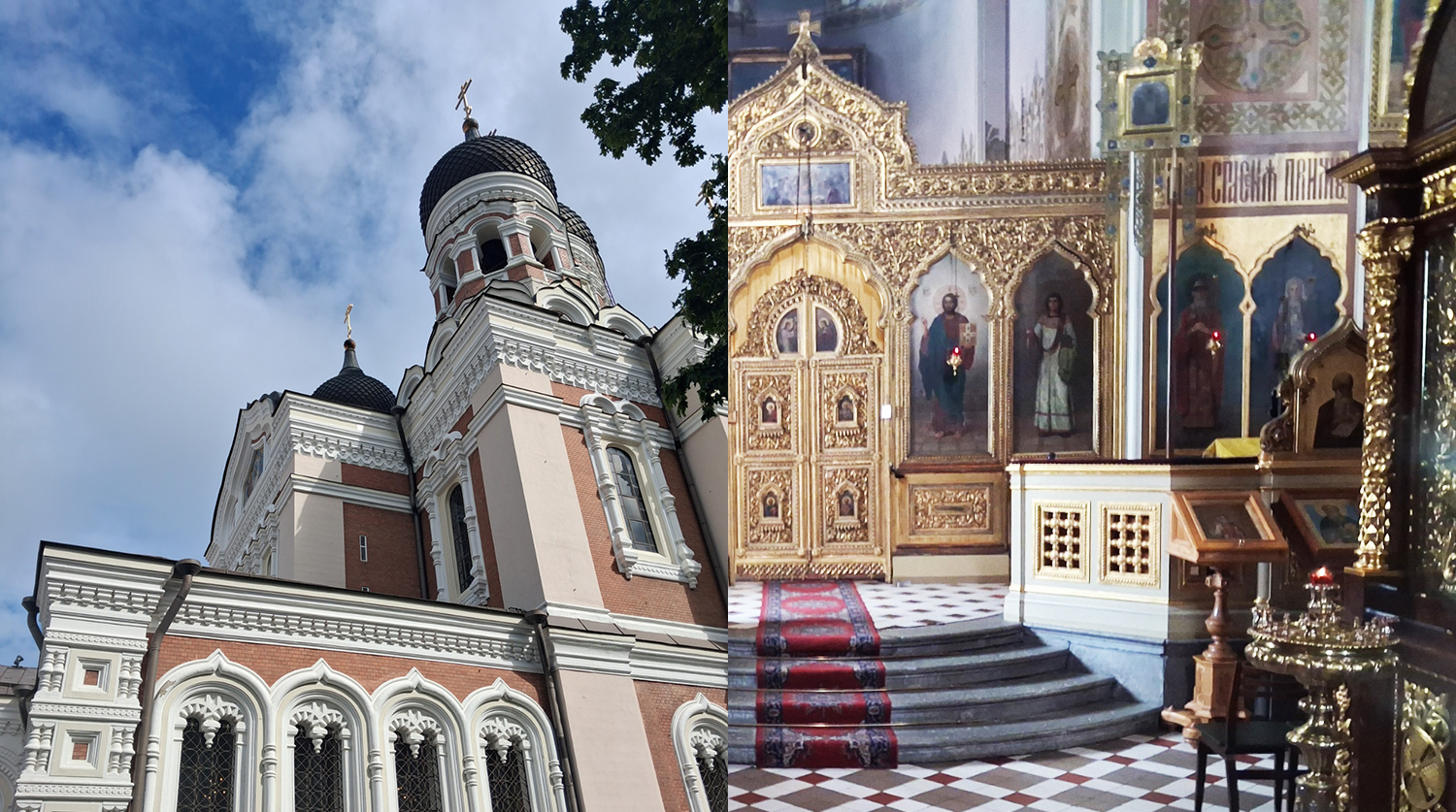
Rising in front of Toompea Castle, Alexander Nevsky Cathedral is one of Tallinn’s most contested buildings. More than a century after its completion, the debate over its future remains unresolved — and Russia’s full-scale invasion of Ukraine in 2022 has pushed the question back to the centre of Estonian public life. In the summer of 2026, Interior Minister Igor Taro called for the termination of the lease agreement between the City of Tallinn and the congregation subordinate to the Moscow Patriarchate that occupies the building, triggering a fresh round of public discussion about the cathedral’s future. This article offers an objective overview of the building’s history, the roots of the dispute, and the solutions currently on the table.
The historical background of the cathedral’s construction
Alexander Nevsky Cathedral was built between 1894 and 1900 on the initiative of Sergei Shakhovskoy, Governor of the Estonian Governorate. The total cost of construction reached roughly 600,000 roubles, a large share of which came from voluntary donations collected across the Russian Empire, with the remainder financed from the state treasury. The design was created by Mikhail Preobrazhensky, an associate professor at the St Petersburg Academy of Arts, who drew on Old Russian ecclesiastical architecture and built the cathedral in the Moscow-Yaroslavl style.
The choice of site was no accident. The cathedral was erected directly facing Toompea Castle — then the seat of the provincial government and today home to the Estonian Parliament — on a spot previously occupied by the Toompea market, where, according to legend, a monument to Martin Luther had once been planned. Governor Shakhovskoy reportedly demanded that the cathedral’s cross “shine from sea and land high above Tallinn” as a sign of Orthodox triumph. The cathedral was consecrated on 30 April 1900 by Agafangel, Bishop of Riga and Mitau.
Historians broadly agree that the building’s location and scale carried a deliberate political message: the cathedral was a visual manifestation of the empire’s Russification policy, intended to assert the supremacy of tsarist rule and Russian Orthodoxy over the local Baltic German nobility and the Estonian population.
The first demolition attempt: the 1920s and 1930s
After Estonia declared independence in 1918 and the War of Independence ended, the cathedral became, for many Estonians, a hated symbol. On 11 October 1928, members of parliament Mihkel Juhkam, August Laur, Oskar Liigand and Ado Johanson submitted a bill to the Riigikogu calling for the cathedral’s demolition. The proposal envisaged partially tearing down the building and converting it into a “Pantheon of Independence.”
The bill provoked strong reactions both at home and abroad. Russian community organisations submitted a memorandum to the head of state and the Speaker of the Riigikogu, warning that demolition would be an affront to the Orthodox Church and harmful to the Republic of Estonia. Internationally, the issue drew intervention from the American Episcopal Church and British representatives, who expressed concern for the rights of a religious minority. In November 1928, the parliamentary committee concluded that although the cathedral’s construction had clearly served a political purpose, demolition itself was neither an appropriate nor a dignified solution. As the pre-election period approached, the issue fell off the agenda, and the following, fourth Riigikogu never took the bill up again.
A significant shift did occur in 1936, however: the Russian congregation exchanged the cathedral with Tallinn’s Estonian-speaking St Simeon’s congregation. The building became the representative church of the Metropolitan of the Estonian Apostolic Orthodox Church and was thereafter known as St Alexander’s Cathedral — an attempt to integrate the building into Estonian cultural life without physically tearing it down.
The Soviet period and the restoration of independence
During the German occupation, the cathedral was closed. Services resumed in May 1945, and the building once again became the centre of Orthodox church life in Estonia — now, however, under Soviet control and the Moscow Patriarchate. During the last decade of the twentieth century, the cathedral underwent extensive restoration: facades, the flake-pattern covering of the domes, and metal ornamental details were all renewed.
Today the cathedral houses a congregation of the Estonian Orthodox Church of the Moscow Patriarchate, which remains canonically subordinate to the Patriarch of Moscow. The building itself belongs to the City of Tallinn and is leased to the congregation under a long-term agreement. It is also a protected architectural monument under Estonian heritage conservation law, which places legal constraints on any potential demolition or structural alteration.
The current dispute: 2022–2026
Russia’s full-scale invasion of Ukraine in 2022 returned the cathedral to the centre of public debate. Because the building belongs to a church structure subordinate to the Moscow Patriarchate, it has for many become an even more sensitive symbol than before. In the summer of 2026, Interior Minister Igor Taro of Eesti 200 called for the termination of the lease agreement between the City of Tallinn and the congregation, reigniting broader discussion of the building’s future.
Several distinct proposals are currently on the table:
Demolition. Some commentators and cultural figures continue to view the cathedral as a symbol of Russification and national humiliation that should be removed entirely, regardless of its heritage status.
Sale and relocation. Historian Lauri Vahtre, a member of Isamaa, has proposed selling the cathedral so that it could be moved elsewhere — preserving the building while, in his words, freeing Tallinn from an “arrogant symbol of Russification.”
Termination of the lease. Interior Minister Igor Taro’s demand focuses more narrowly on ending the lease agreement with the Moscow Patriarchate-affiliated congregation, rather than on the fate of the building itself.
Integration into Estonian cultural life. Architectural historian Oliver Orro has suggested the cathedral could be used for national commemorations, including Estonian-language Orthodox liturgies, which he argues would better include the country’s Slavic-speaking population.
Conversion into a museum. As an alternative, some have proposed converting the building’s function into a museum or cultural site, preserving the architectural monument while severing its ties to the Moscow Patriarchate.
Tallinn Deputy Mayor Vadim Belobrovtsev (Centre Party) has stressed that as long as the state permits the congregation to continue operating, the city has no independent grounds to unilaterally terminate the lease, and that any step in this direction requires careful deliberation.
Analysing the dispute: arguments that echo across a century
Historians and commentators have repeatedly noted that the debate of the 2020s largely mirrors the argumentation of the 1920s and 1930s:
- The pro-demolition position emphasises the cathedral’s overtly political and provocative origins, its symbolic placement at the heart of state power, and, in the present day, its institutional ties to a church structure closely aligned with the Russian state.
- The anti-demolition position points to the building’s architectural and cultural-historical value, its protected heritage status, the principle of religious freedom, the risk of international backlash, and the fact that the cathedral has been part of Tallinn’s cityscape and tourism appeal for over a century.
Both historian Kalmar Ulm and architectural historian Oliver Orro have suggested that demolishing churches as a form of political statement is more characteristic of Soviet-era practice, and that a democratic state governed by the rule of law ought to seek less radical solutions.
Points of consensus
A comparison of sources reveals several points on which most parties — despite differing political views on the building’s ultimate fate — nonetheless converge:
- The political nature of the construction — virtually all historians and commentators, regardless of their position on the cathedral’s future, acknowledge that its construction between 1894 and 1900 was a deliberate act of Russification and a demonstration of tsarist power, not merely a religious undertaking.
- Outright demolition has never achieved broad political or societal consensus, either in the 1920s–1930s or today — in both periods, bills and calls for demolition have remained at the level of debate without being carried out.
- The building’s heritage and architectural value is widely recognised, even among those who support changing its function or ownership.
- The central issue today is less the building itself than its affiliation with the Moscow Patriarchate — a factor that clearly distinguishes the present-day discussion from that of the 1920s and 1930s, when the dispute centred primarily on symbolism and architecture.
- Questions of the lease and future function are legally and politically more complex than they first appear, since the building is owned by the City of Tallinn while its use is bound up with canon law and international dimensions.
Conclusion
The story of Alexander Nevsky Cathedral on Toompea reflects Estonia’s broader relationship with its historical past. Similar arguments recur a century apart, yet the context has shifted: where the dispute of the 1920s and 1930s centred on the building’s symbolic and architectural fit within a newly independent state, today’s discussion adds a geopolitical dimension — Russia’s aggression against Ukraine and the cathedral’s institutional ties to the Moscow Patriarchate. Objectively, none of the proposed solutions — demolition, sale, relocation, conversion into a museum, or integration into Estonian cultural life — has so far achieved broad political consensus, and the debate is likely to continue in the years ahead.

Martinus Vaicarius’s mission is to:
- Provide spiritual support and guidance to people seeking peace and hope
- Create prayer texts that bring God’s peace to hearts suffering under fear and anxiety
- Promote deep understanding of the power of the
- God of Sabaoth and the protection of the heavenly hosts
- Help people enter the spiritual sphere where God’s peace reigns over all
AICortex Invest OÜ
- Dormition Fast 2026: When It Begins, When It Ends, and How to Fast Rightly - 2. Aug 2026
- The Nevsky Cathedral on Toompea: A Century-Old Dispute Over a Symbol of Russification - 1. Aug 2026
- The Meaning and Power of Prayer in Christianity: Biblical Teaching and the Wisdom of the Church Fathers - 29. Jul 2026