Views: 43
Why Icons May Depict Christ and the Saints: A Biblical and Historical Answer to the Case Against Sacred Images
Meta description: Is the veneration of icons idolatry? This article examines the Mosaic commandment, the incarnation of Christ, the decisions of the Second Council of Nicaea (787), and every relevant biblical passage on the making of images.
Introduction: A Question the Church Has Faced for Centuries
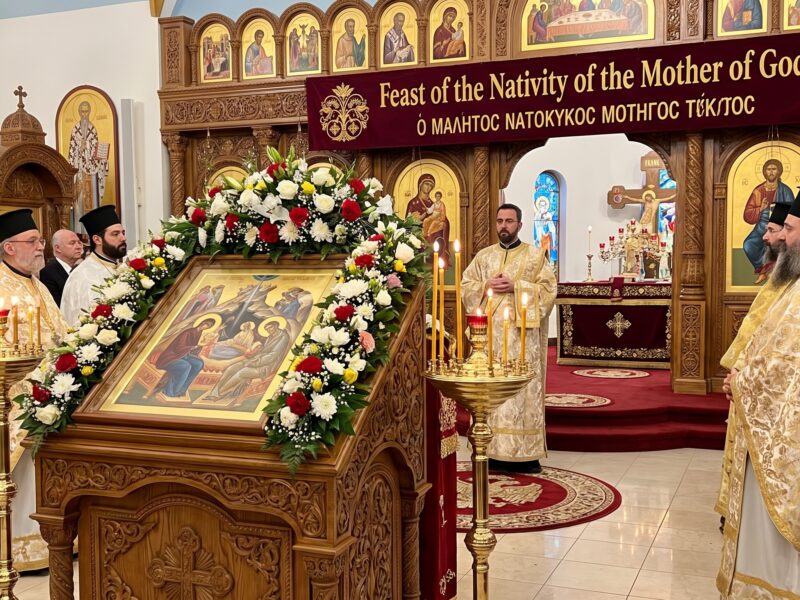
Few questions have divided Christians as persistently as whether it is permissible to venerate icons — images of Christ, the Mother of God, and the saints. On one side stands the claim that depicting God, or anyone recognized as holy, is idolatry, a violation of the second commandment. On the other stands a Church that, in 787, at the Second Council of Nicaea, formally affirmed both the legitimacy and the theological necessity of venerating icons. This article weighs both sides, sets out the relevant biblical texts and conciliar sources, and explains why honoring icons does not contradict the Mosaic commandment but follows directly from the fact of Christ’s incarnation.
What the Mosaic Commandment Actually Forbids
The second commandment reads: “You shall not make for yourself a carved image, or any likeness of anything that is in heaven above, or that is in the earth beneath, or that is in the water under the earth. You shall not bow down to them or serve them” (Exodus 20:4–5). Read in isolation, this might seem to forbid images altogether. But set within the wider context of the Pentateuch, it becomes clear that God himself commanded Israel to make certain images.
Two golden cherubim were to stand over the mercy seat, hammered out of the very ends of the ark’s cover (Exodus 25:18–20). Solomon’s Temple was adorned throughout with carved cherubim, palm trees, and flowers, and its inner sanctuary held two enormous wooden cherubim (1 Kings 6:23–29). The clearest case is the bronze serpent: God commanded Moses to make an image of a serpent and raise it on a pole, so that whoever looked upon it would live (Numbers 21:8–9). These examples show plainly that the second commandment does not forbid image-making as such; it forbids treating an image as an independent object of worship — that is, idolatry.
Deuteronomy makes the commandment’s underlying rationale explicit: “you saw no form on the day that the LORD spoke to you at Horeb out of the midst of the fire” (Deuteronomy 4:15–16). The prohibition is tied specifically to the fact that at Sinai Israel did not see God in any visible form — he revealed himself as a voice, not a bodily shape. The commandment guards against reducing the invisible, bodiless God to a piece of creation, in the manner of the idols of neighboring nations.
Why the New Testament Fulfills This Command Rather Than Abolishing It
Here we reach the heart of the matter. If the Old Testament commandment forbids depicting a bodiless, invisible God, the New Testament proclaims something radically new: God has become visible. “And the Word became flesh and dwelt among us, and we have seen his glory” (John 1:14). Christ himself tells Philip, “Whoever has seen me has seen the Father” (John 14:9). Paul calls Christ directly “the image of the invisible God” (Colossians 1:15) and “the radiance of the glory of God and the exact imprint of his nature” (Hebrews 1:3). In 2 Corinthians, Paul speaks of “the gospel of the glory of Christ, who is the image of God” (2 Corinthians 4:4).
This is precisely the logic articulated by the eighth-century theologian John of Damascus in his three treatises defending sacred images. In the Old Testament, he argued, God was bodiless and invisible, so depicting him would have been false and misleading. But since God has himself, in Christ, taken on human flesh and become visible, tangible, and touchable, it is no longer right to refuse depicting what God himself has chosen to reveal. To refuse to depict Christ, John argued, is in effect to deny that God truly became flesh — a path that leads toward Docetism, the teaching that Christ’s human body was only apparent, not real.
The New Testament, then, does not contradict the second commandment but fulfills its deeper intent: the commandment guarded an era in which God had not yet revealed himself bodily. The incarnation changed that reality fundamentally.
The Incarnation of Christ, His Two Natures, and His Two Wills
The theological foundation of Christian iconography rests directly on Christology — the doctrine of the person of Christ. Paul describes Christ’s kenosis, his self-emptying, in Philippians: “who, though he was in the form of God, did not count equality with God a thing to be grasped, but emptied himself, by taking the form of a servant, being born in the likeness of men” (Philippians 2:6–8). Christ, eternally God, took on a genuine human nature — a real body, a real soul, a real will.
In 451, the Council of Chalcedon (the Fourth Ecumenical Council) affirmed that Christ possesses two natures — divine and human — united in one person “without confusion, without change, without division, without separation.” This means Christ’s human body was not an illusion or a temporary shell, but a real body, part of the material world, that could be seen, touched, and therefore depicted.
In 680–681, the Third Council of Constantinople (the Sixth Ecumenical Council) refined this further: Christ has two wills — divine and human — operating in harmony, without conflict. This teaching of dyothelitism confirms that Christ’s humanity was complete and genuine in every respect, including at the level of will, not merely at the level of body.
Christ, described in 1 Timothy as “the mystery of godliness: He was manifested in the flesh” (1 Timothy 3:16), rose bodily from the dead on the third day — not as a spirit, but in a real, though glorified, body that the disciples saw, touched, and that Thomas personally examined (John 20:27). The resurrection confirms that Christ’s bodily existence was not a temporary episode but an enduring reality: Christ remains, even now, seated at the Father’s right hand, true God and true man in the body.
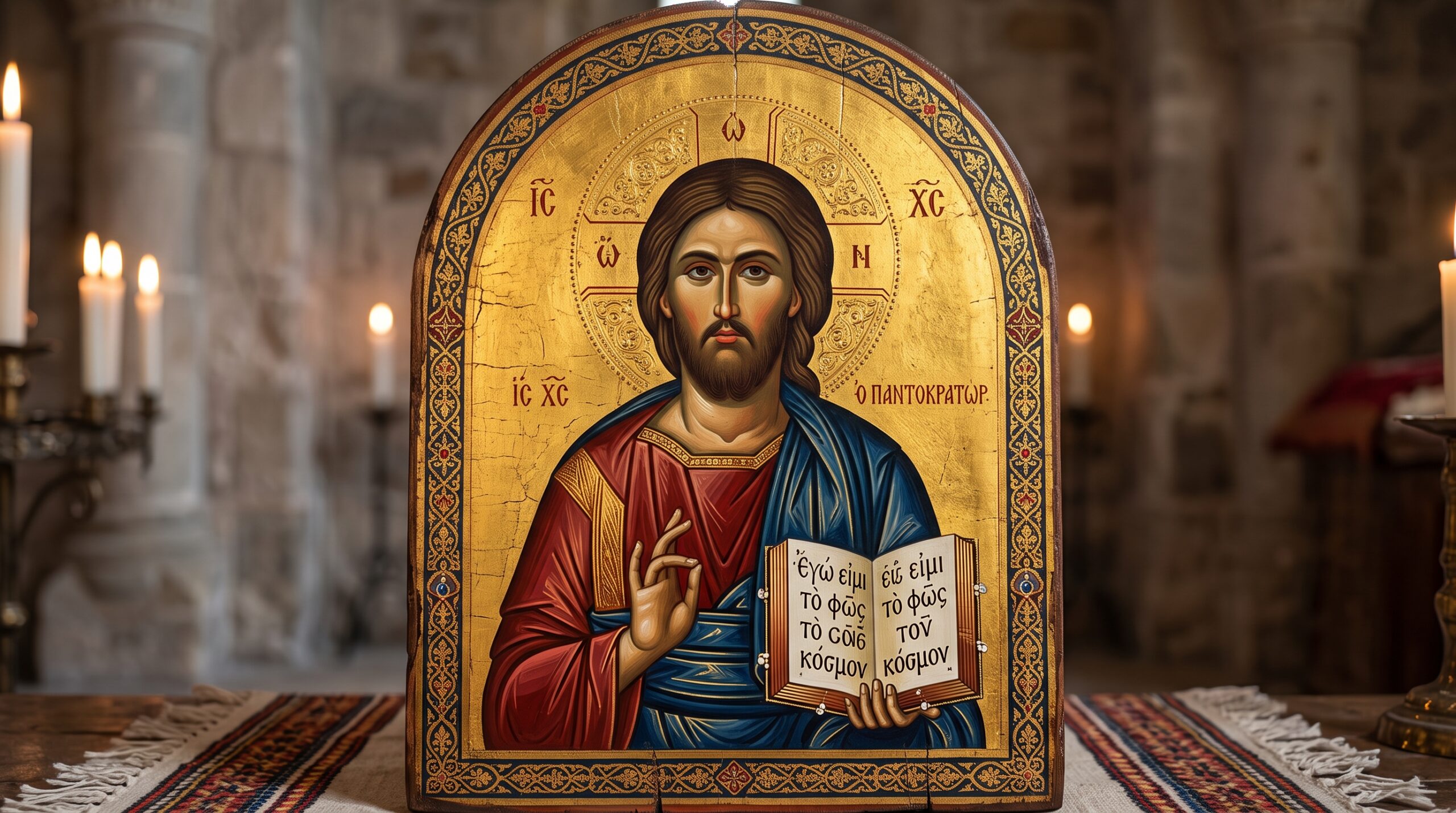
If Christ’s body is real and enduring, and if he is the visible image of God, then it is theologically sound to depict that body in an icon. An icon does not depict the divine nature itself — which remains undepictable and invisible — but depicts Christ’s human nature, united to the divine person.
The Early Councils That Affirmed the Veneration of Icons
The Council of Trullo (Quinisext Council), 692
Even before the great iconoclast crisis, the Council of Trullo — also known as the Quinisext Council — ruled in its 82nd canon that Christ should be depicted in human form rather than symbolically as a lamb, as had sometimes been done earlier. The reasoning was explicitly Christological: since Christ has already come in the flesh, the truth itself should be preferred to the symbol — Christ our God should be shown “in his human form instead of the ancient lamb.”
The Second Council of Nicaea, 787
The Seventh Ecumenical Council, convened at Nicaea in 787 under Empress Irene and Patriarch Tarasius, was a direct response to the first wave of iconoclasm, which had begun under Emperor Leo III in 726. The council established a theological distinction that underlies all subsequent icon theology: the honor given to icons (in Greek, proskynesis, relative veneration) is fundamentally different from divine worship (latreia), which belongs to God alone. The council cited a principle from Basil the Great: “the honor paid to the image passes to the prototype” — meaning that in venerating an icon, one does not worship wood and paint, but through them turns toward the person depicted.
The Council of Constantinople, 843 — “The Triumph of Orthodoxy”
After a second wave of iconoclasm (beginning in 815), the veneration of icons was finally and permanently confirmed in 843 in Constantinople, under Empress Theodora. This day is still celebrated in the Orthodox Church as the “Triumph of Orthodoxy,” reaffirming the validity of the Nicene decisions of 787.
The Arguments For and Against: Both Sides of the Question
The iconoclast (image-opposing) position: Iconoclasts relied on a literal reading of the second commandment, arguing that any depiction of God or Christ inevitably constitutes idolatry, or at least dangerously approaches it. Some also advanced Christological arguments: if Christ is depicted only according to his human nature, the two natures are unlawfully separated (in the direction of Nestorianism); but if both natures are depicted together, one is claiming to depict the divine nature itself, which is impossible, since the divine nature is invisible and infinite.
The iconophile (icon-defending) response: John of Damascus, and later Theodore the Studite, answered that an icon never depicts the divine nature itself, but only the person of Christ through his human body — much as a portrait of a person does not depict the soul, but shows the person through their body. Veneration is always directed toward the person, never toward the nature, and an icon functions as a window that directs honor toward what is signified rather than toward the material itself. They also pointed out that the Old Testament itself contained images made at God’s own command — the cherubim, the bronze serpent — which makes any reading that Scripture forbids all images whatsoever self-contradictory.
Both sides took the question with the utmost seriousness precisely because a deeper issue lay beneath it: whether Christ’s incarnation was real and complete. This was not a debate about artistic theory, but a Christological debate carried out in the medium of art.
Practical Application for Believers Today
In a contemporary context, where many Christian traditions are either indifferent to icons or explicitly reject them, three principles are worth keeping in mind. First, an icon is never an end in itself — it is a window, not a wall; a means, not an object of worship in its own right. Second, the honor given to an icon is not fundamentally different from the honor given to Scripture, to a cross, or even to a photograph of a loved one — honor passes through the symbol to the person it signifies. Third, rejecting icons altogether risks reducing the Christian faith to a purely verbal and conceptual system, forgetting that at the center of the faith stands the Word who became flesh — concrete, visible, and depictable.
Conclusion
The second commandment forbids idolatry, not depiction as such — a point confirmed by the cherubim and the bronze serpent, images God himself commanded to be made. Through the incarnation of Christ, attested by both the Gospels and Paul’s letters, God himself became visible and bodily while remaining fully divine — as affirmed by the Councils of Chalcedon (451) and the Third Council of Constantinople (680–681) concerning his two natures and two wills. On this theological foundation, the Council of Trullo (692), and especially the Second Council of Nicaea (787), followed later by the Synod of Constantinople (843), affirmed that depicting and venerating Christ, the Mother of God, and the saints is not merely permissible but stands as a direct testimony that God has truly become flesh among us.
A prayer before standing before an icon:
Lord Jesus Christ, who took on our human nature and became visible among us, grant me grace to see in your holy image not wood and paint, but the presence of your own love. Help me to worship you in spirit and in truth, lifting my heart through what is visible toward your invisible glory. Amen.
A prayer for the intercession of the Mother of God and the saints:
Most holy Mother of God and all the saints, whose faces we honor in icons as living witnesses to Christ’s victory over death, intercede for us before the Lord, that we may live as you lived — faithful to Christ in body and spirit — until we reach, together with you, the glory of heaven. Amen.

Trough all this I want to declare this is all from God and to God. All Glory to Him!