Views: 104
The Power of Anointing: How to Receive and Activate God’s Anointing
Introduction: What Is Anointing?
Anointing (Greek χρίσμα, chrisma — “anointing, unction”) is one of the deepest, and at the same time one of the most misunderstood, concepts in Christian spirituality. Popular usage often reduces it to a special charismatic gifting — eloquence, an electrifying preaching style, or a visible aura of spiritual authority. In reality, anointing is far more: it is the coming of the Holy Spirit’s own presence and power into a person’s life, a presence that consecrates, equips, and sends into ministry. Both the Pentecostal and Orthodox traditions — despite radically different vocabulary and practice on the surface — agree that anointing is not a human achievement but a gift of God, one that must be received and answered with faith and obedience.
This essay approaches anointing from three angles: its biblical and historical meaning, the sacramental theology of Orthodox chrismation (Greek τὸ Ἅγιον Μύρον, to Hagion Myron — the Holy Myron/Chrism), and the Pentecostal understanding of the Spirit’s anointing as a living, ongoing, and activatable reality. It closes with practical, plain-language answers to the question: how does one receive God’s anointing, and how does one activate it in daily life?
1. Anointing in the Old Testament: Oil as the Mark of Consecration
In the world of the Old Testament, anointing with oil (Hebrew mashach, the root behind “Messiah” — the Anointed One) was a sacred act that set a person or object apart for God’s special service. Three categories of people were anointed: priests, kings, and prophets.
“Then Samuel took the horn of oil and anointed him in the midst of his brothers. And the Spirit of the LORD rushed upon David from that day forward.” (1 Samuel 16:13, ESV)
Two truths stand out in this verse: anointing (a physical act) and the coming of the Spirit (a spiritual reality) go hand in hand, yet are not identical — the oil is a visible sign, while the Spirit is invisible but genuinely powerful. The consecration oil prescribed to Moses (Exodus 30:22–25) had a unique composition and was reserved exclusively for consecrated objects and persons in God’s service; it could not be used for any ordinary purpose (Exodus 30:32–33). Already here we see a principle that echoes throughout Scripture: anointing is consecration — a setting apart from the common for a holy purpose.
Psalm 133 pictures anointing oil running down from Aaron’s beard to the collar of his robe — an image of how God’s blessing and unity spread outward and cover the whole body (Psalm 133:2). This image matters for both traditions: anointing does not stay on the surface but permeates the whole of a person’s life and the life of the community.
2. Christ — the Anointed One, and the Legacy of His Anointing
In the New Testament, anointing becomes a core Christological term. The very name “Christ” (Greek Χριστός, Christos) means, quite literally, “the Anointed One.” In the synagogue at Nazareth, Jesus himself reads the prophecy of Isaiah:
“The Spirit of the Lord is upon me, because he has anointed me to proclaim good news to the poor…” (Luke 4:18, ESV; cf. Isaiah 61:1)
The apostle Peter later sums up the nature of Christ’s earthly ministry: “God anointed Jesus of Nazareth with the Holy Spirit and with power. He went about doing good and healing all who were oppressed by the devil, for God was with him” (Acts 10:38, ESV). Here the threefold structure of anointing is clearly visible: God anoints, the Holy Spirit is the bearer of power, and the result is a visible ministry — doing good and setting people free.
In the New Testament epistles, anointing extends to all believers. The apostle John writes: “But you have been anointed by the Holy One, and you all have knowledge… the anointing that you received from him abides in you, and you have no need that anyone should teach you” (1 John 2:20, 27, ESV). The apostle Paul likewise affirms: “And it is God who establishes us with you in Christ, and has anointed us, and who has also put his seal on us and given us his Spirit in our hearts as a guarantee” (2 Corinthians 1:21–22, ESV). From this text comes one of the deepest theological connections in the subject: anointing is inseparably bound to the reception of the Holy Spirit and to the concept of the Spirit as guarantee (Greek ἀρραβών, arrabon — down payment, pledge). Anointing is not merely an event; it is an ongoing state — the beginning of something that is still being brought to completion.
3. The Orthodox Understanding: Chrismation and Its Theology
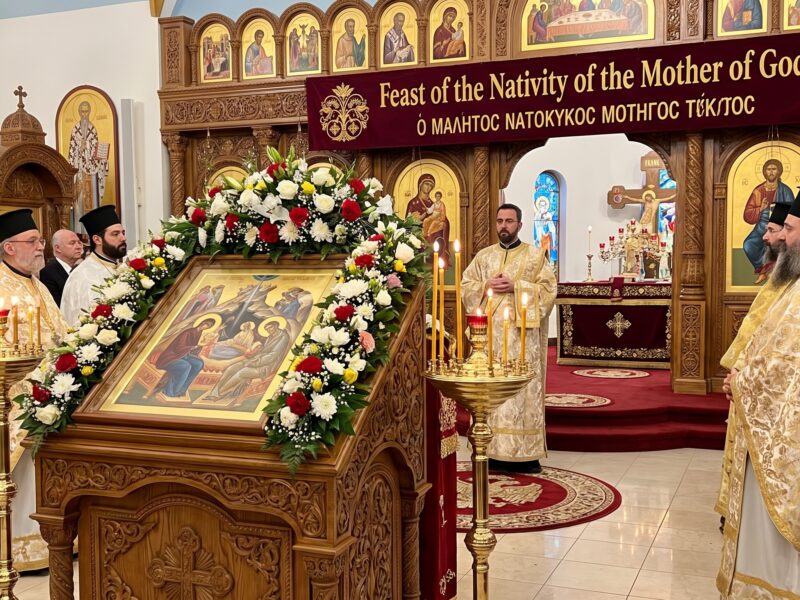
In the Orthodox Church, anointing is formally and sacramentally embodied in the sacrament of chrismation, also called holy myron-anointing (Greek Χρίσμα, Chrisma; the common Western rendering “confirmation” does not fully capture the depth of the original term). Unlike Western confirmation, which often takes place years after baptism, in the Orthodox Church a child receives chrismation immediately after baptism, even as an infant. This expresses the conviction that baptism and the reception of the Spirit’s gift belong inseparably together — just as at Christ’s own baptism in the Jordan, water and Spirit appear together as one event (Matthew 3:16–17).
At the center of the rite stands the Holy Myron (Greek τὸ Ἅγιον Μύρον, to Hagion Myron) — an extraordinarily rich oil compounded from dozens of fragrant oils and spices, consecrated only rarely, typically by a patriarch or archbishop, during the Holy Thursday liturgy. The word myron (μύρον) shares a root with Christos (Χριστός) — both point back to anointing. The priest anoints the newly baptized in the form of a cross on the forehead, eyes, nostrils, mouth, ears, chest, hands, and feet, saying each time: “Σφραγὶς δωρεᾶς Πνεύματος Ἁγίου” — “The seal of the gift of the Holy Spirit.” This phrase is decisive: anointing is a seal (Greek σφραγίς, sfragis) — a mark of ownership, identifying the person as belonging to God and sealed by the Spirit (cf. Ephesians 1:13, where Paul speaks of being sealed with the promised Holy Spirit).
A second important Orthodox practice is the anointing of the sick, known as Holy Unction or Euchelaion (Greek Εὐχέλαιον, Euchelaion — literally “prayer-oil”), grounded in the epistle of James: “Is anyone among you sick? Let him call for the elders of the church, and let them pray over him, anointing him with oil in the name of the Lord. And the prayer of faith will save the one who is sick, and the Lord will raise him up” (James 5:14–15, ESV). This sacrament is not aimed solely at bodily healing; it is a sacrament of release from sin, of the healing and strengthening of the soul, and it is often offered to the whole congregation, healthy and sick alike, before the great feasts.
Orthodox spirituality stresses that anointing is not a one-time mechanical transaction but a sealed promise, whose power a person must rediscover and actualize throughout life through synergy (Greek συνεργία, synergia — cooperation with divine grace), by way of prayer, fasting, the sacraments, and a life ordered by the feasts of the Church. As Basil the Great taught, the Spirit dwells in the baptized, but human freedom determines whether that gift bears fruit or lies dormant.
4. The Pentecostal Understanding: The Spirit’s Anointing as a Living, Activatable Power
The Pentecostal movement, which takes its name from the apostles’ being filled with the Spirit on the Day of Pentecost (Acts 2), emphasizes anointing above all as experiential, ongoing spiritual power. Where Orthodox theology sees anointing primarily as a sacramental seal, Pentecostal theology sees it primarily as functional equipping for ministry — power given so that the believer can carry on the works of Christ in the world.
The foundation for this is Jesus’ own promise: “But you will receive power when the Holy Spirit has come upon you, and you will be my witnesses…” (Acts 1:8, ESV). In the Pentecostal understanding, this power is not automatically and uniformly active in every believer — it must be received by faith (Galatians 3:2, 14 — the promise of the Spirit comes through faith), yielded to, and exercised. Hence the phrase “activating the anointing” — not in the sense that a person creates something on their own, but in the sense of consciously entering into cooperation with a gift God has already given, the way a fire catches on wood already laid, once air is given to it.
Pentecostal spirituality commonly distinguishes between:
- The indwelling presence of the Spirit in every believer from the moment of conversion (Romans 8:9)
- Being filled with / baptized in the Spirit as a distinct, often consciously experienced empowering for greater boldness in ministry (Acts 2:4; Acts 4:31)
- The manifestation of spiritual gifts, “activated” through faith, prayer, the laying on of hands (1 Timothy 4:14), and stepping into active ministry
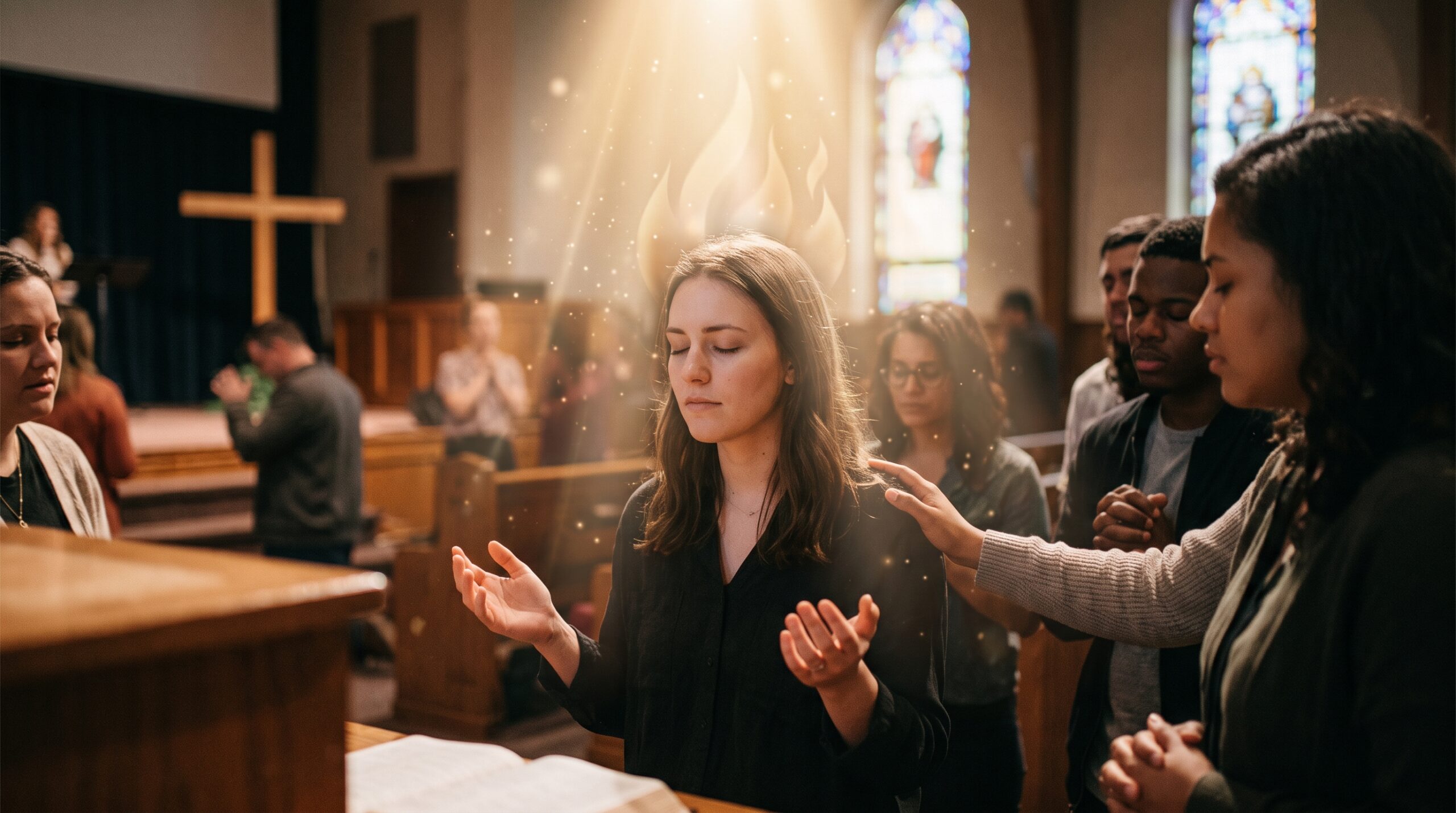
The laying on of hands (Greek ἐπίθεσις χειρῶν, epithesis cheiron) plays a role here similar to Orthodox chrismation — it is a visible, bodily act through which the invisible transfer of the Spirit is invoked and acknowledged. Paul reminds Timothy: “Do not neglect the gift you have, which was given you by prophecy when the council of elders laid their hands on you” (1 Timothy 4:14, ESV) — and later adds: “For this reason I remind you to fan into flame the gift of God, which is in you through the laying on of my hands” (2 Timothy 1:6, ESV). This “fanning into flame” (Greek ἀναζωπυρεῖν, anazopyrein — literally “to rekindle, to blow back to life”) is one of the clearest biblical passages speaking directly to the activation of anointing: the gift has already been given, but the person must keep it alive through deliberate, conscious spiritual effort.
5. The Shared Core Between the Two Traditions
Despite significant differences — the sacramental, hierarchical, liturgical shape of the Orthodox approach versus the experiential, personal, often spontaneous shape of the Pentecostal approach — both traditions share three deep convictions:
- Anointing comes from God, not from man. Neither priest nor preacher “creates” anointing; both are merely instruments through whom God acts.
- Anointing is bound to a sign and an act — whether chrismation, the laying on of hands, or anointing with oil in prayer — because God works through visible and spiritual union, not through abstract idea alone.
- Anointing calls for a human response. It is not a passive attribute but a living relationship, one that either grows and bears fruit, or is left unused and fades.
6. How to Receive and Activate God’s Anointing — In Plain Language
Here are several practical, plain-language steps, drawn from the biblical and historical analysis above:
1. Recognize that the anointing is already yours if you are in Christ. If you are baptized and believing, the Spirit already dwells within you (1 John 2:27; Romans 8:9). The first step is not “acquiring” but recognizing — much as Paul calls Timothy not to create a new gift, but to fan into flame the one already given.
2. Deliberately ask God for the fullness of the Spirit. Jesus said: “If you then, who are evil, know how to give good gifts to your children, how much more will the heavenly Father give the Holy Spirit to those who ask him!” (Luke 11:13, ESV). Prayer is not a formality — it is the beginning of activation.
3. Give yourself to obedience and service. Anointing does not thrive in comfort; it thrives in service. Just as Christ himself was anointed “to proclaim good news” and “to do good,” so too with us: anointing shows itself in action, not merely in feeling.
4. Seek bodily and congregational connection. Both the laying on of hands and anointing with oil (James 5:14) show that God wants to work through visible and communal means as well — do not underestimate the power of the prayers of pastors, elders, and the church in your life.
5. Live a regular life of spiritual practice. Fasting, prayer, Scripture, sacramental communion, thanksgiving, and worship — all of these “keep the fire burning” (2 Timothy 1:6). Anointing fades in emptiness and passivity but grows stronger through constant spiritual nourishment.
6. Chase fruit, not feeling. Both Pentecostal and Orthodox spirituality warn against the same error: the proof of anointing is not emotion or spectacle, but the fruit of the Spirit (Galatians 5:22–23) and Christlikeness. When deed, word, and love bear fruit — that is power in action.
Conclusion
Anointing — whether expressed in the holy mystery of Orthodox chrismation or in the experiential Pentecostal filling of the Spirit — is, at its deepest level, one and the same truth seen through different windows: God himself comes among his people, seals them as his own, and equips them with power to live and serve as Christ did. This power is neither magic nor a mechanical formula — it is a living relationship that demands faith, obedience, and continuous, deliberate cooperation with God’s grace. Just as oil runs down over the whole body (Psalm 133:2), and just as fire needs constant fanning to keep burning (2 Timothy 1:6), so God’s anointing must become a daily, conscious, and active reality in our lives.
A Deep Prayer for Receiving the Anointing
Lord God, Father, Son, and Holy Spirit,
I come before you with empty hands but an open heart. You are the one who anointed David from shepherd boy to king, who anointed Jesus of Nazareth with the Holy Spirit and with power, and who promised that this same Spirit would live in me, your child.
I confess, Lord, that anointing is not my merit or achievement, but the gift of your grace. Cleanse me of everything that hinders the free flow of your Spirit within me — indifference, unbelief, fear, and self-reliance.
Fan into flame again the gift you have placed within me. As oil flows down from Aaron’s head to the collar of his robe, let your blessing and power cover the whole of my life — my thoughts, my words, my hands, and my ways. Set your seal upon me, that I may be known as your own.
Give me courage to receive your power not only as feeling but as action — that I may serve, love, heal, and bear witness as Christ, in whom I live. Awaken in me a hunger for your presence, your Word, and your holy communion, for from these the anointing grows and bears fruit.
Father, I surrender to your will. Son, I abide in you, as a branch abides in the vine. Holy Spirit, I call on you: come, fill, anoint, activate what you have already placed within me, that it may not lie dormant, but burn and give light to the world through me.
For your glory, not mine. Amen.

Trough all this I want to declare this is all from God and to God. All Glory to Him!