Views: 20
Introduction: The First Great Feast of the Church Year
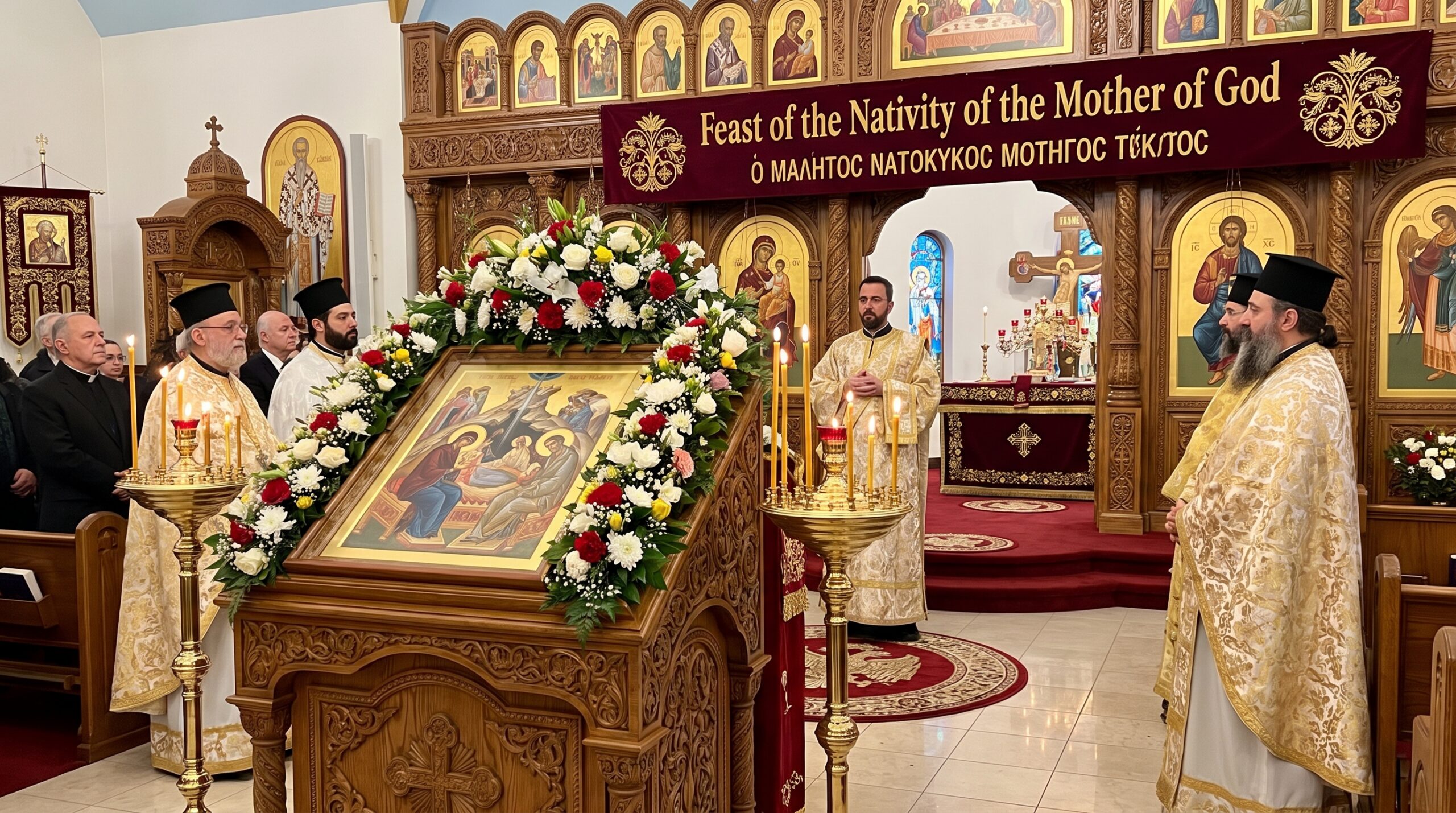
On September 8, the Orthodox and Catholic Churches celebrate the Nativity of the Theotokos — the birth of the Virgin Mary, the Mother of God. It is the first of the twelve great feasts of the liturgical year, since the Orthodox Church year begins on September 1, and the birth of Mary symbolically opens the whole arc of salvation history, a cycle that closes in August with the Dormition of the Theotokos. Scripture itself is silent about Mary’s birth, yet for centuries the Church has carried forward the tradition of her parents, Joachim and Anna, and of the wondrous birth that followed years of childlessness. This article unfolds three dimensions of the feast: its meaning for believers today, its historical and textual sources, and the prayers fitting for marking the day.
1. The Meaning of the Nativity of the Theotokos: Why This Feast Matters
The significance of the feast lies less in marking one woman’s birthday than in what that birth sets in motion within the Church’s understanding of history. Tradition has always read Mary’s birth as a turning point in salvation history: through it, she becomes the “living temple,” the space in which God the Son will later take on flesh. In Byzantine hymnography the day is often called the “gateway to all feasts” — the opening event that leads toward every other great feast, including the Nativity of Christ itself.
Theologically, the birth of Mary is closely bound to the decision of the Third Ecumenical Council of Ephesus (AD 431) to affirm for her the title Theotokos — God-bearer. That title does not exalt Mary for her own sake; it safeguards the Church’s teaching about the person of Christ. Because Mary gave birth to the God-Man and not merely to a man, her role is inseparable from Christology itself. The feast is therefore not a peripheral “Marian holiday” on the calendar but thoroughly Christ-centered in substance: every line written about Mary’s birth ultimately points back to Christ.
A second layer of meaning is typological. Old Testament stories of barren women who receive a promised child — Sarah, Hannah, Elizabeth — are read within Church tradition as foreshadowings of the story of Joachim and Anna. Mary is also seen as the “new Eve”: where the first Eve’s disobedience brought death into the world, Mary’s obedience (cf. Luke 1:38) prepares the way for the giving of life. In this sense her birth already carries within it the shape of hope and reversal — God at work long before the outcome becomes visible.
On a practical level, the feast reminds believers that God works through ordinary, seemingly hopeless situations — such as the childlessness and old age of Joachim and Anna. It is an encouragement to anyone who feels “barren” or held in waiting in their own life: God’s promise can be fulfilled at a point when, humanly speaking, it is no longer expected.
2. The History of the Nativity of the Theotokos: Sources, Tradition, and the Church Fathers
Why Scripture Is Silent on Mary’s Birth
The New Testament says nothing about Mary’s birth, her parents’ names, or her childhood. The Gospels focus on Christ’s birth and public ministry; Mary herself enters the narrative only at the moment of the Annunciation (Luke 1:26–38). This means that everything known about Mary’s birth and parentage comes down through the Church’s Tradition, not through the canonical Scriptures.
The Earliest Source: The Protoevangelium of James
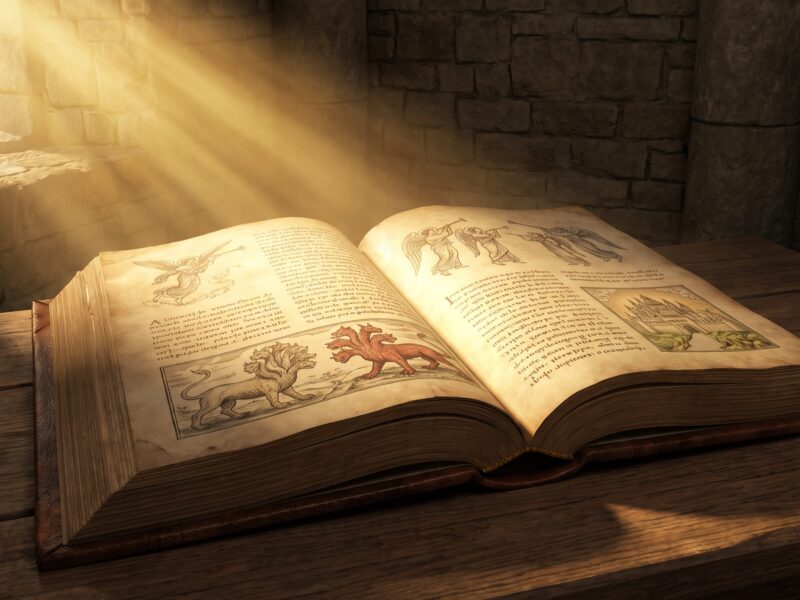
The oldest surviving text describing Mary’s birth is the Protoevangelium of James, an apocryphal work that most scholars date to the mid-second century, roughly AD 140–150. Authorship is traditionally attributed to James, “the Lord’s brother,” though the real author is unknown and the attribution pseudepigraphical. As early as the beginning of the third century (around AD 240), Origen refers to the text in his commentary on Matthew, expressing doubt about its origin — evidence that the story was already widely known by that time.
The Protoevangelium falls into three sections: the first describes the childlessness of Joachim and Anna and Mary’s miraculous birth; the second, her upbringing in the Temple and betrothal to Joseph; the third, the birth of Christ and the events surrounding it. From this text come the enduring elements of Church tradition: the names Joachim and Anna, their long years of childlessness, the angel’s announcement of a promised child, and Mary’s dedication to the Temple at the age of three — the last of these forming the basis for the later feast of the Presentation of Mary on November 21.
The Text’s Status: Apocryphal, Not Canonical
It is important to keep two things distinct: the Protoevangelium is not part of the biblical canon, and the Church Fathers themselves treated it with caution, regarding it as a pious legend rather than a historical document. Modern textual scholarship notes that the work’s depiction of Temple practice does not correspond well to what is known of Second Temple Jewish custom, which points to a later, theological-literary character rather than a firsthand historical account. The earliest surviving fragments date from the third or fourth century (Papyrus Bodmer 5), while the oldest complete Greek manuscript dates only to the tenth century.
This means the factual, historical basis for the precise circumstances of Mary’s birth is thin — we cannot know with historical certainty the names of her parents or the exact date of her birth. The theological basis, however, stands on firmer ground, because it does not depend on the historical accuracy of an apocryphal text but on the Church’s long, consistent, and liturgically affirmed witness to Mary’s place in salvation history. The Church received the story of Joachim and Anna not as Scripture, but as pious tradition carrying the right theological content, even where the details take legendary form.
The Feast’s Development in the Liturgy
The earliest references to the feast itself date from the fifth century: homilies attributed to Proclus, Patriarch of Constantinople (in office 434–446), in the East, and the Sacramentary attributed to Pope Gelasius (492–496) in the West. In both cases, authorship and dating are disputed among scholars — the authenticity of Proclus’s homilies is contested, and the oldest surviving copies of the Gelasian Sacramentary date only from the eighth century. Still, the fact that the feast is also kept by the Nestorians and the Jacobites, who broke communion with the Chalcedonian Church in the mid-fifth century, suggests it was already known in the Eastern Church before that split.
Tradition holds that Saint Helena, mother of the Emperor Constantine, had a church built in Jerusalem on the site of Mary’s birth — a cave over which the later Crusader-era Church of Saint Anne was built. This links a physical shrine to the historical memory, though this tradition, too, rests on later Church testimony rather than direct historical documentation.
The feast’s theological content was given its finished form by the Church Fathers of the seventh and eighth centuries. Andrew of Crete (c. 660–740) wrote two homilies and a canon for the feast, calling it “the beginning of all feasts” and “the gateway to grace and truth.” John of Damascus likewise wrote homilies on the theme, drawing out its Christological weight: Mary’s birth is the first step toward the reconciliation of humanity and God. With these homilies, the feast reached the mature theological shape the Church still carries today.
Summary of the Source Analysis
In short: the factual starting point of the Nativity of the Theotokos is the Protoevangelium of James (c. AD 140–150) — the oldest text describing Mary’s birth and parentage, yet an apocryphal, not canonical, source. The feast’s own liturgical roots begin in the fifth century and reach theological maturity in the homilies of the seventh- and eighth-century Fathers, above all Andrew of Crete and John of Damascus. The historical and theological levels need to be kept distinct here: the Church does not claim that the Protoevangelium is a historically precise report, but affirms that the tradition it carries rightly expresses Mary’s place in salvation history — her birth as God’s preparation for the redemption of humankind.
3. Prayers for the Nativity of the Theotokos: The Troparion and a Prayer for the Day
The Feast’s Troparion
The central liturgical hymn of the feast, the troparion, sums up its message: Mary’s birth is joy for the whole world, for from her rises the “Sun of Righteousness” — Christ himself. Its traditional content proclaims that with Mary’s birth the power of the curse is broken, blessing spreads abroad, and the gates of death are shut, because the power of life has been opened to humankind. It is sung in churches at the September 8 service, and can equally form part of prayer at home.
A Personal Prayer for the Feast
O Mother of God, born after long waiting and by God’s own promise, teach me to hope even when my own path seems closed. As your parents, Joachim and Anna, bore their childlessness with patience and faith, help me to carry my own trials without losing hope. You, who from birth were being prepared to become God’s dwelling place, prepare my heart also to receive Christ — not once a year at this feast, but anew each day. Intercede with your Son for me and for those I love, that we may find the way you were the first to open: through humility to exaltation, through waiting to joy.
A Closing Prayer of Thanks
I thank you, Lord, that you prepared the salvation of the world long before it became visible, allowing to be born the one who would carry you in her body. Help me to see the events of my own life — even the small and seemingly unimportant ones — as part of your greater plan. Just as the birth of the Theotokos seemed, in its own time, an ordinary family event, yet carried within it the hope of the whole world, so bless my ordinary days that they too may bear fruit I cannot yet see. Amen.
Conclusion
The feast of the Nativity of the Theotokos on September 8 draws together three layers that together form a complete picture: meaning, grounded in Mary’s role in salvation history and the teaching on the Theotokos; history, reaching from the apocryphal Protoevangelium of James (c. AD 140–150) through the earliest fifth-century liturgical traces to the seventh- and eighth-century homilies of Andrew of Crete and John of Damascus; and prayer, which carries this ancient tradition into the present day, calling the believer to personal hope and gratitude. A historian sees here a legend that took shape over centuries; a believer sees in that same legend the Church’s faithful witness to God’s work, preparing the world’s salvation long before it became visible.

Trough all this I want to declare this is all from God and to God. All Glory to Him!