Views: 46
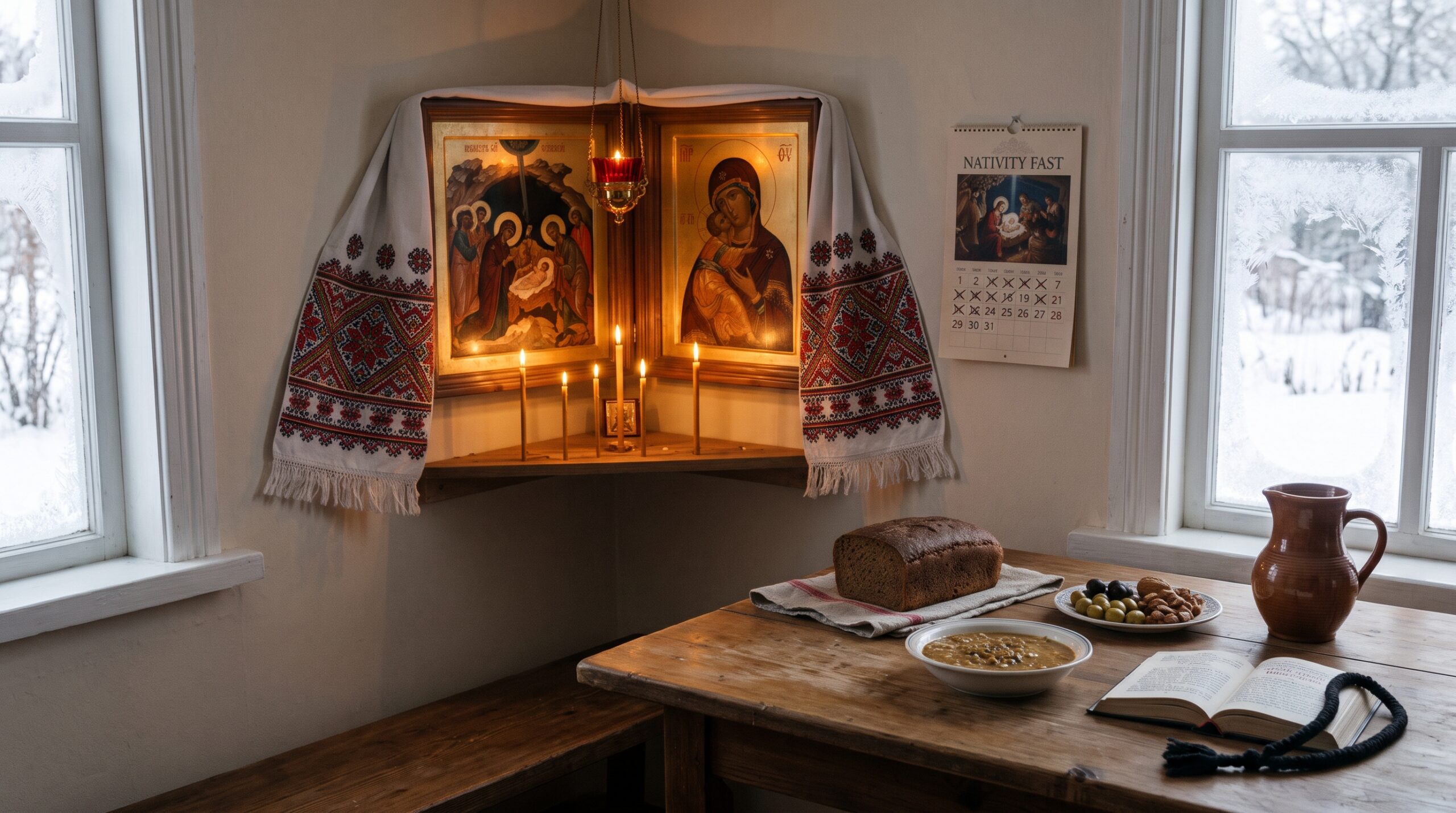
The Orthodox Christmas Fast, also called the Nativity Fast, begins in 2026 on Sunday, 15 November, and lasts until 24 December, Christmas Eve. Orthodox churches in Estonia celebrate Christmas on 25 December. The fast is forty days of spiritual preparation for the Feast of the Nativity of Christ. It is not a diet. It is a path of prayer, repentance, mercy and abstinence from certain foods, and its purpose is to bring the heart to meet the newborn Saviour.
Orthodox Nativity Fast 2026 at a Glance
- Begins: Sunday, 15 November 2026 (New, or Revised Julian, calendar)
- Ends: Thursday, 24 December 2026 (Christmas Eve)
- Length: 40 days
- Christmas: 25 December
- Old (Julian) calendar: 28 November 2026 to 6 January 2027 (Gregorian dates)
- Basic rule: no meat, dairy or eggs; fish, oil and wine only on specific days
- Strictest days: Mondays, Wednesdays and Fridays, and 20–24 December
When Does the Orthodox Nativity Fast Start in 2026?
According to the New Calendar (Orthodox Churches in Estonia)
In Estonia, the fixed feasts are kept according to the New, or Revised Julian, calendar. The Nativity Fast therefore begins on 15 November and ends on 24 December. Because 15 November 2026 falls on a Sunday, the fast begins on the Lord’s Day, with the Divine Liturgy and Holy Communion.
According to the Julian Calendar
Churches that follow the Old Julian calendar keep the fast from 28 November 2026 to 6 January 2027. The calendars differ by thirteen days, but the substance of the fast is the same for everyone: preparation for the feast of the Incarnation of the Son of God.
Why Is It Called Philip’s Fast?
The fast begins right after the commemoration of the Apostle Philip (14 November), which is why it is popularly known as Philip’s Fast. The name is traditional rather than theological. Just as Philip led Nathanael to Christ (John 1:43–46), the fast leads us to Christ.
Why Forty Days?
In Scripture, the number forty signifies purification and preparation. Moses spent forty days on Mount Sinai (Exodus 34:28), Elijah travelled forty days to the mountain of God (1 Kings 19:8), and Christ himself fasted forty days in the wilderness (Matthew 4:1–2). The present form of the Nativity Fast developed in the Church over several centuries and was established throughout the Byzantine world by the twelfth century.
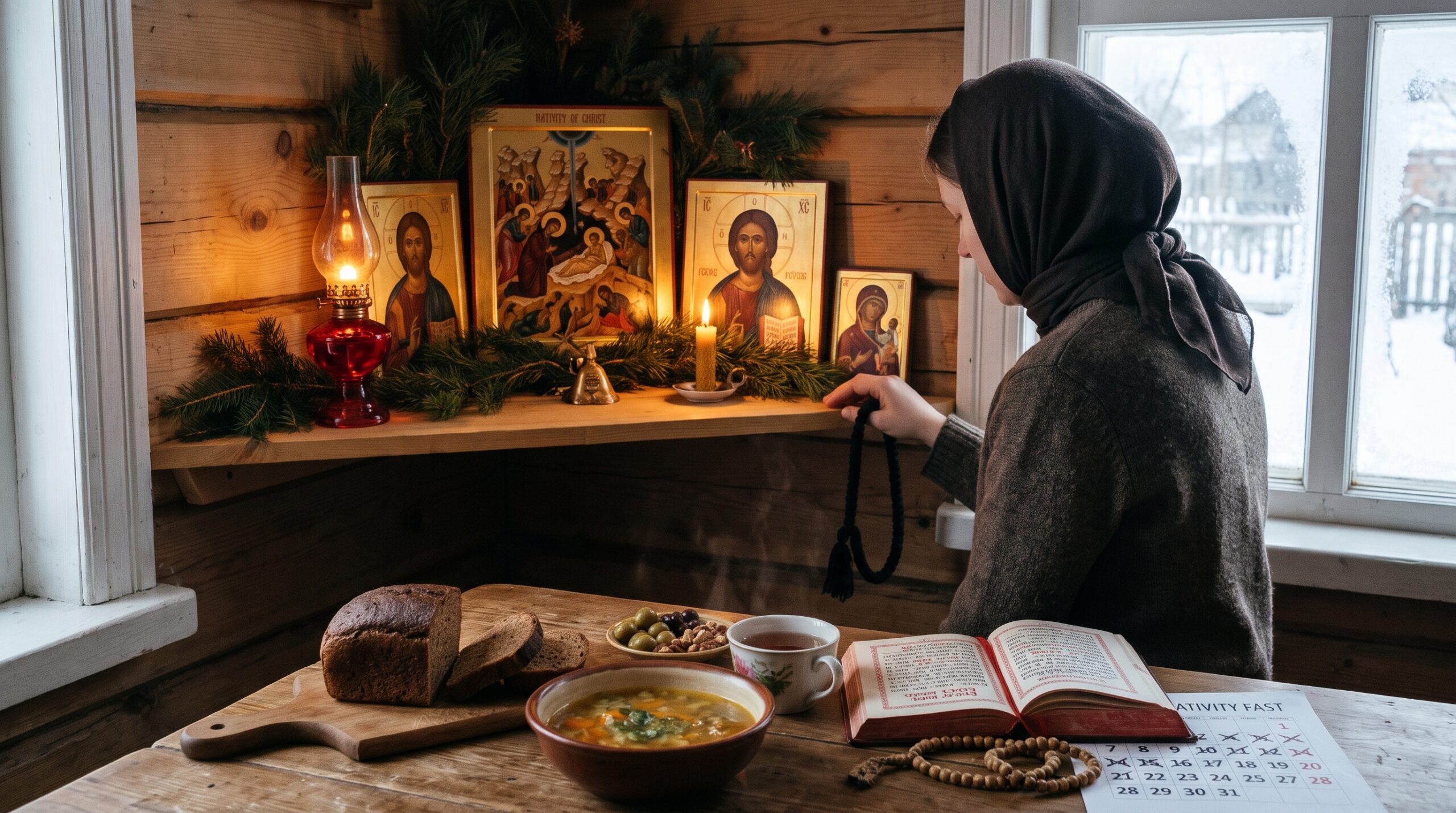
What Is the Nativity Fast? Its Theological Meaning
The Biblical Foundation
Fasting is not an Orthodox invention but a practice rooted in Scripture. The prophet Joel calls God’s people to return to Him with all their heart, with fasting, weeping and mourning, and to rend their hearts rather than their garments (Joel 2:12–13). According to Isaiah, the fast God desires is the loosing of the bonds of injustice, the sharing of bread with the hungry and shelter for the homeless (Isaiah 58:5–7). The Lord himself assumes that His disciples will fast, and teaches them to do so without hypocrisy and in secret (Matthew 6:16–18). In the Acts of the Apostles, the Church fasts as it sends out its missionaries (Acts 13:2–3).
Above all, the Nativity Fast is a season of expectation. As the righteous of the Old Testament awaited the Messiah, the Church awaits the coming of Christ. That coming is at once historical (Bethlehem, Luke 2:1–20), personal (Christ coming into the heart) and eschatological (His Second Coming).
The Teaching of the Church Fathers
The Church Fathers consistently explain that outward asceticism is a path, not a goal.
- Basil the Great teaches in his homilies on fasting that true fasting is abstaining from evil, not merely from food.
- John Chrysostom binds fasting inseparably to almsgiving and reconciliation: a fast that produces no mercy remains fruitless.
- Isaac the Syrian places a merciful heart above every outward form of ascetic labour.
- John Climacus, in the fourteenth step of The Ladder of Divine Ascent, treats moderation in eating as a precondition of inner freedom.
In the Orthodox understanding, fasting therefore has three inseparable parts: fasting, prayer and almsgiving. If one is missing, the whole is incomplete.
What to Eat During the Nativity Fast 2026
The Basic Rules
The Nativity Fast is somewhat milder than Great Lent, but it is still a serious fast. On all days:
- excluded: meat, poultry, dairy products and eggs;
- permitted: plant-based food, including grains, vegetables, fruit, legumes, mushrooms, nuts, seeds and bread;
- fish, oil and wine are allowed only on specific days (see the table below).
| Day or period | Food rule |
|---|---|
| Monday, Wednesday, Friday (15 Nov – 19 Dec) | Strictest days: plant-based food, traditionally without oil or wine |
| Tuesday, Thursday | Plant-based food; oil and wine are permitted in many traditions |
| Saturday and Sunday | Plant-based food, oil and wine; fish is also permitted in many places |
| Entry of the Theotokos into the Temple (21 Nov) and St Nicholas Day (6 Dec) | Fish, oil and wine are permitted |
| 20–23 December | Strict fast, no fish |
| 24 December (Christmas Eve) | The strictest day: plant-based food only, traditionally eaten after the first star appears |
Important: the rules for fish days, oil and wine vary between local churches, monasteries and traditions (Greek, Russian, Bulgarian and Estonian practice). For exact guidance, consult your parish priest or spiritual father.
An Estonian Fasting Table: What to Cook
Estonia’s northern cuisine suits the fast well:
- oatmeal porridge, buckwheat, barley and lentils;
- sauerkraut, root-vegetable soups, cauliflower and potatoes;
- dried and pickled mushrooms;
- beans, peas and chickpeas;
- nuts, seeds, dried fruit and honey;
- rye bread and plant-based pasta.
Christmas Eve, 24 December
Christmas Eve is the climax of the fast. By tradition it is kept with special strictness, and the meal is eaten only after the service. In the Slavic tradition, the table features kutia (a grain porridge with honey) or sochivo. The fast ends with the Divine Liturgy of the Nativity, and on Christmas Day the feasting begins: Christ is born, glorify Him!
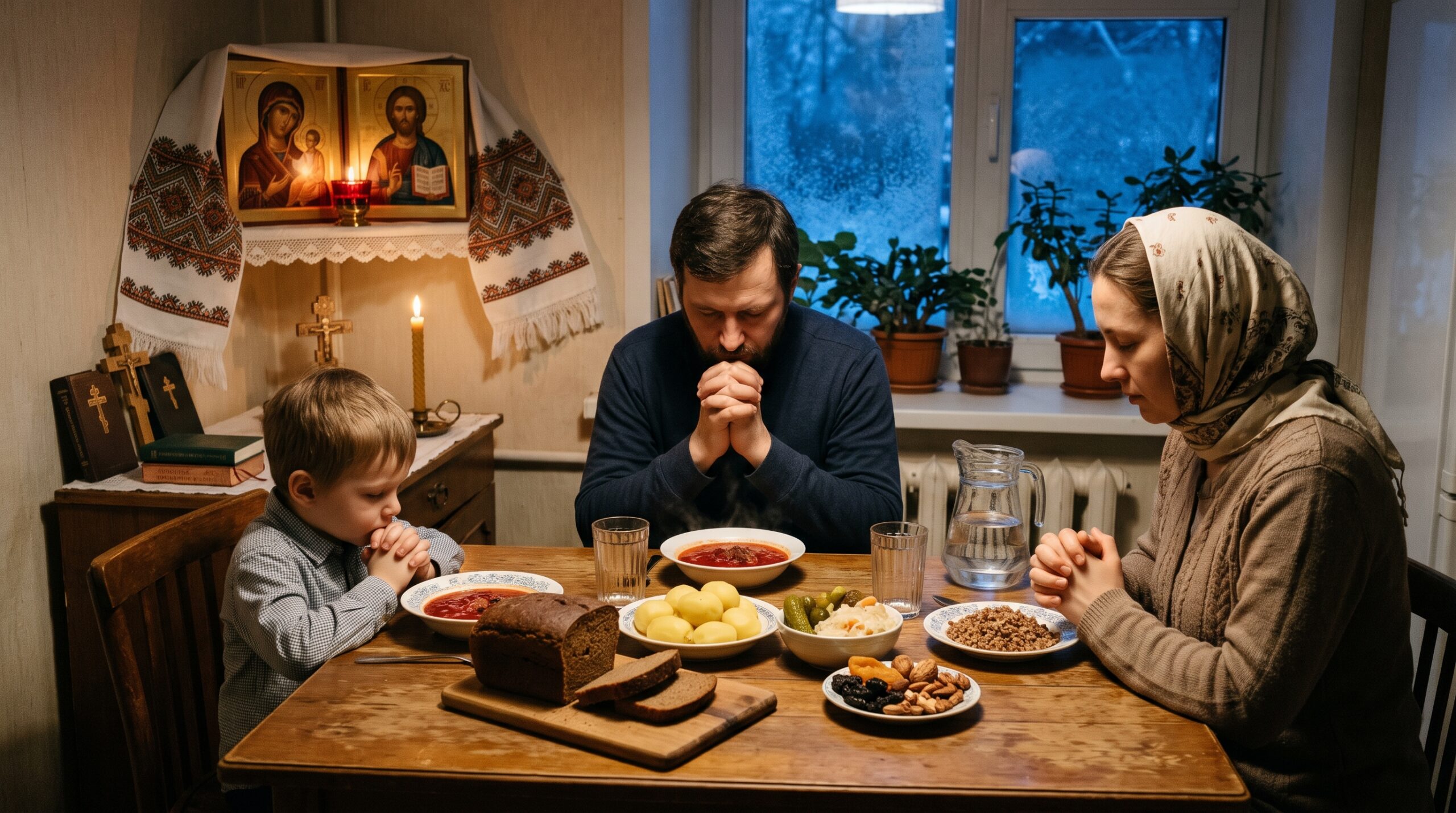
How to Fast: A Practical Spiritual Guide
- Ask for a blessing. Speak with your spiritual father about the fast that suits you. One fasts with a blessing, not by one’s own will alone.
- Do not turn fasting into a source of pride. If food restrictions make us irritable and judgmental, the fast has gone astray. In the Apostle’s words, the kingdom of God is not food and drink, but righteousness, peace and joy in the Holy Spirit (Romans 14:17).
- Pray more. Add a few minutes to your morning and evening prayer, read the Gospel and attend the services, especially on Sundays.
- Give alms. Fasting without mercy is merely a diet. Share bread, time and attention with those who need them (Isaiah 58:7).
- Be reconciled. Before you bring your gift to the altar, be reconciled with your brother (Matthew 5:23–24). The Nativity Fast is a good time for forgiveness.
- Fast with the mind and the tongue. Give up complaining, harsh words, gossip, excessive screen time and inner restlessness.
- Prepare for Confession and Communion. The crown of the Nativity Fast is confession and the reception of Holy Communion at the Christmas liturgy.
Who May Relax the Fasting Rules?
The Church does not require anyone to harm their health. Pregnant and nursing women, the sick, the elderly, children, travellers and those engaged in heavy physical work may relax the fast with the blessing of their spiritual father. Medical needs and prescribed medication always come first. A relaxed fast accompanied by prayer and mercy is dearer to God than a strict fast without love.
Frequently Asked Questions (FAQ)
When does the Orthodox Nativity Fast start in 2026? It starts on 15 November 2026 and lasts until 24 December. Churches on the Julian calendar fast from 28 November to 6 January.
Can I eat fish during the Nativity Fast? Yes, but not every day. Fish is permitted mainly on feast days (21 November and 6 December) and, in many traditions, on weekends until 19 December. From 20 to 24 December, no fish is eaten.
Are dairy products and eggs allowed during the Nativity Fast? No. Dairy products and eggs are excluded throughout the fast.
What if the fast has already begun and I have not started yet? Begin now. You can start fasting at any time, even a couple of weeks before Christmas, with a small and manageable rule agreed with your spiritual father.
Do children have to fast? A child’s fast is adapted to age, health and the parents’ blessing. The main goal is to introduce the child to prayer, mercy and moderation.
When does the fast end? The fast ends on Christmas night after the Nativity service, at the beginning of 25 December. In Estonia, Christmas Day is 25 December.
Conclusion: The Fast as a Road to Bethlehem
The Orthodox Christmas Fast 2026 invites us to spend forty days slowing down, keeping silence and listening. The restrictions at the table are only a framework within which the heart learns to wait for God again. If at the end of the fast you are as quick to quarrel as before, only more burdened, the fast has remained a form. If you are more merciful, more thankful and more prayerful, you have arrived where the Church is calling you: Bethlehem, where the Word became flesh (John 1:14).
A Prayer During the Nativity Fast
Lord Jesus Christ, our God, You came into the world in humility, were born in a cave and laid in a manger. Teach me to fast not only with my lips, but with my whole heart.
Cleanse my mind of pride, my tongue of judgment, and my hands of greed. Grant me obedience, patience and a merciful heart. Do not let me forget my neighbour who is hungry, lonely or sick, but open my eyes to see You in him.
When my strength is small, cover my weakness with Your grace. When I feel weak before temptation, be my strength. Give me peace, that I may go to meet the feast of Your Nativity with a pure heart.
Holy Theotokos, Saint Nicholas and all the saints, pray to God for our souls. For Yours is the kingdom, and the power, and the glory, of the Father, and of the Son, and of the Holy Spirit, now and ever and unto the ages of ages. Amen.

Trough all this I want to declare this is all from God and to God. All Glory to Him!