Views: 38
Holy Communion or the Altar Sacrament: The Body and Blood of Jesus in Bread and Wine – In-Depth Orthodox Theological Analysis
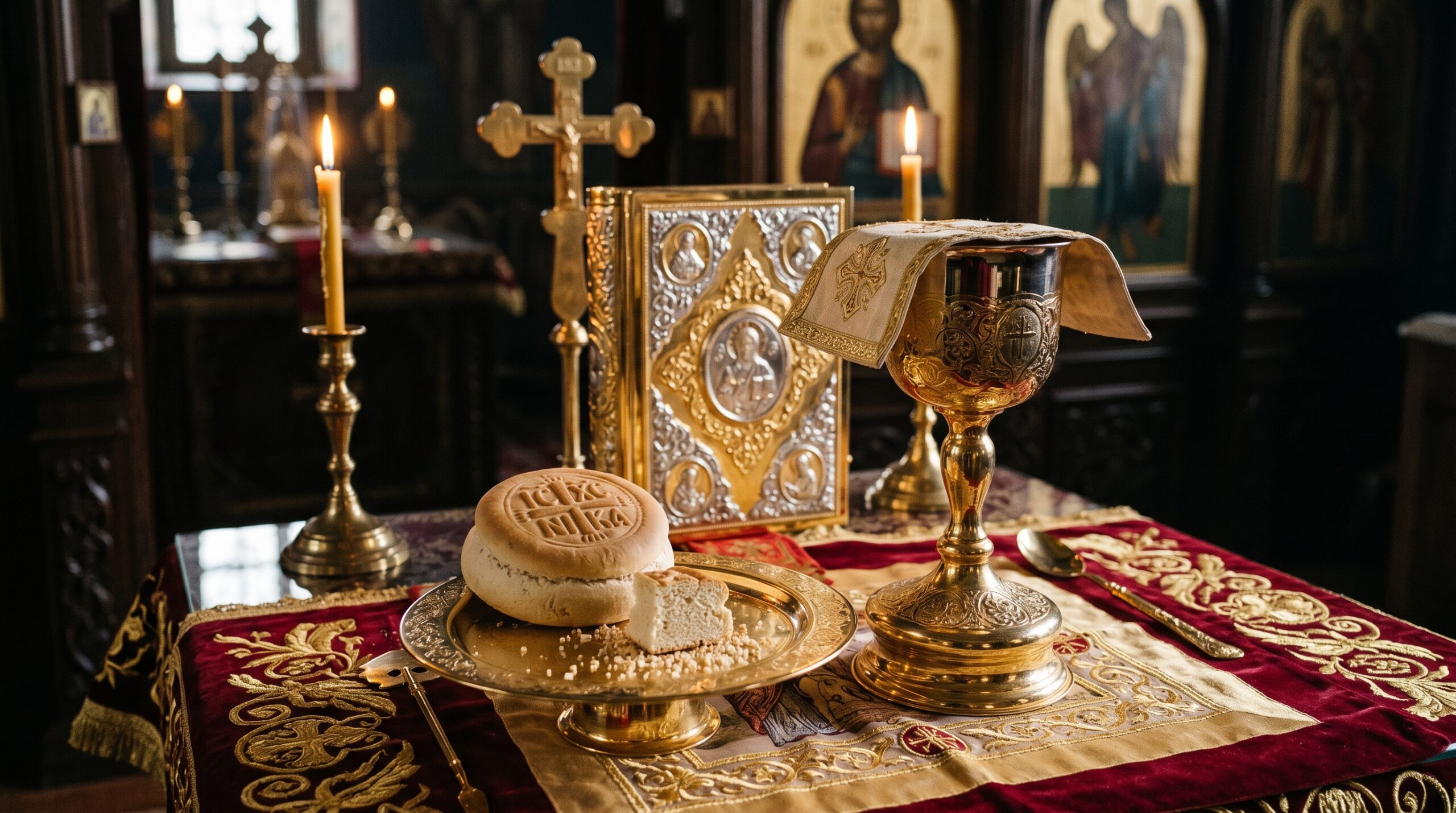
Holy Communion, also known as the Altar Sacrament or the Eucharist (from the Greek eucharistia – thanksgiving offering), is the central mystery of the Christian faith. It is a living encounter with the risen Christ, in which the believer receives the true Body and Blood of our Lord Jesus Christ in the form of consecrated bread and wine. According to the theology of the Eastern Orthodox Church (Estonian Apostolic Orthodox Church – EOC), this is not merely a symbol or a memorial, but a real communion with Christ that brings about the sanctification of soul and body, the forgiveness of sins, and union with God.
Biblical Foundation: Jesus’ Words and the Last Supper
The Eucharist is based directly on the institution by Jesus Christ at the Last Supper. The Gospels and the Apostle Paul describe it as follows:
“And as they were eating, Jesus took bread, blessed and broke it, and gave it to the disciples and said: ‘Take, eat; this is My body.’ Then He took the cup, and gave thanks, and gave it to them, saying: ‘Drink from it, all of you. For this is My blood of the new covenant, which is shed for many for the remission of sins.’” (Matthew 26:26-28)
Similar passages appear in Mark 14:22-24, Luke 22:19-20, and 1 Corinthians 11:23-26. Jesus commands: “Do this in remembrance of Me” (Luke 22:19). This is not simply a recollection of the past, but the actualization of the event – the unbloody re-presentation of the sacrifice of the Cross.
In the Gospel of John, Jesus expands this teaching in the discourse on the “Bread of Life”:
“Most assuredly, I say to you, unless you eat the flesh of the Son of Man and drink His blood, you have no life in you. Whoever eats My flesh and drinks My blood has eternal life, and I will raise him up at the last day. For My flesh is true food, and My blood is true drink.” (John 6:53-55)
Orthodox theology interprets these words literally, not metaphorically. This sharply distinguishes it from many Protestant (free church) views, where Communion is often seen only as a symbol or memorial.
Orthodox Theology: Mystery and Transformation
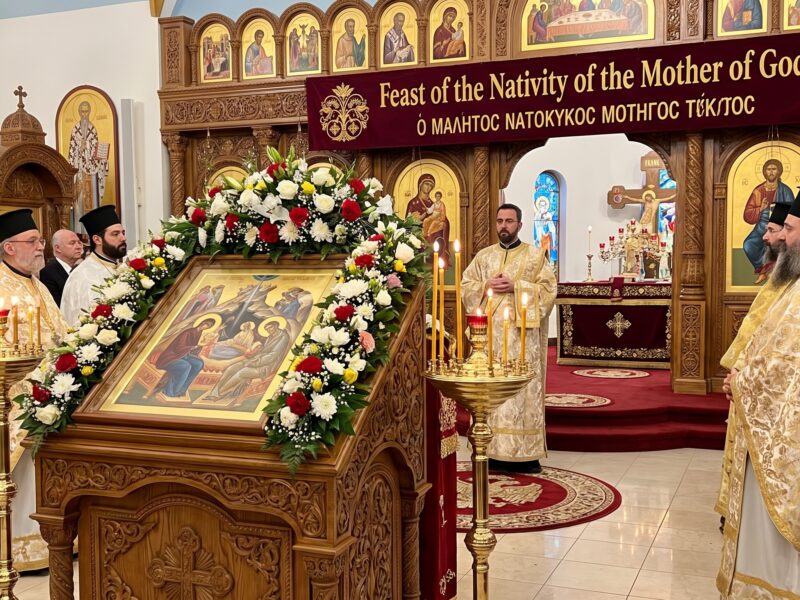
In the Orthodox Church, during the Divine Liturgy, a mysterious transformation (metabole) of the bread and wine into the Holy Body and Blood of Christ takes place through the power of the Holy Spirit, especially during the epiclesis (the invocation of the Holy Spirit) by the priest. This is not explained through philosophical “transubstantiation” as in Catholic teaching, but remains a sacred mystery that cannot be fully comprehended by human reason. The outward appearances of bread and wine remain, while their inner reality changes.
The Eucharist is:
- Sacrifice: The unbloody actualization of the sacrifice of the Cross.
- Communion: Union with Christ and with the entire Church.
- Medicine: The “medicine of immortality” (St. Ignatius of Antioch), which grants eternal life, cleanses from sin, and sanctifies the believer.
It unites the faithful into one body – the Church.
Quotes from the Church Fathers: Early Witness
The early Church Fathers unequivocally confirm the reality of the Eucharist:
- St. Ignatius of Antioch (c. 110 AD): “They abstain from the Eucharist and from prayer, because they do not confess that the Eucharist is the flesh of our Savior Jesus Christ, which suffered for our sins…” (Letter to the Smyrnaeans 7).
- St. Justin Martyr (c. 150 AD): “For not as common bread and common drink do we receive these; but… the food which is blessed by the prayer of His word, and from which our blood and flesh by transmutation are nourished, is the flesh and blood of that Jesus who was made flesh.” (First Apology 66).
- St. Irenaeus of Lyons (c. 180 AD): “The bread which is from the earth, receiving the invocation of God, is no longer common bread, but the Eucharist, consisting of two realities: earthly and heavenly.” (Against Heresies 4:18).
- St. Cyril of Jerusalem (c. 350 AD): “The bread and wine before the holy invocation are simple bread and wine, but after the invocation the bread becomes the Body of Christ and the wine His Blood.” (Catechetical Lectures 19:7).
These testimonies show that belief in the real presence was the norm already in the apostolic era.
Archaeological Evidence
Early Christianity has also left material traces:
- Frescoes in the catacombs (e.g., Catacomb of Priscilla in Rome, 2nd–3rd century) depict the “breaking of bread” and Eucharistic meals.
- The Megiddo mosaic in Israel (c. 230 AD) refers to “God Jesus Christ.”
- Ancient chalices, patens, and inscriptions on tombs and amulets from the first centuries confirm that the Eucharist was a central practice from the earliest days of the Church.
Differences Between Free Church (Protestant) and Orthodox Understanding of Communion
- Orthodox View: Real transformation into the Body and Blood of Christ (a sacred mystery). Participation is reserved for baptized and chrismated Orthodox Christians. Children also receive Communion. It is understood as sacrifice and the path to theosis (deification).
- Free Church/Protestant View: Often purely symbolic or a memorial (Zwinglian tradition). Some (Lutherans) believe in real presence, but most see it as a spiritual fellowship or reminder. It is usually open to all believers. There is no epiclesis, no emphasis on mystery, and no apostolic succession or ordained priesthood in the Orthodox sense.
From the Orthodox perspective, Protestant Communion is not considered a complete sacrament due to the lack of apostolic continuity and valid priesthood.
Holy Communion calls us to participate regularly in the full life of the Divine Liturgy, preparing ourselves through fasting, confession, and prayer. It is a foretaste of the Kingdom of Heaven on earth – the place where heaven and earth meet.

Trough all this I want to declare this is all from God and to God. All Glory to Him!