Views: 328
Dormition Fast 2026: When It Begins, When It Ends, and How to Fast Rightly
The Dormition Fast 2026 runs from August 1 to August 14 for most Orthodox churches, closing with the Feast of the Dormition on August 15 — with one notable calendar exception this year. Here is what the fast means, how it developed, and how to keep it well.
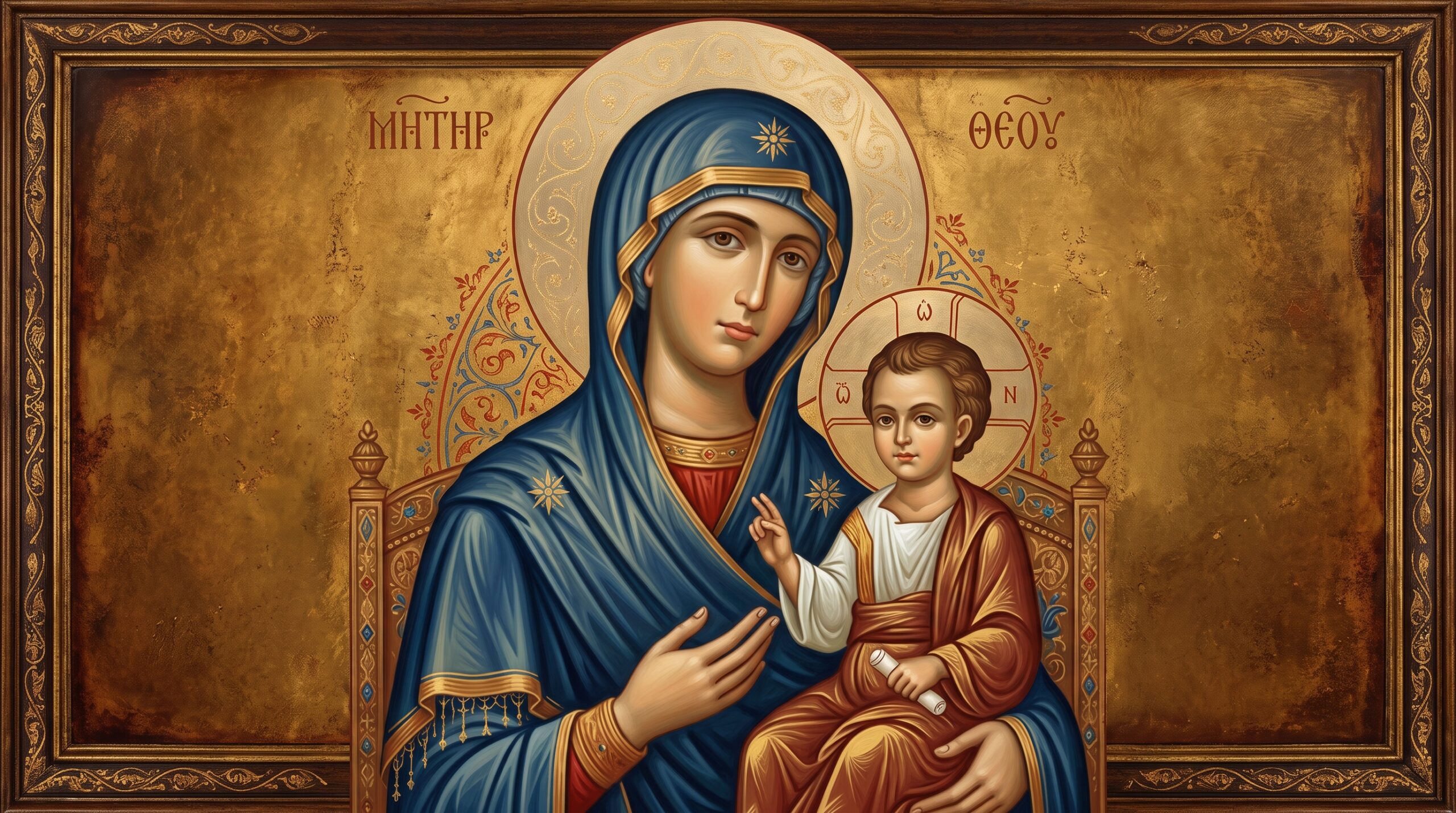
The liturgical rhythm of the Church year moves between fasting and feasting, carrying the believer through a recurring cycle of repentance and joy. August opens with the last of the Church’s great fasting seasons before autumn — the Dormition Fast, kept in honor of the Most Holy Theotokos, the Mother of God, as the faithful prepare their hearts for the feast of her falling asleep. It is short, but its depth lies not in length but in focus: for two weeks, believers are called to contemplate the life of the Mother of God as a pattern of humility, purity, and total trust surrendered to God.
When Does the Dormition Fast 2026 Begin and End?
Unlike Great Lent, whose dates shift each year with Pascha, the Dormition Fast is one of only two fixed-date fasts on the Church calendar. It has no moveable dates: it always begins on August 1 and ends on the evening of August 14, the eve of the Feast of the Dormition.
For churches following the Revised Julian (Gregorian-aligned) calendar — including the Greek, Romanian, and Antiochian Orthodox churches — the fast in 2026 runs from August 1 through August 14. For churches that keep the Old or Julian calendar — the Russian, Serbian, and Georgian Orthodox churches — the same two weeks fall, by the civil Gregorian calendar, between August 13 and August 27.
One detail is worth noting specifically for 2026. Because July 31 falls on a Friday this year, an older rule observed in some jurisdictions — notably the Romanian Orthodox Church — takes effect: when July 31 lands on a Wednesday or a Friday, the fast begins a day early. In 2026, that means the fast opens on July 31 rather than August 1 in those churches. The same shift last occurred in 2024, 2020, and 2019. Most parishes, however, keep the traditional August 1–14 frame, so the safest guide is always the specific liturgical calendar of one’s own parish.
The fast always closes on the evening of August 14, culminating on August 15, when the Church celebrates the Dormition of the Mother of God — in Western terms, the Assumption of the Virgin Mary — the day her body and soul were taken up into heaven, following the end of her earthly life, which the Church calls not death but “falling asleep” (Greek: koimesis).
The Historical and Theological Background of the Fast
The Dormition Fast took its settled, institutional shape only in the Middle Ages, though its roots reach back into earlier centuries, when local practice still varied widely. It was the Council of Constantinople in 1166, under the presidency of Patriarch Luke Chrysoberges, that fixed the two-week length of the Dormition Fast for good and unified the practice across the churches of the Byzantine rite. From that point, the August fast became the norm throughout the Eastern Church.
Theologically, the fast carries a double meaning, reflected even in its timing. It can be understood as oriented toward two feasts at once — the Transfiguration of Christ and the Dormition of the Mother of God — so that the faithful prepare for the feast that gives them the Light, and for the feast that reveals to them God’s mercy. The fourteen days of the fast are divided at their midpoint by the Transfiguration on the mountain (Matthew 17:1–8; Luke 9:28–36) on August 6, and reach their conclusion on August 15 in the Dormition. The fast thus becomes a kind of journey from Light to Mercy — from the Transfiguration on Mount Tabor to the empty tomb of the Mother of God, found empty because her body, together with her soul, had been taken up to her Son.
The scriptural foundation for honoring the Mother of God comes above all from the Gospel of Luke, where the angel Gabriel greets Mary: “Hail, thou that art highly favoured, the Lord is with thee” (Luke 1:28), and where Mary herself prophesies: “For, behold, from henceforth all generations shall call me blessed” (Luke 1:48). The Church Fathers have read this proclamation through the centuries as testimony to the unique place the Mother of God holds in the history of salvation — she is the one whose “Be it unto me according to thy word” (Luke 1:38) made possible the Incarnation of the Word. John of Damascus, who wrote several homilies on the Dormition, emphasized that Mary’s falling asleep is not death in its fearful sense, but a passing-over in which she, being the Mother of God, already shares in the fullness of her Son’s resurrection ahead of the general resurrection. This is a wellspring of hope for every Christian: the fate of the Mother of God shows what Christ has promised to all who believe in Him.
In the tradition of the Church Fathers — and likewise in the Apophthegmata Patrum, the sayings of the Desert Fathers — fasting is treated as something far broader than dietary restriction. Basil the Great teaches that true fasting purifies the soul of its passions, not merely the body of its food; without inward conversion, outward fasting remains an empty form. John Chrysostom takes up the same theme, warning that one who fasts while harboring hatred or envy toward a brother is like someone who cleans the outside of a cup while leaving its inside unclean.
Fasting Rules: What to Eat and What to Avoid
In terms of dietary discipline, the Dormition Fast is one of the strictest short fasts of the Church year — milder than Great Lent, but stricter than either the Apostles’ Fast or the Nativity Fast. It is, in fact, the second-strictest fasting period after Great Lent, lasting exactly two weeks.
As a general rule, the following are avoided throughout the fast:
- meat and meat products,
- dairy products (milk, cheese, butter),
- eggs,
- fish,
- and, on most days, oil and wine as well.
The single exception is August 6, the Feast of the Transfiguration of the Lord, when fish is permitted regardless of the day of the week. On every other day of the fast, fish is forbidden — even on Saturdays and Sundays, which is the strictest feature of this fast and what most clearly distinguishes it from the Apostles’ Fast, where fish is normally allowed on weekends.
Across the week, the usual pattern runs as follows: Monday, Wednesday, and Friday are strict fasting days, on which oil and wine are also avoided; on Tuesday and Thursday, vegetable oil and wine are generally permitted; on Saturday and Sunday, oil and wine are usually allowed, though not fish — except when the Transfiguration itself falls on one of those days.
It is worth remembering, however, that these fasting rules are first and foremost a spiritual guide, not a law to be fulfilled as an end in itself. The Church has always recognized that health, pregnancy, nursing, old age, demanding physical labor, and other life circumstances may justify a lighter approach — and that such adjustments are best made in consultation with one’s pastor, rather than by imposing a strict rule on oneself alone.
Spiritual Practice During the Fast
Abstaining from certain foods is only one part of the wider spiritual rhythm of the Dormition Fast. Throughout the fast, either the Great or the Small Paraklesis is chanted every evening — except on Saturday evenings and on the eves of the Transfiguration and the Dormition — a canon of prayer addressed to the Mother of God, asking for her intercession and help. This daily rhythm of prayer gives the fast its particular character: it is not only a season of renunciation, but one of continual turning and trust.
Christian tradition has always bound fasting to two companions — prayer and almsgiving — each supporting the other. Fasting without prayer becomes mere dieting; prayer without almsgiving becomes words that bear no fruit. In this way, the August fast calls the believer to a fuller kind of self-examination: not only “what am I giving up at the table,” but “how do I treat my neighbor,” “how do I choose my words,” “how do I spend my time.”
The figure of the Mother of God herself is the guiding thread here. Her humility (“Behold the handmaid of the Lord,” Luke 1:38), her patient waiting, and her quiet accompanying of her Son to the very foot of the cross (John 19:25–27) offer a pattern for what it means to live by faith without complaint and without drawing attention to oneself. During the fast, it is customary to read and meditate on the life of the Mother of God in light of the Gospels and the tradition of the Church, dwelling on her receptivity to the will of God.
Practical Tips for Fasting Well
Fasting rightly begins with intention, not merely with a change of diet. Before the fast begins, it is worth considering what the season is meant to accomplish personally — whether that is greater attention to the intercession of the Mother of God, a deeper prayer life, or freedom, with God’s help, from a particular passion or habit.
A few practical suggestions:
- Begin gradually. If prior experience with fasting is limited, there is no need to adopt the strictest form at once. Consulting a pastor helps identify a framework that is both manageable and meaningful.
- Put prayer first, not just food. Reading the Paraklesis, or even a shorter prayer, every evening gives the fast its spiritual backbone.
- Avoid comparing yourself to others or policing their practice. Christ warns: “But thou, when thou fastest, anoint thine head, and wash thy face; that thou appear not unto men to fast, but unto thy Father which is in secret” (Matthew 6:17–18). Fasting is a personal journey before God, not a performance.
- Pair fasting with almsgiving. Money or time saved from food can be redirected toward helping someone else.
- Account for your actual circumstances. Work, health, family responsibilities — these are all legitimate considerations that should not be suppressed out of guilt, but weighed with the Church’s own pastoral wisdom.
- Close the fast deliberately. August 15, the Feast of the Dormition, is not merely the end of the fast but a feast of joy in its own right — worship and fellowship with the parish give the fast its rightful conclusion.
In Summary
For most parishes, the Dormition Fast 2026 runs from August 1 to August 14, culminating in the Feast of the Dormition on August 15; in some traditions, including the Romanian Orthodox Church, the fast begins exceptionally early, on July 31, because that date falls on a Friday this year. In churches that keep the old calendar, the same period falls between August 13 and August 27. More important than the dates, though, is what this season carries: an invitation to imitate the humility of the Mother of God, her trust, and her quiet “yes” to the will of God. Dietary discipline here is a means, not an end — it clears space for deeper prayer and a more attentive love of neighbor.
A Prayer to the Mother of God
Most Holy Theotokos, save us by your intercessions. You who passed through your earthly life in quiet humility and complete trust in God, teach us to let go of whatever keeps us from loving your Son. Be our advocate in this present fast; strengthen our weakness, and guide our hearts to true repentance. Amen.
A Prayer to God
Lord God, who has given us fasting as a gift and not a burden — teach us to fast in spirit and in truth. Cleanse our hearts of envy, anger, and pride; give us strength to abstain from what harms our souls, and grace to see our neighbor with Your eyes. Through the intercessions of the Mother of God, bring us to the fulfillment of Your will. Amen.

Trough all this I want to declare this is all from God and to God. All Glory to Him!