Views: 65
Pentecost 2026: In the Unity of the Holy Spirit Lies the Power of Lutheran and Orthodox Witness
Pentecost, also known as Trinity Sunday, is one of the greatest and most joyful feasts in both the Estonian Apostolic Orthodox Church and many Lutheran congregations. In the year 2026, it falls on Sunday, May 31, bringing special joy and hope. This day commemorates the miraculous coming of the Holy Spirit upon the apostles, marking the birth of the Church and the full revelation of the Triune God to humanity. In the unity of the Holy Spirit, there opens a possibility to overcome historical divisions and strengthen the unity of Christians. It is in this spirit that both the mystical heritage of Orthodoxy and the reformational witness of Lutheranism call us.
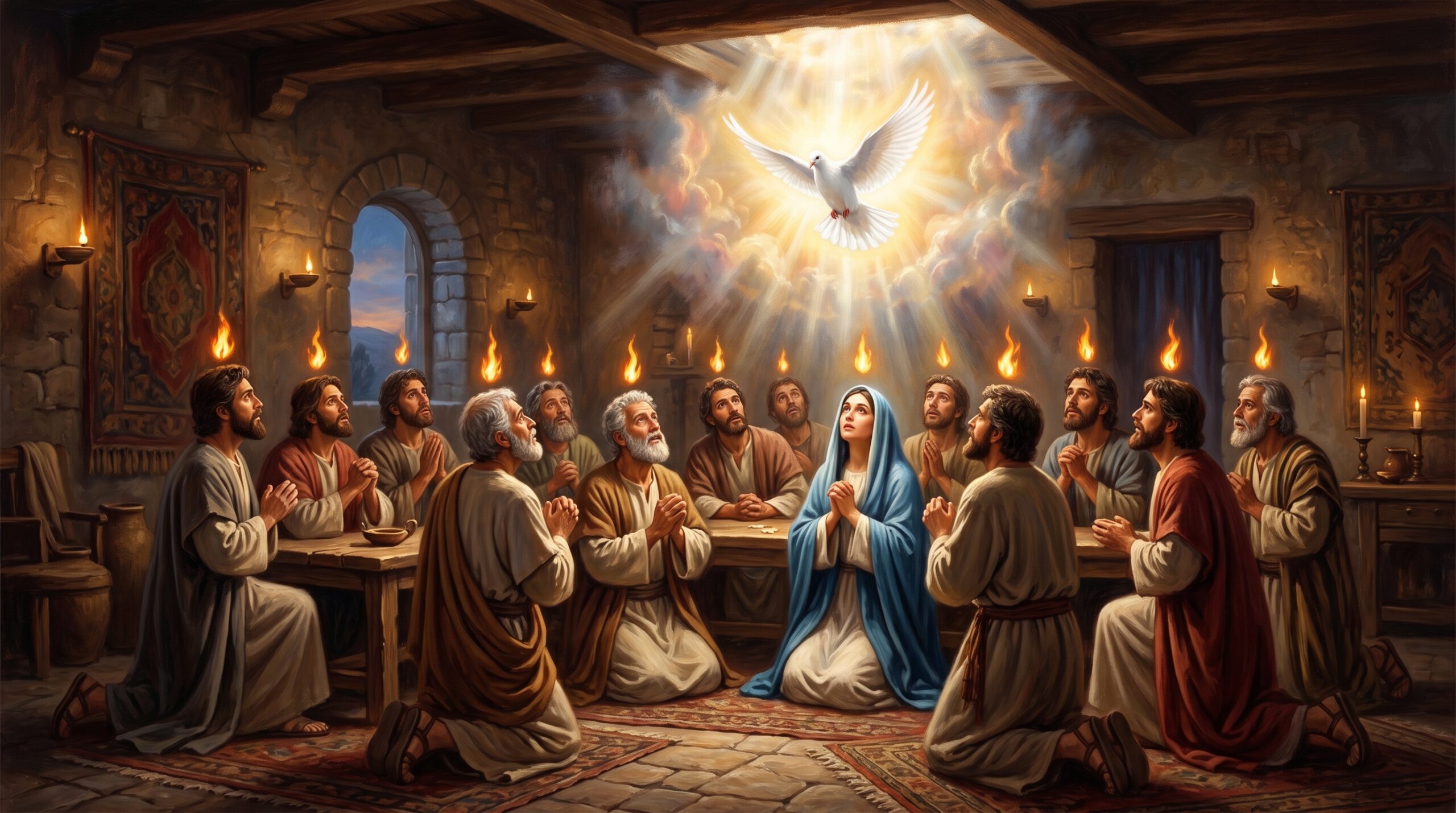
The meaning of Pentecost extends far beyond a single calendar date. It is an event that unites the past, present, and future into one whole within God’s plan of salvation. Exactly fifty days after Christ’s Resurrection, the apostles gathered in the upper room in Jerusalem, waiting for the Lord’s promise. Suddenly the room was filled with the sound of a mighty rushing wind and tongues of fire, and all were filled with the Holy Spirit. This moment was not merely a dramatic event, but the beginning of the Church as the living temple of God. Today, in 2026, it calls us to ask: how does the Holy Spirit live among us now?
The Biblical Foundation and Historical Depth of Pentecost
The Bible provides a firm foundation for Pentecost that is equally important in both Orthodox and Lutheran traditions. The Book of Acts describes it as follows: “When the day of Pentecost arrived, they were all together in one place. And suddenly there came from heaven a sound like a mighty rushing wind, and it filled the entire house where they were sitting.” (Acts 2:1–2). This wind and fire symbolize the purifying and life-giving power of the Holy Spirit, which transforms ordinary people into bold witnesses. The Holy Spirit came not only individually but communally, creating one unified Body of Christ. This calls us even today to seek unity in diversity.
The Bible repeatedly emphasizes the divinity of the Holy Spirit, which forms a common foundation for both Orthodox and Lutheran confessions of faith. In Acts 5:3–4, the Apostle Peter places the Holy Spirit on the same level as God Himself: “Why has Satan filled your heart to lie to the Holy Spirit? … You have not lied to man but to God.” This text speaks clearly of the full divinity of the Spirit. Similarly, Matthew 28:19 commands to baptize “in the name of the Father and of the Son and of the Holy Spirit,” confirming the unity of the Trinity. These verses are not mere doctrine but a living call to communion with God.
The Divinity of the Holy Spirit in the Bible – A Deep Analysis
The divinity of the Holy Spirit stands out especially clearly from the pages of the New Testament. 2 Corinthians 3:17–18 states: “Now the Lord is the Spirit, and where the Spirit of the Lord is, there is freedom. And we all, with unveiled face, beholding the glory of the Lord, are being transformed into the same image from one degree of glory to another. For this comes from the Lord who is the Spirit.” This transformation is theosis – deification – emphasized in Orthodox tradition. The Lutheran tradition sees here the work of grace that frees man from the bondage of sin. Both approaches complement each other through the Holy Spirit.
John 14:26 and 16:13–14 describe the Spirit as the Comforter and the Spirit of Truth, who leads the apostles into all truth. These texts demonstrate the personality and divinity of the Spirit – He is not an impersonal force but fully God. Galatians 5:22–23 lists the fruits of the Spirit: love, joy, peace, patience. These are not human achievements but gifts of the Spirit that unite believers. In the 2026 Pentecost, this is particularly relevant, as the world needs exactly such life-giving power.
The Filioque Question – History, Meaning, and Contemporary Resolution
The Filioque question is one of the historical disagreements between the Eastern and Western Churches concerning the procession of the Holy Spirit. The original Nicene-Constantinopolitan Creed (381) states that the Holy Spirit “proceeds from the Father.” In Western Churches, including the Lutheran tradition, the phrase “and the Son” (filioque) was later added to emphasize the unity of the Father and the Son against Arian heresy. The Orthodox tradition sees this addition as potentially disturbing the hierarchy and unity within the Trinity. It is not merely a wording issue but a profound theological question about the inner life of God.
The Lutheran Reformation inherited the filioque from the Latin tradition and did not consider it a problem, while strongly emphasizing the work of the Spirit through the Word and grace. For Orthodoxy, preserving the original Creed is important in order to honor the authority of the ecumenical councils. However, this does not change the confession of the full divinity of the Holy Spirit on either side. Recent dialogues have brought breakthroughs: the 2024 joint statement by the Lutheran World Federation and the Orthodox Church on the Filioque recommends using the original Greek form to promote unity. This is a sign of hope – differences do not have to divide the churches.
The Unity of Lutheran and Orthodox Witness in the Communion of the Holy Spirit
In the unity of the Holy Spirit lies the true power of the Lutheran and Orthodox witness. Martin Luther emphasizes in his Small Catechism: “The Holy Spirit has called me by the Gospel, enlightened me with His gifts, sanctified and kept me in the true faith; even as He calls, gathers, enlightens, and sanctifies the whole Christian Church on earth.” This is a deeply personal and ecclesial confession. In Orthodox theology, a mystical depth is added – theosis, or communion with the life of God through the sacraments and liturgical life. These are not contradictions but enrich each other.
Orthodoxy emphasizes the continual presence of the Spirit in the liturgy, epiclesis, and ascetic life, through which man is transformed into participation in God. The Lutheran tradition reminds us that the Spirit works freely through the Word and sacraments, without human merits. This balance is a gift of the Holy Spirit. The 2024 joint statement shows that dialogue bears fruit: both traditions confess the full divinity and personality of the Spirit. Such unity does not erase differences but makes them fruitful.
Differences and Common Ground – An Analytical View
While the Orthodox approach to Pentecost is deeply mystical and liturgical, the Lutheran tradition places more emphasis on the proclamation of the Word and personal faith. The Orthodox Trinity Sunday highlights the full revelation of the Triune God, in which the Spirit is fully God. In Western traditions, the focus may be more practical on the use of the Spirit’s gifts in mission. These differences are not obstacles but opportunities for mutual enrichment. The Holy Spirit calls us to transcend human boundaries.
The common ground is broad: both churches confess the Spirit as the Creator of the Church (Acts 2). The liturgical heritage of Orthodoxy can bring a deeper mystical dimension to the Lutheran Word-centered approach. At the same time, the Lutheran emphasis on grace protects mystical experience from possible distortions. Jesus said: “If anyone thirsts, let him come to me and drink.” (John 7:37). This call is valid in both traditions. In the 2026 Pentecost, it is time to live this unity.
How Pentecost Is Celebrated in the Orthodox Church – Liturgical Richness
In the Orthodox tradition, the celebration of Pentecost begins already on the eve with the All-Night Vigil, where solemn hymns are sung and holy scriptures are read. Churches are decorated with green foliage, flowers, and grass, symbolizing the life-giving power of the Holy Spirit. Green is the liturgical color of Pentecost, calling for renewal. The Divine Liturgy is exceptionally solemn, emphasizing the mystery of the Trinity. In the evening, three long prayers are read, during which the faithful kneel – this is the first time after the Paschal season. In Estonia, hymns are sung in Estonian and Church Slavonic, creating deep communion.
In Lutheran churches, Pentecost is a joyful Sunday, with the focus on the gifts of the Spirit, mission, and the Word. The liturgical richness may be more modest, but the work of the Spirit is equally real. In both traditions, the call resounds: “Come, Holy Spirit!” This prayer unites hearts across confessional boundaries. Celebration is not merely form but living communion with God.
The Theological Depth of Pentecost and Its Contemporary Application
Pentecost is not a past event but an eternal reality through the Holy Spirit. The Spirit enlightens the mind (John 14:26), gives power for witness (Acts 1:8), and brings abundant fruit. The process of theosis, in which man participates in the life of God, is Orthodoxy’s gift to the whole Church of Christ. The Lutheran emphasis on faith alone reminds us that everything is grace. These elements form a whole in the unity of the Holy Spirit. In 2026, when the world is full of divisions, this witness is especially needed.
Saint John Chrysostom called Pentecost “the crown of all blessings and the capital of feasts.” This day calls us to open our hearts to the Spirit, who transforms, renews, and unites. In the Estonian context, where Orthodox and Lutheran congregations live side by side, a common witness is a powerful testimony. The Spirit knows no human boundaries – He calls everyone into one Body.
Conclusion: A Call to Communion with the Holy Spirit
In the year 2026, Pentecost calls all Christians – Orthodox, Lutheran, and others – to open their hearts to the Holy Spirit. It is in this continual communion that the true power and hope of the Church for the future lies. “Come, Holy Spirit!” remains forever the heartfelt prayer of the Church, leading us deeper into the mystery of God. May this feast be filled with joy, peace, and renewal in everyone’s life. In the unity of the Holy Spirit, the Lutheran and Orthodox confessions find their full power, strengthening one Church of Christ.
This Pentecost never ends – it continues in every heart ready to receive God’s grace. Let us be open to the Spirit, who unites us in the oneness of the Father and the Son. Amen.

Trough all this I want to declare this is all from God and to God. All Glory to Him!