Views: 25
Religious Spirit: Why It Does Not Apply in Orthodoxy? The Full Truth Revealed
The Deep Foundation in Scripture, the Church Fathers, and Orthodox Theology
Christian theology begins with God’s revelation in the Bible and continues through the living tradition of the Holy Fathers. In Hebrew there is no exact equivalent for the modern concept of “religion” as a formal ritual system. Instead, the Scriptures speak of ruach – spirit, breath, living force (Genesis 1:2; Hebrews 4:12). Ruach Elohim is God’s creative and life-giving Spirit, not a set of external rules. In the Greek New Testament the word threskeia (θρησκεία) appears rarely and usually refers to outward worship or rituals (James 1:26–27; Colossians 2:18). James defines pure religion as caring for orphans and widows, not empty formalism. Jesus Himself warned against Pharisaic religion: “You worship what you do not know” (John 4:22), and called people to worship “in spirit and truth” (John 4:23–24).
Orthodox theology is rooted directly in the apostles and the Holy Fathers (such as Athanasius, Basil the Great, John Chrysostom, and Gregory Palamas). Orthodoxy is not “religion” in the Western institutional or legalistic sense, but orthodoxia: right worship and right belief, inseparably united with communion in the Holy Trinity. The Holy Spirit is not an abstract force here but a divine Person who makes us partakers of God’s own life (2 Peter 1:4). The heart of Orthodoxy is theosis – deification, participation in the divine nature by grace, not by natural merit. This occurs through the mysteries (sacraments), prayer, fasting, and love, whereby man becomes “a partaker of the divine nature” through the Holy Spirit.
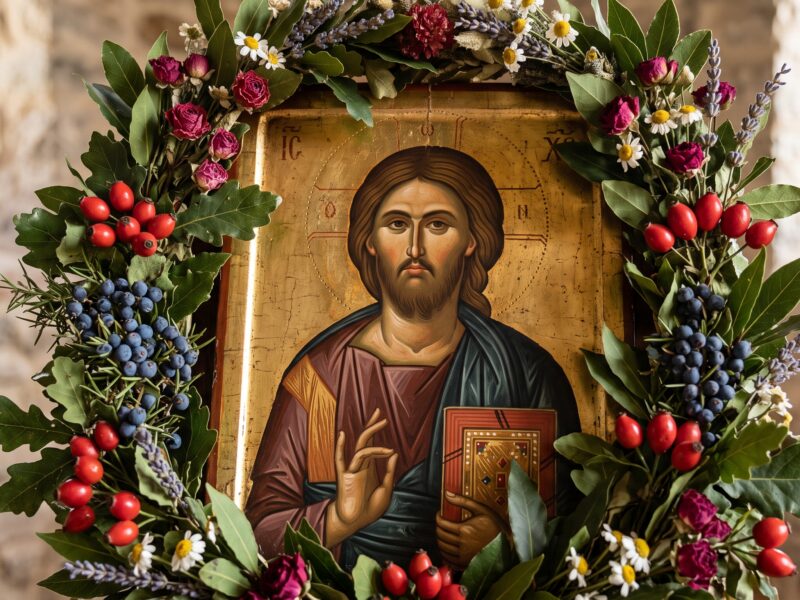
The Holy Fathers emphasise that true faith is a transformation of the heart (metanoia), not external forms. Basil the Great teaches the Holy Spirit as the Life-Giver who conforms us to Christ. Orthodoxy does not carry the “religious spirit” – that legalistic, accusatory, and lifeless attitude that replaces grace with rules – because its core is living communion, not performative religiosity. It is mistakenly viewed as carrying a religious spirit mainly through a Western individualist lens: its beautiful liturgy, icons, and tradition may appear as mere “form,” yet in reality they are windows into eternity that lead to deep inner prayer and communion with God.
Lesser-Known Aspects and the Potential for Dialogue
Less well known is how Orthodox hesychasm (the prayer of the heart and inner stillness) and the Jesus Prayer (“Lord Jesus Christ, have mercy on me”) enable direct communion with the Holy Spirit, remarkably similar to the charismatic experience valued in free Christianity. The Holy Spirit works dynamically in Orthodoxy: He sanctifies through the mysteries, leads into theosis, and creates unity in the Church as the Body of Christ. Faith in Jesus is not merely an intellectual decision but a living participation in His death and resurrection through baptism and the Eucharist.
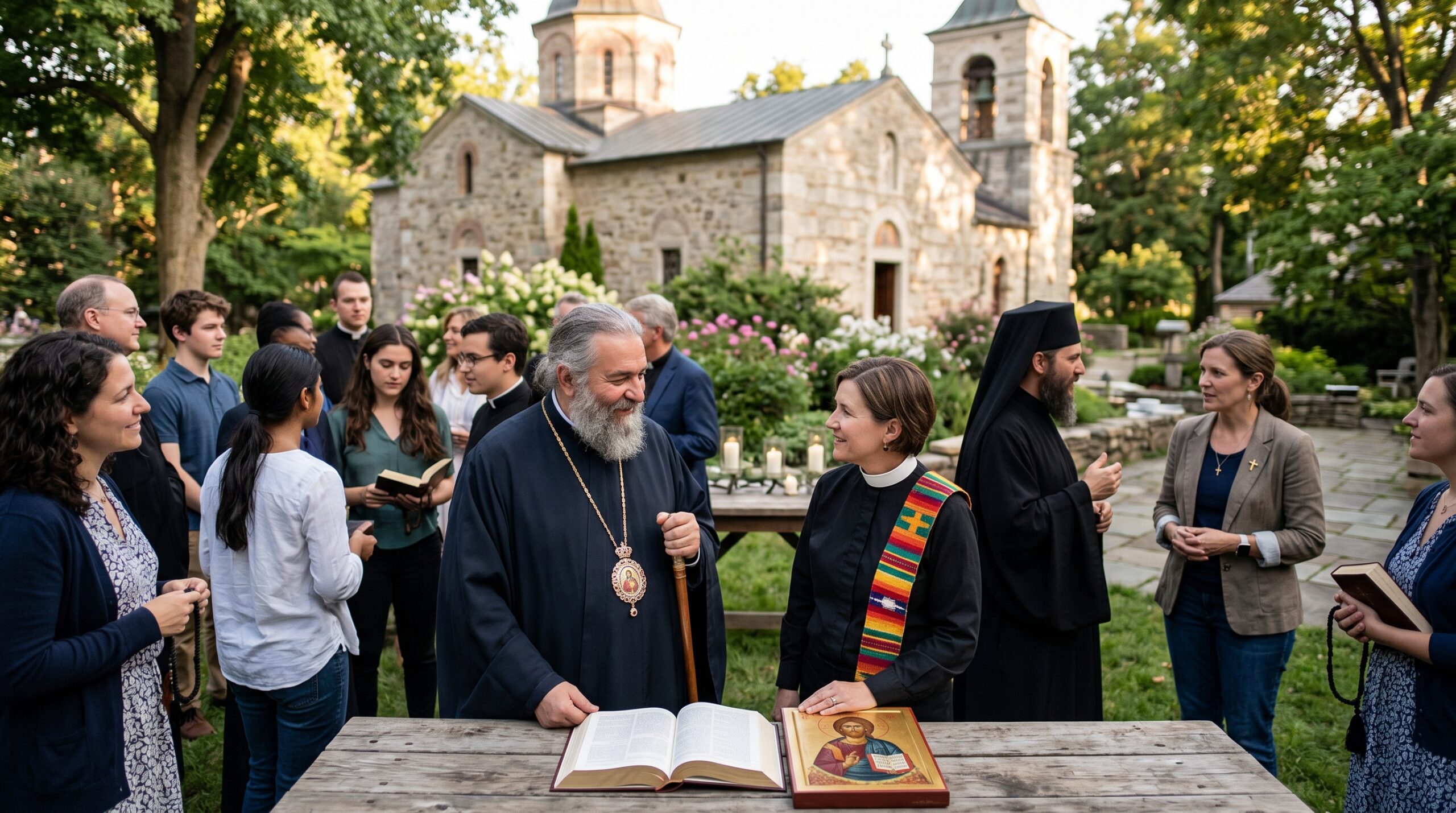
Free Christianity (non-denominational or evangelical Christianity) emphasises a personal relationship with Jesus and the power of the Holy Spirit. Orthodoxy shares this profoundly: both confess that without the Holy Spirit faith is dead. The potential for dialogue is enormous. Free Christianity can bring fresh joy of grace and missionary zeal, while Orthodoxy offers deep rootedness in apostolic tradition that protects the faith from heresy. Both stand against the religious spirit: free Christianity warns against legalism, Orthodoxy demonstrates how tradition can be alive rather than dead. The mistaken accusation often stems from a superficial understanding of liturgy as “empty ritual,” whereas Orthodox theology insists that everything points to Christ and the Holy Spirit.
Factual Foundation for Dialogue
- The Bible uses “religion” (threskeia) mainly positively for pure practice or negatively for human traditions.
- Orthodox Churches have preserved the teaching of the first seven Ecumenical Councils unchanged.
- Theosis is an early Christian doctrine (2 Peter 1:4; Athanasius: “God became man so that man might become god”).
- Many from free Christian backgrounds discover Orthodoxy as a deeper mystical dimension without losing personal relationship with Christ.
- Common enemies: secularism, legalism, and formalism. Common goal: living communion with the Trinity.
The full truth is that Orthodoxy does not carry the religious spirit because its centre is the living work of the Holy Spirit, not rules. Free Christianity has no right to mistakenly label it as such, because this overlooks the apostolic continuity and mystical depth that enrich the whole Body of Christ. Dialogue leads both traditions deeper into grace.
Prayer
Lord Jesus Christ, our God, who came into the world to set us free from every bondage, deliver us from the religious spirit – that shadow of death that replaces Your living grace with empty forms. Open our eyes to see the beauty of Orthodox theology: how the Holy Spirit works in the mysteries, leading us into theosis, into participation in Your divine nature. Help us understand that Orthodoxy is not religion but living communion with You, with Your Father, and with the Holy Spirit. Holy Spirit, come and fill us with Your power so that we may live in spirit and truth, free from all legalism. Amen.
Longer Prayer for Understanding Deliverance from the Religious Spirit in Free Christianity and Orthodoxy: Heavenly Father, Lord Jesus Christ, and gracious Holy Spirit, we come before You in humility, asking for deliverance from every religious spirit that has clouded the beauty of Your Church. In free Christianity, where personal faith and the power of the Spirit are emphasised, free us from any attitude that condemns tradition without understanding it and reduces grace to mere emotional experience. In Orthodoxy, where deep tradition lives, free us from any formalism that might hide living communion of the heart. Help us understand how the Holy Spirit works in both: renewing and awakening in free Christianity, rooting and sanctifying in Orthodoxy. Bring us into dialogue where free Christianity enriches with fresh grace and Orthodoxy with apostolic depth. God, who are Love, transform us so that we see one another as members of Your Body, free from accusation and full of grace. Grant us wisdom to know the truth: Orthodoxy carries Your Spirit in a living way, and free Christianity has no right to deny it. Holy Trinity, unite us in Your love so that we may live in spirit, truth, and freedom until we reach perfect communion with You. Amen.

Martinus Vaicarius’s mission is to:
- Provide spiritual support and guidance to people seeking peace and hope
- Create prayer texts that bring God’s peace to hearts suffering under fear and anxiety
- Promote deep understanding of the power of theGod of Sabaoth and the protection of the heavenly hosts
- Help people enter the spiritual sphere where God’s peace reigns over all
AICortex Invest OÜ