Views: 7
The International Day of Peace on September 21 — its UN history, biblical theology of peace, patristic perspectives, the paradox of human diversity and unity, and the meaning of peace in the age of artificial intelligence.
Introduction: Two Peaces, One Day
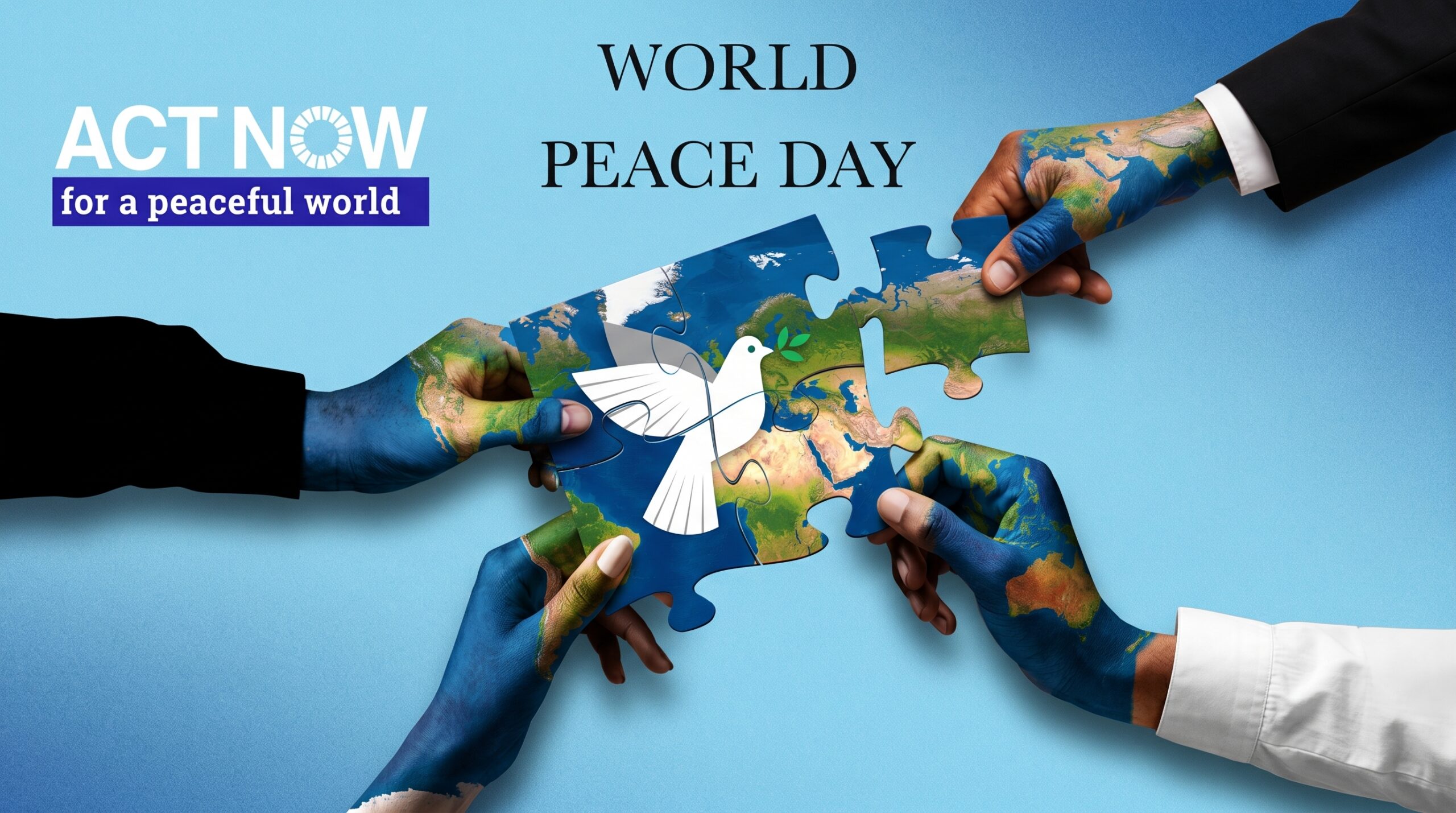
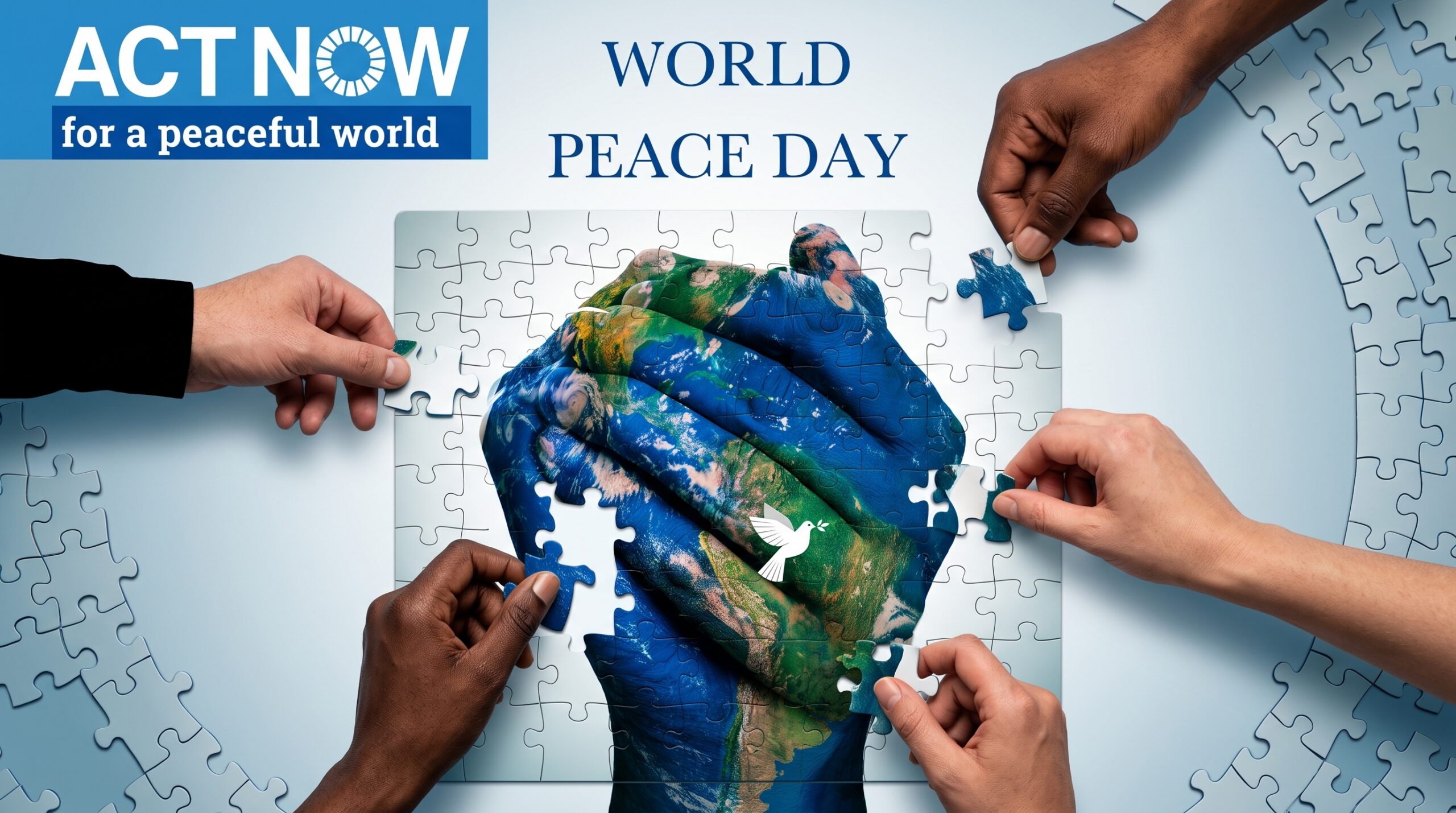
September 21 marks a unique moment of stillness in the world’s calendar. The International Day of Peace is not merely a symbolic date for political speeches — it is a window into humanity’s deepest longing: the desire to live together without fear. The UN General Assembly established the Day of Peace in 1981, and in 2001 the date was fixed firmly as September 21, making it a day of global ceasefire and non-violence. The 2026 theme — “Invest in Peace: For Everyone, Everywhere, Every Day” — carries within it a principle Christian theology has known for two millennia: peace is not a passive state but an active choice that must be made anew each day.
Here, however, lies an important distinction that secular analysis often overlooks. The UN and the Western humanist tradition understand peace primarily as the absence of war, violence, and conflict — a negative peace, so to speak. Scripture, however, speaks of a far richer concept: shalom, meaning wholeness, flourishing, right relationship with God, with oneself, with one’s neighbor, and with creation itself. Peace is not a vacuum but a fullness.
The History of the Day of Peace: A Secular Initiative, an Eternal Longing
The origin story of the Day of Peace is fascinating precisely because it reflects humanity’s collective trauma. In 1981, at the height of the Cold War, the international community felt the need to create a symbolic point in time when weapons would fall silent for even a single day. It was no accident that the initiative came from an organization founded after the Second World War — the UN’s very existence is a response to humanity’s inability to preserve peace on its own. In 2001 the date was fixed and a call for ceasefire was added, giving the day a more concrete, practical dimension: not merely reflection, but the cessation of action.
Less well known, but theologically telling, is the observation that September 21 falls close to the autumnal equinox — a time when light and darkness stand in balance. In church tradition, equinoxes and turning points have always carried symbolic meaning — transition, balance, new beginning. Though the UN does not officially emphasize this connection, it is hard not to see in it a testimony from nature itself: balance is never self-evident; it must be maintained.
Biblical Peace: Shalom as a Theology of Wholeness
The prophets of the Old Testament saw peace as a mark of the messianic age. Isaiah proclaims a vision in which nations beat their swords into plowshares and their spears into pruning hooks, and nation no longer lifts up sword against nation (in the spirit of Isaiah 2:4; the same prophecy recurs in Micah 4:3). This is not a naive dream of nonviolence, but an eschatological hope — a testimony that final peace is God’s act, not merely a human diplomatic achievement.
In the New Testament, peace becomes personal. Before his suffering, Jesus tells his disciples that he leaves them his peace, giving it not as the world gives (in the spirit of John 14:27). Here lies a critical difference: the world’s peace is usually a balance of power, a temporary ceasefire, a compromise of interests. Christ’s peace is fundamentally different — it endures even amid suffering and injustice, because its source is not the favorability of external circumstances but an inner union with God.
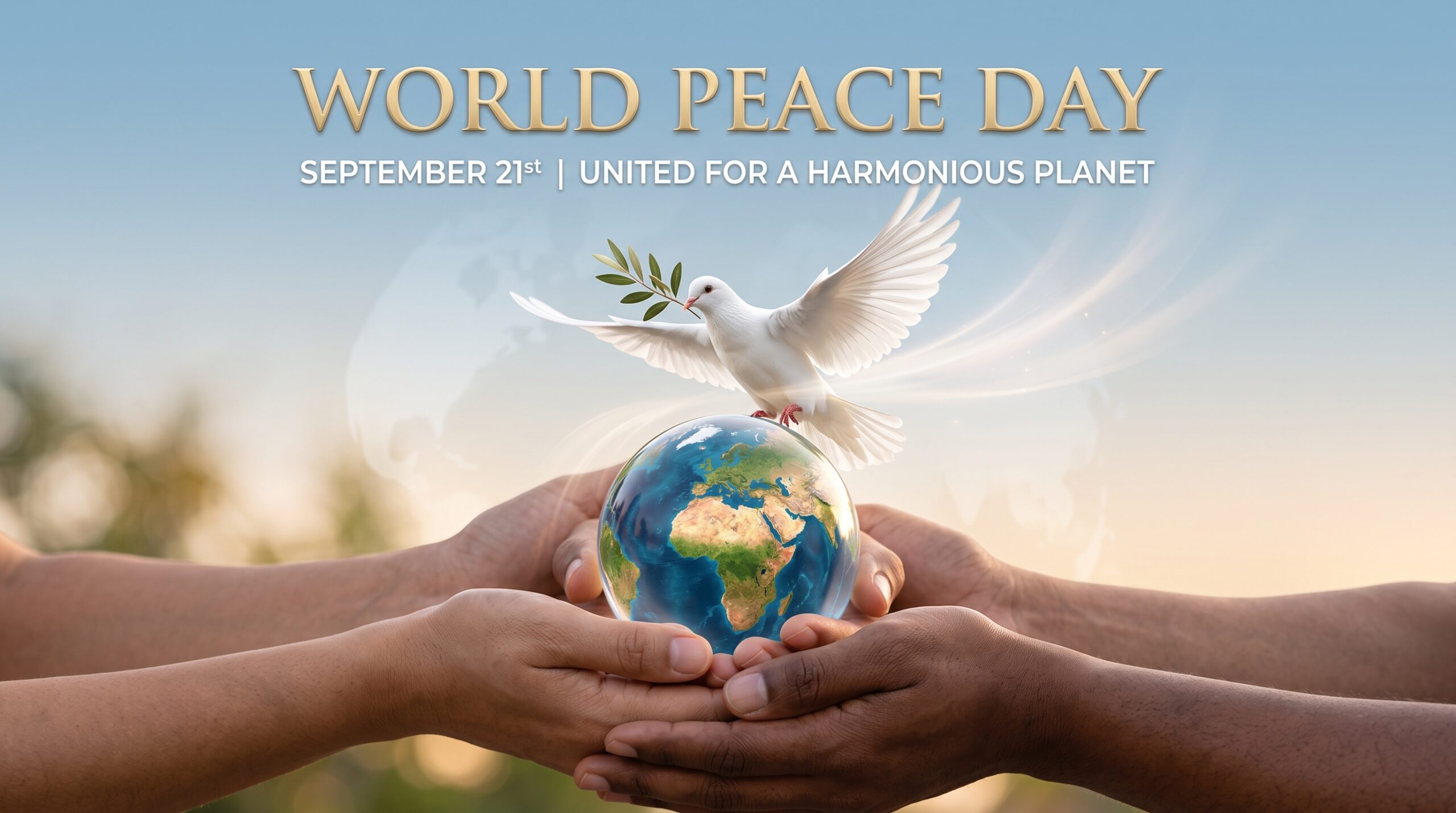
Paul goes further still, writing that Christ himself is our peace, who has made the two — Jews and Gentiles — one, breaking down the dividing wall of hostility (in the spirit of Ephesians 2:14). This is one of Christian theology’s most radical statements about peace: peace is not merely the ending of enmity but the creation of a new, shared identity where division once reigned. The apostle also writes that in Christ there is neither Jew nor Greek, slave nor free, male nor female (in the spirit of Galatians 3:28) — not the erasure of cultural differences, but their elevation into a shared belonging that does not abolish but transcends division.
Less familiar, yet profoundly significant, is the observation in the Epistle of James that the fruit of righteousness is sown in peace by those who make peace (in the spirit of James 3:18) — meaning that peace is not only an outcome but also a method. Peace cannot be reached through violent or dishonest means; the way one moves toward peace must itself bear the character of peace. This is a principle that today’s geopolitical negotiations often ignore, but which the Church Fathers have emphasized throughout the ages.
The Patristic View: Peace as Inner Warfare
The spiritual tradition of the Eastern Church adds another layer to the concept of peace that has almost vanished from Western discourse: the roots of external conflict lie within. According to the teaching of Abba Isaac the Syrian, the true hesychast — the seeker of stillness — attains peace first by struggling with his own passions and thoughts; only then does his presence become a source of peace for others. Gregory of Nyssa similarly emphasized that the human soul united with God (theosis) reflects divine peace into its surroundings without words — through being alone.
Augustine, in turn, distinguishes in his work The City of God between earthly peace (pax terrena) and heavenly peace (pax caelestis). Earthly peace, he holds, is good and necessary, yet always imperfect and temporary, since it rests upon the order of a fallen world. Heavenly peace, however, is a perfect order in which all things stand in right relation to God. This distinction gives the UN’s Day of Peace a deeper frame: the secular pursuit of peace is valuable and blessed, but it must not replace the longing for a more perfect, final peace.
Similarities and Differences: Between the UN and Christian Conceptions of Peace
The similarities are, in fact, considerable. Both traditions understand peace as something more than the absence of war — the UN’s 2026 theme itself emphasizes that peace means security, dignity, opportunity, human rights, cooperation, and dialogue, not merely the silencing of weapons. This is close to the concept of shalom. Both also emphasize a daily, communal dimension: peace is not born only at summits but in neighborhoods, classrooms, and communities, as Secretary-General Guterres emphasizes in his own message.
The differences, however, are equally important. The UN’s approach is fundamentally human-centered and horizontal — peace as a project of organizing relations among people. Christian theology, however, is both vertical and horizontal: true peace among people is possible only when peace with God also exists. Without this vertical dimension, every horizontal pursuit of peace remains vulnerable — for in the absence of a transcendent source before which one feels accountable, peace easily becomes merely a balance of power, sustained only as long as it benefits all parties involved.
Diversity and Syntony: How Humanity Can Exist in Peace
Here we arrive at a question that troubles every generation anew: how can humanity — so diverse in language, belief, culture, and conviction — exist in synchrony without difference turning into enmity?
The biblical answer is not a demand for uniformity but a model of harmony resembling musical polyphony. Psalm 133 describes how good and pleasant it is when brothers dwell together in unity (in the spirit of Psalm 133:1) — yet this unity does not mean identity, but a bond of love that holds different parts together, like oil flowing down upon a beard or dew falling upon mountains — diverse images, one blessing. According to the Christian theology of the body (which Paul develops in his letters to the Corinthians), one body consists of many members, each with a different function, yet all indispensable to the whole. This is a radically different model from both uniform assimilation and fragmented individualism: diversity is not a threat to unity but its precondition, when all parts are oriented toward the same center.
A less common, yet spiritually profound, understanding is what the Eastern Church tradition calls perichoresis — the description of the inner life of the Triune God, in which three Persons exist in complete mutual interpenetration without losing their distinctness. If humanity is created in the image of God (imago Dei), then it also bears within it a calling to such a model of relationship: difference that does not divide but enriches, because all parties remain open to one another through love, without anyone losing their uniqueness. This is a theological answer to today’s dilemma of multiculturalism — neither fusion nor separation, but distinctness interpenetrated by love.
Peace in the Age of Artificial Intelligence: A Question of Species Survival
The Day of Peace in the 21st century faces a challenge that neither Isaiah nor Augustine foresaw directly, yet whose principles speak to it nonetheless: the rapid advance of artificial intelligence. Where earlier threats to peace were primarily interpersonal — nation against nation, people against people — the age of AI brings a new dimension, in which the question is no longer only “can people live in peace with one another,” but “can humanity preserve its inner balance and dignity in the face of technology capable of imitating, accelerating, and amplifying both its goodness and its passions.”
Here the patristic teaching on inner peace becomes surprisingly relevant. If the outer world accelerates through artificial intelligence at an unprecedented pace — information, decisions, even communication mediated through machines — then the cultivation of inner stillness and clarity is no longer only the privilege of the monastery, but an existential necessity for the whole species. Isaac the Syrian’s teaching that peace begins with the inner struggle against one’s own thoughts and passions gains new weight in a world where artificial intelligence can systematically amplify those very passions — fear, greed, anger, the lust for power — through algorithms and information flows.
Theologically, it is important to remember here that human dignity rests not on cognitive capacity or productivity, which a machine may surpass, but on being created in the image of God — something unique that cannot be computationally recreated. Peace in the sense of the survival of the human species in the AI age therefore means, above all, that humanity must hold fast to the truth about the source of its dignity, rather than allowing itself to be defined solely by measures created by technology. If humanity forgets that it is something more than a biological information-processing system, it also loses the inner compass that keeps it from violence and self-destruction. Peace in the age of artificial intelligence is thus inseparably bound to theological anthropology: a person who knows who he is before God no longer needs the fear that breeds competition, anxiety, and ultimately conflict.
At the same time, there is a source of hope worth emphasizing here: artificial intelligence itself, rightly directed, can serve peace — helping to overcome language barriers, detect disease, and distribute resources more justly. The question is not the technology itself, but the heart that wields it. Like every tool throughout history, artificial intelligence too reflects the inner state of its creator and user — which is why the inner peace that Christ spoke of giving becomes a precondition for outer peace to even become possible in this new age.
Conclusion: An Investment That Never Ends
The 2026 theme of the Day of Peace calls us to invest in peace — for everyone, everywhere, every day. Christian theology adds depth to this call: investment in peace begins in a heart that has itself found peace, not through external circumstances, but through a restored relationship with God. Only once inner shalom is established can it carry over into family, community, among nations — and finally into this new world, interwoven with artificial intelligence, that today’s generation stands before.
Peace is neither utopia nor naivety. It is a choice made anew each day, whose deepest source is not a political agreement but — in the Christian view — the very nature of God, whom Paul calls the God of peace (in the spirit of Philippians 4:7), whose peace surpasses all understanding. On this September 21, where the secular and the sacred meet, there is room for both the UN’s call and an ancient prayer — two voices that, each in its own way, long for the same thing: a world where swords have been turned into plowshares, and humanity, in all its diversity, at last lives together in peace.
Our mission through SalvationPrayer is to bring the message of Salvation, Peace, and Hope to millions of people across Europe and around the world.
Give as God leads you
The Bible encourages us to give freely, generously, and joyfully:
“He who sows sparingly will also reap sparingly, and he who sows generously will also reap generously.”
2 Corinthians 9:6
We do not want to promise that a particular donation will result in a specific financial, health-related, or other material outcome. We believe, however, that generosity, prayer, and serving others are an important part of Christian life.
If this ministry speaks to your heart, you are welcome to support it.
How to Donate
Bank details – Individuals
- Bank: AS SEB Pank
- BIC/SWIFT: EEUHEE2X
- IBAN: EE921010010067330010
- Recipient: Martin Vaik
- Payment reference: donation – prayer request (1–2 words)
Thank you from the bottom of our hearts for every donation supporting the work of SalvationPrayer.eu.
A Prayer for World Peace
God of peace, whose very being is love and wholeness,
look with mercy upon this fractured world, where nations still beat plowshares into swords and the heart seeks peace in the wrong places.
Give us Your peace — not as the world gives, but the peace that endures despite storms and trials.
Teach us to see in difference not a threat, but a richness; teach us to love those who think, pray, and live differently than we do, just as You love all Your children.
Guide those to whom power and knowledge have been entrusted — whether political, scientific, or technological — that they may use it in humility, not pride, for service, not domination.
Give humanity the wisdom to remember who it is before You, even as machines learn to think as we do — that we may never lose the true source of our dignity.
Be our peace, Christ, who broke down the dividing wall of hostility; make us peacemakers, who rightly represent You in our families, in our nations, and across the whole earth.
The world peace for which we long, let it begin in our own hearts, today, and every day to come.
Amen.

Trough all this I want to declare this is all from God and to God. All Glory to Him!