
Views: 23
Christian prayer times give the day a rhythm and help people bring gratitude, worries, failings, and prayers for others before God. The Bible does not set a mandatory schedule of hours that every Christian must follow. Jesus taught his followers to pray sincerely and trustingly, and gave them the Lord’s Prayer as a model (Matthew 6:5–13; Luke 11:1–4). At the same time, the Bible describes regular prayer at different points in the day: Daniel prayed three times a day, the psalmist turned to God in the evening, morning, and at noon, and Peter prayed around midday (Daniel 6:11; Psalm 55:18; Acts 10:9). These accounts show that prayer can belong to different parts of the day, but they do not make particular hours a binding rule for all Christians. The Christian call to persistence is expressed in the exhortation to pray continually and remain devoted to prayer with thanksgiving (1 Thessalonians 5:17; Colossians 4:2).
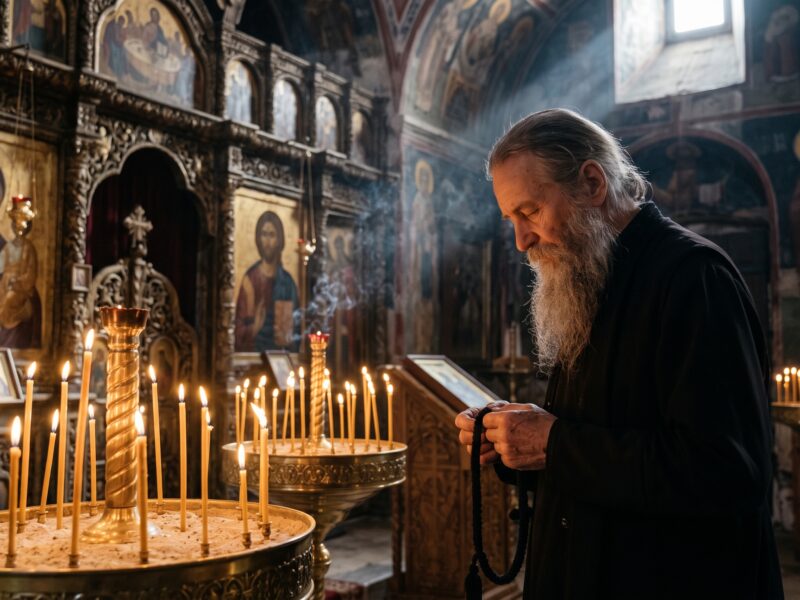
Orthodox prayer practice brings together a personal prayer rule and the Church’s communal worship. The Orthodox Church in America’s prayer texts and teaching materials introduce morning and evening prayers, prayers before meals, the Jesus Prayer, and the Church’s Hours. The Greek Orthodox Archdiocese of America’s collection of personal prayers likewise shows how a prayer book can shape a recurring rhythm around the start of the day, mealtimes, and evening. The Hours use psalms and recall events in Christ’s life at different points in the day, so prayer is not limited to a person’s immediate mood or needs; it also places the worshipper within the Church’s shared remembrance and praise (Acts 2:42; Psalm 119:164). The Jesus Prayer—“Lord Jesus Christ, Son of God, have mercy on me, a sinner”—is used as a brief invocation that can be repeated throughout the day, but its purpose is not to achieve a special result through a particular number of repetitions (Luke 18:13; 1 Thessalonians 5:17). The aim of Orthodox prayer rules is to cultivate attentiveness, repentance, gratitude, and a life shaped by God’s will, rather than to make prayer a transaction that obliges God to grant a request (Matthew 6:7–10; James 1:22).
Orthodox prayer books may include appeals to the Theotokos, or Mother of God, and to the saints, asking them to pray for the person. Orthodox theology distinguishes this intercession from the worship offered to the Holy Trinity and understands it as part of the communion of the Church, not as placing another saviour alongside Christ. This practice is explained in part through biblical images of the communion of saints and mutual intercession (Hebrews 12:1; James 5:16), although other Christian traditions interpret it differently. The Bible calls Christ the one mediator between God and humanity, so Orthodox and other churches’ understandings should be presented as distinct rather than merged into a single rule binding on all Christians (1 Timothy 2:5; Acts 4:12). The prayers below are therefore extended examples, not the only permitted wording or an official prayer book shared by every denomination. Their structure follows biblical themes of thanksgiving, seeking God’s will, asking forgiveness, interceding for others, and placing trust in God (Matthew 6:9–13; Philippians 4:6–7).
1. Morning Prayer
Morning prayer helps a person begin the day before attention is scattered by work, news, and other responsibilities. In Orthodox prayer books, the morning rule often begins with praise of God and continues with thanksgiving and a request that God enlighten the heart and mind. This opening expresses the idea that the first word of the day need not be a person’s own worry, but can be gratitude to God for life and a new opportunity. In the Bible, Jesus went to a solitary place early in the morning to pray, and the Psalms ask God to hear prayer in the morning and guide the worshipper in his way (Mark 1:35; Psalm 5:4; Psalm 143:8). Orthodox morning prayer may include praise of the Holy Trinity, a psalm, the Lord’s Prayer, and intercessions, but a person may also begin with a shorter rule. Its spiritual aim is to carry faith into daily actions, because biblical prayer is not separated from serving one’s neighbour or living justly (Micah 6:8; Colossians 3:17).
A morning prayer rule can be consistent while remaining flexible. First, be still for a moment and recognise that you are in God’s presence, since Jesus taught his followers to pray privately and sincerely (Matthew 6:6). Following Orthodox custom, you may make the sign of the cross and begin in the name of the Holy Trinity, but neither the sign of the cross nor a particular posture is a condition prescribed in the Bible for every Christian. Then read a short passage, perhaps a psalm, and consider what it says about God and your life today (Psalm 1:1–3; Psalm 5:4–9). After that, give thanks, honestly acknowledge your failings, and ask for help in specific situations rather than repeating general wishes without considering what they mean (Psalm 139:23–24; 1 John 1:9). Finish with the Lord’s Prayer and name the people you hope to meet with love and attention during the day (Matthew 6:9–13; Mark 12:30–31).
God the Father, I thank you for the night and for this new day, and for all the good you have given me. I confess that I have often rushed, thought only of myself, or failed to do the good that was within my power. Forgive me, and cleanse my heart so that I do not carry yesterday’s failings into today as an unbearable burden. Lord Jesus Christ, teach me to hear your word and follow you, even when doing so requires patience or courage. Holy Spirit, guide my thoughts, words, and decisions, and help me notice someone who needs help. Keep my family, my friends, and the people I will meet today, and give me wisdom to bring them peace and support. Bless my work, but keep me from injustice, pride, and seeking recognition at another person’s expense. May your will be done in my life and through me for the good of others. In the name of Jesus Christ. Amen.
This prayer follows the biblical pattern of thanksgiving, confession, seeking God’s will, and loving one’s neighbour (Matthew 6:9–13; Psalm 90:14–17; Galatians 5:22–23). Its petitions do not ask God to guarantee a particular outcome, but for wisdom and faithfulness within the day that lies ahead. Confession acknowledges that a person can begin again without pretending that yesterday’s failures did not happen (1 John 1:9; Lamentations 3:22–23). Asking the Holy Spirit for guidance is connected to the Christian hope that God forms a person’s character and fruit in daily life (Galatians 5:22–25). Naming other people in prayer can also prepare the worshipper to treat them with patience and practical care (James 2:14–17).
Morning prayer does not mean that a person must know every detail of the day or secure a desired outcome from God in advance. The Bible calls people to entrust their way to God while also acting faithfully according to the light they have received (Proverbs 3:5–6; James 2:17). A prayer can therefore end with one practical intention, such as listening before responding, keeping a promise, or calling someone who needs support. In this sense, the Orthodox prayer rule helps a person remember that repeated words and psalms are meant to shape attention beyond the prayer itself. If a longer rule is not manageable, a person can read one psalm, pray the Lord’s Prayer, and ask God for faithfulness in the day ahead. Such a shorter prayer is not less sincere, because Jesus criticised prayer performed for show and empty verbosity, not honest and repeated prayer (Matthew 6:7–8; Luke 18:1).

2. Noon Prayer
Noon prayer interrupts the day’s automatic rush and helps a person reconsider their intentions and conduct. Psalm 55 speaks of praying in the evening, morning, and at noon, while the Book of Daniel describes his regular practice of prayer three times a day (Psalm 55:18; Daniel 6:11). In Acts, Peter goes to pray around midday, and the same book also mentions the apostles going to prayer at the ninth hour, in the afternoon (Acts 10:9; Acts 3:1). These accounts provide a biblical and historical background for pausing during the day, but they do not mean that God hears prayer only at a particular hour. In the Orthodox liturgical cycle, the Third Hour generally corresponds to the morning, the Sixth Hour to noon, and the Ninth Hour to the afternoon. The purpose of the Hours is to sanctify the day and connect the worshipper with the remembrance of Christ’s Passion and Resurrection, not to require every Christian to follow a monastic schedule (Acts 2:15; Luke 23:44–46).
The Orthodox service of the Sixth Hour is especially associated with the remembrance of Christ’s crucifixion and gives an important place to the Psalms. A comparison of the Sixth Hour texts and Lenten rubrics published by the Orthodox Church in America shows that the prayer rule is not a single unchanging sentence, but a pattern shaped by psalms, Church prayers, and the particular season of the Church year. During Great Lent, the Sixth Hour service also includes the Prayer of Saint Ephrem, which asks for deliverance from sloth, despair, lust for power, and idle talk, and for growth in chastity, humility, patience, and love. This prayer suits the Lenten season because it directs a person to examine their own heart before judging the failings of a neighbour (Matthew 7:3–5; Luke 18:13–14). The Prayer of Saint Ephrem is not, however, a compulsory noon prayer for all Christians, nor is it necessarily recited every day by every Orthodox Christian; it has a particular place in the Church’s Lenten worship. The Hours teach the worshipper that repentance and remembrance of Christ can be brought into the middle of the workday through a brief prayer as well (Psalm 55:18; Acts 10:9).
A noon prayer rule can be simple and repeatable, making it possible to follow at work, at home, or while travelling. Begin with a few moments of silence and notice what you are feeling, without fear of bringing weariness, gratitude, or frustration before God (Psalm 62:8; Philippians 4:6). Read a short passage from a psalm or recall the words of Jesus, then pray the Lord’s Prayer and bring the concerns of your day to God (Matthew 6:9–13; Psalm 119:105). Following Orthodox custom, you may add the Jesus Prayer, saying it attentively rather than trying to reach a particular number of repetitions. Also pray for one person or situation that has come to mind during the day, since Christian intercession turns a person’s attention beyond their own needs (1 Timothy 2:1; James 5:16). End with the intention to continue your work honestly, calmly, and with care for other people’s wellbeing, because biblical prayer calls a person to obedient action (James 1:22; Colossians 3:23).
Lord God, who hear your people at every hour, I pause from my work now to turn to you. I thank you for everything that has gone well today, and ask for wisdom in the situations that are difficult for me. If I have been impatient, unjust, or indifferent to another person’s needs, show me this and give me courage to change my conduct. Keep me from the temptation to use my strength, position, or words to harm anyone. Give strength to those who are overwhelmed today, and comfort those who are afraid, grieving, or alone. Bless the work of my hands, so that it may be useful and not draw me away from love and honesty. Lord Jesus Christ, remind me of your Cross, so that I do not answer anger with anger or suffering with contempt. Holy Spirit, guide me through the next hours and help me do one good thing I have been putting off. I place my worries and the people I pray for in your care. Amen.
This prayer is grounded in trust, justice, love of neighbour, and thanksgiving (Micah 6:8; Philippians 4:6–7; Colossians 3:23–24). Noon prayer helps a person distinguish prayer from the wish to avoid every difficulty. The Bible does not promise that prayer will make every task easy or resolve every conflict at once, but it calls people to trust God and seek peace and wisdom (John 16:33; James 1:5). When someone prays for a colleague, client, or family member, the prayer should also lead them to examine their own words and actions. Orthodox prayer practice makes this point by treating prayer not merely as something said with the lips, but as a commitment to live according to God’s commandments (Matthew 6:14–15; 1 John 3:18). If there is no opportunity to pause at noon, a person can pray silently and find a quieter moment later for a longer prayer. A time of prayer serves a person when it helps them return to faith and love in the middle of the day, rather than becoming a deadline that produces guilt (Romans 8:1; 1 Thessalonians 5:17).

3. Evening Prayer
Evening prayer looks back on the day and places its events in God’s care. The Bible uses images of evening prayer and praise, including prayer rising before God like incense and a person entrusting themselves to God’s peace at the close of the day (Psalm 141:2; Psalm 4:8). Orthodox Vespers, or Evening Prayer, draws in part on the creation story, in which evening and morning form the day, and uses psalms, prayers of thanksgiving, and the image of Christ as light (Genesis 1:5; Psalm 104:19–24). Evening prayer is also associated with the Song of Simeon, in which he thanks God for allowing him to see salvation (Luke 2:29–32). Compline, the Orthodox service after Vespers, belongs to the later part of the evening cycle and directs the worshipper to ask for a peaceful night and God’s protection. These services belong to the Church’s liturgical tradition; they are not a command for every Christian to recite the complete services at home (Psalm 141:2; Luke 2:29–32).
Orthodox evening prayer books include prayers of thanksgiving for the day, confession, and requests for protection during the night. The self-examination within this prayer rule is connected to the Bible’s call to examine one’s actions and confess sins to God rather than conceal them through self-justification (Psalm 139:23–24; 1 John 1:9). Some Orthodox evening prayers also address the Theotokos or a guardian angel and ask for their intercession. In Orthodox sources, these invocations belong to the Church’s understanding of communion and intercession, while worship remains due to the Holy Trinity. Other Christian traditions generally do not pray to Mary or the saints, pointing to Christ’s unique role as mediator, and this difference should be explained respectfully (1 Timothy 2:5; Hebrews 12:1; James 5:16). A Christian from any tradition can therefore use the following prayer addressed to God, while an Orthodox Christian may add an intercessory prayer in keeping with the teaching of their Church.
An evening prayer rule can begin with a quiet review of the day: what was good, where you failed, and what you may need to put right tomorrow. Next, read a psalm or a short passage from the Gospel, so that prayer does not become only a repetition of the day’s problems but also receives direction from God’s word (Psalm 119:105; 2 Timothy 3:16–17). Then give thanks, name specific failings, and ask forgiveness, remembering that asking for forgiveness goes together with a willingness to forgive others (Matthew 6:12–15; Ephesians 4:32). Pray for those who are sick, grieving, alone, or otherwise in need, and entrust to God the worries you could not resolve today (1 Timothy 2:1; 1 Peter 5:7). Finish with the Lord’s Prayer or a brief statement of trust, and leave a quiet moment so that you do not rush straight from prayer to the next screen or responsibility (Matthew 6:9–13; Psalm 4:8).
God, I thank you for this day and for all the good I have received. I thank you for the people who supported me and for the opportunities I had to support someone else. I confess to you the ways I failed today: the times I spoke harshly, closed my heart, or chose comfort over what was right. Forgive me and help me make amends for the harm I have done, where that is still possible. Give me strength to forgive those whose words or actions have hurt me, and keep me from bitterness. Be near the sick, those who grieve, those suffering from war and violence, and those who are alone. Give wisdom to those who must make difficult decisions tonight, and peace to those who cannot sleep. Lord Jesus Christ, I place my unanswered questions in your care and ask you to guide me tomorrow as well. Let me rest with a grateful heart and wake ready to love and do good again. Amen.
This prayer follows the biblical pattern of confession, forgiveness, intercession, and trust in God’s care (Psalm 4:8; Matthew 6:12–15; 1 Peter 5:7). Its review of the day is not intended to produce despair, but to help the worshipper see where repentance and repair are needed. The request to forgive others reflects the Lord’s Prayer and Jesus’ teaching that receiving forgiveness should shape a person’s dealings with others (Matthew 6:12–15). Praying for people in distress widens evening prayer beyond private comfort and connects it with the Church’s concern for the world (1 Timothy 2:1–2). Entrusting unresolved worries to God does not excuse a person from taking responsible action the next day, but can help them rest without pretending to control what they cannot change (1 Peter 5:7; Philippians 4:6–7).
An Orthodox evening prayer may also use wording from the Church’s prayer-book tradition. For example, a person may ask God for protection during the night and ask the Theotokos to intercede, if that belongs to their Church’s rule of prayer. This should be understood as a feature of Orthodox faith, not as a requirement the Bible places on every Christian, since denominations differ in how they understand the intercession of saints (1 Timothy 2:5; Hebrews 12:1; James 5:16). An Orthodox Christian might pray: “Lord Jesus Christ, I thank you for the day that has passed; forgive my failings in thought, word, and deed, and teach me to repent. Keep me in peace through the night, protect my loved ones, and grant rest to those troubled by fear or pain. Theotokos, ask your Son to remember me and all who are in need. Lord, enlighten my mind when I awake, so that I may serve you and love my neighbour again. In the name of the Father, and of the Son, and of the Holy Spirit. Amen.” The first petitions draw on biblical confession and trust through the night, while the intercession at the end expresses a specifically Orthodox tradition (1 John 1:9; Psalm 4:8; Luke 1:46–49).
Keeping prayer times is usually formed through small repeated choices, not by imposing one perfect daily schedule. Choose a time for morning, midday, and evening that fits your life and responsibilities, because the Bible encourages continual prayer but does not tie God’s hearing to one universal hour (1 Thessalonians 5:17; Psalm 55:18). If you miss a time of prayer, begin again without despair, because the Gospel centres on grace and returning to God (Luke 15:20–24; Romans 8:1). Lord God, help me make time for prayer and give me the strength, faithfulness, and joy to keep it. When I am tired or distracted, teach me to turn to you even with a brief prayer and bring my attention back to you. Give me patience, so that prayer does not become a burden but helps me grow in faith, hope, and love. Teach me to thank you in prayer, confess my sins, stand before you on behalf of my neighbour, and seek your will. When I stumble or forget, raise me up again and lead me in the footsteps of Christ. Amen. The purpose of prayer times is to cultivate perseverance and shape life according to love, not to earn God’s favour through effort (Matthew 6:10; Romans 12:1–2; Galatians 5:22–23).

Trough all this I want to declare this is all from God and to God. All Glory to Him!