Views: 75
Orthodox Evangelism: How the Eastern Orthodox Church Spreads the Gospel
Introduction: The Timeless Call to Evangelism in Orthodoxy
The Eastern Orthodox Church views evangelism not as a optional program or modern marketing strategy, but as the very heartbeat of its existence — the natural outflow of the life in Christ. Rooted in the Great Commission (Matthew 28:19-20), Orthodox evangelism emphasizes theosis (deification), the transformative union with God, lived out in the sacramental life of the Church. It is less about aggressive proselytizing and more about authentic witness: incarnating the Gospel through liturgy, holiness, and love so that others are drawn into the fullness of the faith.
This approach stands in continuity with the apostolic Church. As Christ prayed, “As you sent me into the world, so I have sent them into the world” (John 17:18), the Church continues this sending. Evangelism in Orthodoxy is holistic — word, sacrament, and life — aimed at bringing souls into communion with the Triune God.
Biblical Foundations of Evangelism
The Bible provides the bedrock for Orthodox mission. From the Old Testament, God’s call to Abraham — “Go from your country… and I will make of you a great nation” (Genesis 12:1-3) — reveals a missional purpose: blessing all peoples through His chosen. The Psalms echo this universal vision: “Declare His glory among the nations” (Psalm 96:3).
In the New Testament, Jesus embodies perfect evangelism. He “went about all Galilee, teaching… preaching the gospel of the kingdom and healing” (Matthew 4:23). The climax comes in the Great Commission: “Go therefore and make disciples of all nations, baptizing them in the name of the Father and of the Son and of the Holy Spirit, teaching them to observe all that I have commanded you” (Matthew 28:19-20). Mark 16:15 reinforces: “Go into all the world and preach the gospel to the whole creation.”
The Apostle Paul exemplifies this zeal: “Woe to me if I do not preach the gospel!” (1 Corinthians 9:16). His ministry combined bold proclamation with incarnational living — becoming “all things to all people” (1 Corinthians 9:22) while guarding the apostolic deposit. Acts records the explosive growth through word and deed, miracles, and community life (Acts 2:42-47). Orthodox theology integrates these: evangelism flows from the Trinity’s perichoretic love outward, restoring humanity’s fallen image through Christ.
Insights from Church Fathers and Ancient Sources
The Church Fathers affirm evangelism as intrinsic to the Church’s nature. St. John Chrysostom, a great missionary advocate and Patriarch of Constantinople, declared: “For not to one, or two or three cities shall you preach, says Christ, but to the whole world. You will traverse land and sea… preaching to princes and tribes alike.” He urged Christians to persuade others “with our lives and not with mere words,” emphasizing lived holiness over rhetoric.
Sts. Cyril and Methodius, the “Apostles to the Slavs” (9th century), sent from Constantinople, created the Glagolitic alphabet, translated Scriptures and liturgy into Old Church Slavonic, and evangelized Moravia and beyond. Their work exemplifies Orthodox inculturation — making the Gospel accessible in the people’s language while preserving doctrinal purity. They are titled “Equals to the Apostles” for planting faith that shaped Slavic Christianity, including Kievan Rus’.
Other Fathers like St. Basil the Great and St. Gregory the Theologian stressed the Church as the “universal sacrament of salvation.” Evangelism manifests God’s plan in history, extending the Incarnation. Ancient sources, including Eusebius’s Ecclesiastical History, document early missionary expansions from Antioch and Constantinople, blending proclamation with ascetic witness and charitable works.
These patristic examples ground Orthodoxy’s approach: not conquest, but transformation through synergy — human effort cooperating with divine grace.
What Is Orthodox Evangelism? A Theological Analysis
In Orthodox theology, evangelism serves theosis — humanity’s vocation to partake in the divine nature (2 Peter 1:4) without blurring Creator-creature distinction. Salvation is not mere legal forgiveness but union with Christ in His Church, realized through repentance, baptism, Eucharist, and ascetic struggle. The Church is the Body of Christ, where the Gospel is embodied in Divine Liturgy, icons, and saints’ lives.
Key principles:
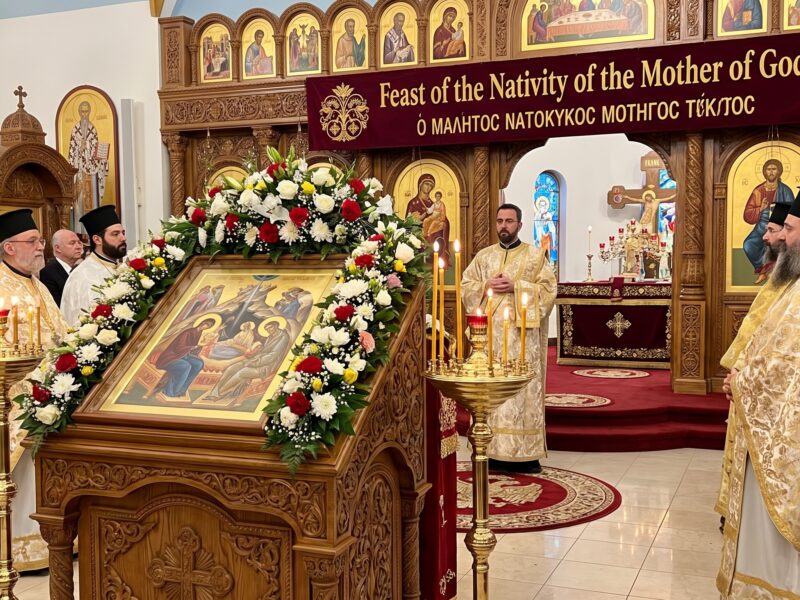
- Liturgy as Evangelism: The Eucharist draws outsiders through beauty and mystery.
- Personal Holiness: Saints like St. Seraphim of Sarov taught, “Acquire the Spirit of Peace, and thousands around you will be saved.”
- No Separation of Word and Sacrament: Unlike some Protestant models, Orthodox evangelism leads to the full sacramental life.
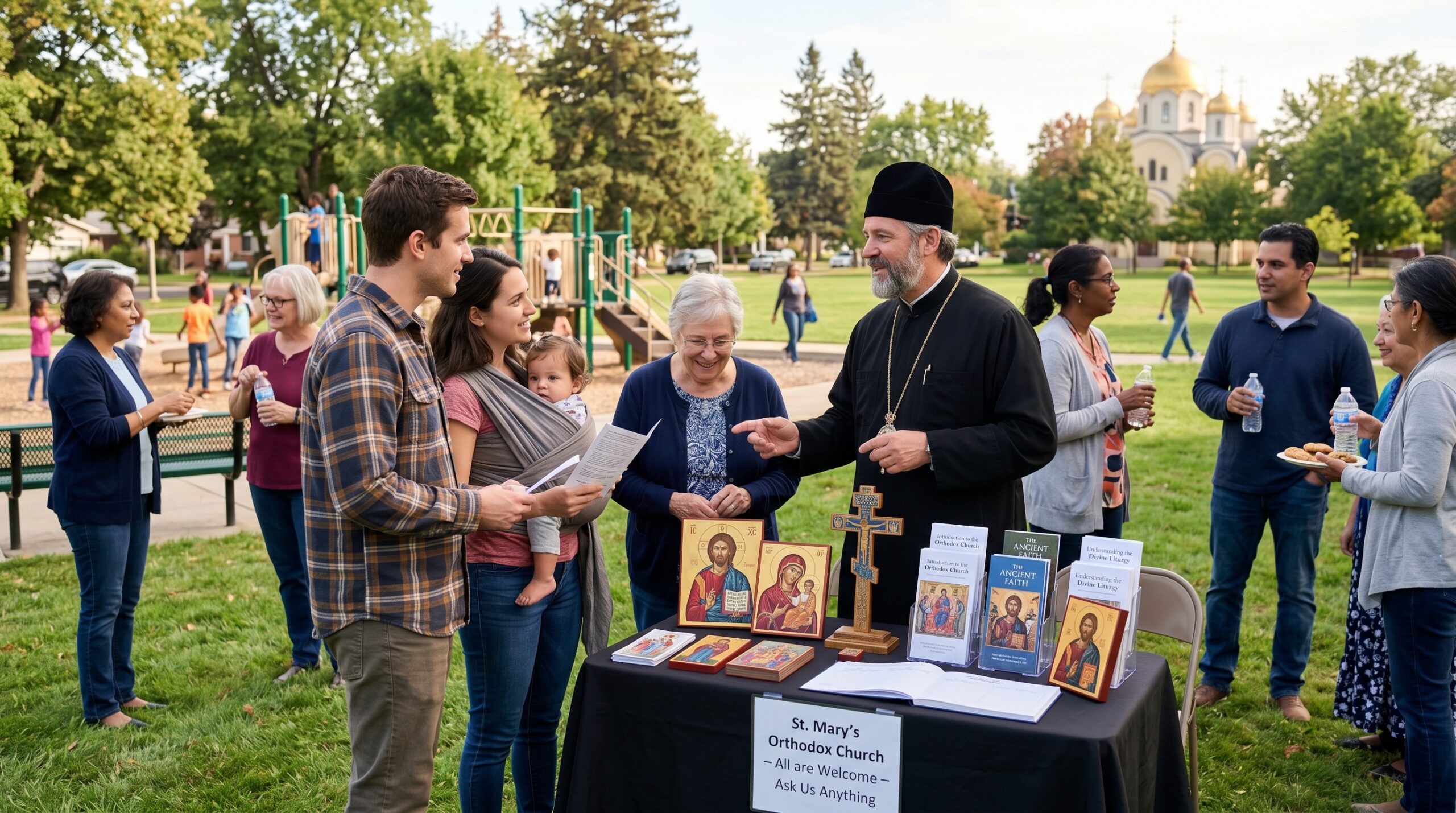
- Love and Hospitality: Befriending, welcoming visitors, and exemplary living (as noted in practical guides).
Proselytism (sheep-stealing) differs from true evangelism, which respects conscience while proclaiming truth.
Orthodox Evangelism Today: Practices and Contributions
Contemporary Orthodox evangelism thrives quietly yet powerfully. In the West, parishes focus on welcoming inquirers, catechesis, and online presence. Converts often cite the beauty of worship, depth of theology, and saints’ examples. Initiatives include Orthodox Christian Mission Center (OCMC) projects in Africa, Asia, and beyond — supporting indigenous clergy, theological training, and publications.
In diaspora communities, evangelism happens through cultural festivals, education, and media. Monasteries and spiritual elders attract seekers. Challenges include nominalism in traditional lands and secularism, yet revival occurs through youth programs, podcasts, and personal witness.
The Role of the Ecumenical Patriarchate of Constantinople
The Church of Constantinople historically led missions (e.g., to Slavs). Today, under Ecumenical Patriarch Bartholomew, it promotes dialogue, environmental stewardship as Gospel care for creation, and global Orthodoxy. Funds come from donations, archdiocesan support (e.g., Greek Orthodox Archdiocese of America contributes millions annually), the St. Andrew Ecumenical Patriarchal Fund, and foundations aiming for financial independence.
Resources support seminaries, philanthropic works, ecumenical efforts, and missionary grants. OCMC and similar bodies allocate over $1.5M yearly for evangelism, clergy support, and outreach across continents. Emphasis remains on canonical order, unity, and witness amid modern challenges.
Conclusion: The Enduring Mission
Orthodox evangelism calls believers to live the Gospel so others encounter the risen Christ. It is the Church’s apostolic DNA — from Pentecost to today — transforming lives toward theosis. In a fragmented world, the Orthodox Church offers the fullness of faith: ancient yet ever-new, mystical yet practical. As Chrysostom urged, may we preach with lives as boldly as with words, until “the earth shall be filled with the knowledge of the glory of the Lord” (Habakkuk 2:14).
This mission belongs to every baptized Orthodox Christian. The light of Christ illumines all — let us shine it faithfully.

Trough all this I want to declare this is all from God and to God. All Glory to Him!