Views: 5
Jesus Christ in Orthodox Christianity: The Complete Guide to Ancient Faith and Salvation
Eastern Orthodox Christianity presents Jesus Christ as the eternal Son of God, fully divine and fully human, the central figure of the one, holy, catholic, and apostolic Church. This ancient faith, tracing directly to the Apostles, offers a profound understanding of who Jesus is and how humanity finds salvation through union with Him.
The Historical Foundation of Orthodox Christology
Orthodox Christianity emerged from the early Church founded by Jesus Christ and His Apostles in the 1st century. It maintains unbroken continuity through apostolic succession and the Seven Ecumenical Councils, which defended the true faith against heresies.
The First Council of Nicaea (325 AD) affirmed that Jesus Christ is “begotten, not made, consubstantial with the Father” — fully God, countering Arianism. The Council of Chalcedon (451 AD) defined the Hypostatic Union: Jesus is one Person with two natures — divine and human — united “without confusion, without change, without division, without separation.”
These councils preserved the apostolic witness that Jesus is not a created being or mere prophet, but the incarnate God who bridges the gap between Creator and creation.
The Divinity of Jesus Christ: Core Orthodox Belief
Orthodox theology teaches that Jesus Christ is the Second Person of the Holy Trinity — fully God and fully man. This is not abstract philosophy but the heart of the Gospel.
Key Biblical Foundations for the Divinity of Jesus:
- John 1:1-3, 14: “In the beginning was the Word, and the Word was with God, and the Word was God… And the Word became flesh and dwelt among us.” This establishes Christ’s pre-existence and divinity.
- John 8:58: Jesus declares, “Before Abraham was, I am” — echoing God’s name in Exodus 3:14.
- John 10:30: “I and the Father are one.”
- Colossians 2:9: “For in him the whole fullness of deity dwells bodily.”
- Hebrews 1:8 (quoting the Father): “But of the Son he says, ‘Your throne, O God, is forever and ever.'”
- Philippians 2:5-11: Christ, “being in very nature God,” humbled Himself to become man.
- John 20:28: Thomas worships the risen Christ, saying, “My Lord and my God!”
Orthodox teaching holds that denying Christ’s full divinity undermines the entire Christian faith, as only God can truly save and deify humanity.
The Incarnation: God Becomes Man
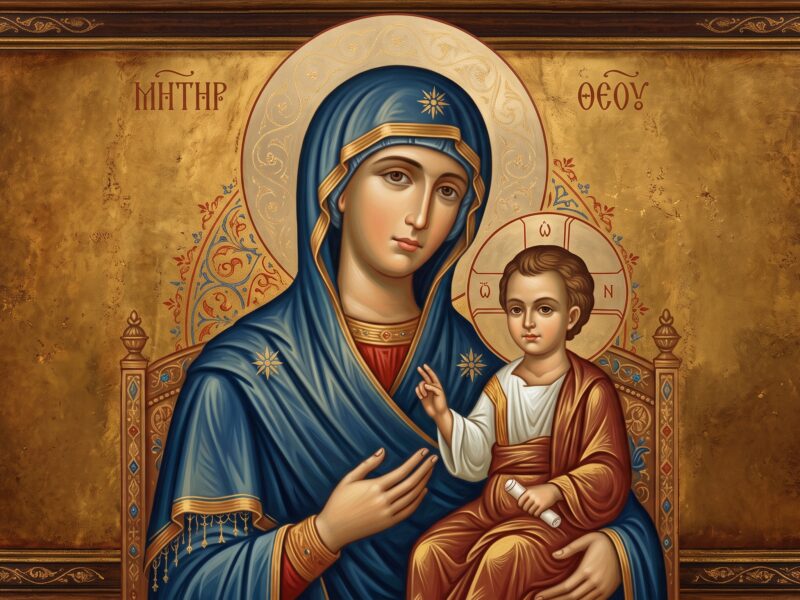
The Incarnation is central to Orthodoxy. God the Son took on human nature from the Virgin Mary (Theotokos — God-bearer) for our salvation. He experienced hunger, fatigue, sorrow, and death, yet without sin. His divine nature remained unchanged.
As St. Athanasius famously stated: “God became man so that man might become god” — not in essence, but by grace through participation in the divine life.
This union makes possible the theosis (deification) of humanity, the Orthodox understanding of salvation.
Salvation as Theosis in Orthodox Christianity
Unlike some traditions that emphasize legal forgiveness alone, Orthodoxy views salvation as a transformative, relational process of becoming like God by grace.
Theosis involves:
- Purification (katharsis): Overcoming passions and sin.
- Illumination (theoria): Seeing God through the heart.
- Union (theosis): Participation in God’s uncreated energies.
Key scriptures include:
- 2 Peter 1:4: “…that you may become partakers of the divine nature.”
- John 17:21-23: Jesus prays that believers “may be one” as He and the Father are one.
Salvation is synergistic — God’s grace working with human free will — experienced through the sacraments (Mysteries), prayer, fasting, and the liturgical life of the Church.
The Jesus Prayer: Encountering Christ Daily
One of the most powerful Orthodox practices for experiencing Christ’s divinity is the Jesus Prayer: “Lord Jesus Christ, Son of God, have mercy on me, a sinner.”
Rooted in Scripture (e.g., the tax collector’s prayer in Luke 18:13 and 1 Thessalonians 5:17’s call to “pray without ceasing”), this prayer invokes the holy Name of Jesus, fostering inner stillness (hesychia) and union with God. It has been practiced since the early centuries and systematized in the Philokalia.
Icons, Liturgy, and the Life in Christ
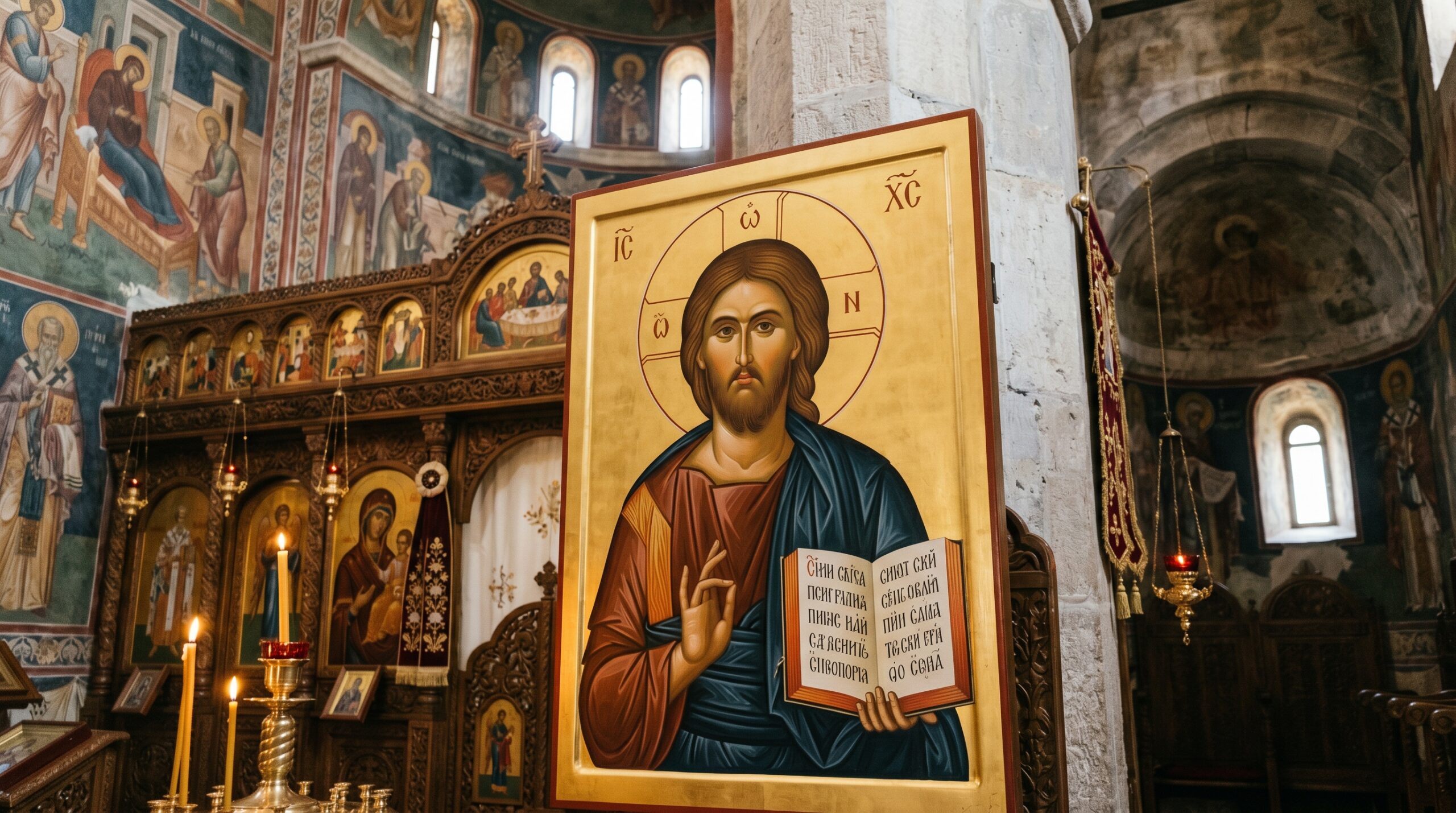
Orthodox Christians venerate icons of Christ as “windows to heaven,” affirming the Incarnation — God became visible. The Divine Liturgy is a foretaste of heaven, where believers partake of Christ’s Body and Blood in the Eucharist.
What Sets Orthodox Christianity Apart
- Vs. Protestantism: Emphasis on Tradition alongside Scripture, real presence in the Eucharist, and theosis rather than forensic justification alone.
- Vs. Roman Catholicism: No papal supremacy; different understanding of the Filioque; preservation of ancient conciliar model.
All traditions affirm Christ’s divinity, but Orthodoxy stresses mystical union and continuity with the undivided early Church.
The Relevance of Ancient Faith Today
In a fragmented world, Orthodox Christianity offers stability through its ancient liturgy, emphasis on Christ’s unchanging divinity, and the transformative path of theosis. Millions find deep peace in the Jesus Prayer and sacramental life amid modern challenges.
Knowing the Real Jesus
Jesus Christ in Orthodox Christianity is the divine Savior who calls us into communion with the Trinity. Understanding His divinity is not merely intellectual — it is an invitation to eternal life through union with Him.

Martinus Vaicarius’s mission is to:
- Provide spiritual support and guidance to people seeking peace and hope
- Create prayer texts that bring God’s peace to hearts suffering under fear and anxiety
- Promote deep understanding of the power of the
- God of Sabaoth and the protection of the heavenly hosts
- Help people enter the spiritual sphere where God’s peace reigns over all
AICortex Invest OÜ
- Dormition Fast 2026: When It Begins, When It Ends, and How to Fast Rightly - 2. Aug 2026
- The Nevsky Cathedral on Toompea: A Century-Old Dispute Over a Symbol of Russification - 1. Aug 2026
- The Meaning and Power of Prayer in Christianity: Biblical Teaching and the Wisdom of the Church Fathers - 29. Jul 2026