Views: 55
Orthodox monks establish Estonia’s first Orthodox monastery in decades
For the first time in more than 80 years, Orthodox monks are once again living and praying on Estonian soil. Kirikla Monastery — the Estonian Apostolic Orthodox Church’s (EAOC) new men’s monastery in Harju County, near Kohila — is the first men’s monastery this church has established in decades. Since the collapse of the Soviet Union, the church has coexisted alongside a separate Orthodox church affiliated with the Moscow Patriarchate, which has a larger membership in the Baltic country, and even so, the Estonian Apostolic Orthodox Church has long sought to rebuild its own monastic community within its own borders. At the center of this story are two monks — Bishop Damaskinos and Father Paisios — who live, work, and pray in the monastery’s farmhouse, about 40 kilometers outside Tallinn.
This article gathers and analyzes everything written about Estonia’s first Orthodox monastery, Father Paisios, and Bishop Damaskinos — drawing on both the Estonian church’s own sources and international media, including a widely syndicated Associated Press (AP) report — and weaves it into a single account: the history of Estonian Orthodox monastic life, from its origins to the present.
Key Takeaways
- Kirikla Monastery is the first men’s monastery the Estonian Apostolic Orthodox Church has established in decades.
- Orthodox monks last lived in Estonia more than 80 years ago, during the interwar period of independence.
- The monastery is located in Kirikla village, Harju County, near Kohila, on a seven-hectare property.
- The monastery’s founding was made possible by a property gifted by entrepreneur Urmas Sõõrumaa.
- The monastery’s spiritual father is Bishop Damaskinos of Haapsalu, a monk of the Xenophontos Monastery on Mount Athos.
- Father Paisios, an Estonian monk, is the first brother tonsured on Estonian soil for this community.
- The monastery follows the ancient prayer-and-work rhythm of Mount Athos and has drawn young visitors and volunteers.
The historical background of Orthodox monastic life in Estonia
Orthodox monastic life is not new to Estonia — it is a tradition now being revived after a long interruption. Orthodoxy reached Estonian lands as early as the medieval period, tied above all to trade relations and military campaigns originating from Kyivan Rus’. Over the centuries, two major Orthodox monasteries grew on Estonian soil: the Pühtitsa Convent of the Dormition of the Mother of God, and the Petseri Monastery of the Dormition of the Mother of God, alongside which the Estonian Apostolic Orthodox Theological Seminary also operated from 1933 to 1940.
The Second World War and the Soviet occupation that followed broke this continuity. Due to border changes, the Petseri Monastery fell, after 1945, outside the present-day territory of the Republic of Estonia and today belongs to the jurisdiction of the Patriarch of Moscow and All Russia, while the Pühtitsa Convent continued operating on Estonian soil, likewise under the jurisdiction of the Moscow Patriarchate. The Estonian Apostolic Orthodox Church itself, which preserved its continuity in exile, did not resume activity on Estonian territory until August 1993.
Since then, EAOC Metropolitan Stefanus has long expressed a wish to restore Estonia’s own monastic life — not only a women’s monastery, but a men’s monastic community as well. While the church currently has more than 60 parishes as well as one convent, the last Orthodox monks lived in Estonia more than 80 years ago, during the years of independence between the two world wars. The founding of Kirikla Monastery therefore marks not merely a new project, but the fulfillment of a long-held hope.
As an interesting side note, it is worth mentioning that in 2013 a separate Orthodox church affiliated with the Moscow Patriarchate also considered founding a men’s monastery in the Setomaa region, in the village of Beresje, where local residents expressed broad support for the plan. That initiative, however, belongs to the history of a different ecclesiastical jurisdiction and should not be conflated with Kirikla Monastery — though it does illustrate a wider, cross-jurisdictional interest in restoring monastic life in Estonia after a long pause.
The monastery’s origin story: Kirikla village and Urmas Sõõrumaa’s gift
The founding of Kirikla Monastery was approved by the general assembly of the Estonian Apostolic Orthodox Church in November 2025, giving its blessing to a new monastery named the Holy Fathers of the Mountain Monastery. In 2024, Hieromonk Damaskinos, a member of the brotherhood of Xenophontos Monastery on Mount Athos, was elected Bishop of Haapsalu, bringing with him a deep wish to establish a men’s monastery and carry the spiritual tradition of Mount Athos to Estonia. In 2026, entrepreneur Urmas Sõõrumaa’s generosity gave the brotherhood a home: a property in Kirikla, Harju County, 40 kilometers from Tallinn.
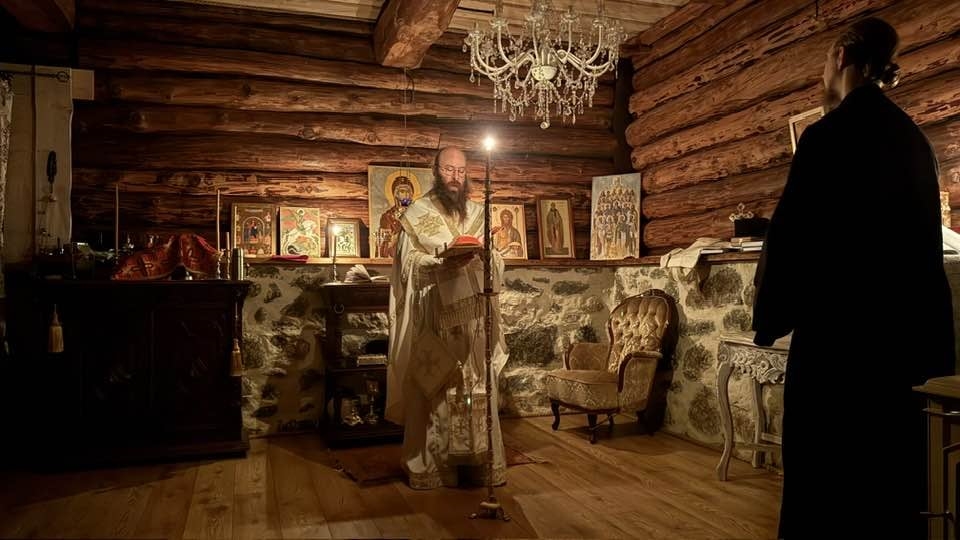
Sõõrumaa, a well-known Estonian businessman and sports figure whose family roots reach into this very area near Kohila, made the gift because of a personal connection to his home region. Founding the monastery in Kirikla village was the idea of archon Urmas Sõõrumaa, since he lives nearby and his family comes from there. Until the monastery’s permanent buildings are completed, the brotherhood lives temporarily at the nearby Üiso Farm, which currently houses both the monastery’s chapel and the monks’ living quarters.
Although the monastery does not yet have any buildings besides the farmhouse donated by the local businessman, Damaskinos’ priority is to plan for the future. On the seven-hectare property, which is designed to fit in with the local surroundings, gradual construction is envisioned — including icon painting and building work carried out by the monks themselves as members of the brotherhood.
Bishop Damaskinos: from Mount Athos to Estonia
The monastery’s spiritual father is Bishop Damaskinos of Haapsalu, whose background ties Kirikla Monastery directly to the ancient monastic tradition of Mount Athos. The Finnish-born Bishop Damaskinos of Haapsalu was consecrated on January 12, 2025, in Pärnu, and speaks ten languages, having spent years at the Xenophontos Monastery on Mount Athos. Athos itself has been a center of Christian Orthodox monasticism for more than a thousand years, and it is the rhythm he learned there that Damaskinos has built into the daily life of Kirikla Monastery.
The 41-year-old abbot Damaskinos and his fellow monk, Father Paisios, are the first monks to live, work, and pray at the new monastery’s farmhouse. Damaskinos himself has stressed that the monastery’s significance is not limited to serving the local community alone. According to Damaskinos, the monastery’s meaning is also global, in the sense that prayers are offered there for the whole world.
Though the monks currently number only two, this is not the bishop’s chief concern. The bishop has said that what worries him is not the number of monks, but their spiritual quality — that they take seriously their task of praying for the whole world.
Father Paisios: an Estonian monk
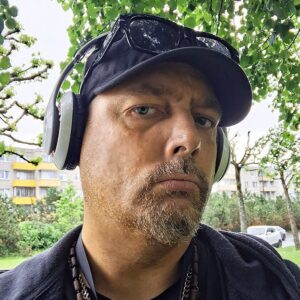
The monastery’s second resident is Father Paisios, an Estonian monk, whose tonsuring in 2025 marked the brotherhood’s first step of growth. The brotherhood’s first monk, Father Paisios, was tonsured in 2025 and ordained to the diaconate in 2026. The newspaper Eesti Kirik has likewise confirmed that Kirikla, which currently has four kelli, or monastic cells, is home to Bishop Damaskinos and Father Paisios.
Father Paisios takes part in the monastery’s everyday physical work — from gardening to weeding the potato field — and his youth (he is 31) and openness toward visitors have helped draw particular interest from a younger generation. According to the monk, visitors appreciate being able to set their phone aside without focusing on it all day, and simply get away from it all. A second brother, currently a novice, has since joined the community, pointing to the monastery’s slow but steady growth.
Daily monastic life: the rhythm of Athos on Estonian soil
Kirikla Monastery follows the rhythm Damaskinos first learned as a young monk on Mount Athos. The day begins at dawn with solitary prayer before the morning communal service, and continues with the daily work of gardening or construction; the only free time comes in the evening, after a second service. Monastic life is divided into three parts — prayer, work, and rest — with both communal and personal prayer, the latter considered especially important in the night hours, when silence favors the seeking of God.
This strict yet peaceful rhythm has proven surprisingly appealing to visitors from abroad who come to help out and experience monastic life. The monastery’s way of life stands in sharp contrast to the fast-paced, digitally saturated everyday life of modern Estonia — and it is precisely this contrast that seems to draw many young people in.
Kirikla Monastery in one of Europe’s most secular societies
Estonia is among the most secular societies in Europe, which makes the founding of a new monastery all the more notable. Founded last year in one of Europe’s most secular societies, Kirikla Orthodox Monastery is the first monastery the Estonian Apostolic Orthodox Church has established in decades. Its founding comes at a time when establishing new monasteries is rather rare in Europe — many old monasteries are closing instead, as the number of monks and nuns declines.
Founding a new monastery is rare in Europe in 2026, as some monasteries are closing altogether because fewer people are taking monastic vows; the success of Kirikla Monastery, even on such a small scale, is therefore heartening both to the Orthodox faithful and to religious scholars. Kirikla Monastery, however, is not the only monastic community in Estonia today. A Dominican order returned to a small monastery in Tallinn in 1996, and a Theravada Buddhist monastery is located on Aegna Island. Of these, Kirikla Monastery alone represents the revival of Orthodox male monasticism in Estonia.
A network of monasteries: Kirikla and Reomäe
Kirikla Monastery is not the EAOC’s only new spiritual community. In November 2024, a convent was opened at the site of the Holy Forerunner Skete at Reomäe on Saaremaa, whose spiritual father is likewise Bishop Damaskinos. There, Sister Porfyria lives and serves as a nun, later joined by novice Sister Maria. Together, the two monasteries — Kirikla men’s monastery and Reomäe convent — form the core of Estonia’s reviving monastic life, with both communities united by the spiritual tradition of Mount Athos and the guidance of Bishop Damaskinos.
Both monasteries currently have limited accommodation for visitors, though church services are always open to everyone. Kirikla Monastery cannot currently host overnight guests, apart from men interested in monastic life, though it hopes in the future to build a separate guesthouse — similar to Reomäe’s small guesthouse, which has room for a couple of visitors.
The significance of Kirikla Monastery and its future plans
Kirikla Monastery symbolizes more than a single new building on the Harju County landscape. It marks the revival of a broken tradition — a moment in which Orthodox monastic life, which ceased in Estonia because of the Second World War and the Soviet occupation, is once again taking root. According to Bishop Damaskinos, the monastery’s purpose is to show visitors the happiness and peace that monastic life offers, and to bring the spiritual heritage of Mount Athos to the shores of the Baltic Sea.
The monastery’s further plans include constructing permanent buildings on its seven-hectare property, including a chapel, living quarters, and a guesthouse. Supporting the monastery depends heavily on donations, since the monks have given up personal possessions and devoted their entire lives to serving God. The brotherhood’s growth — already joined by a second brother, currently a novice — gives hope that Kirikla Monastery will remain a lasting part of Estonia’s spiritual landscape.
A Prayer for Estonia’s First Orthodox Monastery
Lord Jesus Christ, our God, who throughout the ages has called people into silence, prayer, and holy labor — bless Kirikla Monastery, the first home of monasticism restored to Estonian soil. Grant Bishop Damaskinos and Father Paisios, and all who join their brotherhood, strength, humility, and steadfastness in keeping their vows. Give them a pure heart to pray for the whole world, just as You Yourself taught Your disciples to ask: “Thy kingdom come, Thy will be done.” Bless the brotherhoods of Reomäe and Kirikla to grow, bless all who have helped bring them into being, and let the light of this new monastery shine upon the Estonian people as a sign of hope and reconciliation. Glory to the Father, and to the Son, and to the Holy Spirit, now and ever, and unto ages of ages. Amen.
Trough all this I want to declare this is all from God and to God. All Glory to Him!