Views: 62
What Does Orthodox Christian Mean? A Clear 2026 Answer
Seven ecumenical councils shaped the doctrine of Orthodox Christianity, but “what does orthodox christian mean” cannot be answered by history alone. An Orthodox Christian is a follower of Jesus Christ who belongs to a Church that receives the apostolic faith through Scripture, Holy Tradition, sacramental worship, and communal life.
The word Orthodox means “right belief” or “right worship.” It does not mean that Orthodox Christians are more Christian than other believers, nor does it describe an ethnicity. It identifies a historic Christian tradition with a particular understanding of salvation, the Church, and life in Christ.
Key Takeaways
- Orthodox Christianity centers on Jesus Christ and His resurrection.
- Scripture is read within Holy Tradition.
- Divine Liturgy is sacramental worship, not historical theater.
- Icons receive veneration, never worship.
- Eastern and Oriental Orthodox churches are distinct families.
- Orthodox identity is lived through prayer, repentance, and communion.
Orthodox Christianity Means Faithful Continuity with the Apostles
Orthodox Christianity is a historic Christian tradition that believes the Church has preserved the apostolic faith through worship, doctrine, bishops, and the teaching of earlier generations. Orthodox Christians confess Jesus Christ as the incarnate Son of God, worship the Holy Trinity, and receive the Bible as Holy Scripture.
The Eastern Orthodox Church includes churches such as the Greek Orthodox, Russian Orthodox, Serbian Orthodox, Romanian Orthodox, and Antiochian Orthodox churches. These churches govern themselves in many practical matters but share the same central faith, sacraments, and liturgical tradition.
The term apostolic succession describes the continuity of bishops from the apostles through the life of the Church. For Orthodox Christians, this continuity is more than a list of historical names. It connects present worship and teaching with the community formed by Christ and His apostles.
“Jesus Christ is the same yesterday and today and forever.” — Hebrews 13:8, New Revised Standard Version Updated Edition
This verse expresses a principle Orthodox Christians apply to the Church: the Gospel does not change with each generation, even though language, music, architecture, and local customs can differ.
Orthodox identity is therefore a lived relationship with Christ within His Church, not a cultural label attached to a country. Someone may be Greek, Arab, Ethiopian, American, or Ukrainian and belong to an Orthodox community, but nationality does not define the faith.
What Do Orthodox Christians Believe About the Bible and Tradition?
Orthodox Christians believe the Bible is inspired Scripture and the highest written witness to God’s revelation. They do not place the Bible against Tradition. Instead, they understand Scripture as living within the Church’s worship, teaching, and prayer.
Scripture Within the Church
The Orthodox Church recognizes the Old and New Testaments as the Bible. The New Testament emerged from the apostolic Church, whose worship and teaching existed before the New Testament books were collected into one volume.
This does not mean the Church invented the Bible. It means Orthodox Christians read Scripture as the book of the Church, interpreted through the faith shared by the apostles and received across generations.
A practical example is the reading of the Gospel during the Divine Liturgy. The passage is not treated as a detached quotation. It is proclaimed within prayer, confession of faith, hymns, and the Eucharist.
What Holy Tradition Includes
Holy Tradition includes the Church’s received understanding of the Gospel. It involves the decisions of ecumenical councils, the writings of the Church Fathers, the sacraments, the liturgical texts, and the patterns of Christian prayer.
Tradition does not mean every old custom has equal authority. A local food, style of clothing, or musical form may be traditional without being a doctrine. Orthodox Christians distinguish between customs that support faith and teachings that express the Church’s confession.
Scripture and Tradition Are Not Rivals
The Orthodox position rejects the idea that Christians must choose between the Bible and tradition. The question is which tradition is faithful to the apostles and centered on Christ.
The Bible is read through the Church’s worship, while the Church’s tradition must remain accountable to the apostolic Gospel. This relationship explains why Orthodox Christians quote Scripture often, while also relying on creeds, councils, and inherited prayers.
How Does Orthodox Worship Express Its Theology?
Orthodox worship presents salvation as communion with God through Jesus Christ. The central act of worship is the Divine Liturgy, especially the Eucharist, where the Church gathers to hear Scripture, confess the faith, pray, and receive Holy Communion.
The Divine Liturgy is not a performance of ancient culture. Its structure teaches the Christian story: creation, sin, incarnation, death, resurrection, ascension, and the hope of Christ’s return. The congregation participates through responses, standing, singing, listening, and receiving the sacraments.
The Sacraments and Christian Life
Orthodox Christians commonly speak of seven major sacraments: baptism, chrismation, Eucharist, confession, marriage, ordination, and anointing of the sick. Orthodox theology also sees the whole life of the Church as sacramental because material creation can communicate God’s grace.
Baptism marks entry into the Church, while chrismation confirms the newly baptized person with the gift of the Holy Spirit. Infants may receive both, followed by the Eucharist, because salvation is understood as God’s gift rather than a reward for reaching a particular age.
The Eucharist is central because Orthodox Christians believe Christ is truly present in Holy Communion. The bread and wine are not treated as ordinary reminders only. They are received as the holy mystery of Christ’s Body and Blood.
Why the Worship Looks Ancient
Incense, processions, chanting, vestments, fasting, and repeated prayers engage the body as well as the mind. Orthodox worship assumes that human beings learn through sight, sound, movement, and participation, not through ideas alone.
The use of a liturgical calendar also shapes time. Major feasts such as Pascha, the Nativity of Christ, and Pentecost place the life of Jesus and the work of the Holy Spirit at the center of the year.
A Concrete Example of Meaning
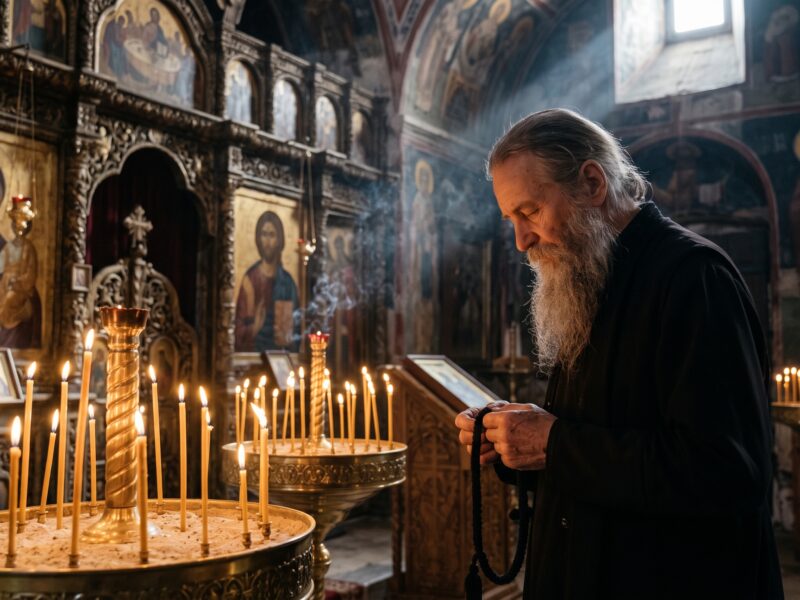
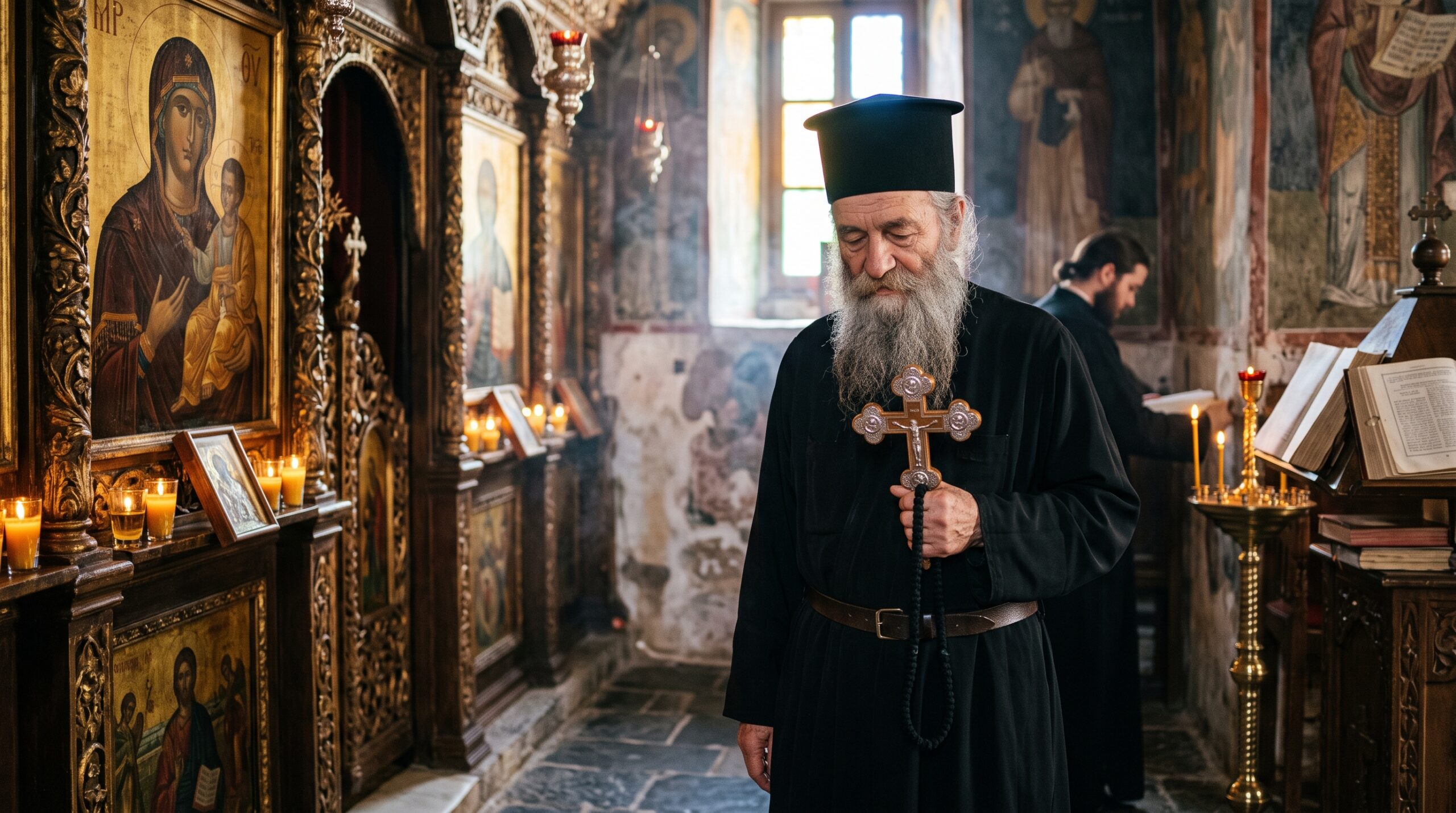
When Orthodox Christians stand before an icon of Christ, light a candle, and make the sign of the cross, the actions are meant to direct attention toward God. They do not believe the wood or paint is a deity. The physical act supports prayer, much as kneeling or lifting hands can express an inward act of faith.
Why Do Orthodox Christians Honor Icons?
Orthodox Christians honor icons because God truly became human in Jesus Christ. Since the Son of God took visible flesh, Orthodox theology holds that depicting Christ is consistent with the incarnation. Icons also depict the Virgin Mary and the saints as witnesses to God’s work.
Veneration Is Different from Worship
The distinction is precise. Worship belongs to God alone. Veneration is an act of respect offered to an icon, a saint, or a holy object because of the person or reality connected with it.
A Christian may kiss an icon of Christ, bow before it, or light a candle. These actions do not mean that the image has divine power. The honor given to the image passes to the person depicted, while worship remains directed to the Holy Trinity.
What Icons Teach
Icons are theological images. Their colors, gestures, and arrangement communicate claims about Christ and the saints. An icon of the resurrection, for example, presents Christ breaking the gates of death and raising Adam and Eve, expressing salvation as victory over death.
Orthodox icons often use a style that does not imitate ordinary portrait photography. The purpose is not naturalistic decoration. It is to show persons transformed by holiness and to direct the viewer toward prayer.
The Seventh Ecumenical Council, held at Nicaea in 787, affirmed the use and honor of sacred images while distinguishing that honor from the worship due to God. That council remains an important reference point in Orthodox teaching about icons.
A Necessary Boundary
Icons are not magic objects, and Orthodox Christianity does not teach that every image has the same spiritual value. If attention becomes superstition, the practice has lost its purpose.
The right question is not, “Does this object protect me automatically?” It is, “Does this image lead me to remember Christ, repent, give thanks, and pray?” That distinction separates veneration from treating religion as a technique for controlling events.
How Is Salvation Understood in Orthodox Christianity?
Orthodox Christianity teaches that salvation is God’s gracious work through Jesus Christ. Human beings are separated from God by sin and death, and Christ restores humanity through His incarnation, obedient life, crucifixion, resurrection, and ascension.
Orthodox Christians do not earn salvation through rituals or good behavior. Grace comes first. At the same time, faith is expected to become a life of repentance, prayer, mercy, and obedience because communion with God changes how a person lives.
Healing and Union with God
Orthodox writers often describe salvation as theosis, meaning participation in the life of God by grace. This does not mean that a human being becomes God by nature. It means that people are healed and transformed through communion with the Father, Son, and Holy Spirit.
This emphasis gives Orthodox teaching a strong healing image. Sin is not only a legal violation requiring a sentence. It is also a wound that damages the person’s relationship with God, neighbor, and the created world.
Christ’s Death and Resurrection
The cross is central, but Orthodox worship places strong emphasis on the resurrection. During Pascha, the Church proclaims that Christ has destroyed death and opened the way to eternal life.
This does not minimize guilt or judgment. It places both within the larger work of Christ, who forgives sin, defeats death, and restores human nature. Salvation is personal, but it is not private. Christians receive it within the body of the Church.
What Repentance Looks Like
Repentance is a continuing return to God, not a single emotional moment. It includes confession of sin, trust in divine mercy, practical change, and renewed prayer.
A person who has harmed a neighbor cannot treat prayer as a substitute for making amends when amends are possible. Orthodox spirituality joins prayer with action: forgive, give to the poor, control speech, keep the fast with wisdom, and seek reconciliation.
A Practical Starting Pattern
Someone investigating Orthodox Christianity can begin with a simple pattern:
- Read one Gospel, such as Mark, slowly.
- Attend a Divine Liturgy and observe without rushing to imitate everything.
- Speak with an Orthodox priest about baptism, communion, and church membership.
- Use a short daily prayer, such as the Lord’s Prayer.
- Compare local customs with the Church’s actual doctrine.
The purpose of these steps is discernment. A person should understand the faith before making formal commitments.
What Is the Difference Between Eastern Orthodox and Other Christians?
Orthodox Christians share core beliefs with Roman Catholics and Protestants, including faith in the Trinity, the divinity of Jesus Christ, His death and resurrection, and the authority of Scripture. Their differences concern Church authority, doctrine, worship, sacraments, and the interpretation of Christian history.
| Christian tradition | Church authority | Worship pattern | Distinctive historical point |
|---|---|---|---|
| Eastern Orthodox | Bishops, councils, Holy Tradition | Divine Liturgy and sacramental prayer | Separated from the Roman Church in the 11th century |
| Roman Catholic | Pope, bishops, councils, tradition | Mass and seven sacraments | Recognizes the pope as universal pastor |
| Protestant traditions | Varies by denomination | Worship shaped by each tradition | Emerged from 16th-century reform movements |
| Oriental Orthodox | Bishops, councils, Holy Tradition | Ancient liturgies and sacraments | Rejected the Council of Chalcedon in 451 |
Eastern Orthodox and Roman Catholic
The separation between the Eastern Orthodox and Roman Catholic churches developed over centuries and is commonly dated to 1054, though the division was gradual. Authority, the role of the pope, certain theological formulations, and later historical disputes all contributed.
Orthodox Christians honor the early Church’s councils but do not accept universal papal jurisdiction in the Roman Catholic sense. Orthodox churches are governed through bishops and synods rather than one bishop with universal authority over every Orthodox church.
Eastern Orthodox and Protestant Christians
Protestant communities vary widely, so no single comparison fits all of them. Many affirm salvation through faith in Christ and rely on the Bible as their final written authority, while Orthodox Christians read Scripture within Holy Tradition and maintain a sacramental episcopal Church.
Some Protestant churches have bishops, formal liturgies, or daily prayers. Others have simpler worship and different views of baptism and Communion. The differences must be examined denomination by denomination rather than reduced to one stereotype.
Eastern Orthodox and Oriental Orthodox
The Oriental Orthodox churches include the Coptic Orthodox Church, Armenian Apostolic Church, Syriac Orthodox Church, Ethiopian Orthodox Tewahedo Church, Eritrean Orthodox Tewahedo Church, and Malankara Orthodox Syrian Church.
They are not the same body as the Eastern Orthodox Church. The major historical division followed the Council of Chalcedon in 451. The two families have engaged in theological dialogue and share much ancient Christian heritage, but they remain distinct communions.
Is Orthodox Christianity an Ethnic Identity or a Religious Commitment?
Orthodox Christianity is a religious commitment, although ethnic customs often shape how it is practiced in a particular community. A parish may use Greek, Arabic, Church Slavonic, Romanian, or English, but language does not change the faith’s central confession.
A person from an Orthodox-majority country is not automatically a practicing Orthodox Christian. Conversely, a person raised outside those cultures can become Orthodox through faith, instruction, baptism, and incorporation into an Orthodox parish.
Culture and Doctrine
Food traditions provide a clear example. Some Orthodox Christians avoid meat and dairy during parts of the fasting calendar. The food itself is not the doctrine. The practice is meant to train self-control, prayer, and generosity.
The same distinction applies to church architecture, music, clothing, and feast-day customs. These can carry deep meaning, but they do not replace belief in Christ or participation in the Church’s sacramental life.
Language Does Not Set the Boundary
A visitor may hear a language they do not understand and still encounter the central actions of Christian worship: Scripture is proclaimed, the Trinity is confessed, Christ is praised, and the Eucharist is celebrated.
Many Orthodox communities now use English for readings, sermons, prayers, or the entire Divine Liturgy. The language may change; the Gospel and sacramental structure remain recognizable.
What Membership Involves
Formal belonging usually includes baptism and chrismation in the Orthodox Church, or reception from another Christian tradition according to the bishop’s decision. Communion is ordinarily received by Orthodox Christians who are prepared according to the Church’s discipline.
A curious visitor may attend and ask questions, but should not assume that every visitor may receive Communion. That boundary is about shared faith and ecclesial unity, not ethnic exclusion.
Prayer Beyond Cultural Labels
A person seeking Orthodox spiritual formation can begin with Scripture, the Lord’s Prayer, the Psalms, and brief prayers such as the Jesus Prayer: “Lord Jesus Christ, Son of God, have mercy on me, a sinner.”
Resources such as salvationprayer.eu can support this beginning with prayer texts and explanations of Orthodox practice, but reading alone does not replace life in a local church. Orthodox Christianity is learned through prayer, worship, repentance, and relationships within the Christian community.
How Can Someone Recognize Orthodox Christian Faith in Daily Life?
Orthodox Christian faith appears in daily habits that direct a person toward Christ: morning and evening prayer, Scripture reading, fasting, confession, generosity, forgiveness, and participation in the Eucharist. These practices have value because they train attention and reshape desire.
A person may keep an icon corner at home, light a candle during prayer, or follow a fasting rule. None of these actions proves holiness. Their purpose is to make faith concrete within ordinary time, especially when distraction or discouragement is strong.
Orthodox Christians often use a prayer rule suited to their circumstances. For one person, this may mean the Lord’s Prayer and a Psalm each morning. For another, it may include the Jesus Prayer, a short Gospel reading, and evening thanksgiving.
Fasting requires care. Orthodox fasting traditions can be demanding, and medical conditions, pregnancy, age, work, and family responsibilities affect how a person should practice. A priest can give guidance, but the aim remains spiritual: freedom from excess and greater love for God and neighbor.
The Christian test is practical. If prayer produces contempt, vanity, or harsh judgment, something has gone wrong. Orthodox spirituality expects humility, patience, and mercy because the goal is communion with Christ, not religious display.
The clearest sign of Orthodox faith is a life turning toward Jesus Christ. Ancient prayers and icons matter because they direct that turning; separated from repentance and love, they become empty forms.
Conclusion
If you are deciding whether Orthodox Christianity is a tradition you should investigate, begin with the Gospel of Mark and attend one Divine Liturgy. Listen for how Scripture, prayer, Eucharist, and the confession of Christ fit together. Then ask an Orthodox priest about the Church’s faith and your own questions. Take time. A serious spiritual decision deserves understanding rather than impulse.
Frequently Asked Questions
Are Orthodox Christians considered Christians?
Yes. Orthodox Christians confess the Holy Trinity and Jesus Christ as the incarnate Son of God, crucified and risen for humanity’s salvation. They belong to one of the oldest Christian traditions and share the central Nicene faith with many other Christians.
Do Orthodox Christians believe the Bible is true?
Yes. Orthodox Christians receive the Bible as inspired Holy Scripture, while interpreting it within Holy Tradition, the Church’s worship, and the teaching of the apostles and councils. They do not replace Scripture with human customs.
Can a Protestant attend an Orthodox Divine Liturgy?
Yes. Visitors may attend, observe, and speak with members or a priest. Communion is a separate matter: it is normally reserved for Orthodox Christians who share the Church’s faith and are properly prepared to receive it.
Why do Orthodox Christians pray to saints?
Orthodox Christians ask saints to pray for them because they believe the saints are alive in Christ and remain part of the Church. This differs from worship, which belongs to God alone; saintly intercession always points toward Jesus Christ.

Trough all this I want to declare this is all from God and to God. All Glory to Him!